Home
Product
Contact
Odm/Oem
About
A banana clip is a curved hair accessory with two comb-like sides that close around the hair to create a lifted ponytail, loose updo or vertical twist. Unlike a regular hair tie, it spreads the hair along a longer curved shape, which can make the style look fuller while reducing the tight single-point pressure of an elastic.
Banana clips are often associated with retro hairstyles, but they are useful for modern styling because they can hold volume without flattening the hair. They work especially well for long hair, thick hair, wavy hair and curly hair when the clip size, tooth spacing and closure strength match the hair type.
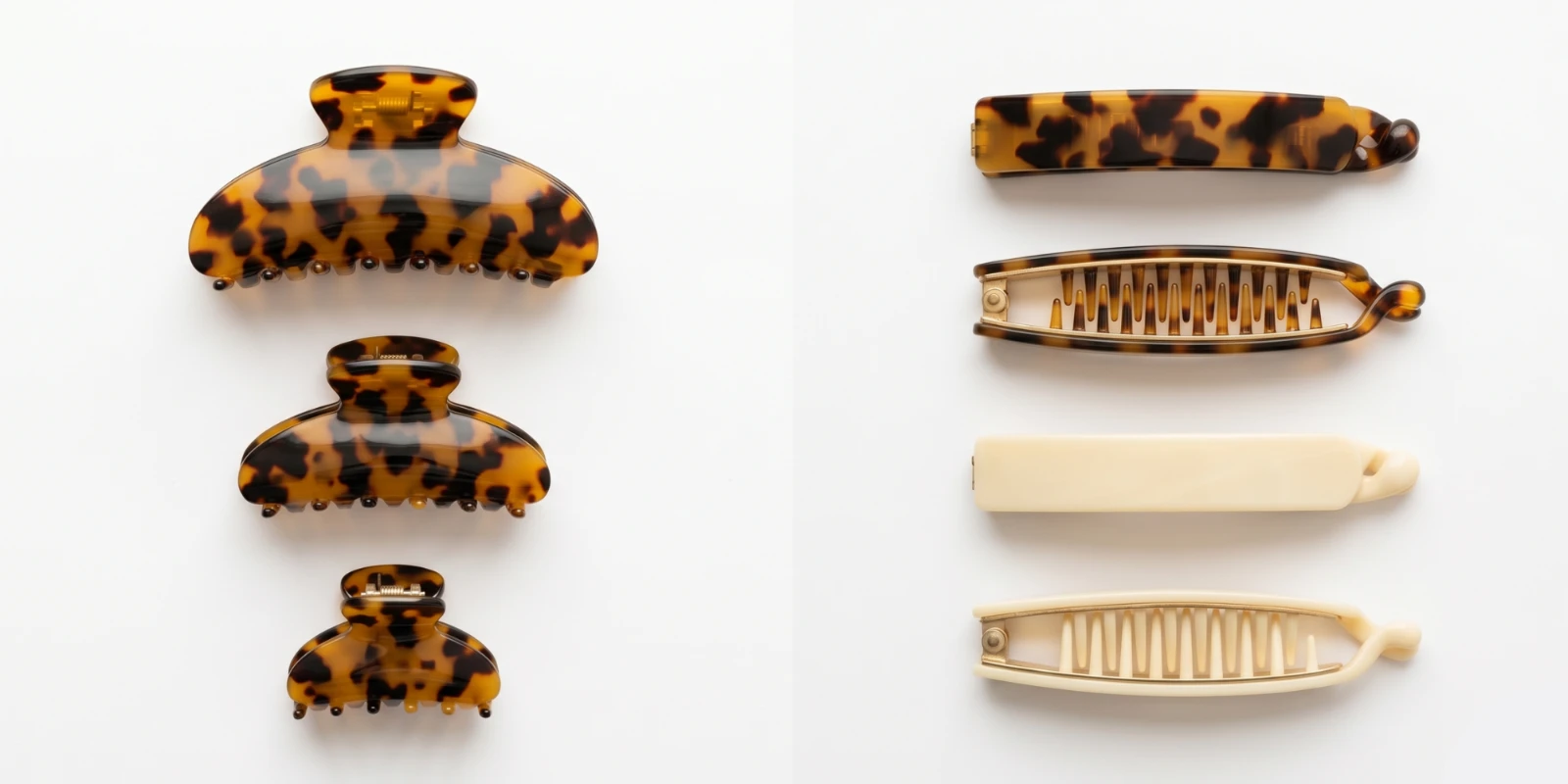
A banana clip is a long, slightly curved clip designed to hold hair vertically or in a lifted ponytail shape. Most banana clips have teeth on both sides and a clasp at one or both ends. When closed, the clip gathers the hair between the two comb sections instead of wrapping tightly around it.
This shape is the reason banana clips create a different result from claw clips or hair ties. A hair tie compresses the hair into a round ponytail base. A claw clip grips hair in a folded or twisted section. A banana clip spreads the hair along a curved line, which can create a fuller ponytail effect and a softer silhouette.
For a direct comparison between these two accessory types, see claw clip vs banana clip. The choice depends on whether the goal is a folded updo, a strong twist hold or a lifted ponytail shape.
The basic banana clip method is simple, but small adjustments make a large difference in comfort and hold. The clip should sit close enough to the scalp to feel secure, but not so tight that it pulls at the roots.
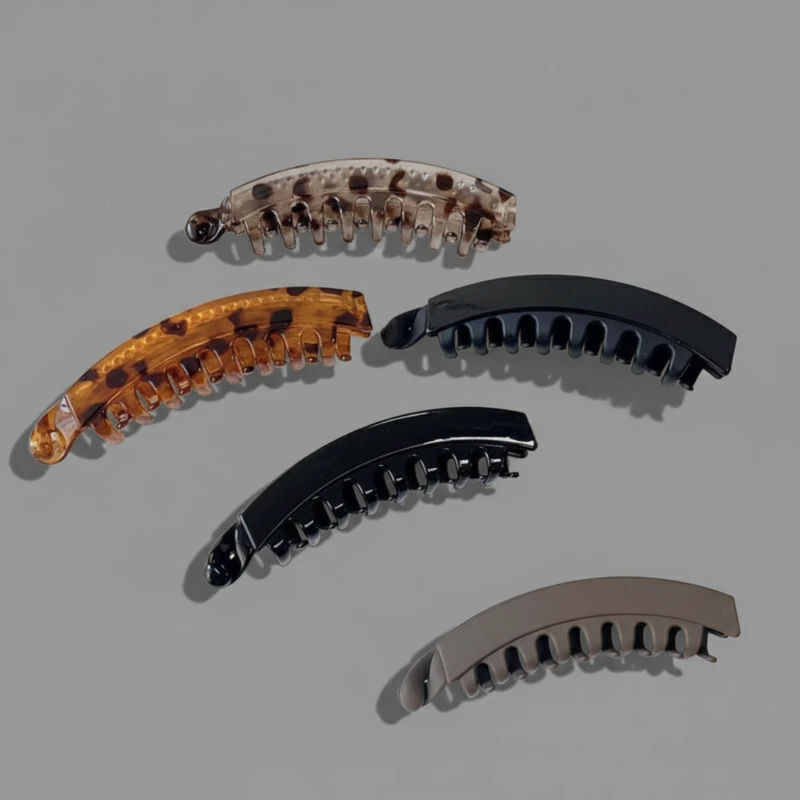
If the clip slides, the issue is usually one of three things: the clip is too small, the hair is too smooth, or the clip is sitting too far away from the scalp. Adding light texture, placing the clip closer to the head, or choosing a larger design can improve stability.
External styling guides from L’Oreal Paris and The Right Hairstyles also describe banana clips as useful for ponytails, volume and retro-inspired updos.
For long hair, the most reliable banana clip style is a vertical ponytail. This style keeps the length controlled while allowing the hair to fall naturally from the top of the clip. It works for straight, wavy and lightly curled hair.
Start by brushing or finger-combing the hair backward. Gather it at the center of the head, then place the banana clip underneath the gathered section. Close the clip upward so the hair is supported from the nape toward the crown. After closing, loosen the top section slightly to avoid a pulled-back look that feels too flat.
Long hair usually needs a longer clip with stronger teeth. If the ends feel heavy, a narrow clip may slide down during the day. A larger acetate or reinforced plastic banana clip can provide better surface contact along the gathered hair.
For product structure reference, a page such as custom large acetate banana hair clips shows the type of longer curved format often used for fuller hair volume.
Thick hair needs more space inside the clip. If the clip is too narrow or the clasp is weak, the hair may push the clip open or create pressure at the closure. The best approach is to work with the hair volume instead of forcing it into a tight shape.
| Hair Type | Recommended Clip Feature | Styling Tip |
|---|---|---|
| Long straight hair | Long curved body | Add light texture before clipping |
| Thick hair | Wide teeth and strong clasp | Gather loosely before closing |
| Curly hair | Rounded teeth with enough spacing | Use fingers instead of tight brushing |
| Fine hair | Smaller lightweight clip | Place close to scalp to prevent sliding |
For thick hair, one useful method is the loose ponytail guide. First gather the hair loosely with one hand, then insert the open banana clip from underneath. Instead of pulling the hair flat, allow the volume to fill the clip evenly. Close the clip gradually and stop if the clasp feels strained.
If the hair is very dense, sectioning can help. Divide the hair into an upper and lower layer, place the lower layer into the clip first, then guide the upper layer over it before closing. This creates a more balanced shape and reduces pulling near the crown.
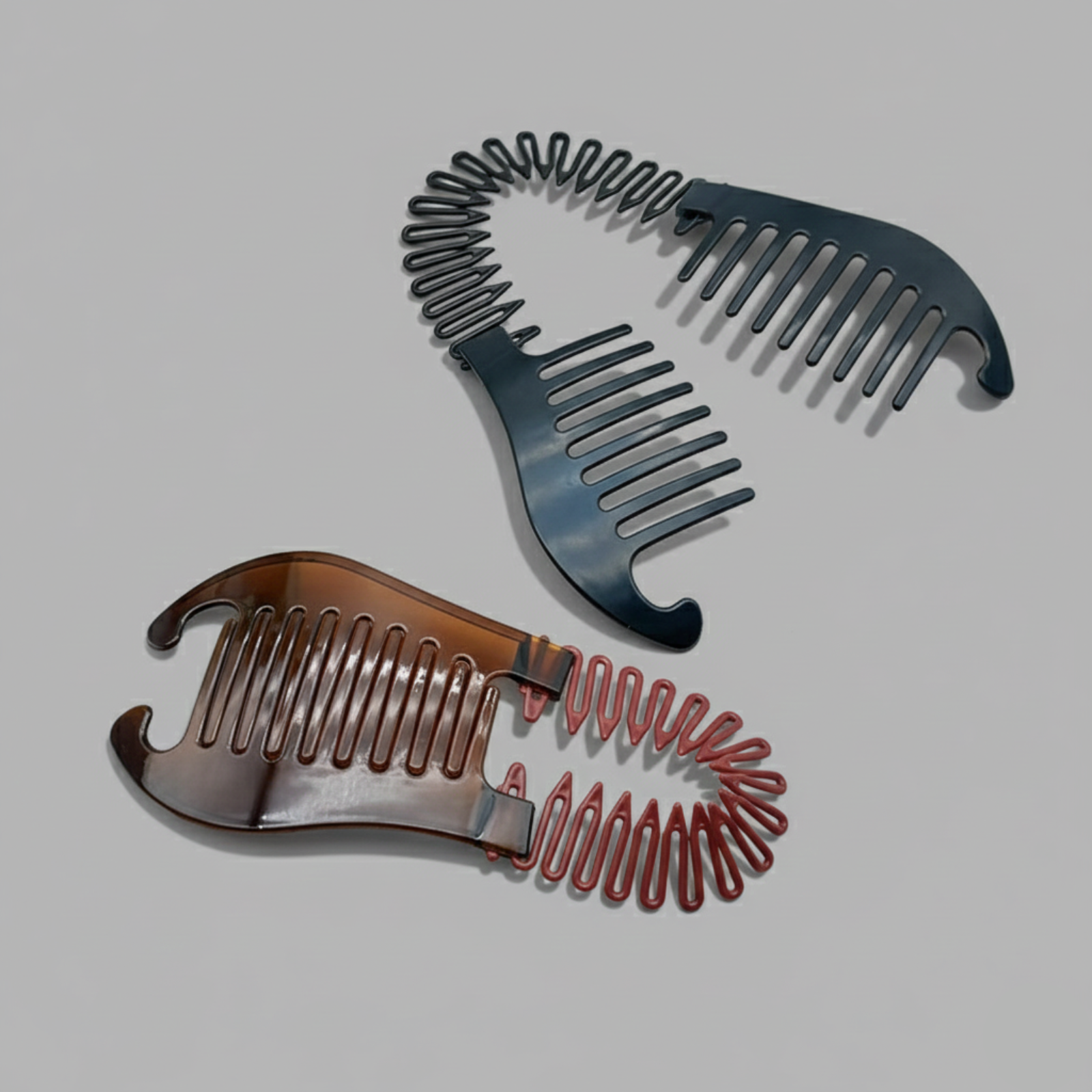
Curly hair should be handled with less brushing and more shaping by hand. The goal is to keep curl groups intact while using the banana clip to lift and hold the overall shape. Brushing dry curls before clipping may create frizz, so finger detangling or a wide-tooth comb is usually gentler.
Start with moisturized or lightly styled curls. Gather the curls at the desired height without stretching them flat. Open the banana clip and place it under the hair, then close it around the curl volume. After closing, pull a few face-framing curls loose if the style feels too tight.
Curly hair often works well with banana clips because the natural texture gives the teeth more grip. However, the teeth should be smooth and rounded. Sharp seams, rough plastic edges or narrow teeth can catch curls and create friction.
For curly hair accessory planning, hair accessories for curly hair gives useful context on hold, texture and accessory shape.
The classic banana clip ponytail is the easiest style. Gather the hair at mid-height, place the clip underneath, close it upward and let the hair fall naturally. This creates a lifted ponytail shape without a tight elastic base.
The half-up banana clip style works well for thick or layered hair. Separate the top half of the hair, gather it at the back of the head and secure it with a smaller banana clip. The lower section remains loose, while the top section gains height and control.
The soft French twist uses the banana clip as a vertical support. Gather the hair low, twist it upward, fold the ends inward and close the clip around the twist. This style may need a few pins if the hair is very long or slippery.
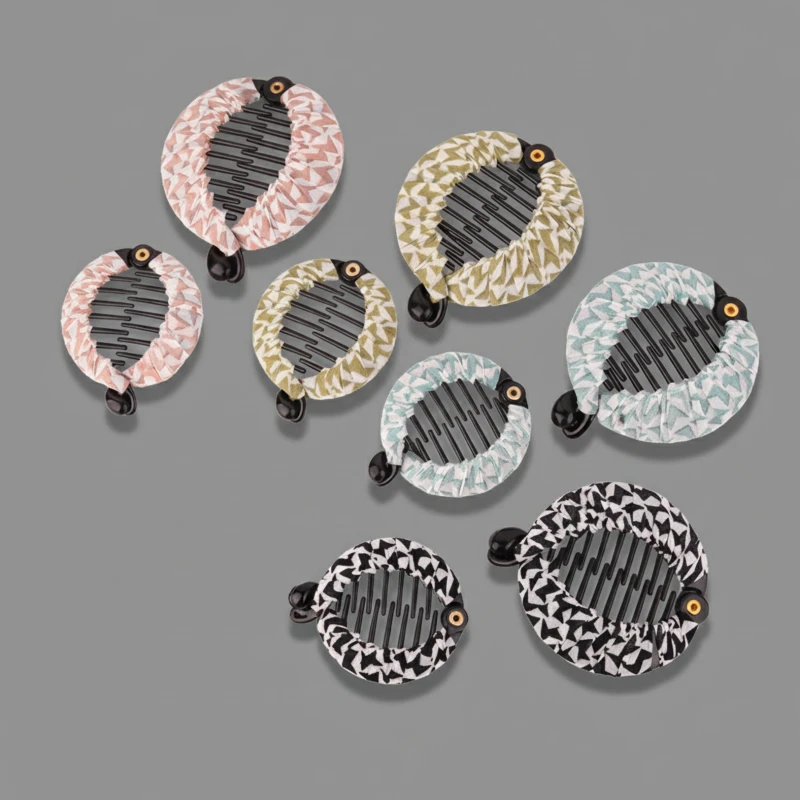
The video below demonstrates a simple banana clip styling method that uses a temporary loose ponytail to control placement before closing the clip.
The most common mistake is choosing a clip that is too small. When the clip does not have enough internal space, it may squeeze the hair, pop open or slide downward. Long and thick hair usually needs a longer body, wider teeth and a stronger closure.
Another mistake is pulling the style too tight. Tight hairstyles can create scalp tension, especially when worn repeatedly. The American Academy of Dermatology notes that hairstyles that pull on the scalp can contribute to traction-related hair loss over time, so banana clip styles should feel secure but not painful. See the AAD guidance on hairstyles that pull and hair loss.
A third mistake is closing the clip too far away from the scalp. If the clip sits only around the outer hair instead of supporting the base, the weight of the hair can pull it down. Place the teeth close to the scalp, then adjust the surface hair after closing.
The right banana clip depends on hair length, density, texture and styling goal. A long clip works better for vertical ponytails and thick hair. A smaller clip may suit half-up styles or fine hair. Curly hair benefits from smooth teeth with enough spacing to avoid catching or breaking curl groups.
| Clip Feature | Why It Matters | Best For |
|---|---|---|
| Long curved body | Supports more hair length | Long hair and vertical ponytails |
| Wide tooth spacing | Reduces crowding and pulling | Thick, wavy and curly hair |
| Smooth rounded teeth | Helps reduce snagging | Curly or fragile hair |
| Strong clasp | Prevents popping open | Dense or heavy hair |
For broader category planning, hair accessories product categories can help compare banana clips with claw clips, barrettes, pins, scrunchies and other formats.
Banana clips can work well for thick hair when the clip is long enough, the teeth are wide enough and the clasp is strong. A small or narrow clip may slide, pull or pop open.
Banana clips can be useful for curly hair because they lift the hair without compressing curls into a tight elastic base. Smooth teeth and gentle placement are important to reduce snagging.
A banana clip may slide if it is too small, placed too far from the scalp, or used on very smooth hair without enough grip. Using a larger clip or adding light texture can improve hold.
Neither is universally better. A banana clip is better for lifted ponytail shapes and long vertical volume. A claw clip is better for folded twists, quick buns and compact updos.
Learning how to use a banana clip is mostly about matching the clip to the hair type. Long hair needs length and support. Thick hair needs space and a strong clasp. Curly hair needs smooth teeth, gentle placement and enough room for natural volume.
When used correctly, a banana clip can create a lifted ponytail, a soft half-up style or a simple French twist without relying on a tight elastic base. For manufacturers and buyers, examples from JunYi Beauty show why shape, tooth spacing, closure strength and material finish all matter when designing banana clips for different hair textures.
👉 Searching for Hair Accessories ? Your brand deserves the best.