Home
Product
Contact
Odm/Oem
About
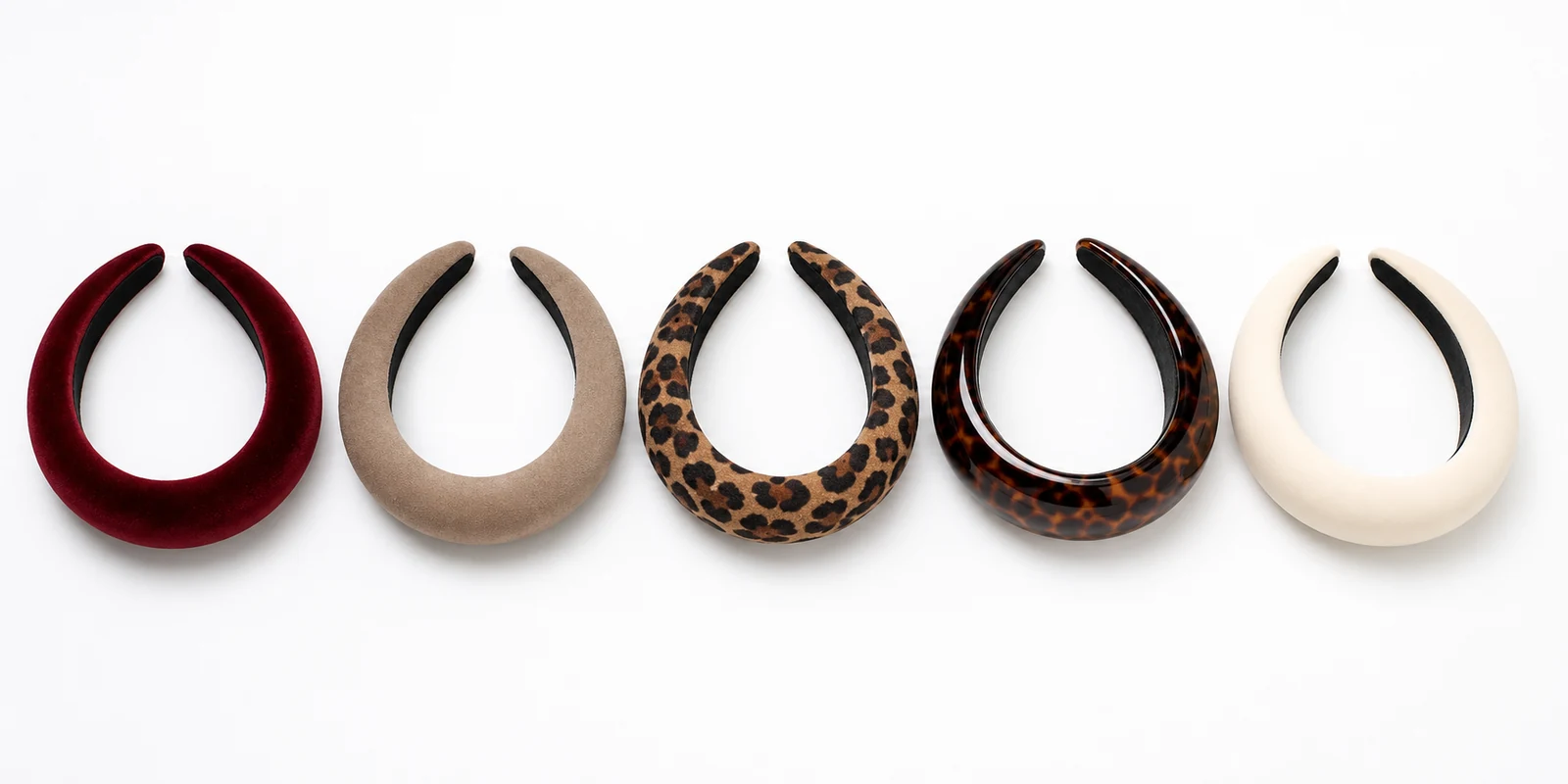
A padded headband is a wide, structured hair accessory built around an internal foam or wire core, covered in fabric or leather, that sits higher off the head than a flat headband and holds its shape rather than flexing flat under hair weight. The padding is what separates it from a standard fabric or plastic band, giving it visible volume and a more finished, dressed-up look.
The style has moved from a supporting accessory to a headline one for 2026, driven by a wider return to structured, vintage-inspired hair styling on runways and in celebrity style coverage. This guide covers what defines the trend, how it compares with other headband styles, sizing and fit, care, cost, and what the shift means for anyone sourcing headbands at volume.
Major fashion houses have put padded and structured headbands back on the runway this year, styled with a playful, retro spirit that nods to the early 2000s. Style coverage has also pointed to a broader revival of Carolyn Bessette-Kennedy’s understated 1990s aesthetic, where a simple structured headband replaces more elaborate styling. That combination of runway visibility and a recognisable style icon is what tends to move an accessory from niche to mainstream within a single season.
Flat headbands never fully left the market, but the padded version answers a specific styling problem: it adds visible volume and a polished finish without requiring any actual hairstyling underneath. Worn with loose waves, a low bun, or hair left down, it does the styling work on its own, which is a large part of why it has moved from occasional accessory into daily rotation for a wider range of people. It also photographs well, which matters more than it once did given how much of current fashion coverage moves through short-form video and still images rather than print.
The padded format is one of several headband types currently in circulation, each suited to a different look and level of structure.
| Style | Structure | Best For | Positioning |
|---|---|---|---|
| Padded headband | Foam or wire core, fabric covered | Polished, dressed-up looks | Fashion-forward, mid to premium |
| Flat fabric headband | No core, soft fabric only | Everyday casual wear | Mass market, low cost |
| Comb headband | Rigid band with small teeth | Secure hold, vintage feel | Functional, mid market |
| Alice band | Rigid plastic, thin profile | Minimalist, understated looks | Classic, all price tiers |
| Sports headband | Stretch fabric, no rigid core | Active wear, sweat control | Functional, budget to mid |
The padded headband sits at the more structured end of this spectrum, closer to a comb headband in how much shape it holds, but softer and more comfortable against the scalp because of the padding rather than rigid teeth or plastic. Buyers stocking across several of these categories are effectively covering the full range of customer intent, from someone who wants a headband purely to keep hair out of their face to someone treating it as a fashion statement.
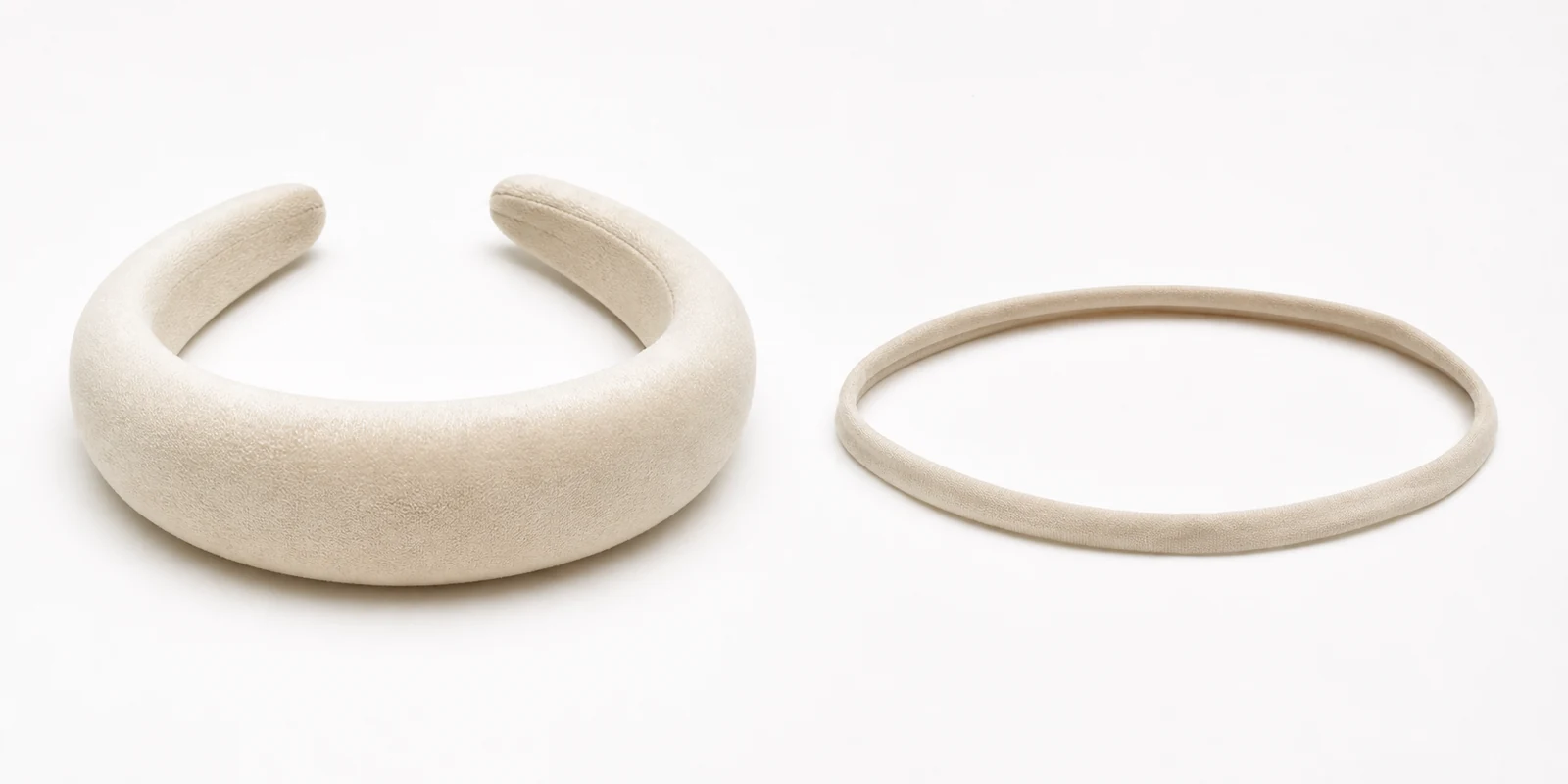
The padding itself is typically a moulded foam strip or a wire-and-foam combination, shaped and stitched inside an outer sleeve. Foam-only cores are lighter and suit everyday wear, while wire-reinforced cores hold a more sculpted, arched shape that is common in the higher-end versions of the trend. The foam density used also varies meaningfully between low-cost and premium versions, with higher-density foam resisting compression and holding its shape through repeated wear far longer than the softer, lower-density foam common in budget lines.
Velvet remains the most recognisable finish for the padded headband trend, giving the accessory a soft, dressed-up texture that photographs well and pairs easily with both casual and formal outfits. Suede and faux-leather versions lean more into the vintage, equestrian-adjacent aesthetic behind the current revival. Printed fabrics, particularly leopard and tortoiseshell patterns, add a more fashion-forward option for buyers who want the trend without committing to a single neutral colour. Satin and silk-finish covers appear less often but serve a specific bridal and evening-wear niche where sheen matters more than texture.
Daytime and errand-running looks favour narrower, foam-only padded bands in neutral tones, paired with loose waves or hair left down, since the accessory needs to read as effortless rather than styled. Office and smart-casual settings lean toward suede or matte velvet in muted colours, worn with a low ponytail or bun that keeps the headband as the single statement piece rather than one of several competing details.
Evening and going-out looks are where the wider, more structured wire-core versions and bolder prints appear most, often paired with a sleek low bun or hair worn fully down and glossy. Bridal and formal styling has also picked up the trend, particularly in ivory and blush velvet, worn as an alternative to a traditional headpiece for a softer, less formal finish. This spread across occasions is part of what gives the category commercial staying power beyond a single-season fashion moment, since it is not tied to one specific styling context.
Padded headbands come in fixed-circumference and adjustable formats, and the difference matters more than it does with flat bands because the padding adds bulk that fixed sizing has to accommodate precisely. A fixed band sized too small sits too far forward and creates pressure at the temples within the first hour of wear; sized too large, it slides backward and loses the polished position that makes the style work.
Adjustable versions, typically using a hidden elastic or comb section at the back, solve most of this and are increasingly standard on mid-range and premium padded headbands. For buyers, offering at least one adjustable SKU per colourway measurably reduces fit-related returns compared with a single fixed size covering all head circumferences, and is a relatively low-cost addition to specify at the development stage rather than retrofitting later.
The most common complaint with padded headbands is pressure along the temples during long wear, particularly with wire-reinforced cores that hold their shape by staying rigid rather than flexing to the head. Wider bands distribute that pressure across more surface area than narrow ones, which is why width has become a genuine comfort specification rather than only a style choice.
Padded headbands sit higher on the head than flat bands, which gives them more surface area to slip on smooth or freshly washed hair. Silicone grip strips on the inner band, stitched along the section that contacts the hairline, address this directly and have become a standard feature on better-made versions rather than an optional upgrade.
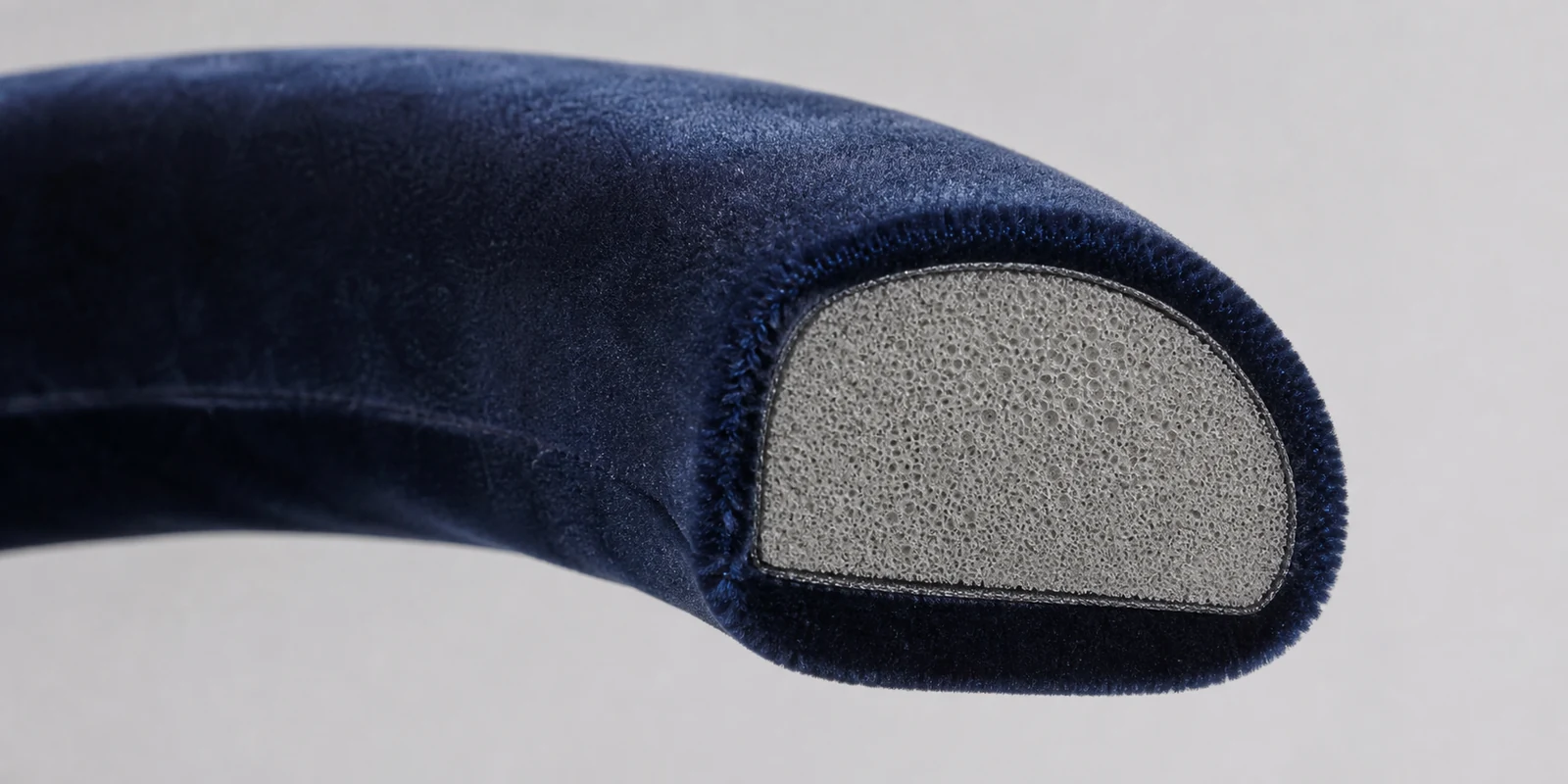
Velvet and suede padded headbands hold their finish longest when kept away from direct moisture, since both fabrics water-spot easily and the foam or wire core underneath does not dry evenly if it gets wet. A soft brush run along the nap restores velvet’s texture after it gets compressed in storage or packaging, and this alone extends the visible life of the accessory considerably. Suede benefits from a dedicated suede brush rather than a general fabric brush, since the wrong tool can flatten the nap in the opposite direction and leave visible streaking.
Storage affects the padding itself more than most buyers expect. Stacking padded headbands flat under other items crushes the core over time, particularly foam-only versions, leaving a permanent flat section that does not spring back. Storing them upright or hanging, the way they would sit in a display box, preserves the structured shape that makes the style worth wearing in the first place. This is worth communicating to retail customers directly, since improper storage is a common cause of the padding looking prematurely worn even when the fabric itself is undamaged.
Entry-tier padded headbands use foam-only cores and polyester velvet or plain fabric covers, keeping unit cost low and suiting fast-fashion price points. Mid-tier versions typically add a wire-reinforced core for better shape retention and move to a higher-density foam that resists crushing, along with a silicone grip lining as standard rather than optional.
Premium tier versions use genuine suede or leather covers, hand-finished stitching along the fabric seam, and often a fully adjustable back closure. The material and construction differences across these tiers are visible and tactile to the end consumer, which is why padding quality and fabric sourcing justify a real price gap rather than existing only as a marketing distinction. For buyers positioning a range across multiple price points, moving between tiers is largely a matter of substituting these specific components rather than redesigning the product from scratch.
Buyers developing a padded headband range can specify core material, band width, and inner lining directly through a custom hair band manufacturer rather than working from a fixed stock design, which matters given how much comfort and fit vary across the category. For brands building a full accessory range around the trend, pairing padded headbands with claw clips in matching fabrics is a common way to extend one trend across multiple SKUs without separate development cycles.
A padded headband has an internal foam or wire core covered in fabric, giving it visible volume and a structured shape that holds rather than flexing flat. A regular flat headband has no core and lies close to the head with minimal shape of its own.
The trend follows a wider return to vintage-inspired, structured hair styling, reinforced by runway coverage and a revival of understated 1990s aesthetics in celebrity style. The padded headband also solves a practical problem, adding a polished look without any actual hairstyling required underneath.
They can, particularly wire-reinforced versions worn for long periods, since a rigid core concentrates pressure at the temples. Wider bands distribute that pressure more evenly, and foam-only cores without wire reinforcement tend to be more comfortable for extended wear.
Store it upright or hanging rather than flat under other items, since stacking crushes the foam core over time and leaves a permanent flat section. Keep velvet and suede versions away from direct moisture, and brush velvet along the nap to restore texture after storage.
They work best with simpler styling underneath, such as loose waves or hair worn down, since the headband’s own volume competes with high-volume updos. Fine or freshly washed hair is more prone to slipping, which a grip-lined inner band helps prevent.
Band width and foam thickness directly affect comfort and are worth specifying rather than accepting a default. An inner grip lining and at least one adjustable-fit option per colourway meaningfully reduce return rates linked to slipping and sizing.
The padded headband earns its place in the 2026 trend cycle by solving a real styling problem: instant polish with minimal effort, backed by a vintage aesthetic currently dominating both runway and street style coverage. For buyers, the trend has turned padding depth, band width, sizing, and grip lining into genuine specification points rather than cosmetic details, and getting those right is what separates a headband that sells once from one that gets repurchased across multiple colours.
Manufacturers such as JunYi Beauty, which produces padded and structured headbands alongside a full range of hair accessories at its Dongguan facility under ISO 9001:2015 and amfori BSCI certification, offer the material variety and construction control needed to build a padded headband range that holds up to the comfort and fit standards this trend now demands.
👉 Searching for Hair Accessories ? Your brand deserves the best.