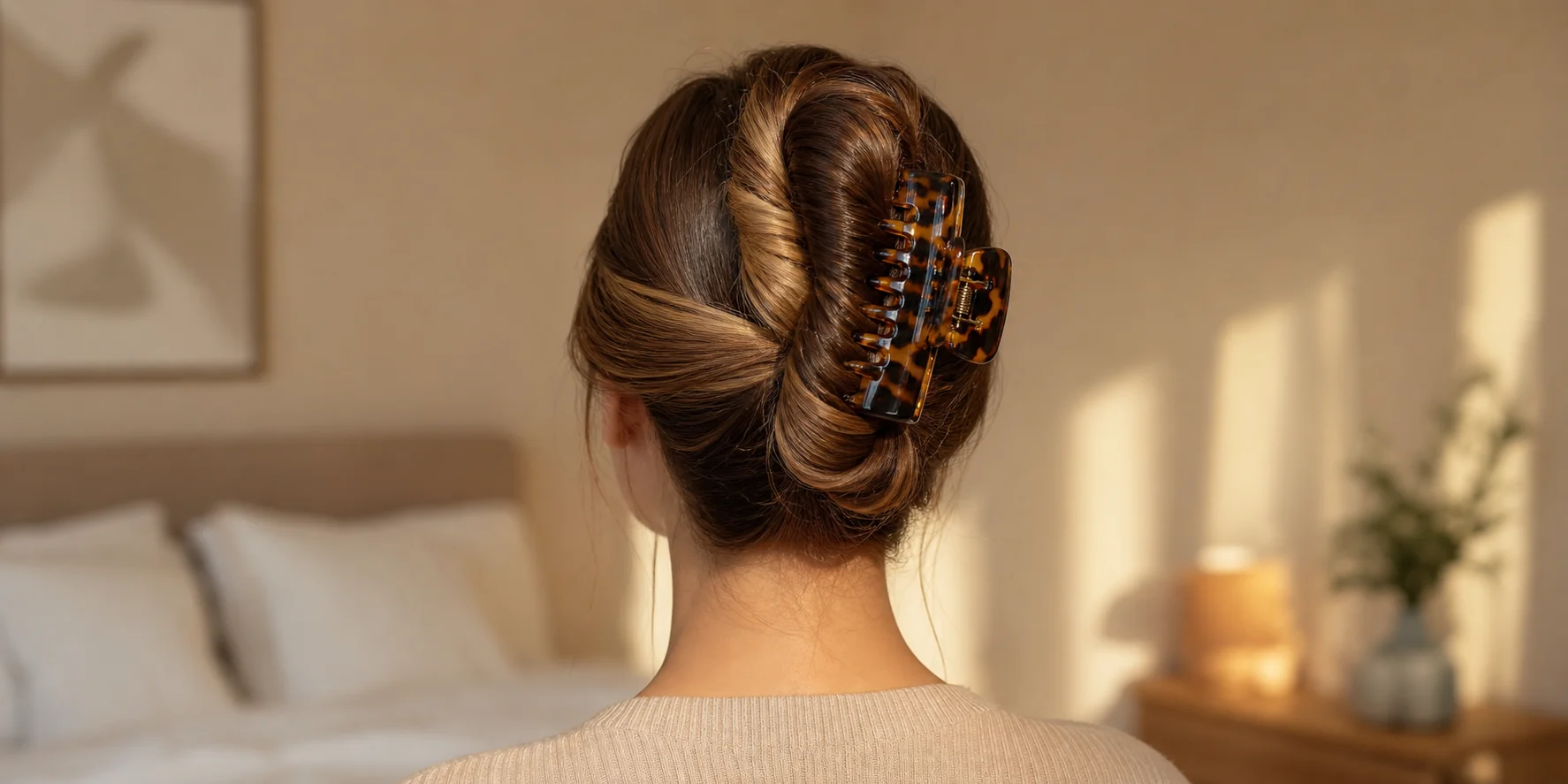
Heatless curls with a claw clip is a styling method that creates soft waves overnight by twisting damp hair into a rope, coiling it at the crown, and securing it with a large claw clip instead of a curling iron or hot rollers.
Most attempts fail for one of three reasons: the hair was too wet, the twist was too loose, or the clip was the wrong size. Fix those three variables and the method works almost every time, without a single degree of heat touching your hair.
This tutorial covers the full method, how it compares with other heatless techniques, the adjustments for your hair type, product and clip choices that affect the result, and what the trend means if you’re sourcing claw clips.
Why Heatless Curling Works
Curls set thermally when heat softens the hydrogen bonds in a hair strand, letting it reshape around a barrel and hold that shape as it cools. The claw clip method achieves something similar without heat, using time and moisture instead.
When you twist damp hair and let it finish drying inside a coil, the hair sets in that twisted shape as the water evaporates. The mechanism is mechanical, not thermal, which is exactly why it avoids the cuticle damage repeated hot tool use causes.
This is also why timing matters. Hair too wet has not finished drying by morning, so the set never locks in. Hair too dry has nothing left to reshape. The 70 to 80 percent dry window is the point where enough moisture remains to reshape but not so much that overnight drying becomes unrealistic.
Claw Clip Method vs Other Heatless Techniques
The claw clip coil is one of several heatless curling methods, and each suits a different hair length and effort level.
Braiding damp hair into one or more plaits produces tighter, more defined waves and works well on any length, but takes longer to set up and needs the braid fully undone in the morning. Twist-and-pin with bobby pins gives similar results to the claw clip method but requires ten or more pins rather than one clip, and suits shorter hair where a full coil is not practical.
Foam or fabric rollers give the most uniform curl pattern of any heatless method but cost more, take longer to place, and can feel uncomfortable to sleep in for some people. The claw clip method sits in the middle: faster to set up than rollers, less fiddly than multiple bobby pins, and requires only one accessory most people already own.
What You Need
The list is short. Each item still changes the result.
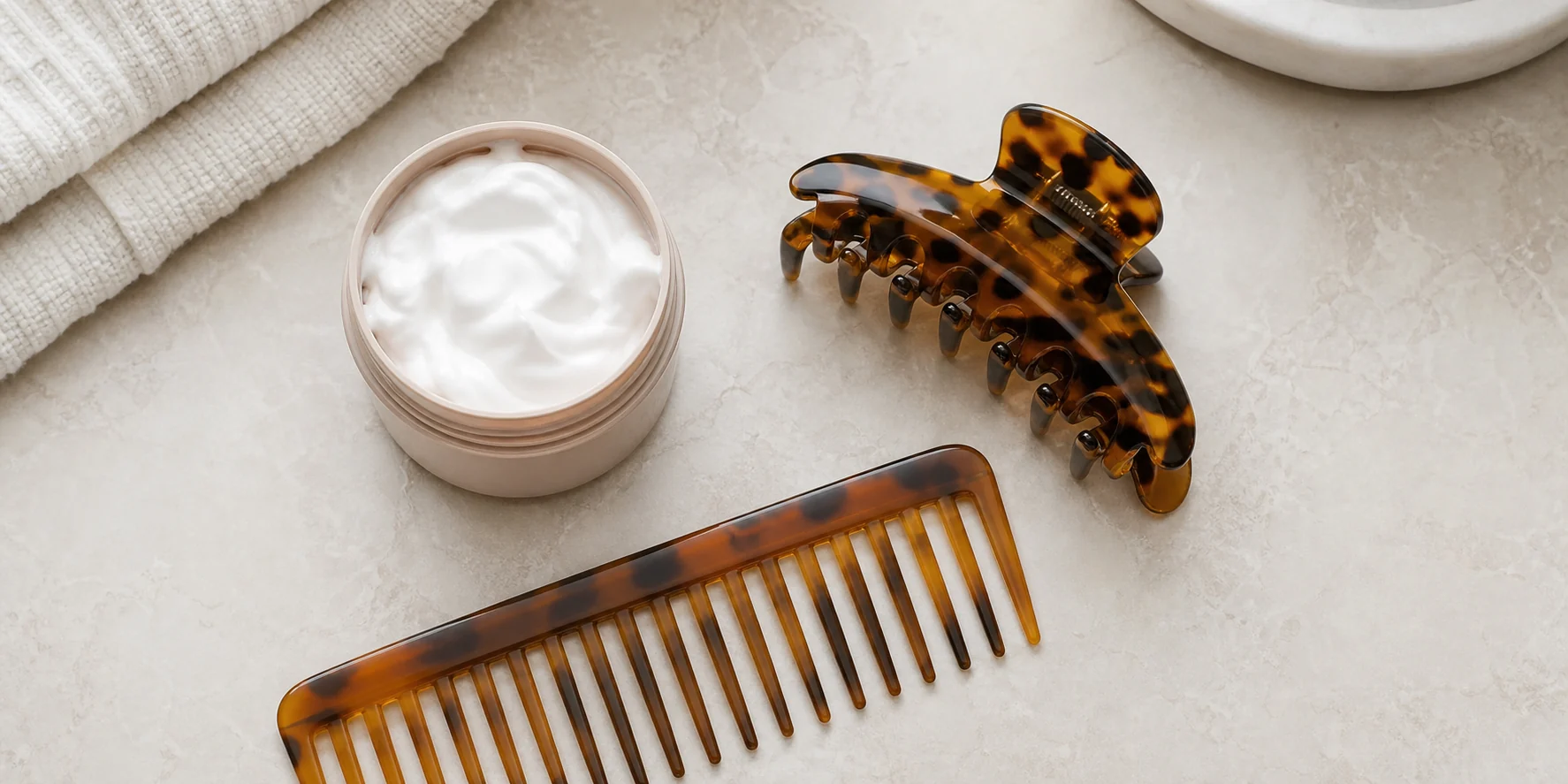
- A large claw clip, 9 to 11 cm. It needs to close fully around your coiled hair without straining the spring. Too small, and it creases your hair or pops open at 3am. A quality large-format clip from an established claw clip manufacturer has the spring tension this method depends on.
- Damp hair, not wet. Aim for 70 to 80 percent dry. Soaking wet hair will not dry overnight inside a coil, and you will wake up to a damp, misshapen knot instead of a set.
- A light-hold product. Mousse, styling cream, or curl cream applied before twisting improves definition and next-day hold. Skip it if your hair holds a wave naturally without help.
- Optional: a silk or satin scrunchie. Wrap it under the clip to soften the crease point if your hair dents easily at the base.
- Optional: a wide-tooth comb. Detangling with a wide-tooth comb rather than a brush before twisting keeps the hair smoother going into the coil.
Step-by-Step Overnight Method
- Start with damp hair. Air dry until 70 to 80 percent dry, or mist dry hair lightly. Add product from mid-length to ends, keeping it off the roots.
- Brush through and gather high. Detangle fully first. Gather all your hair at the crown, roughly where a high ponytail sits. The higher you gather, the more root lift you get.
- Twist into a rope. Twist the full length consistently in one direction until it coils back on itself. Tighter gives springier waves; looser gives soft bends.
- Coil it flat. Wrap the twisted rope around its own base in a flat spiral, close to your head rather than piled high.
- Clip the whole coil. Open the clip fully and close it over the entire coil. It should close without force. If the spring strains, split into two coils with two clips instead.
- Check your sleep position. The coil sits above the pillow line for most sleepers. If you feel the clip pressing, shift it slightly forward.
- Release in the morning. Unwind gently, flip your head over, and separate waves with your fingers. Skip the brush, it pulls the fresh set straight.
Adjustments for Your Hair Type
The core method stays the same across hair types. What changes is twist tension, coil count, and how much product you use.
| Hair Type / Length | Adjustment | Expected Result |
|---|---|---|
| Fine hair | Lighter product, looser twist | Soft volume and bend |
| Thick hair | Split into two ropes, two clips | Even waves throughout |
| Long hair (waist+) | Twist tighter, coil flatter | Strongest waves mid-length to ends |
| Shoulder length | Gather lower if crown coil is too short | Bend and body, not full curls |
| Wavy base (2A–2C) | Minimal product, standard method | Enhanced, more uniform pattern |
| Colour-treated | Smooth clip teeth, moderate tension | Standard result, lower stress |
If your hair sits between two categories, treat the volume adjustment as the priority. Splitting into two coils solves more problems than any other single change.
Common Mistakes and How to Fix Them
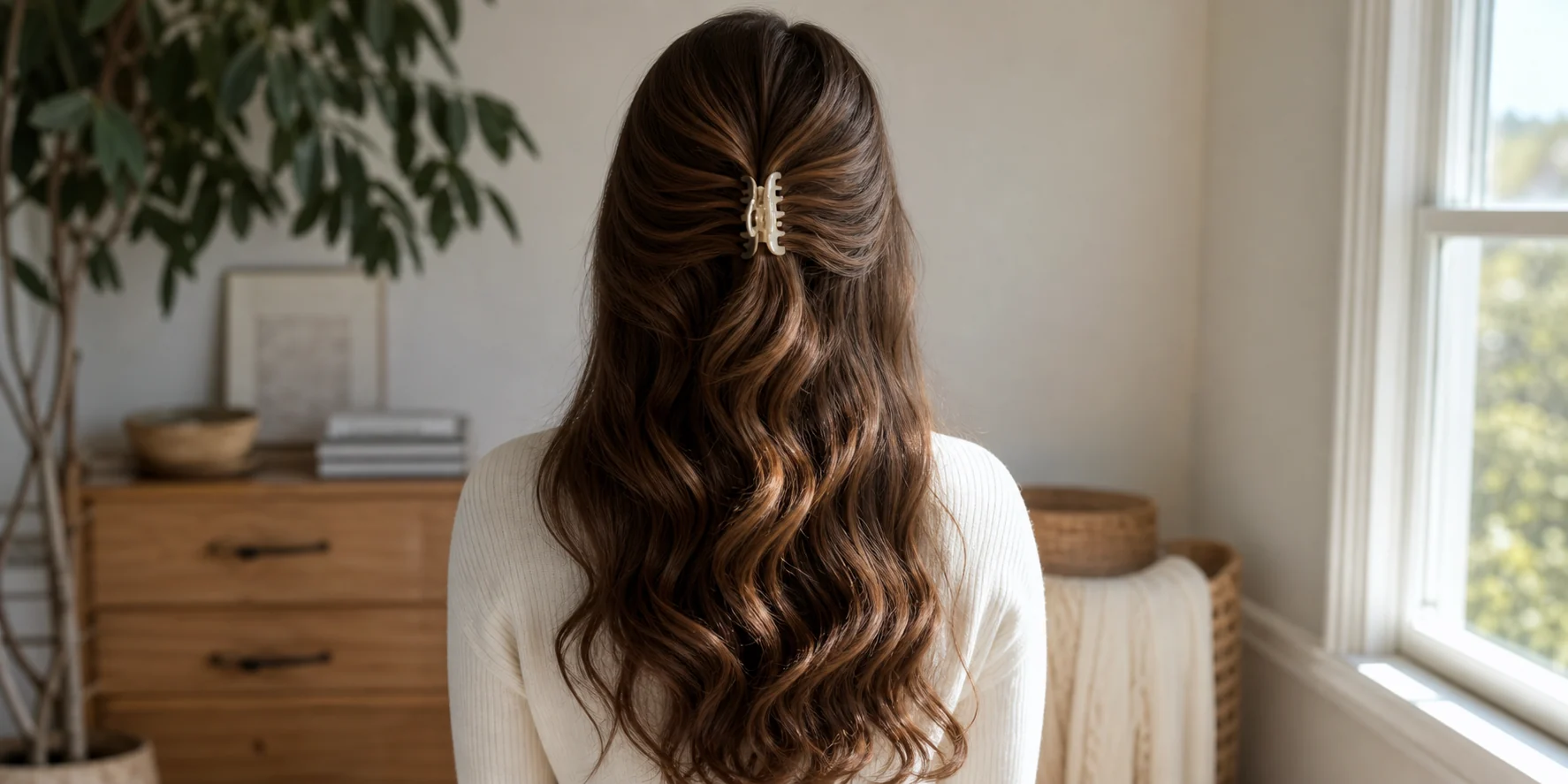
If your waves fell out by midday, your hair was too dry going in, or you skipped product on hair that needs hold. Start damper and add a light mousse.
If your hair was still wet in the morning, it was too wet going in, or the coil itself was too dense for air to reach the centre. Split thick hair into two coils rather than one.
If you see a visible dent at the clip point, the clip was too small for the volume it held. Size up, or cushion the base with a scrunchie before clipping.
If the clip popped open overnight, your hair volume exceeded its jaw capacity. That is a sizing issue rather than a technique issue.
If your waves look uneven, check that you twisted both sides with the same tension and gathered an equal amount of hair into the coil. Uneven gathering is the most common cause of lopsided results.
One honest note belongs here: rigid clips are not generally recommended for sleeping when they sit under your head, a point covered in more detail in this guide to hair ties and breakage. This method works around that by keeping the clip at the crown, above the pillow contact zone. If you still feel it pressing, the same twist-and-coil works secured with a soft scrunchie instead.
Making the Waves Last Beyond Day One
A silk or satin pillowcase reduces the friction that flattens waves overnight on cotton, extending the set into a second night without redoing anything. Avoiding a brush entirely, even on day two, keeps the wave pattern intact, since brushing separates curls into frizz rather than defined waves.
Refreshing the style on day two takes less effort than starting over. Re-twisting just the front, face-framing sections for the last hour before you leave restores definition where it fades first.
A small amount of dry shampoo at the roots on day two also helps, since it absorbs the oil that makes second-day waves look flatter than they did that morning.
Why This Trend Keeps Growing
Heat damage awareness has moved from professional salon advice into mainstream consumer habit. Heatless methods that deliver comparable results with a one-time accessory purchase rather than an electrical appliance benefit directly from that shift, summarised in published overviews of heat damage and hair health.
For the accessories market, this trend turns a claw clip from a holding product into a styling tool. A buyer who adopts this method uses the same clip far more often than someone wearing it only for daytime hold, and specific attributes start to matter more: jaw capacity for a full coil, spring durability under nightly cycles, and smooth teeth that release the coil without snagging.
What This Means If You’re Sourcing Claw Clips
- Large formats carry the trend. The 9 to 11 cm jaw sizes are the functional requirement for this method. A range built only around small fashion sizes misses this styling-use buyer entirely.
- Spring specification becomes a quality claim. Nightly use multiplies open-close cycles compared with occasional daytime wear. Spring steel grade and hinge construction determine how long the product survives.
- Tooth finish affects returns as much as marketing. Moulding seams and sharp tooth edges snag twisted hair. Smooth-finished acetate sits in the premium tier for this reason.
- Bundling makes commercial sense. A large claw clip plus a silk scrunchie covers the complete method in a single purchase, a natural pairing for brands carrying both categories.
If you’re developing a dedicated heatless styling line, jaw dimensions, spring tension, and surface finishing can be specified directly through OEM and ODM hair accessories manufacturing, rather than accepted as-is from a stock catalogue.
Frequently Asked Questions
How do you do heatless curls with a claw clip?
Start with hair 70 to 80 percent dry, gather it high at the crown, twist the full length into a rope, coil the rope around its base, and secure the whole coil with a large claw clip. Sleep with it in place and separate the waves with your fingers in the morning.
Should hair be wet or dry for claw clip curls?
Damp, not wet. Around 70 to 80 percent dry works best: damp enough to reshape as it finishes drying, dry enough to actually finish drying inside the coil overnight.
What size claw clip is best for heatless curls?
Large formats in the 9 to 11 cm range suit most medium to long hair. If the jaws sit wide open or the clip pops off overnight, it is too small for your hair volume, so split into two coils with two clips.
Is it safe to sleep with a claw clip in your hair?
Positioned at the crown, yes, since that keeps it above the pillow contact zone for most sleepers. If you still feel pressure regardless of position, secure the same twisted coil with a soft scrunchie instead.
How long do claw clip curls last?
Typically one to two days, depending on hair type and product used. Fine, straight hair holds the set for a shorter time; textured hair holds it longer. A light mousse before twisting extends hold noticeably.
What should buyers look for in claw clips for heatless curling?
Jaw capacity large enough to close over a full coiled rope, spring and hinge construction rated for daily cycles, and smooth tooth finishing that releases hair without snagging. These can be specified directly through OEM programmes rather than accepted from stock.
Conclusion
The method comes down to three variables you control: moisture level, twist tension, and clip size. Get those right and it works almost every time, no heat and no equipment beyond a clip built for the job. Most failed attempts trace back to one of these three variables rather than a flaw in the method itself.
For brands building claw clip ranges around this use case, manufacturers such as JunYi Beauty, which produces acetate claw clips across the full size spectrum alongside silk and satin scrunchies at its Dongguan facility under ISO 9001:2015 and amfori BSCI certification, offer the product breadth and specification control that heatless styling lines require.