Home
Product
Contact
Odm/Oem
About
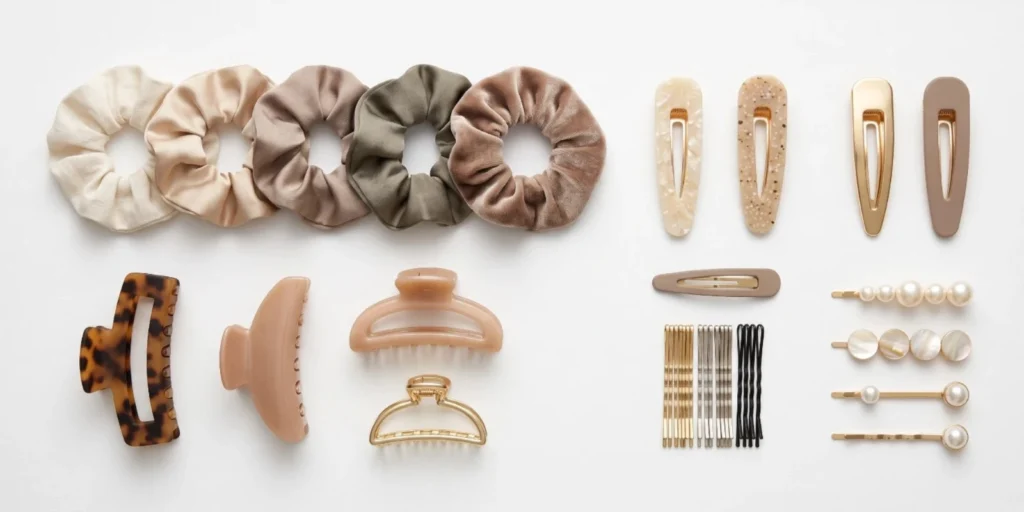
White label hair accessories are finished products manufactured to a standard specification and made available to multiple buyers who apply their own branding — typically a logo or packaging design — without modifying the product itself. Private label hair accessories are products developed or customised exclusively for a single buyer, incorporating specifications such as proprietary materials, colourways, shapes, or structural features that distinguish the product from anything available to other buyers. While both models allow brands to sell hair accessories under their own name, the degree of product control, the investment required, and the resulting market positioning differ substantially between the two approaches.
This guide examines both sourcing models across product control, manufacturing process, cost structure, and suitability for different business types — with a focus on helping B2B buyers evaluate which model fits their brand strategy and category.
White label in the hair accessories context refers to a manufacturing model where a supplier produces a standardised product — for example, a basic acetate claw clip or a velvet scrunchie — and makes it available to any buyer who meets the minimum order quantity. The product design, material selection, and manufacturing specification are determined by the supplier, not the buyer. The buyer’s contribution is branding: a logo applied to the product surface, a custom hang tag, a branded polybag, or custom outer packaging.
White label products are sometimes referred to as stock products, generic products, or off-the-shelf products with custom branding. The key characteristic is that the product itself is not exclusive — the same item may be available to competing brands through the same or other suppliers.
Common white label hair accessory formats include:
Private label in hair accessories refers to a manufacturing model where a buyer works with a supplier to develop a product — or a range of products — that is manufactured exclusively for that buyer’s brand. The buyer controls one or more product parameters: the specific material or material blend, the colour or finish, the structural geometry (clip jaw width, scrunchie fabric ratio, headband curvature), surface texture, embossing pattern, or hardware specification.
Private label products may begin from an existing supplier mould or base material, with modifications made to suit the buyer’s brief — or they may involve entirely new tooling developed to produce a shape or form not previously available from the supplier’s standard range. In either case, the resulting product is exclusive to the commissioning buyer and cannot be sold by the supplier to competing brands.
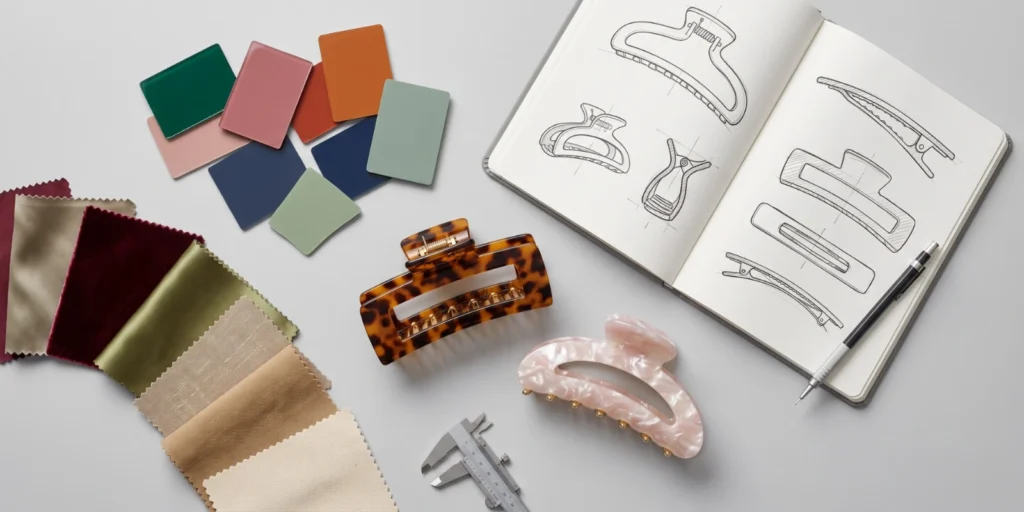
Private label hair accessories sourced from custom hair clip manufacturers with established mould libraries typically offer lower tooling costs than fully bespoke manufacturing, as modifications to an existing mould are less expensive than commissioning an entirely new one.
The distinction between white label and private label centres on product exclusivity, development involvement, and the degree of brand differentiation each model enables. The following table outlines the primary differences across key criteria:
| Criteria | White Label | Private Label |
|---|---|---|
| Product exclusivity | Non-exclusive — available to any buyer | Exclusive to the commissioning brand |
| Design control | None — supplier determines product spec | Partial to full — buyer controls spec |
| Branding scope | Logo, packaging, hang tag only | Product form, material, colour, and packaging |
| Tooling investment | None required | Mould fees or modification costs apply |
| MOQ | Lower — typically 100–500 units per SKU | Higher — typically 300–2,000+ units per SKU |
| Lead time | Short — 2–4 weeks from order | Longer — 6–14 weeks including sampling |
| Unit cost | Slightly higher per unit at low volume | Lower per unit at scale |
| Market differentiation | Limited — product identical to competitors | High — product is brand-exclusive |
| Risk level | Low — no development cost exposure | Medium — tooling and sampling investment upfront |
| Best suited for | New brands, fast market entry, low capital | Established brands, product-led differentiation |
The level of product control available under each model is the most operationally significant difference for B2B buyers evaluating sourcing strategy.
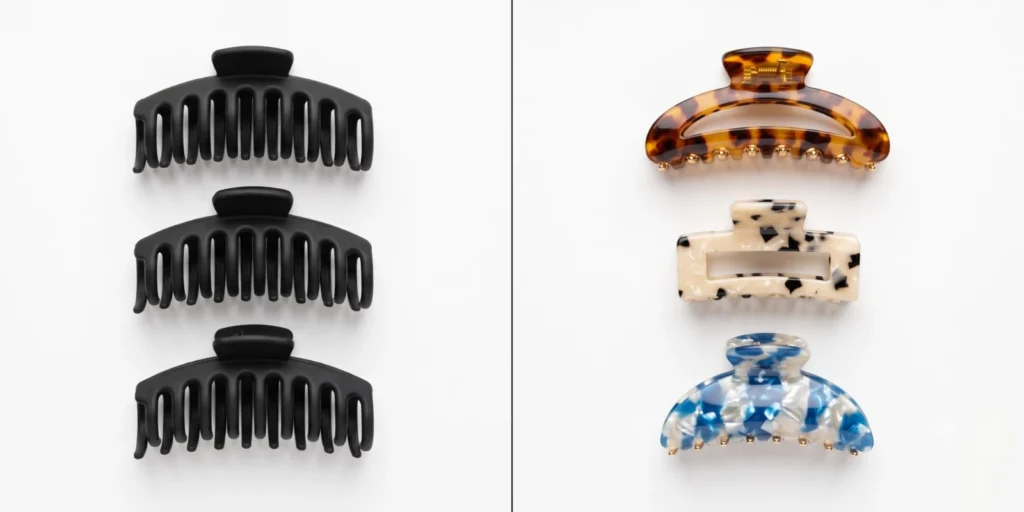
Under a white label arrangement, customisation is confined to surface branding and packaging. A buyer sourcing white label claw clips can specify the logo placement and finish — embossed, debossed, printed, or foil-stamped — and can select from the supplier’s existing colour range, but cannot alter the clip’s jaw mechanism, material composition, or structural profile. Two brands sourcing the same white label product from the same supplier will sell functionally identical items distinguished only by their packaging.
Private label allows buyers to specify the product at a deeper level. For a claw clip, this might include the acetate sheet thickness and pattern, the jaw opening angle, the number and pitch of teeth on the inner surface, and the surface finish — matte, gloss, or textured. For a scrunchie, it might include the fabric composition, the elastic gauge, the seam finish, and the fabric-to-elastic ratio that determines the final drape and volume when worn. These specifications define the product’s performance characteristics and aesthetic identity, creating a meaningful differentiation from generic alternatives in the same category.
The commercial parameters of white label and private label sourcing differ in ways that significantly affect cash flow, inventory planning, and brand launch timelines.
White label hair accessories typically carry lower minimum order quantities than private label equivalents, because no tooling or development work is required before production can begin. MOQs for white label claw clips, scrunchies, and barrettes commonly begin at 100 to 500 units per SKU, depending on the supplier and product complexity. Lead times are correspondingly short — many white label orders can be produced and shipped within two to four weeks of order confirmation, as the product specification is already fixed and materials are held in supplier inventory.
Private label MOQs are higher because the production run must offset the fixed costs of tooling, sampling, and any material or process setup specific to the buyer’s specification. MOQs typically begin at 300 to 500 units per SKU for modifications to existing moulds, and rise to 1,000 units or more for entirely new tooling. Lead times range from six to fourteen weeks depending on the extent of development required — a colour modification to an existing mould is faster than a new structural form requiring new tooling and multiple sample rounds. Buyers sourcing custom acetate claw clips or custom hair scrunchies under a private label arrangement should plan for the full sampling cycle in their launch timelines.
Neither white label nor private label is universally superior — the appropriate model depends on the buyer’s brand stage, category strategy, and capital position.
The terms OEM (Original Equipment Manufacturer) and ODM (Original Design Manufacturer) are frequently used alongside white label and private label, and the distinctions are worth clarifying for buyers evaluating supplier relationships.
OEM manufacturing refers to a model where the buyer provides the product specification and the manufacturer produces to that specification. This aligns closely with private label — the buyer controls the design, the manufacturer executes it. ODM manufacturing refers to a model where the manufacturer provides an existing design that the buyer can adopt, modify, or brand. This aligns more closely with white label, though ODM can also support private label when the buyer modifies an existing ODM design for exclusive use.
In practice, most hair accessories manufacturers operate across both models — offering stock products for white label branding and OEM development capability for private label programmes. Buyers working with OEM and ODM hair accessories manufacturers should clarify at the outset whether the products under discussion are exclusive to their brand or available to other buyers through the same supplier.
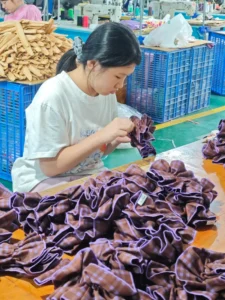
Quality management and supplier certification requirements apply across both white label and private label sourcing, though the points of risk differ between the two models.
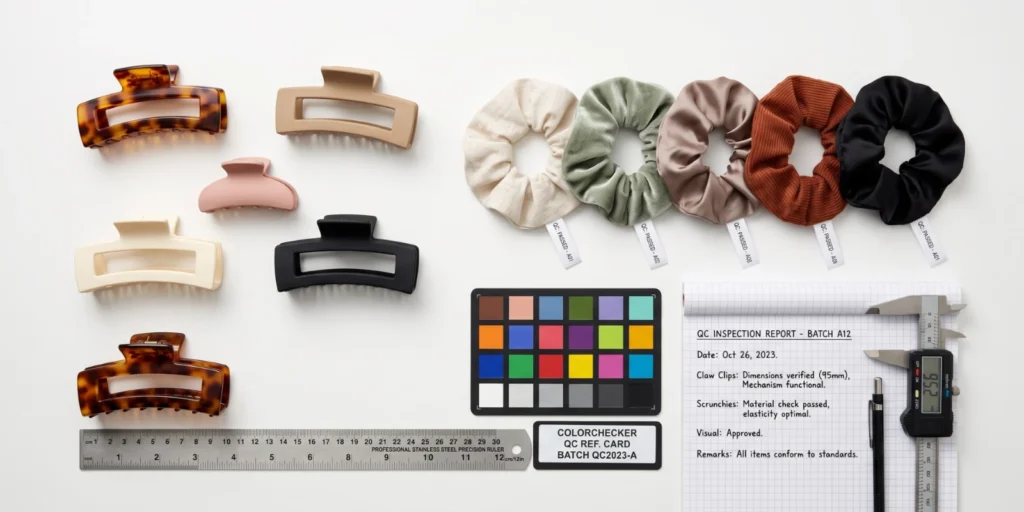
For white label sourcing, the primary quality risk lies in the consistency of the supplier’s standard product — since the buyer has no control over material specification, batch-to-batch variation in colour, finish, or dimensional accuracy is a supplier-side responsibility. Buyers should request product specification sheets and quality control documentation for any white label product before placing first orders.
For private label sourcing, quality risk is distributed across the development and production phases. Material approval, prototype review, pre-production sample sign-off, and in-line inspection are all stages at which the buyer’s specification can diverge from the final product if not properly managed. Buyers should establish written sign-off procedures at each stage and confirm that the supplier’s quality system is certified to ISO 9001:2015 or equivalent.
For products destined for regulated markets — particularly the EU, UK, and US — both white label and private label sourcing require compliance verification for chemical content (REACH), nickel release (EN 1811 for metal accessories), and, where applicable, flammability standards for fabric-based products such as scrunchies and headbands.
Q: What is the main difference between white label and private label hair accessories?
White label hair accessories are standard products made by a supplier that any buyer can brand with their own logo and packaging — the product itself is not exclusive. Private label hair accessories are developed to a buyer’s specification and manufactured exclusively for that brand, giving the buyer control over product design, materials, and features that competitors cannot access through the same supplier.
Q: Which is better for a new hair accessories brand — white label or private label?
White label is generally more suitable for new brands because it requires no tooling investment, carries lower MOQs, and has shorter lead times. This allows a brand to enter the market, test product-market fit, and build sales volume before committing the capital and development time required for private label. Private label becomes more advantageous once a brand has identified which products perform best and has the volume to justify exclusive development.
Q: Can a supplier sell the same product to my competitors under a white label arrangement?
Yes. Under a white label arrangement, the product is not exclusive — the same or functionally identical product can be sold by the supplier to any other buyer. Only private label products, developed to a buyer’s exclusive specification and covered by an exclusivity agreement, are protected from being available to competing brands through the same supplier.
Q: What MOQ should buyers expect for private label hair accessories?
MOQs for private label hair accessories vary by product type and the extent of customisation required. Modifications to an existing supplier mould — for example, a new colour or texture on an existing claw clip form — typically carry MOQs beginning at 300 to 500 units per SKU. Products requiring new tooling typically carry MOQs beginning at 1,000 units per SKU, reflecting the need to amortise mould costs across the production run.
Q: How long does private label development take for hair accessories?
Private label development timelines for hair accessories typically range from six to fourteen weeks from brief confirmation to production-ready approval, depending on the complexity of the specification. Simple colour or finish modifications to an existing mould can be sampled within two to three weeks. New structural forms requiring original tooling and multiple sample rounds typically require ten to fourteen weeks before production can begin.
Q: What is the difference between OEM and private label in hair accessories?
OEM (Original Equipment Manufacturer) describes the manufacturing model — the buyer provides the specification and the manufacturer produces to it. Private label describes the commercial arrangement — the product is developed and manufactured exclusively for the buyer’s brand. In practice, private label hair accessories are typically produced under an OEM manufacturing model, where the buyer’s specification drives the production brief.
White label and private label represent two distinct approaches to building a hair accessories brand, each suited to a different stage of business development and a different level of product investment. White label offers faster market entry, lower capital commitment, and simpler sourcing logistics at the cost of product exclusivity. Private label offers brand-defining product differentiation and long-term competitive protection at the cost of higher development investment and longer lead times. For many brands, the most practical path is to begin with white label to establish market presence and cash flow, then transition priority SKUs to private label as volume and brand positioning warrant the investment. Manufacturers such as JunYi Beauty, which supports both white label branding and full private label OEM development from its Dongguan facility under ISO 9001:2015 and amfori BSCI certification, represent the type of integrated supplier suited to brands at either stage of this progression.
👉 Searching for Hair Accessories ? Your brand deserves the best.