Home
Product
Contact
Odm/Oem
About
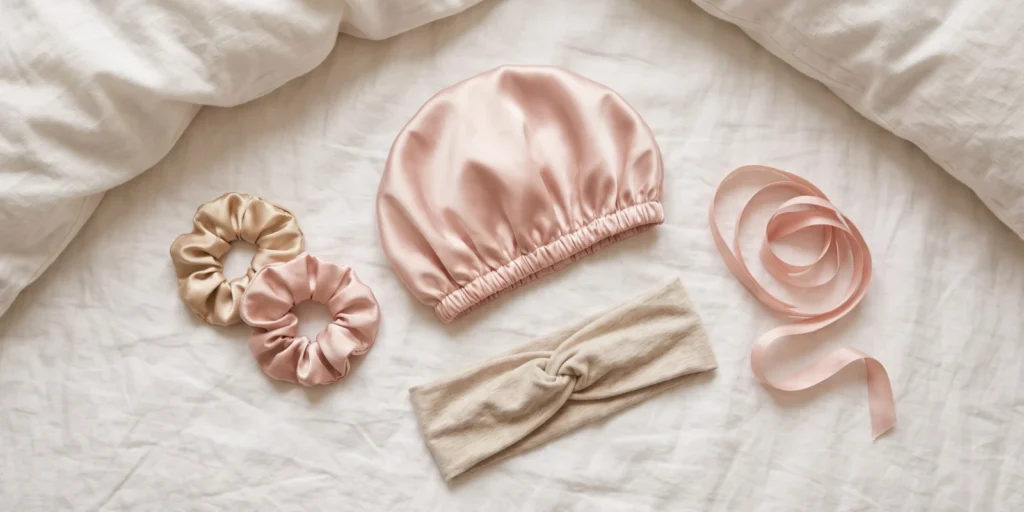
Hair accessories for sleeping are products designed to secure, protect, or contain hair overnight while minimising the friction, tension, and compression that cause breakage, tangling, and frizz during sleep. Unlike daytime accessories, which prioritise hold strength and visible styling, sleep accessories prioritise low-tension hold, smooth contact surfaces, and materials that reduce moisture loss from the hair shaft. The category spans silk and satin scrunchies, sleep bonnets, protective headbands, braid ties, and specialised overnight curl accessories.
This guide examines the main types of sleep-friendly hair accessories, the materials that determine their protective performance, and the selection criteria relevant to both end users and B2B buyers developing overnight hair care product lines.
Hair is subjected to a distinct set of mechanical stresses during sleep. Repeated head movement against a pillowcase generates friction along the hair shaft, lifting the cuticle and producing frizz and surface damage over time. Hair secured under tension — in a tight elastic tie, for example — experiences sustained pulling force at the anchor point for six to eight hours, concentrated on the same section of hair night after night.
Additionally, cotton bedding absorbs moisture from hair during the night, leaving hair drier and more brittle by morning — an effect that compounds for curly, coily, and chemically treated hair types that are already prone to dryness.
Sleep-specific accessories address these three mechanisms directly:
Silk and satin scrunchies are the most widely used sleep hair accessory, and for most hair types the most effective single product for overnight protection. The scrunchie format wraps the elastic core in a generous volume of fabric, distributing hold pressure across a wide contact area rather than concentrating it at a single point the way a bare elastic band does.
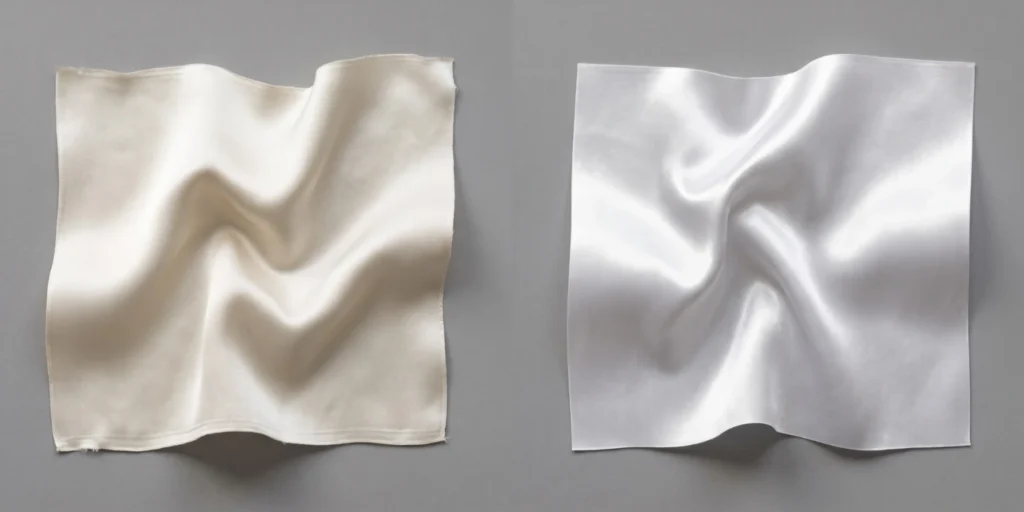
The material distinction matters for performance and for product positioning:
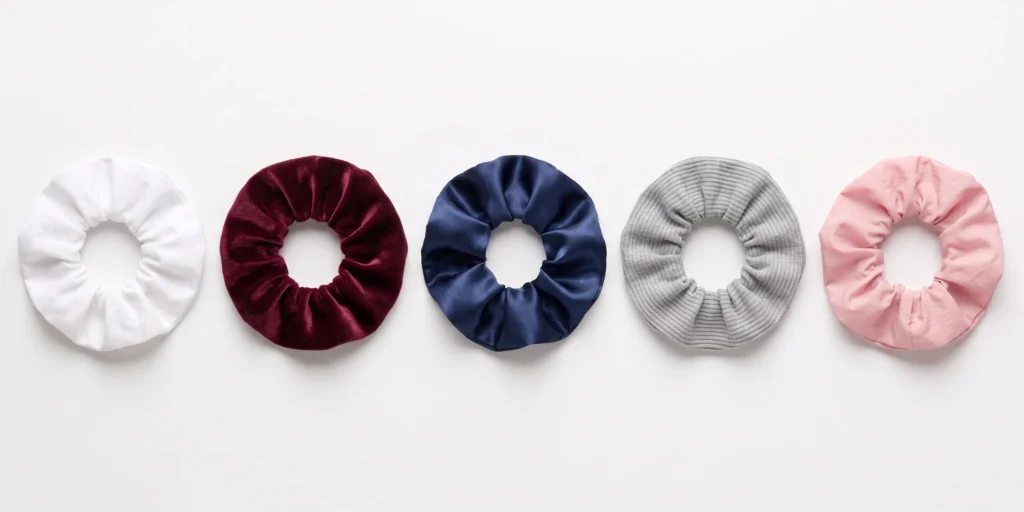
For a detailed comparison of the two materials, including fibre properties, care requirements, and sourcing considerations, see the guide to velvet vs satin scrunchies. Brands developing sleep-focused lines typically source from a custom hair scrunchie manufacturer capable of producing both genuine silk and polyester satin variants to serve premium and mass-market tiers within the same range.
Sleep bonnets fully enclose the hair, providing the most complete protection available in the category. Rather than securing hair at a single point, a bonnet contains the entire hair mass within a smooth-lined enclosure, eliminating pillowcase friction across the full surface of the hair.
Bonnets are particularly relevant for:
Construction quality in bonnets centres on three specifications: the lining material (silk or satin charmeuse), the edge band design (a soft, wide elastic band that holds without leaving a pressure line on the forehead), and the crown volume (sufficient internal space for long or high-volume hair without compression). Double-layer construction — satin inside, breathable outer shell — is the standard specification in the mid-to-premium retail tier.
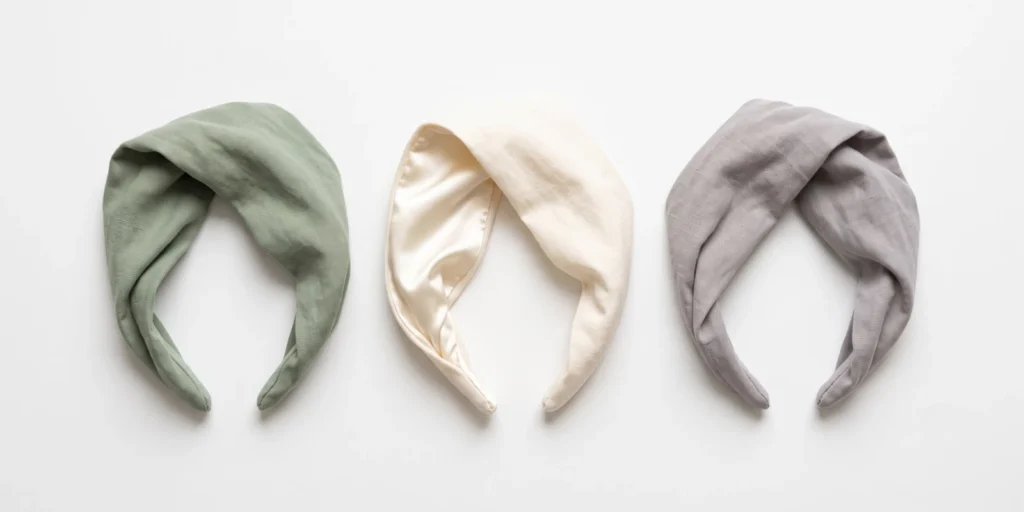
Soft fabric headbands serve a boundary function during sleep — keeping hair off the face and containing shorter front sections that cannot be gathered into a scrunchie. For sleep use, the relevant specifications differ from daytime headbands: no teeth or grip ridges, no rigid core, a wide flat profile that does not create pressure points, and a smooth lining where the band contacts the hairline.
Braid accessories occupy a complementary niche. Loose braiding is one of the most widely recommended overnight hair configurations, and the tie that secures the braid end matters — a small silk or satin-covered tie, or a coil-free spiral tie, secures the braid tail without creasing or crimping the hair. Fabric-covered hair bands designed with low-tension elastic cores are the standard product format for this application.
Product selection for overnight use is as much about exclusion as inclusion. Several common daytime accessories cause measurable damage when worn during sleep:
The following table summarises the main sleep accessory formats and their suitability by hair type:
| Accessory | Best For | Key Material Spec | Protection Level |
|---|---|---|---|
| Silk scrunchie | All hair types, loose buns and braids | 19–22 momme mulberry silk | High |
| Satin scrunchie | All hair types, budget-conscious buyers | Polyester satin, smooth weave | Medium–high |
| Sleep bonnet | Curly, coily, braided, treated hair | Satin or silk lining, soft edge band | Highest |
| Soft headband | Short hair, face-framing sections | No rigid core, smooth lining | Medium |
| Coil / spiral tie | Braid ends, fine hair | Smooth TPU coil, no metal join | Medium–high |
| Bare elastic band | Not recommended for sleep | — | Low |
The sleep hair accessories segment has grown alongside broader consumer attention to hair health, and it presents distinct product development considerations for brands and retailers building overnight lines.
The performance claims in this category rest on material authenticity. “Silk” scrunchies made from polyester satin are widespread in the market, and the price difference between the two materials is substantial. Buyers sourcing genuine silk products should request fibre composition documentation and, for premium positioning, momme weight specification. Research on hair damage mechanics supports the friction-reduction claims associated with smooth fibres — background on this is summarised in published overviews of silk’s effects on hair and skin — but the benefit depends on the actual fibre used, not the product name.
Sleep accessories maintain prolonged skin contact — typically six to eight hours nightly — which raises the relevance of chemical compliance beyond that of daytime accessories. For EU and UK distribution, dyed fabrics should be verified against REACH restricted substance requirements, and OEKO-TEX Standard 100 certification on fabric inputs is an increasingly common retailer requirement in this segment.
Most successful sleep accessory ranges pair a premium silk tier with a satin volume tier, sharing construction specifications across both. This allows a single set of tooling and sewing patterns to serve two price points, with fabric input as the primary cost variable.
Q: What is the best hair accessory to sleep in?
For most hair types, a silk or satin scrunchie securing hair in a loose braid or high loose bun offers the best balance of protection and practicality. For curly, coily, braided, or chemically treated hair, a satin-lined sleep bonnet provides the most complete protection, as it eliminates pillowcase friction across the entire hair surface rather than only securing the hair in place.
Q: Is it better to sleep with hair up or down?
Loosely contained hair generally experiences less overnight damage than fully loose hair, which is free to tangle and rub against the pillowcase. The key qualifier is tension — hair should be secured loosely, in a soft braid or a loose bun with a fabric-wrapped scrunchie, never in a tight ponytail. Fully loose hair on a silk or satin pillowcase is a reasonable alternative for short hair or those who find any overnight containment uncomfortable.
Q: Are satin scrunchies as good as silk for sleeping?
Polyester satin replicates most of the friction-reduction benefit of silk at a substantially lower price, because the smooth weave surface — rather than the fibre itself — provides the majority of the low-drag contact behaviour. Genuine silk adds natural temperature regulation and lower moisture absorption. For most consumers the practical difference is modest; for premium product positioning and sensitive or highly porous hair, genuine mulberry silk remains the higher-specification choice.
Q: Can sleeping in a claw clip damage hair?
Sleeping in a claw clip is not recommended. The rigid frame and teeth create pressure points against the scalp under head weight, and hair bends sharply around the hard edges of the clip throughout the night, concentrating mechanical stress at those points. Claw clips are designed for daytime wear; overnight hold should come from soft, flexible formats such as fabric scrunchies or bonnets.
Q: What should buyers check when sourcing silk sleep accessories?
The primary verification points are fibre authenticity and fabric weight. Genuine mulberry silk should be documented by fibre composition certificates, with momme weight specified — 19 to 22 momme is the standard range for sleep accessories. Buyers should also confirm OEKO-TEX Standard 100 certification on dyed fabrics, given the prolonged skin contact involved in overnight wear, and request physical samples to verify seam quality and elastic tension before committing to production quantities.
Q: What MOQ applies to custom sleep hair accessories?
MOQs for custom sleep accessories follow standard fabric accessory patterns. Satin scrunchies and headbands in stock fabrics typically begin at 100 to 300 units per colourway. Genuine silk products carry higher minimums — typically 300 to 500 units — reflecting fabric procurement requirements. Custom-dyed fabrics in either material add dye-lot minimums, typically raising the effective MOQ to 500 to 1,000 units per custom colour.
The best hair accessories for sleeping share three characteristics: smooth low-friction contact surfaces, low-tension hold, and materials appropriate for prolonged skin contact. Silk and satin scrunchies serve as the versatile core of the category, sleep bonnets provide maximum protection for high-vulnerability hair types, and soft headbands and braid ties address specific containment needs. The accessories to exclude — bare elastics, rigid clips, and high-tension styles — matter as much as the products chosen.
For brands developing overnight hair care lines, the category rewards material authenticity and construction quality, as the product claims are directly verifiable by the end user’s experience. Manufacturers such as JunYi Beauty, which produces silk and satin scrunchies, soft headbands, and fabric hair accessories at its Dongguan facility under ISO 9001:2015 and amfori BSCI certification, represent the type of factory-direct partner suited to brands building sleep accessory ranges across both premium and volume tiers.
👉 Searching for Hair Accessories ? Your brand deserves the best.