Home
Product
Contact
Odm/Oem
About
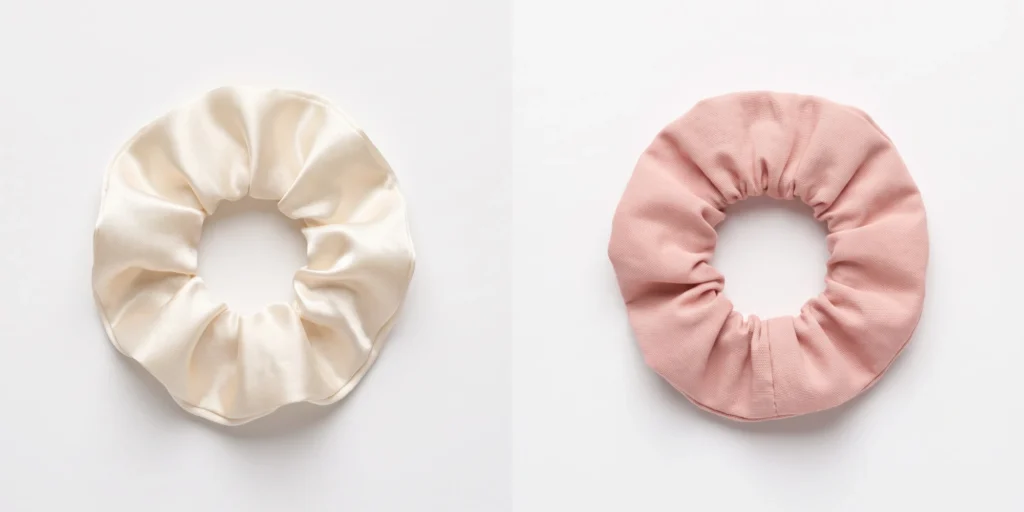
A silk scrunchie is a hair fastening accessory constructed with an outer fabric casing made from silk or silk-like material — typically mulberry silk, charmeuse, or satin-weave silk — encasing an elastic band core, designed to secure hair with minimal surface friction and reduced tension on the hair shaft. A regular scrunchie follows the same construction method but uses conventional fabric materials such as cotton, polyester, velvet, or nylon for the outer casing. The distinction between the two lies primarily in the surface material properties, which affect friction level, moisture interaction, and the degree of mechanical stress placed on hair during wear and removal.
This guide examines both scrunchie types across material composition, hair health implications, performance characteristics, and B2B sourcing considerations to help buyers evaluate whether silk scrunchies merit inclusion in a product range alongside standard options.
A silk scrunchie is defined by its outer casing material — silk fabric, which is a natural protein fibre produced by silkworms and characterised by its smooth surface, low coefficient of friction, and moisture-wicking properties. The most common silk grade used in hair accessory production is mulberry silk, typically rated by momme weight (mm), a unit measuring fabric density. Scrunchies intended for hair care positioning typically use 19–22 momme silk, which provides sufficient fabric body for construction while retaining the surface smoothness associated with silk’s functional hair benefits.
Key material characteristics of silk scrunchies:
A distinction worth noting for B2B buyers: many products marketed as silk scrunchies in the mass-market retail channel are constructed from satin-weave polyester rather than genuine silk. While satin-weave polyester mimics the surface sheen of silk and offers some reduction in friction compared to matte fabrics, it does not replicate the moisture management properties of genuine silk fibre. Buyers sourcing for positioning around hair health claims should confirm fibre composition with suppliers and request relevant certification or lab testing where necessary.
A regular scrunchie uses the same elastic-core, fabric-casing construction as a silk scrunchie but with conventional textile materials for the outer fabric. The category covers a wide range of fabric types, each with distinct surface properties, aesthetic characteristics, and production cost profiles.
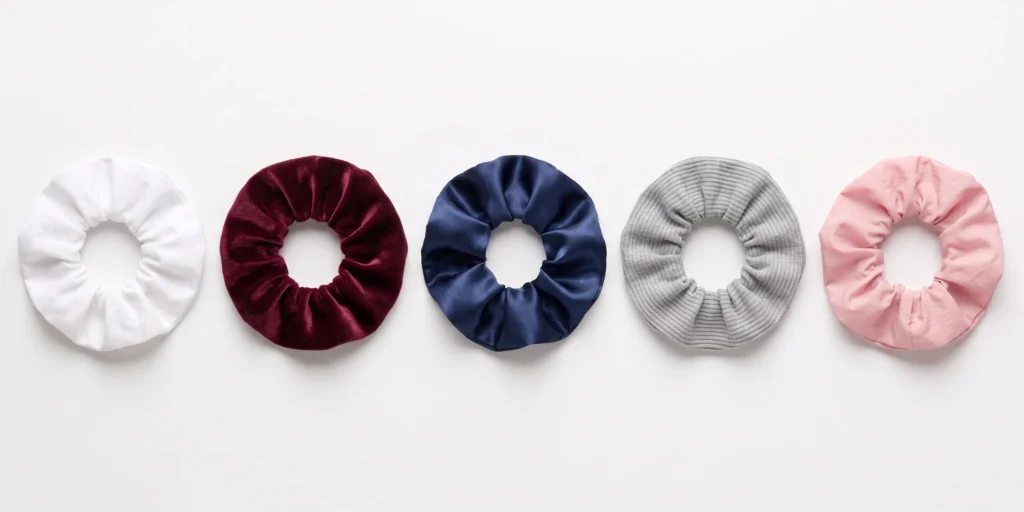
Common regular scrunchie fabric types and their characteristics:
Brands sourcing across multiple scrunchie fabric types should work with a custom hair scrunchie manufacturer that maintains fabric sourcing relationships across both natural and synthetic textile categories within the same production facility.
The primary differences between silk and regular scrunchies relate to surface friction, moisture management, hair health impact, durability, and production cost. The comparison below summarises the key criteria across both product types:
| Criteria | Silk Scrunchie | Regular Scrunchie (Cotton/Polyester) |
|---|---|---|
| Surface friction | Very low | Low to high depending on fabric |
| Hair breakage risk | Lower — smooth surface reduces mechanical stress | Higher for cotton and velvet; lower for satin-weave polyester |
| Moisture absorption | Low — does not strip hair moisture | Cotton absorbs moisture; polyester does not |
| Hold strength | Moderate — low friction reduces grip slightly | Moderate to high depending on fabric |
| Durability | Lower — silk degrades faster with frequent washing | Higher for polyester and nylon; moderate for cotton |
| Care requirements | Hand wash or delicate cycle; air dry only | Machine washable in most cases |
| Retail price tier | Mid to premium | Low to mid |
| MOQ (OEM) | Typically higher due to fabric cost | Lower; wider supplier availability |
| Positioning | Hair health / sleep / anti-breakage | Fashion / everyday / sports / mass market |
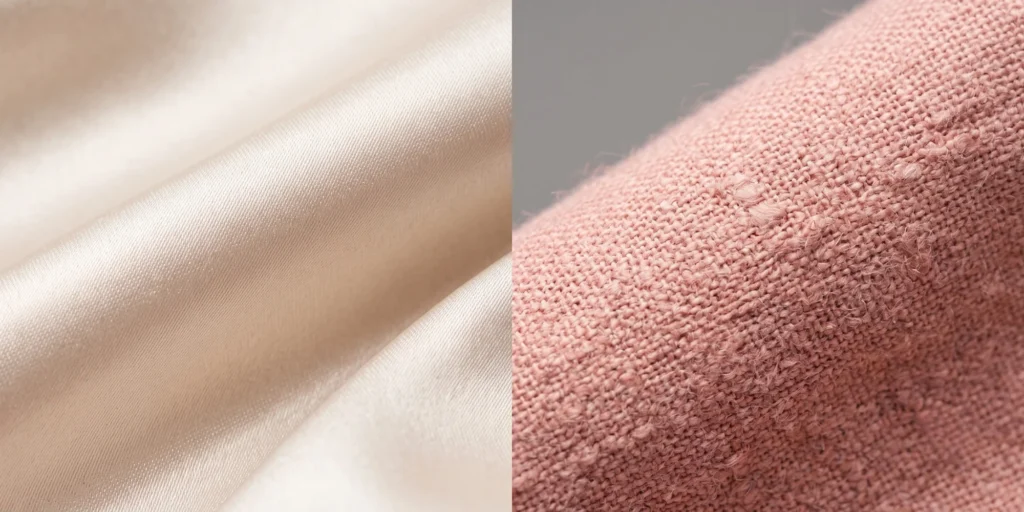
The primary functional argument for silk scrunchies over regular alternatives centres on surface friction. Hair fibres, particularly when dry or chemically treated, are susceptible to mechanical damage from repeated friction against rough textile surfaces. The cuticle layer of the hair shaft — the outermost protective layer — can be disrupted by high-friction contact, leading to surface roughness, frizz, and over time, increased breakage risk at the point of elastic contact.
According to hair friction and mechanical damage research, low-friction surface contact during sleep and styling is consistently identified as a meaningful factor in reducing cuticle disruption, particularly for processed or fine hair types.
Cotton fabric, as a hydrophilic natural fibre, absorbs moisture on contact. When a cotton scrunchie is worn overnight or during extended periods, it can draw moisture from the hair shaft surface, which is a concern for dry or coarse hair types that already have lower moisture retention. Silk’s lower absorbency means it interacts differently with the hair surface — it does not pull moisture from the hair shaft in the same way cotton does.
Polyester, as a synthetic hydrophobic fibre, shares this low-absorbency property with silk and represents a more cost-efficient alternative for brands seeking to address the moisture-retention concern without the material cost of genuine silk.
Regular scrunchies — particularly cotton and velvet variants — can leave visible crease marks in hair where the elastic tension concentrates. This is more pronounced when the scrunchie is worn for extended periods or during sleep. Silk scrunchies are commonly positioned as a solution to this issue due to their smooth surface distributing tension more evenly and reducing the concentration of friction at a single contact point.
For standard daytime use — ponytails, buns, and half-up styles worn for several hours — the performance gap between silk and quality regular scrunchies is narrower than the price gap might suggest. A well-constructed satin-weave polyester scrunchie performs comparably to a silk scrunchie for friction reduction during daytime wear, at a substantially lower material cost. The meaningful difference between fabric types for everyday use is primarily in hold strength — velvet scrunchies provide superior grip for thick or heavy hair that silk variants may not secure as reliably.
This is where silk scrunchies demonstrate the clearest performance advantage over standard cotton or velvet alternatives. During sleep, hair moves repeatedly against the scrunchie surface, and the cumulative friction effect over a full night is substantially higher than during a few hours of daytime wear. Silk’s low-friction surface reduces this cumulative mechanical stress, making it the preferred material for brands positioning scrunchies specifically for overnight or sleep use.
Buyers building product ranges for the hair health or sleep category should review custom scrunchie manufacturing options that can accommodate both silk and satin-weave polyester as dual-tier options within the same range — allowing brands to offer a genuine silk SKU alongside a lower-price-point silk-alternative SKU without sourcing from separate manufacturers.
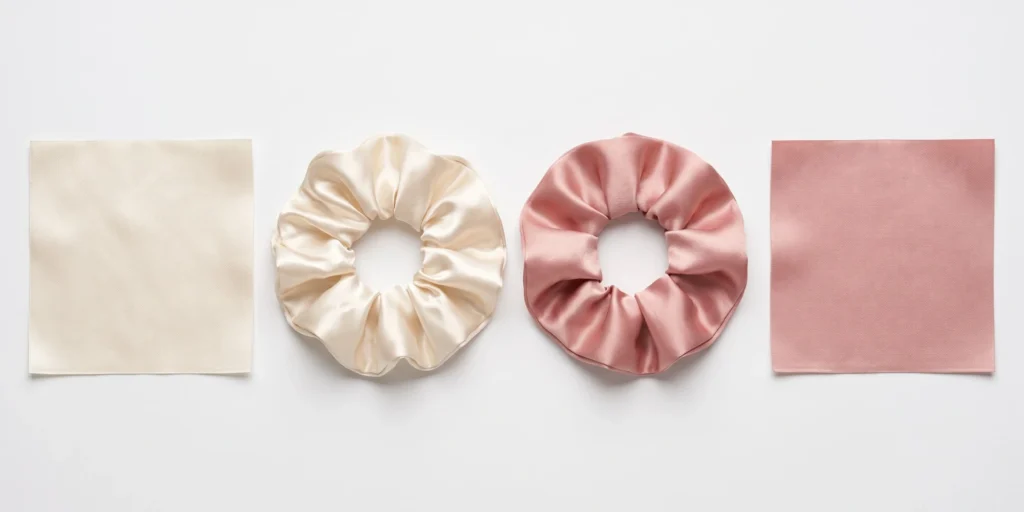
Genuine mulberry silk fabric commands a significantly higher unit cost than polyester, cotton, or velvet alternatives. For scrunchie production, the per-unit fabric cost differential between a genuine silk outer casing and a satin-weave polyester outer casing typically ranges from 3x to 6x depending on silk grade and order volume. This cost differential translates directly to minimum order quantities and retail price positioning — silk scrunchies are typically positioned in the mid-to-premium retail bracket, while standard fabric scrunchies occupy the low-to-mid price range.
Factory-direct OEM scrunchie production typically carries the following MOQ ranges by fabric type:
Buyers engaging OEM hair accessories manufacturing partners for silk scrunchie development should confirm fabric sourcing practices — specifically whether the supplier sources silk from certified mills and whether momme weight and fibre origin documentation is available upon request.
In regulated retail markets — particularly the EU, US, UK, and Australia — textile products are subject to mandatory fibre content labelling requirements. For scrunchies marketed as silk, the fibre composition label must accurately reflect the outer casing material. Products labelled as silk that contain satin-weave polyester are non-compliant with textile labelling regulations in these markets and expose retail partners to regulatory risk. Buyers sourcing silk scrunchies for regulated markets should request fibre content test reports from their manufacturing partners and ensure that packaging labelling accurately reflects the actual composition.
According to international textile certification standards, fibre origin documentation and third-party testing are increasingly expected by retail buyers, particularly in markets where greenwashing and material misrepresentation claims are subject to enforcement action.
The value proposition of silk scrunchies depends on the specific retail positioning and target consumer segment a brand is addressing. The comparison below summarises the practical assessment for B2B buyers evaluating range decisions:
| Use Case | Recommended Material | Rationale |
|---|---|---|
| Everyday fashion scrunchie | Cotton / polyester | Cost-efficient; wide colour range; sufficient for daytime wear |
| Premium gift or seasonal collection | Genuine silk or satin | Perceived value; suitable for gift-box positioning |
| Hair health / anti-breakage range | Genuine silk (19–22mm) | Friction reduction claim is material-specific; requires genuine silk |
| Overnight / sleep scrunchie | Genuine silk or satin-weave polyester | Low-friction requirement; satin polyester is a viable lower-cost option |
| Sports / active range | Nylon or jersey | Moisture resistance and grip priority; silk inappropriate |
| Mass-market multi-pack | Cotton or polyester | Volume economics require low per-unit cost |
For brands building a tiered scrunchie range, the strategic case for including at least one silk or silk-alternative SKU is supported by the consistent consumer interest in hair health positioning across premium beauty retail channels. The product category is well-established and the premium tier command is predictable — what requires scrutiny is whether the sourced product genuinely delivers on its material claims.
Q: Is a silk scrunchie actually better for hair than a regular scrunchie?
Silk scrunchies reduce surface friction against the hair shaft compared to cotton, velvet, and most standard polyester fabrics. This lower friction translates to reduced mechanical stress on the hair cuticle during wear and removal, which is a meaningful benefit for fine, fragile, chemically treated, or dry hair types. For healthy, resilient hair used in standard daytime styling, the practical performance advantage over a well-constructed satin-weave polyester scrunchie is narrower. The clearest functional advantage of silk scrunchies is in overnight wear, where cumulative friction reduction during sleep is the primary use case.
Q: What is the difference between a silk scrunchie and a satin scrunchie?
A silk scrunchie uses genuine silk fibre — most commonly mulberry silk — for the outer fabric casing. A satin scrunchie typically uses a satin-weave construction, which refers to the weave pattern rather than the fibre content. Most satin scrunchies in the mass market are constructed from satin-weave polyester, which replicates the surface sheen and some friction-reduction properties of silk but is a different material at the fibre level. Genuine silk satin combines both — a satin weave with silk fibre — but commands a higher price than polyester satin. For retail labelling compliance, the fibre content must be accurately disclosed regardless of the weave structure.
Q: What MOQ should buyers expect for silk scrunchie OEM production?
Factory-direct OEM production for genuine silk scrunchies typically begins at 300–500 units per colour per style, reflecting the higher fabric cost rather than production complexity. For satin-weave polyester scrunchies — which are mechanically similar but use lower-cost fabric — MOQs typically align with standard scrunchie production at 500–1,000 units per colour per style. Buyers sourcing both silk and satin-polyester variants within the same order may be able to negotiate blended minimum arrangements with factory-direct suppliers.
Q: Can silk scrunchies be machine washed?
Genuine silk fabric requires gentle care — most silk scrunchies are rated for hand washing in cold water with a mild detergent, or delicate machine cycle in a mesh laundry bag. Air drying is required; tumble drying degrades silk fibre. This care requirement is a relevant product consideration for retail positioning, as it represents a limitation compared to cotton or polyester scrunchies, which are typically fully machine washable. End-user care instructions should be clearly communicated on product packaging.
Q: What silk grade is used in quality silk scrunchies?
Quality silk scrunchies are typically constructed from 19–22 momme mulberry silk. Momme (mm) is the unit used to measure silk fabric weight and density — higher momme indicates a heavier, more durable fabric. Scrunchies produced from below 16 momme silk may feel thin and are more susceptible to tearing at the seam under elastic tension. For B2B buyers specifying silk scrunchies, confirming the momme weight with the manufacturing partner is a standard quality specification to include in the product brief.
Q: Is it worth sourcing both silk and regular scrunchies from the same manufacturer?
For brands building tiered hair accessory ranges, consolidating silk and standard scrunchie production with a single factory-direct OEM partner offers meaningful logistical and quality management advantages — unified sampling processes, consistent elastic tension specifications across SKUs, and single-point quality control. Manufacturers experienced in both silk and conventional fabric scrunchie production can typically advise on elastic selection and construction differences between fabric types, which affects the finished product’s hold profile and durability.
Silk scrunchies offer a measurable functional advantage over standard cotton and velvet alternatives in the specific context of friction reduction — an advantage that is most relevant for overnight wear, fragile hair types, and hair health positioning. For standard daytime fashion use, the performance gap narrows considerably, and satin-weave polyester represents a cost-efficient alternative that addresses the friction concern without the full material cost of genuine silk. B2B buyers evaluating range decisions should align material selection with the specific end-use positioning being developed rather than treating silk as universally superior to regular alternatives across all applications. Manufacturers such as JunYi Beauty, which produces both silk and standard fabric scrunchies under ISO 9001:2015 and amfori BSCI certification at its Dongguan facility, offer the kind of multi-material production capability that supports tiered range development from a single supplier relationship.
👉 Searching for Hair Accessories ? Your brand deserves the best.