Home
Product
Contact
Odm/Oem
About
A snap clip is a small hair fastening accessory designed with a curved metal or plastic body that bends open and snaps closed to hold hair in place. It is commonly used for securing side sections, managing loose strands, decorating hairstyles and creating lightweight everyday hair looks.
Snap clips are also known as snap hair clips, contour clips, bendy clips or sleepies in some markets. They are simple in structure, affordable to produce at scale and widely used across children’s hair accessories, salon styling kits, retail hair clip sets and private label accessory collections.
For buyers comparing small everyday clips with decorative barrettes, claw clips and bobby pins, custom hair clip manufacturer pages are often useful for understanding available clip structures, materials and customization options.
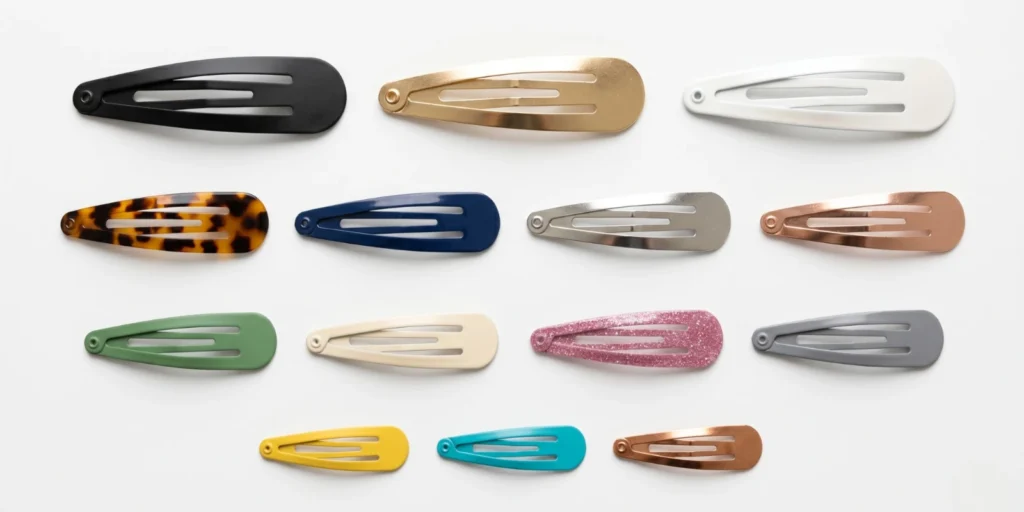
A snap clip works through a flexible curved body that changes tension when pressed. In the open position, the curved plate is slightly lifted, allowing hair to slide between the clip and the lower contact surface. When pressure is applied to the raised curve, the plate reverses direction and snaps downward, gripping the hair.
This simple bending mechanism is the main reason snap clips are easy to use. They do not require a spring hinge, elastic band or separate locking part. The holding force comes from the curved plate itself.
Most snap clips are designed for light to medium hold. They are suitable for front sections, side partings, children’s hairstyles, decorative placement and temporary styling during makeup or salon work. They are not usually intended to hold very heavy buns or thick full-head updos.
The performance of a snap clip depends on several details:
A well-made snap clip should open smoothly, close with clear tension and avoid sharp edges that may pull or scratch hair.
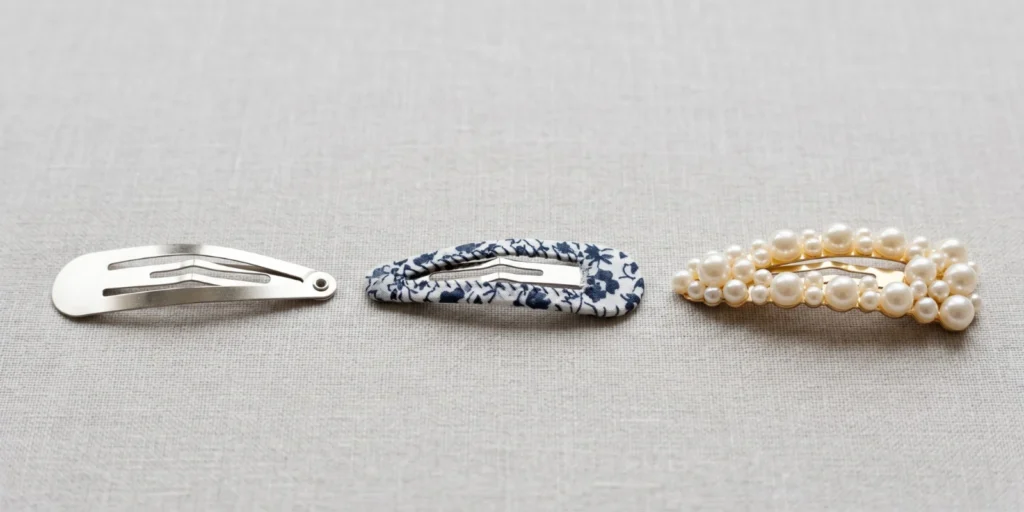
Snap clips are available in several formats, although the basic bending structure remains similar. The most common type is the plain metal snap clip. It is often coated with enamel, paint or epoxy for colour and corrosion resistance. These clips are widely used in children’s hair sets and daily styling packs.
Fabric-covered snap clips are another common category. They may use cotton, velvet, satin, grosgrain ribbon or printed textile surfaces. This structure gives the clip a softer appearance and helps brands create seasonal or themed collections.
Decorative snap clips may include pearls, beads, resin charms, acrylic panels, bows, glitter sheets or printed patterns. These designs are often used in fashion retail and gift sets. However, extra decoration adds weight and may reduce comfort if the base clip is too small.
The following table outlines typical snap clip categories.
| Snap Clip Type | Main Material | Common Use | Key Feature |
|---|---|---|---|
| Plain metal | Steel | Daily styling | Slim structure |
| Coated metal | Painted steel | Retail sets | Colour variety |
| Fabric-covered | Textile + metal | Children’s wear | Soft surface |
| Pearl snap clip | Metal + beads | Decoration | Visual detail |
| Acrylic snap clip | Metal + acrylic | Fashion styling | Pattern options |
For broader product planning, buyers often compare snap clips with barrettes, alligator clips and claw clips through custom hair accessories manufacturing before confirming a full accessory line.
The most common material for snap clips is metal, usually steel or stainless steel depending on the required finish and market positioning. Steel provides the bending memory needed for the snap mechanism. It can be plated, painted or coated to create different colours and surface effects.
Plastic snap clips are lighter and can be made in bright colours, but they may not provide the same crisp snapping tension as metal versions. For this reason, many plastic-looking snap clips still use a metal base with plastic, resin or acrylic decoration attached on top.
Fabric and decorative components are often added to the upper surface. Velvet, satin, ribbon and printed textiles create soft-touch designs, while acrylic, resin, pearls and rhinestones create more decorative effects. For children’s accessories, smooth edges and secure attachment are especially important.
Material choice affects:
For general information about quality systems used in manufacturing, ISO 9001 quality management standards can be used as an external reference.
Snap clips can be good for hair when they are smooth, lightweight and properly finished. Because they do not rely on tight elastic pressure, they can hold small hair sections without creating strong tension at the roots. This makes them useful for everyday styling, section control and decorative placement.
However, poor-quality snap clips may damage hair. Rough metal edges, peeling paint, sharp corners or weak coatings can catch strands and cause breakage. Clips that close too tightly may also press the hair shaft or create bends in fine hair.
For fine hair, lightweight clips with moderate tension are usually more comfortable. For thick hair, longer snap clips with stronger curvature may provide better grip. For curly or textured hair, smooth coating and rounded ends are especially important because rough surfaces can catch loops and coils.
Snap clips should also be removed carefully. Pulling the clip sideways while it is closed can drag hair through the edges. Opening the clip first reduces friction and helps prevent unnecessary breakage.
Snap clip manufacturing usually starts with metal sheet selection. The sheet is cut into the required shape, then pressed into a curved structure using stamping tools. The curve must be consistent because it determines how the clip opens, snaps and holds hair.
After shaping, the clip edges are treated to reduce sharpness. This may involve polishing, tumbling or other finishing methods. Edge treatment is important because snap clips sit close to the scalp and often contact fine front hair sections.
The next stage is surface finishing. Metal snap clips may be painted, powder coated, plated or covered with enamel-like coatings. Decorative versions may receive fabric wrapping, acrylic plates, pearls, bows or resin parts. Each added component requires secure bonding or mechanical fixing.
Quality inspection usually checks:
For private label programmes, snap clips may also include logo cards, custom colour sets, retail packaging and barcode labels.

Snap clips are often compared with other small hair fasteners. Bobby pins are slimmer and better for hidden hold, especially in updos. Barrettes are usually larger and may use clasp systems to hold more hair. Alligator clips have a spring hinge and are commonly used for salon sectioning, bow clips and children’s accessories.
Snap clips are easier to use than many alternatives because the open-close action is simple. They are visible accessories rather than hidden styling tools, so colour and decoration matter more in product development.
The comparison below summarises common differences.
| Accessory Type | Holding Method | Best Use | Typical Visibility |
|---|---|---|---|
| Snap clip | Bending tension | Side sections | Visible |
| Bobby pin | Pinching tension | Hidden fixing | Low |
| Barrette | Clasp closure | Larger sections | Visible |
| Alligator clip | Spring hinge | Sectioning, bows | Medium |
| Hair pin | Inserted hold | Buns, updos | Low to medium |
Snap clips are not a full replacement for bobby pins or barrettes. They are better understood as lightweight control and decoration accessories. Hair pin options can be compared separately through a custom hair pin manufacturer when the goal is bun support, bridal styling or updo structure.
For B2B buyers, snap clips are attractive because they are compact, easy to assort by colour and suitable for many retail formats. They can be sold as single pieces, pairs, multipacks, children’s sets, seasonal collections or private label hair accessory kits.
The key sourcing issue is consistency. Since snap clips rely on curved tension, small differences in metal thickness or stamping depth can affect usability. A sample that opens smoothly but a bulk order with weak tension can create quality complaints. For this reason, tension testing and edge inspection should be part of product approval.
Packaging should also match the clip surface. Painted or pearl-decorated clips can scratch during transport if packed loosely. Carded sets, inner bags, trays or separated compartments may help protect the finish.
Common customization options include:
A snap clip is a simple, lightweight hair accessory that uses a curved snapping mechanism to hold small sections of hair. It is commonly used for side styling, children’s hair accessories, decorative looks, salon section control and everyday hair management.
Snap clips can be hair-friendly when they are smooth, properly coated and matched to the user’s hair type. The main quality risks include rough edges, weak tension, peeling finishes and poorly attached decorative parts. For buyers, product testing should focus on snap strength, surface finishing, coating durability and packaging protection.
From a manufacturer perspective, JunYi Beauty represents the type of factory-direct supplier involved in developing snap clip ranges across metal, fabric-covered, pearl and custom decorative formats for private label and wholesale hair accessory programmes.
👉 Searching for Hair Accessories ? Your brand deserves the best.