Home
Product
Contact
Odm/Oem
About
A nickel-free hair clip is a metal hair accessory whose nickel release stays below the legal limit when it is tested under EN 1811, the European standard method for measuring how much nickel a metal item releases onto skin. “Nickel-free” on a retail listing rarely means the metal contains zero nickel. It means the finished clip, as sold, releases too little nickel to trigger an allergic reaction in most wearers. This guide explains the rule, the test, and what buyers should ask a factory before ordering metal clips, pins, and headbands for Europe.
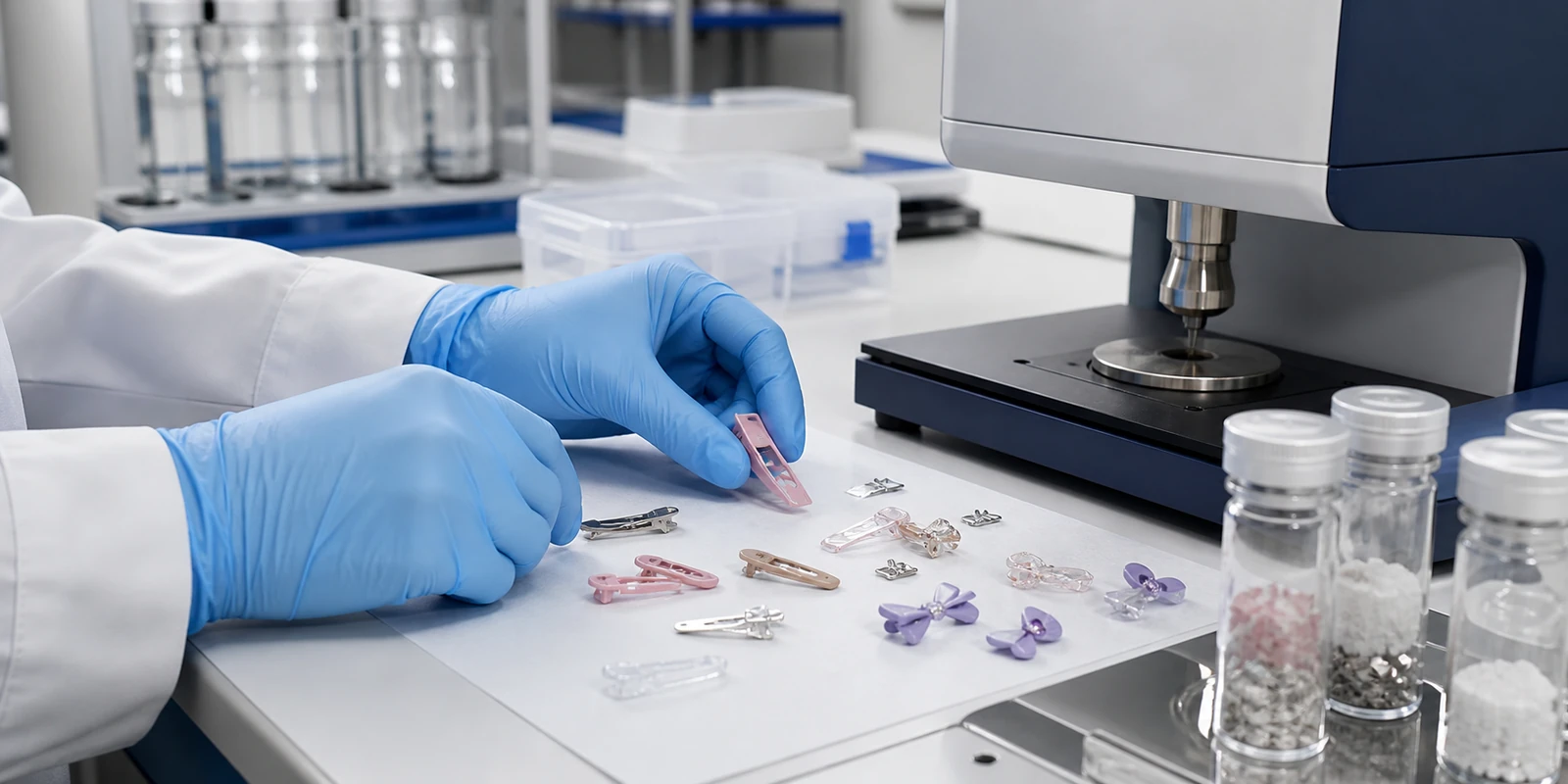
Nickel is one of the most common causes of contact allergy in Europe. Once someone is sensitized, repeated contact with nickel-releasing metal can cause itching, redness, and rash at the point of contact. Nickel allergy does not go away, so the wearer reacts every time.
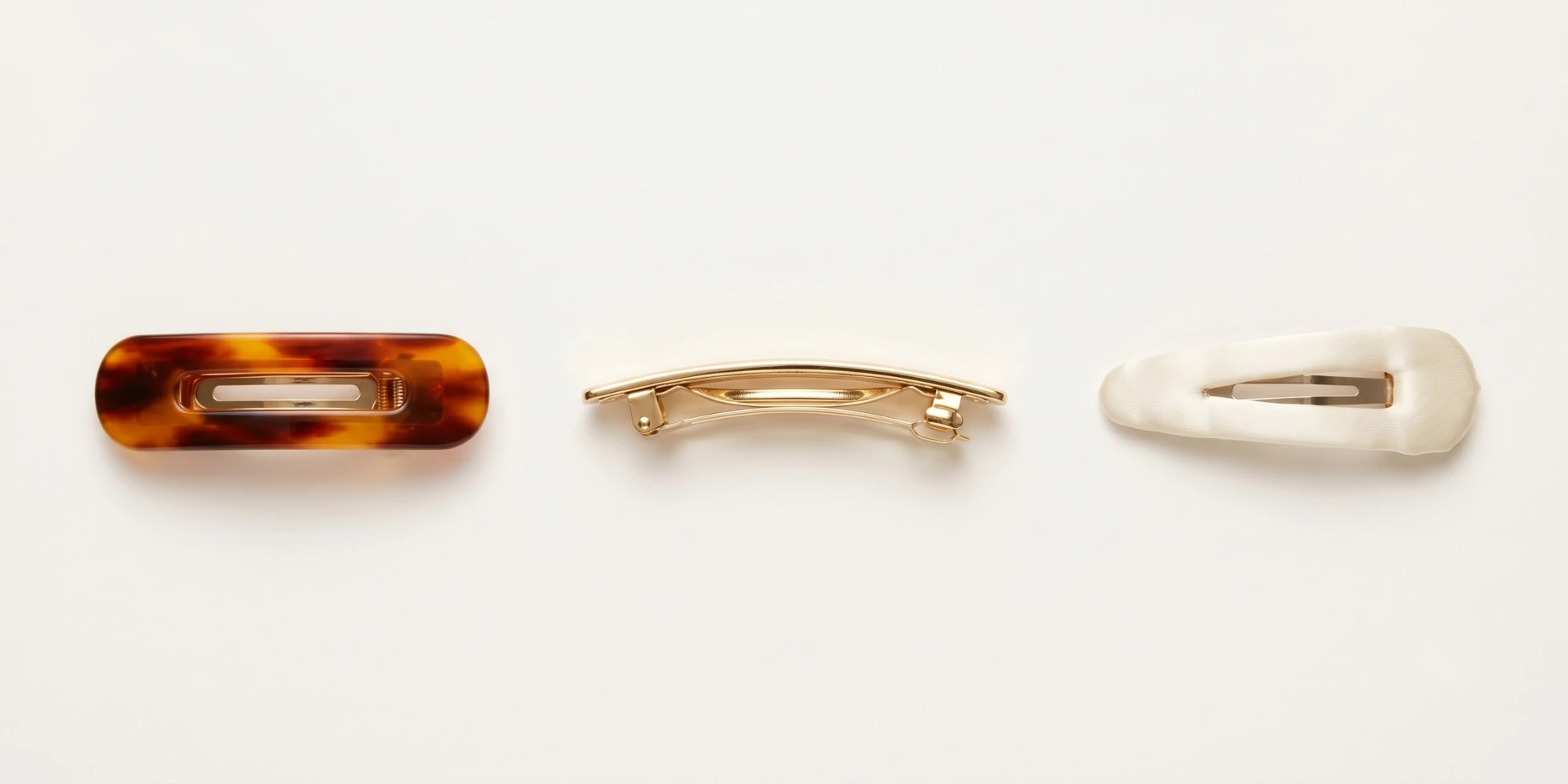
Bobby pins and snap clips sit on the scalp. Metal headbands press behind the ears. Claw clip springs and hinge pins can touch the neck when hair is worn up. Each of these can count as prolonged skin contact.
Many hair accessory buyers assume nickel rules apply only to jewelry. They do not. A metal clip worn for hours against the scalp is treated much like an earring back or a watch strap. Retailers in the EU increasingly ask for a test report before listing metal accessories.
Nickel release is restricted under REACH Annex XVII, entry 27. The restriction sets limits on how much nickel an article may release, not on how much nickel the metal contains.
The table below summarises the three limits that matter for hair accessories.
| Item Type | Nickel Release Limit | Test Method | Hair Accessory Example |
|---|---|---|---|
| Articles in direct and prolonged skin contact | 0.5 µg/cm²/week | EN 1811 | Bobby pins, snap clips, metal headbands |
| Coated or plated articles | 0.5 µg/cm²/week after two years of normal use | EN 12472 wear simulation, then EN 1811 | Gold-plated barrettes and claw clips |
| Items inserted into pierced skin | 0.2 µg/cm²/week | EN 1811 | Not usually relevant to hair clips |
The rule targets items worn against skin for long periods or repeatedly. Hair clips and pins worn all day are commonly treated as prolonged contact. Brands that are unsure should agree the classification with their test lab before testing.
Great Britain kept the same nickel restriction under UK REACH. The United States has no federal nickel release limit for adult accessories, though some retailers set their own. Children’s products sold in the United States fall under separate lead and phthalate rules.
EN 1811 measures nickel released into artificial sweat over one week. It is a laboratory test on finished pieces, not a check of the raw metal.
Plating wears away with use. For coated items, the lab first runs EN 12472, which tumbles the parts with abrasive media to simulate about two years of wear. Only then is EN 1811 run. A gold-plated clip can pass when new and fail after wear if the plating is thin or the base metal releases nickel.
A dimethylglyoxime (DMG) spot test turns pink when nickel is present on the surface. It is useful for quick screening in the factory or warehouse. It is not a substitute for EN 1811, because it shows presence, not release rate.
The following video shows how a DMG nickel spot test is used to screen metal accessories.
Passing EN 1811 depends on three choices: base metal, plating system, and plating thickness. The lowest-cost combination is often the one most likely to fail after wear.
Iron, zinc alloy, brass, and stainless steel are all used in hair accessories. Some stainless grades contain nickel yet release little of it, while others release more. The only reliable answer is a test on the finished part.
Many decorative plating systems use a nickel layer under the gold or silver finish because it gives a bright, hard base. A nickel-free system replaces that layer with other undercoats. It costs more and needs tighter process control, so it should be specified in writing.
Thicker plating and a clear protective coat slow down wear. Both add cost. Ask the factory which plating system and thickness it quoted, because two quotes for the “same” gold clip may use different systems.
Some brands avoid nickel risk by keeping metal away from skin altogether. That is not possible for every product, but it works for many.
Cellulose acetate and plastic clips have no metal on the skin-contact surface. The spring and hinge are usually enclosed or sit away from the scalp. These clips still need testing if any metal part touches skin when worn.
Fabric-wrapped clips and bobby pins with a plastic coating reduce direct contact. Coatings can chip, so the tips and edges should be checked after wear.
The guide to safe hair accessories for kids covers material choices for children’s lines, where lead and small-part rules also apply.
Each product type has a different part that touches skin. Testing should focus on that part.
Pins sit directly on the scalp for hours, and their coating is thin at the tips. Test the coated pin after wear simulation, and check that tip balls or dipped ends stay intact.
The inner face of the band presses behind the ears all day. Wide metal bands have a large contact area, so plating quality matters more than on small clips.
On acetate barrettes and claw clips, the metal spring or clasp is usually the only metal part. Check whether it touches skin when the clip is worn in a typical style. If it does, it needs testing like any other metal part.
Rhinestone and pearl settings use small metal prongs and cups. These are hard to plate evenly, and they wear quickly at the edges. Test decorated styles separately from plain versions of the same clip.
Avoid printing “hypoallergenic” or “nickel-free” on packaging unless a current report supports it for that exact finish. An unsupported claim is harder to defend than no claim at all.
Most nickel failures can be avoided at the quotation stage. These questions belong in the first request for quote.
Test the pre-production sample, not a catalogue piece. Keep the report with the golden sample, so the bulk order can be checked against both. The steps in the guide to quality control for hair accessories manufacturing show where that check fits.
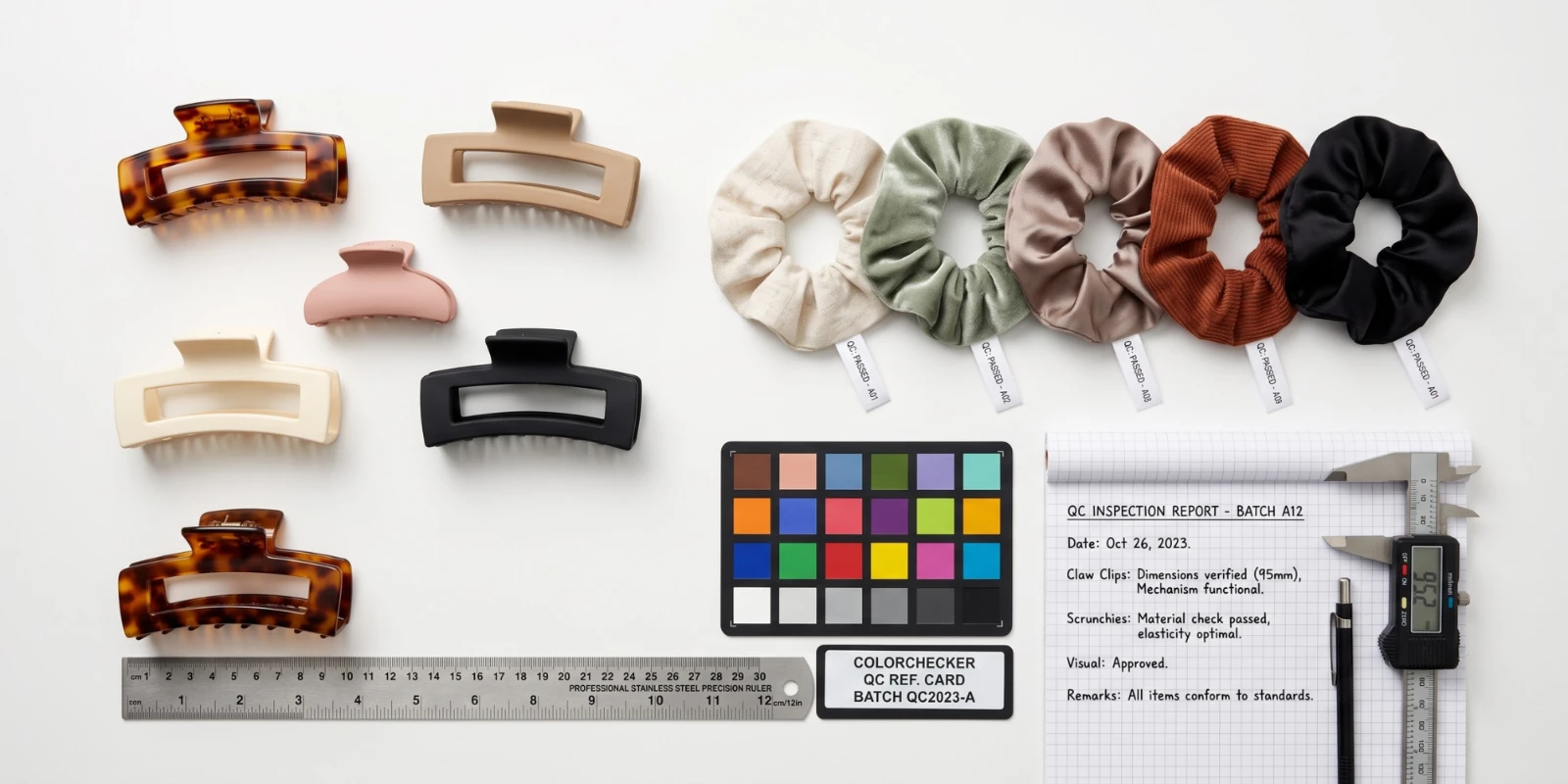
A report on one gold finish does not cover the silver or rose gold version. A report from last year does not cover a new plating supplier. Each finish and each change of process needs its own test. A supplier that offers one old report for every finish is not offering a real answer.
Q: What does nickel-free mean for hair clips?
In practice it means the finished clip releases less nickel than the legal limit when tested under EN 1811, not that the metal contains no nickel at all. For items in prolonged skin contact the EU limit is 0.5 µg/cm² per week.
Q: Do hair clips need EN 1811 testing to be sold in the EU?
The law sets a nickel release limit for articles in direct and prolonged skin contact, and EN 1811 is the standard way to show compliance. Metal clips, bobby pins, and headbands worn for hours are commonly treated as prolonged contact, so most EU retailers expect a report.
Q: Why do plated clips need an extra test?
Plating wears with use. For coated items, the lab runs an EN 12472 wear simulation first, then EN 1811, to check that nickel release stays under the limit after about two years of normal wear.
Q: Is a DMG spot test enough?
No. A DMG spot test shows whether nickel is present on the surface and is useful for screening. Compliance is shown by an EN 1811 laboratory test that measures the release rate.
Q: Are acetate claw clips affected by nickel rules?
Only if a metal part touches the skin when the clip is worn. The acetate itself contains no nickel. Springs and hinge pins are usually enclosed or kept away from the scalp, but this should be confirmed for each design.
Nickel-free hair clips are defined by test results, not by the metal name on a specification sheet. Buyers selling in Europe should specify the plating system, test each finish under EN 1811, and add the EN 12472 wear step for plated parts.
Manufacturers such as JunYi Beauty, which produces metal, acetate, and plastic hair clips at its Dongguan facility, represent the type of custom hair clip manufacturer able to supply each finish with its own test documentation.
👉 Searching for Hair Accessories ? Your brand deserves the best.