Home
Product
Contact
Odm/Oem
About
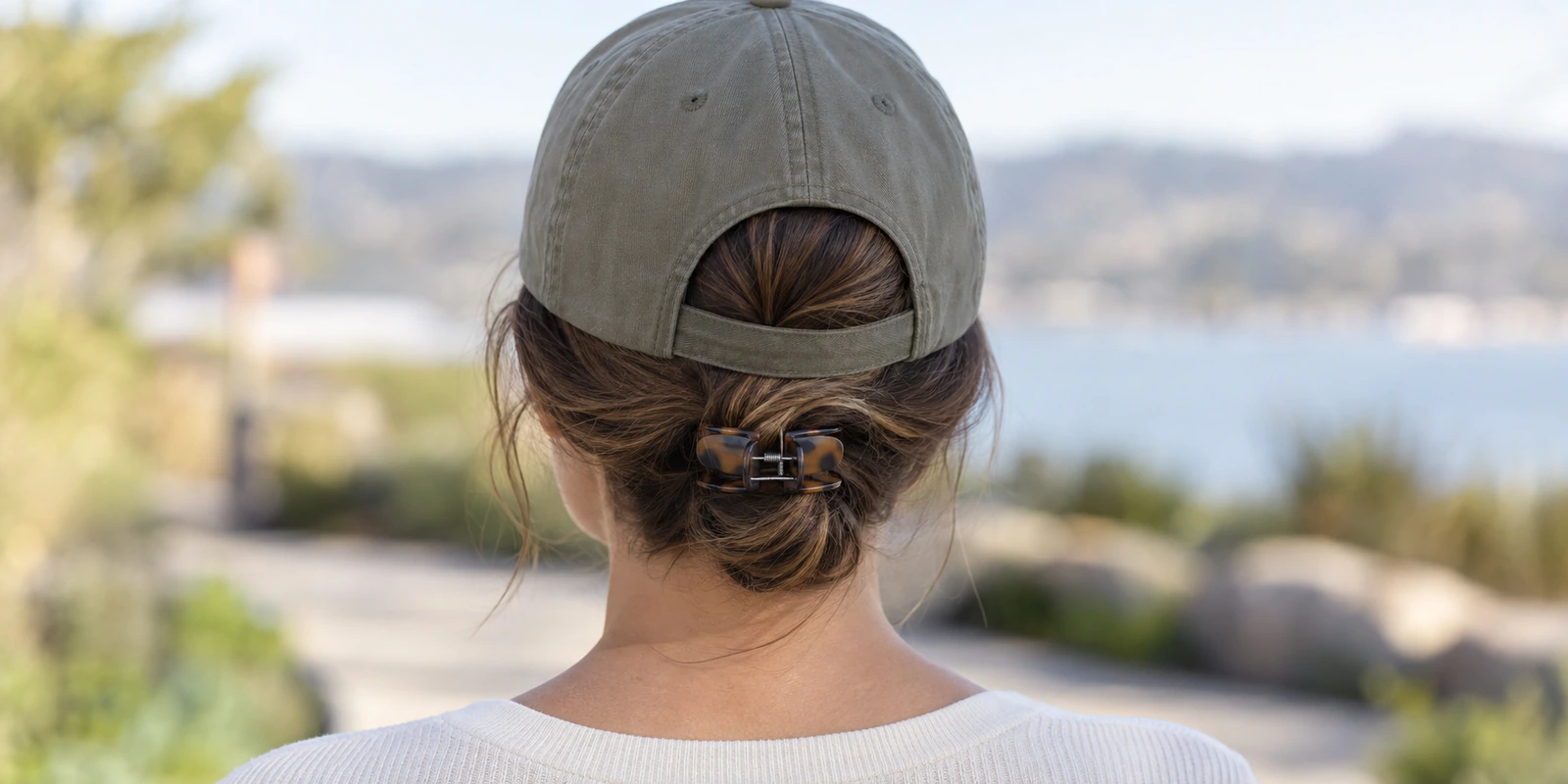
A hat-friendly claw clip is a claw clip designed with a low or flattened profile so it doesn’t create a visible bulge or pressure point when a cap or hat is worn over it. This is a distinct engineering problem from a standard claw clip‘s design goal, which optimizes for maximum grip and volume rather than a low profile that sits comfortably under headwear. As caps and structured hats have become a near-daily accessory for a large share of consumers, retailers and buyers have started asking suppliers specifically for this sub-category, and the differences between a hat-friendly claw clip and a standard one go well beyond simply making the clip smaller.
A standard claw clip is built with a tall, arched profile because that shape is what generates strong spring tension and gathers a large volume of hair efficiently. Under a fitted cap, that same arched profile creates a hard, raised bump that the hat brim or crown presses directly against, which causes visible lumps in the fabric, discomfort at the pressure point, and in some cases a headache from sustained pressure over the course of a day. The taller the clip’s arch, the more pronounced this problem becomes, which is why oversized claw clips marketed for maximum hold are generally the worst-suited option for anyone planning to wear a hat over the style.
Several specific design features separate a hat-friendly claw clip from a standard one, and buyers sourcing this category should look for all of them rather than assuming “smaller” automatically means “hat-friendly.”
The single most important factor is a reduced arch height, meaning the clip sits closer to the head rather than rising several centimetres above the scalp. A genuinely hat-friendly design typically keeps the closed clip profile low enough that a structured cap crown can sit over it without visible distortion in the fabric.
A flattened clip still needs a rounded top edge rather than a flat-cut or angular one, since a hard edge pressing against the inside of a cap crown creates a localized pressure point even at a reduced height. Suppliers producing this category should round and smooth the outer edge of the mold specifically for this use case.
Because a low-profile clip has a shorter jaw span than a tall arched clip, it generally holds a smaller volume of hair, which changes where on the head it performs best. A hat-friendly claw clip is typically positioned lower, at the nape of the neck or just above it, rather than high on the crown, since that placement both suits the smaller hold capacity and sits naturally under the back of a cap rather than fighting for space under the crown.
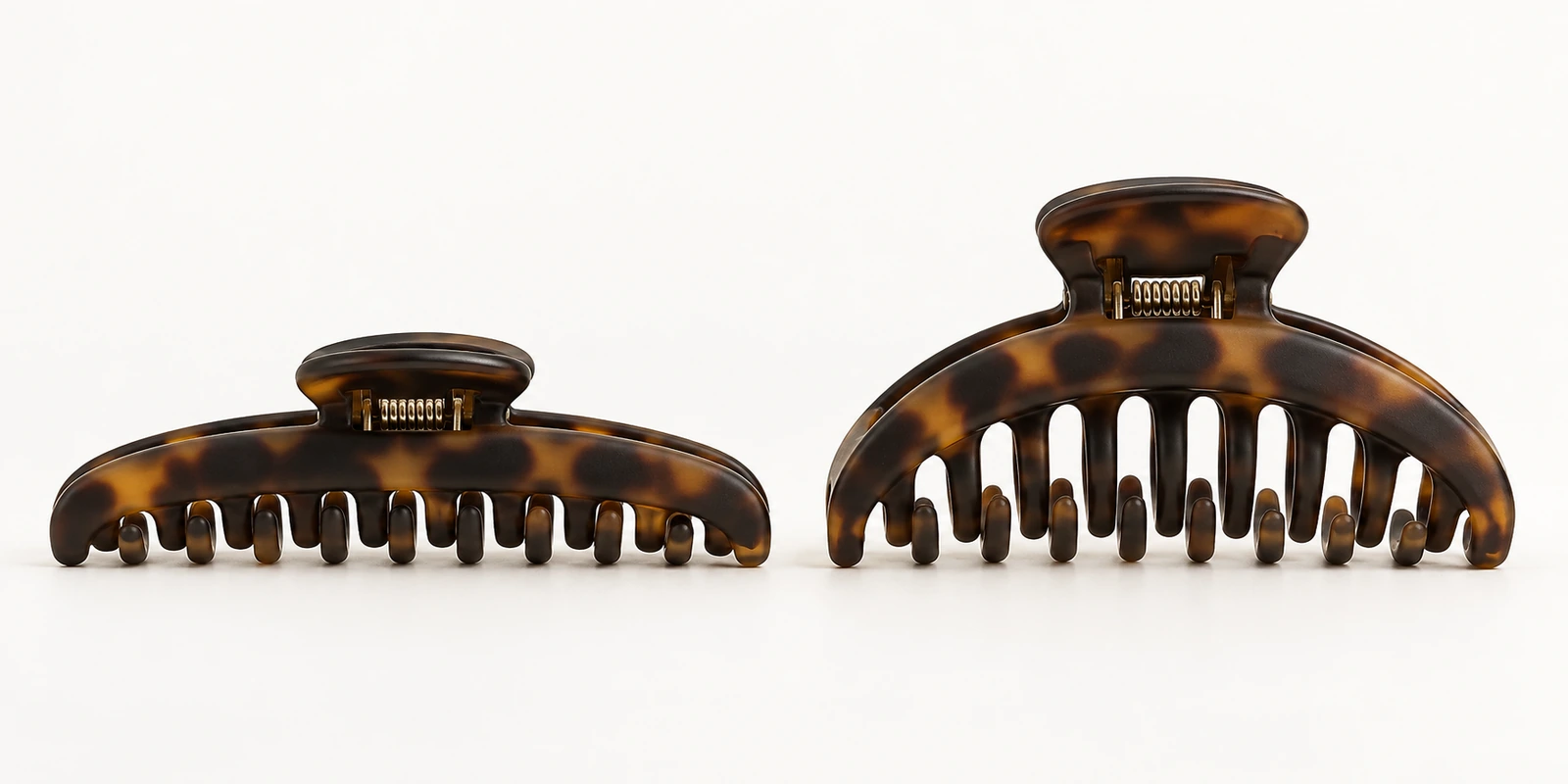
Material choice affects hat-friendly performance as much as shape does, particularly for anyone wearing a cap for extended periods.
Matte-finish acetate or a lighter-weight ABS construction is generally preferred over glossy, thick acetate for this category, since a lighter clip reduces the overall pressure felt under a snug-fitting cap over several hours. Spring tension also needs adjustment: a hat-friendly clip’s spring should hold securely without requiring the same aggressive clamping force as a maximum-volume clip, since a lower-tension spring reduces the pressure transferred to the scalp when a hat is pressing down on top of it.
A few recurring mistakes show up when buyers try to source hat-friendly claw clips without a clear specification in place.
The most common mistake is requesting a “small” or “mini” claw clip and assuming size alone solves the hat-compatibility problem. A mini clip can still have a tall, steep arch relative to its size, which means it can be just as uncomfortable under a cap as a full-sized clip, since arch height and overall clip size are two separate dimensions that don’t automatically scale together. Buyers should request arch height as its own specification, measured from the base of the clip to its highest point when closed, rather than relying on overall length or jaw width as a proxy.
Another common mistake is testing a sample without actually wearing it under the intended hat style. Structured caps with a stiff buckram crown press very differently than soft, unstructured dad caps or beanies, so a clip that feels comfortable under one hat style can still create a noticeable pressure point under a different, stiffer structure. Buyers developing a hat-friendly line should test samples under the specific hat styles their end customers are most likely to wear it with.
Hat-friendly claw clips are best positioned as a distinct SKU rather than a marketing label applied to an existing standard clip line, since the design changes involved (reduced arch, adjusted spring tension, positioning-appropriate jaw width) are structural rather than cosmetic. Retailers building an athleisure or activewear-adjacent accessory line, where cap-wearing customers are a core audience, tend to see the strongest performance from this category when it’s developed as its own product rather than repackaged from a general claw clip catalog. Buyers working with a custom claw clip manufacturer can specify arch height, spring tension, and jaw width as separate line items on a development brief, which produces a more consistent result than describing the product only as “hat-friendly” and leaving the specific dimensions to the factory’s interpretation.
Because a hat-friendly claw clip typically requires a new mold rather than a modification of an existing tool, buyers should expect tooling costs and MOQs similar to launching any new claw clip SKU, not a discounted rate for what might look like a minor size adjustment. Factories that already produce a range of arch heights across their existing catalog can sometimes offer a faster path to a hat-friendly variant by adapting a mold they already have in a similar family, which is worth asking about directly before committing to a fully custom tool.
Buyers sometimes ask whether a flat clip or snap clip is simply a better alternative to a hat-friendly claw clip, since both sit lower against the head by design. The answer depends on hold capacity and styling intent rather than one format being a universal upgrade over the other. A flat or snap clip sits closer to the scalp than even a well-designed hat-friendly claw clip, but it also holds considerably less hair and relies on a different closure mechanism that some end users find less secure for a full ponytail or half-up style. A hat-friendly claw clip occupies a middle position: lower profile than a standard claw clip, but still built around a spring-jaw mechanism that holds more hair than a flat clip can manage. Buyers developing a cap-compatible accessory line should treat these as complementary formats rather than direct substitutes, since customers styling a full ponytail under a cap are better served by a genuinely low-profile claw clip, while those securing a thinner section may prefer a flat clip instead.
Retail listings that use the term “hat-friendly” without backing it up with a specific arch height or comfort claim tend to generate returns and negative reviews once a customer wears the product under their own hat and finds it uncomfortable. Buyers should require suppliers to provide an arch height measurement that can be translated into simple, testable language for a product listing, such as a stated maximum height in millimetres, rather than relying on the word “low-profile” alone, which has no fixed meaning across suppliers. Providing a short comfort disclaimer noting that structured, stiff-crown hats may still create some pressure, while soft caps and beanies fit more easily, also sets more accurate expectations than a blanket “fits comfortably under any hat” claim, which is rarely true across every hat construction on the market.
A hat-friendly claw clip is a genuinely different product from a standard claw clip scaled down in size, and treating it as a distinct specification rather than a marketing description produces a far more reliable result for end customers. Buyers should request arch height, spring tension, and intended wear position as explicit specifications, and should test samples under the actual hat styles their customers wear rather than assuming general comfort claims will hold up under a stiff, structured crown. A custom hair clip manufacturer with experience producing low-profile designs across multiple clip formats will be able to translate a hat-friendly brief into consistent tooling rather than guessing at the right dimensions from a vague description.
A hat-friendly claw clip has a reduced arch height, a rounded top edge, and adjusted spring tension, in addition to being sized appropriately. A small clip can still have a tall, steep arch that creates the same pressure point under a hat as a full-sized clip.
It's typically positioned at or just above the nape of the neck rather than high on the crown, since that placement suits its smaller hold capacity and sits naturally under the back of a cap without competing for space under the crown.
Generally no. Because the jaw span is shorter to achieve a lower profile, hat-friendly claw clips typically hold a smaller volume of hair than a tall, arched claw clip designed for maximum grip.
Matte-finish acetate or lighter-weight ABS is generally preferred over thick, glossy acetate, since a lighter clip reduces the pressure felt under a snug-fitting cap over extended wear.
Sometimes. Factories that already produce a range of arch heights may be able to adapt an existing mold from a similar family faster than developing a fully custom tool, though a genuinely low-profile design usually still requires a new or modified mold rather than a simple resize.
Structured caps with a stiff crown press differently than soft, unstructured caps or beanies. A clip that feels comfortable under one hat style can still create a pressure point under a stiffer structure, so samples should be tested under the specific hat types end customers will actually wear.
Hat-friendly claw clips solve a specific, structural comfort problem that standard claw clips were never designed to address, and buyers who specify arch height, spring tension, and wear position get a far more consistent result than those who simply ask for a smaller version of an existing clip. Manufacturers such as JunYi Beauty, which develops claw clips across a range of arch heights and spring tensions at its Dongguan facility under ISO 9001:2015 and amfori BSCI certification, can translate a hat-friendly brief into tooling built around these specific dimensions rather than a general size reduction.
👉 Searching for Hair Accessories ? Your brand deserves the best.