Home
Product
Contact
Odm/Oem
About
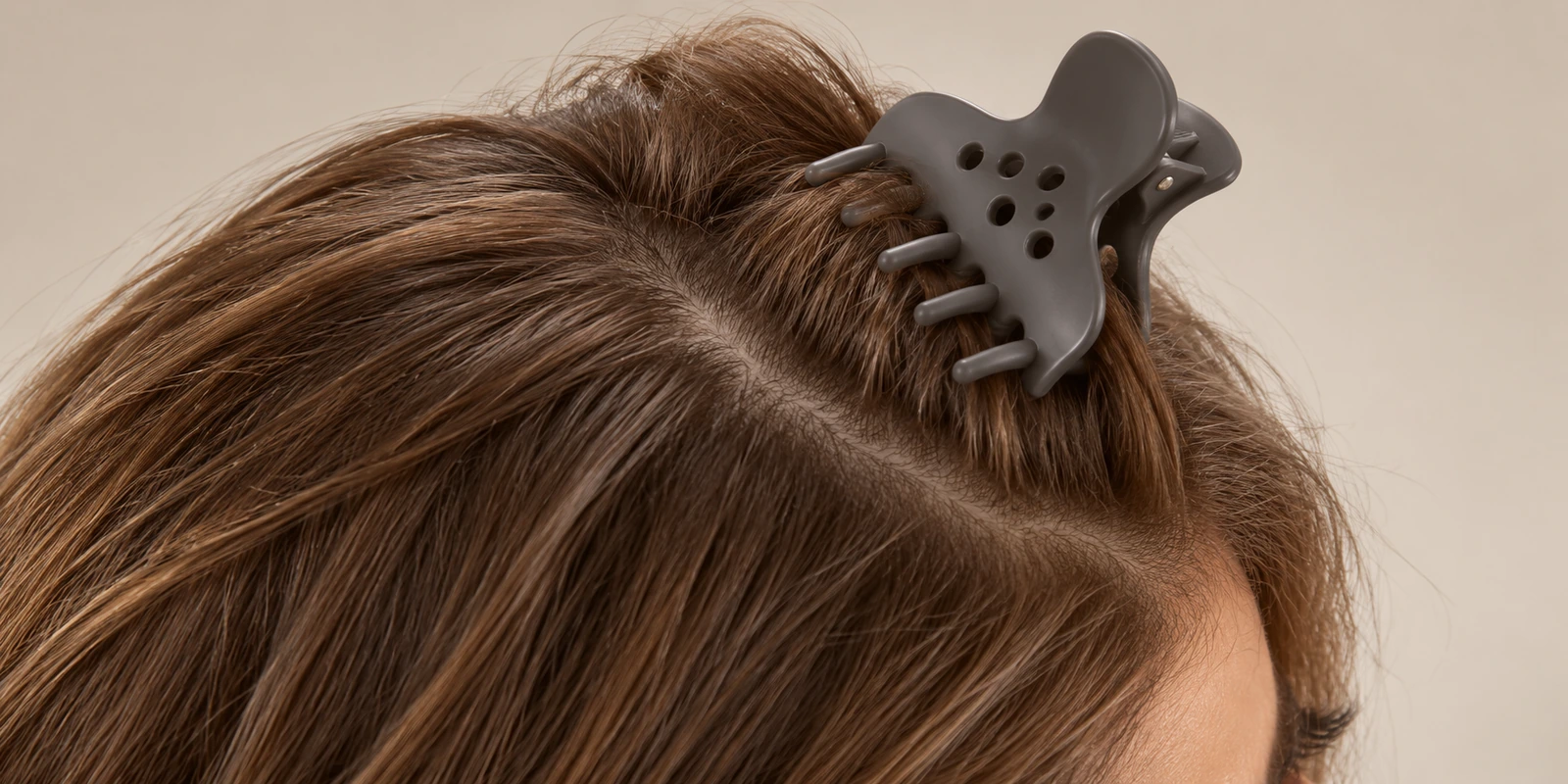
A volumizing root clip is a small clip, typically fitted with a comb-tooth or ridged base, that lifts hair at the root and holds it in place while it sets, creating lasting volume without the mechanical damage that backcombing causes to the hair shaft and cuticle. The category has grown quickly as a styling-tool alternative because it delivers a similar lifted-root result without the friction, tangling, and long-term breakage risk associated with teasing hair with a comb. For buyers sourcing hair accessories, understanding how this product actually works, and how it differs structurally from a standard claw or snap clip, is necessary before writing a sourcing brief.
Backcombing, or teasing, creates volume by pushing the hair cuticle in the opposite direction it naturally lies, which builds a tangled mat at the root that holds the hair section upright. This technique works, but it comes at a real cost to hair health: repeated backcombing roughs up the cuticle layer, increases split ends, and can cause breakage over time, particularly on fine or chemically treated hair. Consumers who tease their hair regularly, for daily styling rather than occasional special-occasion looks, are the group most likely to experience this cumulative damage, which is precisely the group volumizing root clips are designed to serve as a lower-damage alternative.
Unlike a standard claw clip, which clamps a full section of gathered hair, a volumizing root clip is engineered specifically to grip a small section close to the scalp and hold it lifted at an angle, creating the illusion of a fuller, teased root without disturbing the hair’s natural cuticle direction.
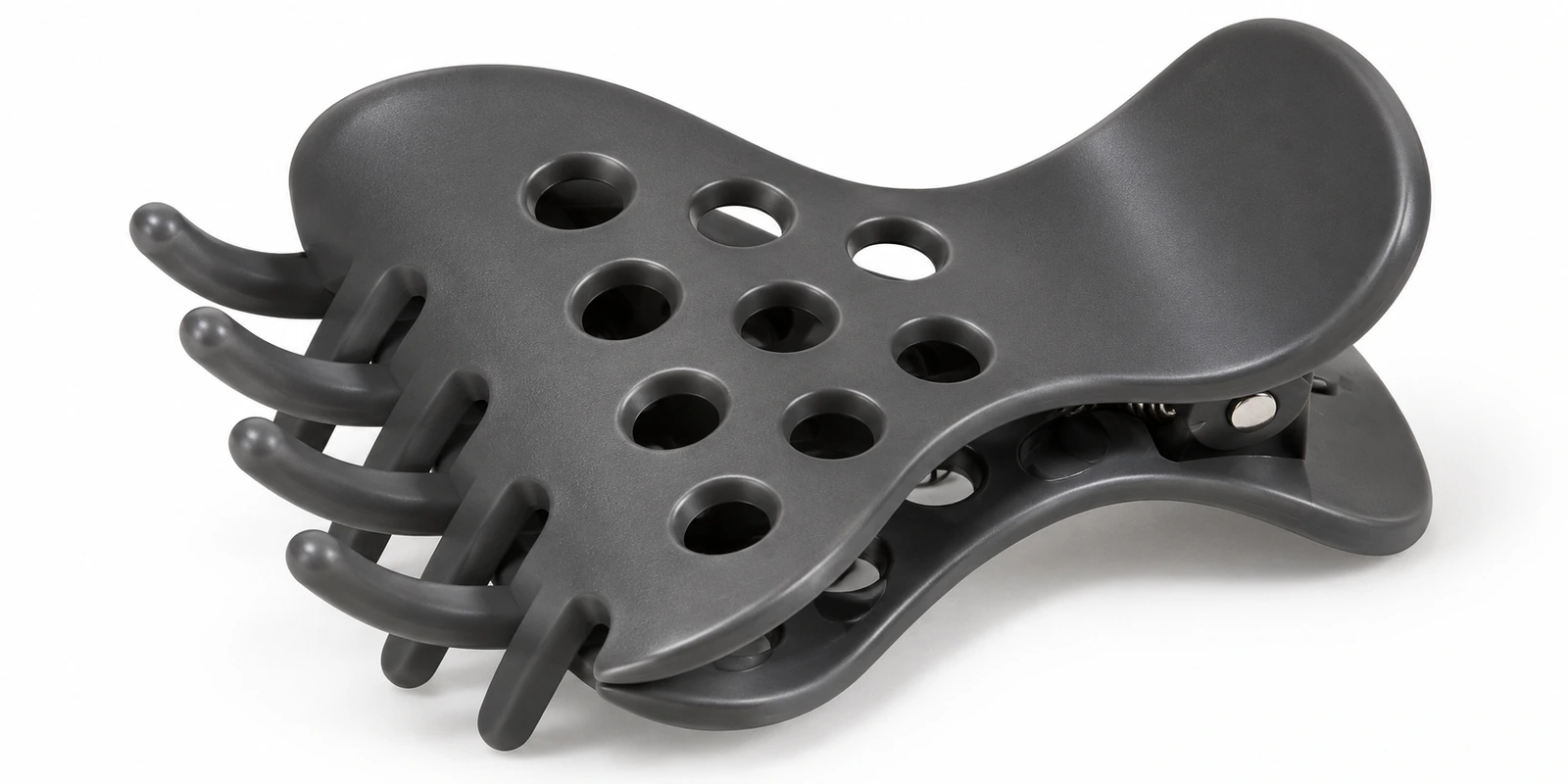
Most volumizing root clips use a row of fine plastic or metal teeth along the base of the clip rather than a smooth flat surface. These teeth anchor into the hair section at the root, which prevents the clip from sliding down the hair shaft the way a smooth-jawed clip would, especially on finer hair textures where grip is harder to maintain.
The clip is built with an internal angle, usually somewhere between 30 and 45 degrees, that holds the gripped section away from the scalp rather than flat against it. This angled hold is what creates the appearance of volume once the clip is removed, since hair set at this angle for even a short period tends to relax into a slightly raised position rather than falling completely flat.
Volumizing root clips are typically used as a temporary styling tool rather than a permanent accessory, meaning they’re clipped in while getting ready and removed once the desired lift has set, generally within fifteen to thirty minutes depending on hair type and humidity. Buyers developing product listings or instructional content should be clear with end customers about this temporary-use pattern, since a customer expecting all-day wear from a clip designed for a short set time is likely to be disappointed with the result. Coarser or previously heat-styled hair tends to hold the lifted set longer than fine, freshly washed hair, which is a detail worth including in product education material to set accurate expectations.
The comb-tooth base changes the manufacturing requirements compared to a standard smooth-jaw claw clip, and buyers should account for this when writing a sourcing specification.
Teeth that are too sharp or too closely spaced can cause discomfort or even minor scalp irritation with repeated daily use, so tooth spacing and tip rounding should be specified explicitly rather than left to a factory’s standard mold. ABS plastic is the most common material for the tooth base because it holds a fine, precise tooth shape better than softer plastics during injection molding, while the outer clip body is often finished in acetate or a coated metal for a more polished retail appearance. Spring tension also needs to be calibrated differently than a standard claw clip: strong enough to hold the lift angle throughout the set time, but not so aggressive that it pulls uncomfortably at the root during the fifteen-to-thirty-minute wear period.
Volumizing root clips are most commonly used along the crown and the top of the head, where lift has the greatest visual impact on overall hair volume, though some styling routines also use smaller versions at the sides for a fuller silhouette without a fully teased look. Buyers developing a multi-piece set should consider offering two or three sizes within one product line, since crown application typically calls for a slightly wider clip than side sections, and a single fixed size limits the product’s usefulness across a full styling routine.
A few recurring issues come up when buyers approach this category without a clear technical specification.
The most common mistake is treating a volumizing root clip as a resized version of a standard claw clip and requesting the same smooth-jaw tooling with a comb texture added as an afterthought. The comb-tooth grip mechanism is the entire functional basis of the product category, so it needs to be engineered as a core design element from the first mold draft, not layered onto an existing claw clip tool. A second common mistake is underspecifying tooth count and spacing, which directly affects both grip strength and comfort; a factory left to default settings may produce teeth that are either too widely spaced to grip fine hair effectively or too closely packed for comfortable scalp contact.
Volumizing root clips are typically positioned as a styling-tool category rather than a decorative accessory, which changes how they’re marketed compared to claw clips or barrettes. Retailers selling into the hair-tools or styling-aid segment, rather than the pure fashion-accessory segment, tend to see stronger performance from this product, since the buying motivation is functional (lasting volume without damage) rather than purely aesthetic. A custom claw clip manufacturer with experience producing comb-tooth or ridged-base tooling can adapt existing production capability to this category more efficiently than a factory starting from a purely decorative clip catalog. Buyers building a broader volumizing or styling-aid line may also want to evaluate a hair pin manufacturer relationship for complementary root-lift pins sold alongside root clips in the same set.
Because volumizing root clips work differently from a decorative clip a customer can figure out by looking at it, packaging and listing content carry more weight for this category than for most hair accessories. A customer who clips it in expecting an all-day hold, the way they would with a standard claw clip, and finds the volume settling after a few hours is likely to read that as a product defect rather than correct, expected behavior. Buyers should plan for simple on-package or in-listing instructions covering three points: where to place the clip, how long to leave it in, and that it is a temporary set-and-remove tool rather than an all-day accessory. A short instructional image or diagram showing the clip placed at the crown at the correct angle also reduces returns tied to incorrect placement, since the lift angle only works as intended when the clip is applied close to the root rather than midway up the section.
Retailers already carrying a claw clip range are often well positioned to add volumizing root clips as a complementary styling-tool category rather than a competing product, since the two solve different problems for the same customer. A customer buying claw clips for quick, no-effort updos is frequently also interested in a lower-damage way to add volume before a more polished style, which makes root clips a natural cross-sell rather than a separate customer acquisition effort. Buyers evaluating shelf space or listing structure should consider bundling a small set of root clips with a styling guide alongside an existing claw clip SKU, since bundled sets tend to perform better for functional tools that benefit from a brief explanation than as a standalone impulse purchase.
Volumizing root clips succeed commercially when the comb-tooth grip and lift angle are engineered correctly from the first prototype, not adjusted after the fact on a mold built for a different product category. Buyers should specify tooth count, tooth spacing, tip rounding, and lift angle explicitly in a development brief, and should communicate the temporary, fifteen-to-thirty-minute set-time use pattern clearly in retail and instructional content so customers know what performance to expect. Suppliers with prior experience producing comb-tooth tooling, rather than a standard claw clip factory adding teeth as an afterthought, are generally the more reliable sourcing partner for this specific category.
A volumizing root clip grips a small section of hair close to the scalp using a comb-tooth base and holds it at a lift angle to create volume, while a standard claw clip clamps a larger gathered section for general hold rather than root lift.
Most volumizing root clips are designed for temporary use, typically fifteen to thirty minutes while getting ready, rather than being worn all day. The clip is removed once the hair has set into the lifted position.
No, that’s the main advantage of this category. Because the clip lifts the hair rather than pushing the cuticle in the opposite direction with repeated combing, it avoids the cuticle damage and breakage risk associated with traditional backcombing.
ABS plastic is the most common choice for the tooth base because it holds a fine, precise tooth shape reliably during injection molding, while the outer clip body is often finished in acetate or coated metal for retail appeal.
The internal angle, usually between 30 and 45 degrees, holds the gripped hair section away from the scalp rather than flat against it, which is what creates the appearance of volume once the clip is removed after the set period.
Not ideally. Crown application typically benefits from a slightly wider clip than side sections, which is why many product lines offer two or three sizes to cover a full volumizing routine rather than a single fixed size.
Volumizing root clips give buyers a functional, lower-damage alternative to backcombing that appeals to customers looking for lasting volume without the cuticle damage of traditional teasing. Manufacturers such as JunYi Beauty, which produces comb-tooth and ridged-base styling clips at its Dongguan facility under ISO 9001:2015 and amfori BSCI certification, can engineer tooth spacing, tip rounding, and lift angle to a buyer’s exact specification rather than adapting an existing claw clip mold as an afterthought.
👉 Searching for Hair Accessories ? Your brand deserves the best.