Home
Product
Contact
Odm/Oem
About
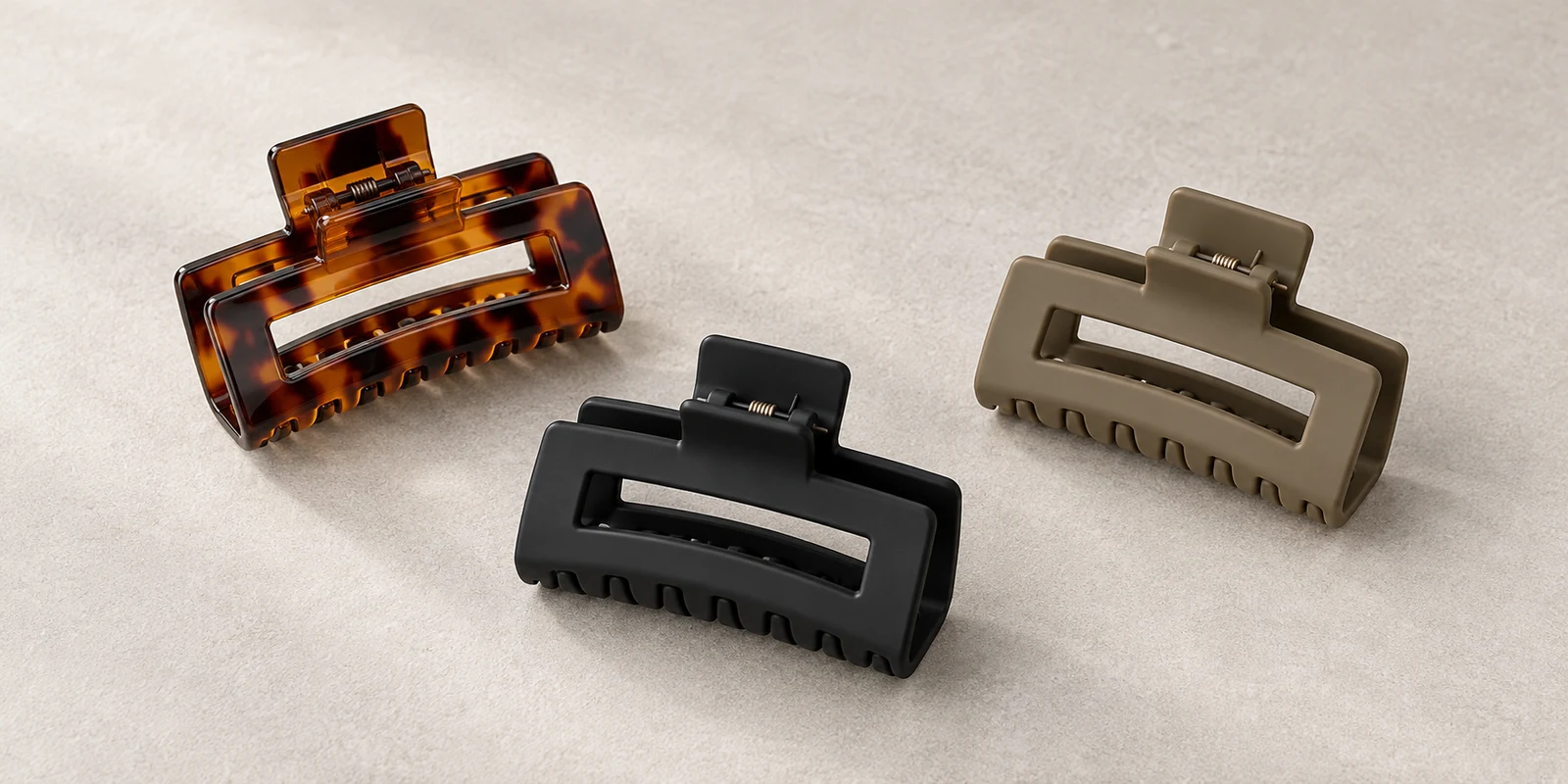
A recycled plastic claw clip is a hair clip molded from post-consumer or post-industrial plastic, most commonly recycled acrylonitrile butadiene styrene (ABS) or polypropylene (PP), rather than virgin resin. For buyers evaluating suppliers, the material claim itself means very little without third-party certification behind it. Recycled content has become one of the most requested specifications in claw clip sourcing over the past few seasons, but it is also one of the most loosely used terms in supplier conversations, so understanding what the claim actually covers is the first step to sourcing it correctly.
Recycled plastic used in claw clip manufacturing generally falls into two categories, and the distinction matters for both marketing claims and certification eligibility.
Post-consumer recycled (PCR) plastic comes from products that have already been used and discarded by consumers, such as packaging, bottles, or other household plastic waste that has been collected, sorted, cleaned, and reprocessed into resin pellets. PCR material is generally viewed as the stronger sustainability claim because it diverts plastic that would otherwise reach a landfill or waste stream, and it is the category most buyers mean when they ask for “recycled” claw clips.
Post-industrial recycled (PIR) plastic, sometimes called pre-consumer recycled content, comes from manufacturing scrap and offcuts that never reached a consumer. This includes runners, sprues, and rejected parts generated during the injection molding process itself. PIR material is easier for a factory to source consistently since it can come from its own production waste, but it represents a smaller net environmental benefit than PCR because much of this scrap was already being reprocessed internally by many factories before recycled content became a marketing point.
Buyers should ask suppliers directly which category their recycled content falls into, since a clip made largely from a factory’s own production scrap is a different claim than one made from reclaimed consumer packaging.
Two certification frameworks apply most directly to recycled plastic claw clips, and each has a different bar for compliance.
The Global Recycled Standard requires a minimum of 20% recycled content for a product to qualify for certification at all, with most brands targeting 50% or higher recycled content before applying the GRS logo to product-level marketing. GRS also covers chain-of-custody documentation, chemical restrictions, and social and environmental criteria at the processing facility, which makes it a more comprehensive standard than a simple recycled-content percentage claim.
The Recycled Claim Standard has a lower threshold, requiring only 5% recycled content and no additional processing or social criteria beyond tracking the material through the supply chain. RCS is faster and cheaper for a supplier to obtain, which is why buyers should always ask which certification a “recycled” claim is backed by, since a clip labeled recycled under RCS could legitimately contain as little as 5% recycled material.
Neither certification is awarded to a factory generally; both are typically issued against a specific transaction or production run, which is why documentation should be requested per order rather than assumed to carry over from a previous certified batch.
Recycled ABS and PP do not always perform identically to virgin resin, and buyers should factor this into their quality expectations rather than assuming parity.
Recycled resin pellets typically come from a blended feedstock, meaning the exact polymer composition can vary slightly from batch to batch depending on what went into the recycling stream. This variability can affect impact resistance, color consistency, and the clip’s ability to hold tight spring tension over repeated use. Reputable suppliers manage this by blending recycled resin with a percentage of virgin material to stabilize mechanical properties, which is a normal and accepted practice under both GRS and RCS as long as the recycled percentage is documented accurately.
Buyers sourcing recycled plastic claw clips for daily-use retail should request physical samples and put them through the same spring-tension and drop-test evaluation used for virgin-resin clips, rather than assuming the recycled version meets the same performance bar by default.
A claw clip has two primary components: the plastic jaw body and the metal spring mechanism that provides clamping tension. Recycled content claims apply only to the plastic jaw body, since the spring is a separate metal component, typically stainless steel, that is not part of a plastic recycled-content calculation.
This distinction matters when interpreting a supplier’s recycled-content percentage. A claim of “30% recycled content” almost always refers to the plastic portion of the clip by weight, not the finished product including the metal spring. Buyers who want the claim to be transparent to end consumers should ask suppliers to specify whether the percentage applies to the plastic component alone or to the total finished clip weight, since these numbers can differ meaningfully.
Recycled plastic presents real limitations for bright or highly saturated colors that buyers should plan around rather than discover late in development.
Reclaimed resin carries residual pigment from its original use, and this residual color cannot always be fully masked, especially in lighter or more vibrant shades like pastel pink, bright white, or clear/translucent finishes. Darker tones, tortoiseshell patterns, matte black, and muted earth tones mask residual pigment far more effectively and are the most common finishes offered in recycled-content claw clip lines for this reason. Buyers planning a full color range that includes bright or pastel options should ask suppliers for physical color-match samples before committing to a recycled-content SKU, since the achievable color range is often narrower than a standard virgin-resin line.
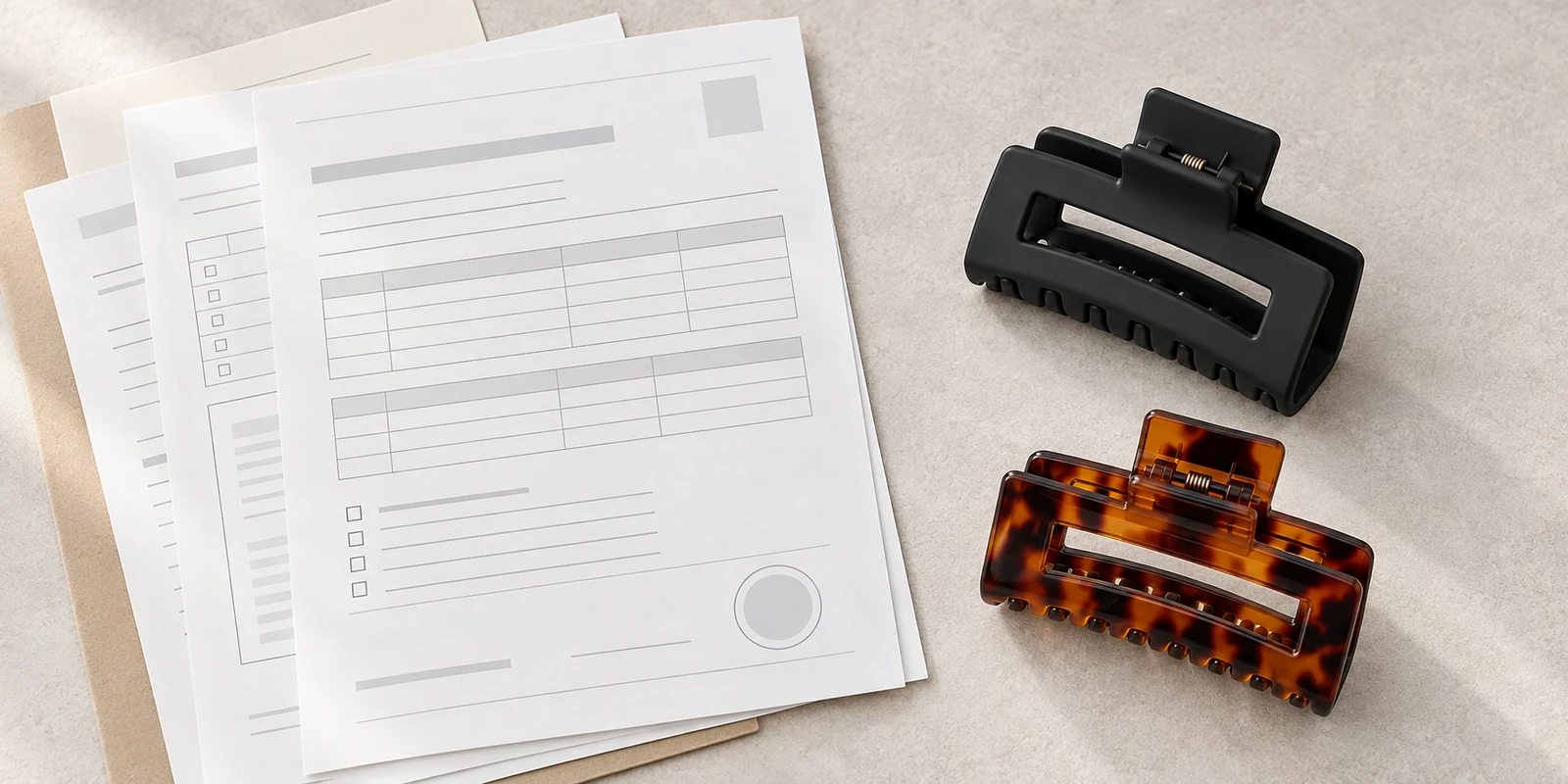
A recycled-content claim without paperwork is a marketing statement, not a verified fact, so buyers should request specific documentation before treating the claim as accurate.
Legitimate recycled-content claims should be backed by a transaction certificate (TC) issued against the specific production order, not a general company-level sustainability statement. The transaction certificate should reference the certification body, the standard (GRS or RCS), the recycled content percentage, and the specific order or batch it applies to. Buyers should be cautious of suppliers who can produce a certificate for the resin supplier but not one that traces to the actual claw clip production run, since certification at the resin level does not automatically transfer to the finished product without proper chain-of-custody documentation at the manufacturing stage.
Recycled resin pricing has historically been more volatile than virgin resin, since it depends on the availability and quality of collected waste streams rather than stable petrochemical supply chains. Buyers should expect the price gap between recycled and virgin-resin claw clips to fluctuate by season and by region, rather than assuming a fixed premium or discount.
Minimum order quantities also tend to differ. Factories with established recycled-resin supply chains and existing GRS or RCS certification can usually offer MOQs close to their standard virgin-resin thresholds, while factories sourcing recycled resin for the first time to fulfill a specific order may require a higher MOQ to justify the sourcing and certification effort. Buyers evaluating a new recycled-content supplier relationship should ask directly whether the factory already runs certified recycled material on other product lines, since this is a strong indicator of a smoother, faster order compared to a factory building this capability from scratch.
Recycled plastic claw clips are a legitimate and growing category, but the sustainability claim is only as strong as the documentation behind it. Buyers should treat “recycled” as a starting question rather than a finished answer: which certification, what percentage, applied to which component, and backed by which transaction certificate. A custom claw clip manufacturer with existing GRS or RCS certification on file will be able to answer all four questions without hesitation, which is itself a useful screening signal during supplier evaluation. Buyers who also source other accessory formats may want to confirm the same certifications are available through a hair scrunchie manufacturer relationship if recycled or sustainable materials are part of a broader product line strategy.
The Global Recycled Standard requires a minimum of 20% recycled content for certification eligibility, though most brands target 50% or higher recycled content before using the GRS logo in product-level marketing claims.
Post-consumer recycled plastic comes from products already used and discarded by consumers, such as packaging or bottles. Post-industrial recycled plastic comes from manufacturing scrap and offcuts, such as rejected parts or runners, that never reached a consumer.
Performance can be comparable when suppliers blend recycled resin with a percentage of virgin material to stabilize mechanical properties, but buyers should request samples and test spring tension and impact resistance rather than assuming automatic parity with virgin-resin clips.
Reclaimed resin carries residual pigment from its original use that is difficult to fully mask, which makes darker tones, tortoiseshell patterns, and muted colors more achievable than bright, pastel, or clear finishes.
Buyers should request a transaction certificate issued against the specific production order, referencing the certification body, the standard used (GRS or RCS), the recycled content percentage, and the exact batch or order it applies to, rather than accepting a general company-level sustainability statement.
Recycled content claims typically apply only to the plastic jaw body of the clip, not the metal spring mechanism, since the spring is a separate stainless steel component not included in a plastic recycled-content calculation.
Recycled plastic claw clips give buyers a genuine way to meet growing retail demand for sustainable accessories, provided the sourcing process treats certification as a requirement rather than a nice-to-have. Manufacturers such as JunYi Beauty, which produces claw clips in both virgin and recycled plastic construction at its Dongguan facility under ISO 9001:2015 and amfori BSCI certification, offer the material documentation and batch-level verification that buyers need to source this category with confidence.
👉 Searching for Hair Accessories ? Your brand deserves the best.