Home
Product
Contact
Odm/Oem
About
A minimum order quantity (MOQ) for hair accessories is the smallest number of pieces a factory will produce in one run, counted per style, per color, or per SKU. The figure is not arbitrary. It reflects what the factory must spend before the first good piece comes off the line. This guide sets out typical minimums for claw clips, scrunchies, hair ties, and pins, and explains which decisions raise or lower them.
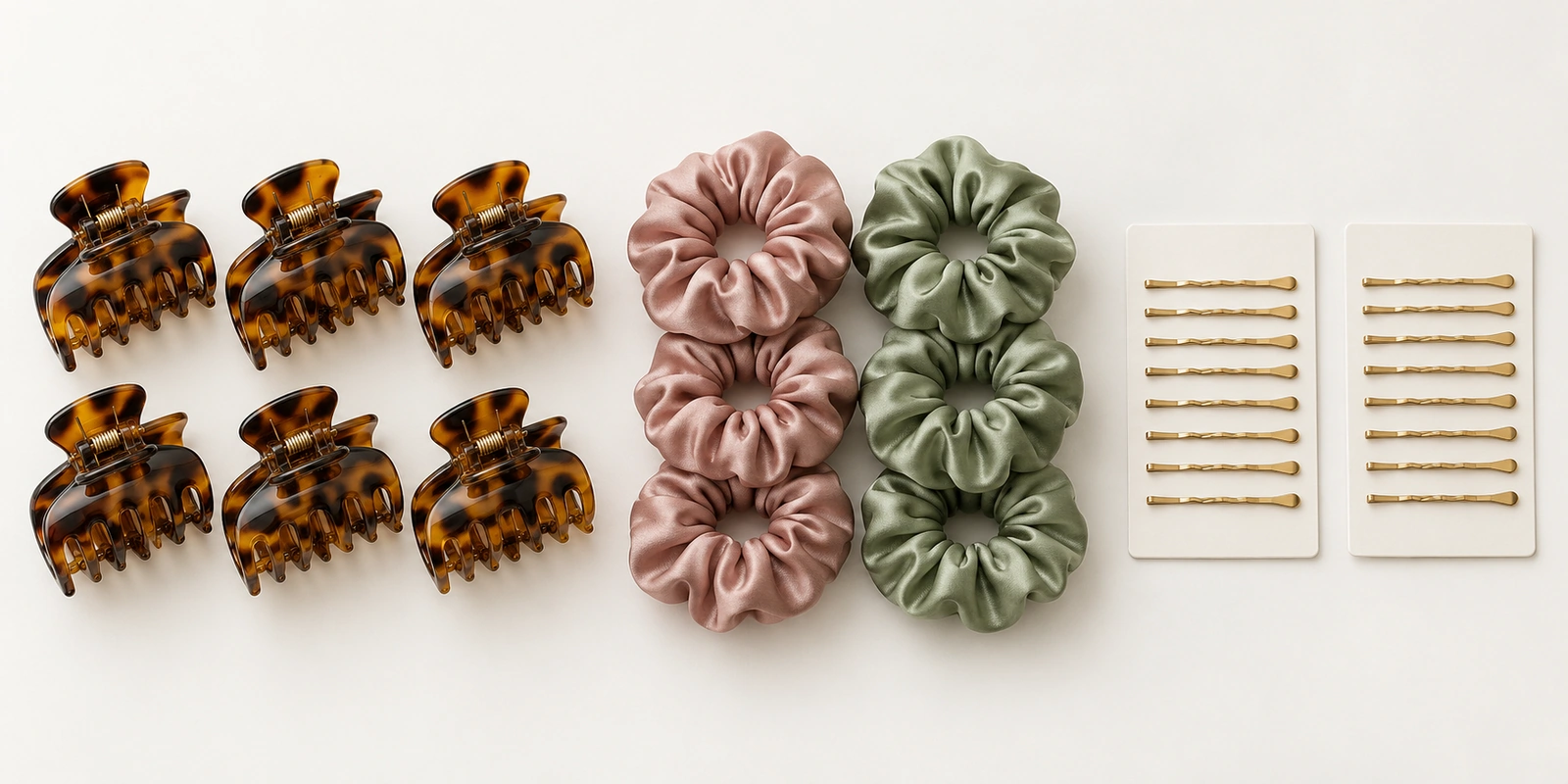
Every production run carries fixed costs. Setting up an injection machine, matching a resin color, dyeing a fabric batch, and approving a first-off sample cost the same for 100 pieces as for 5,000. The MOQ is the volume at which those costs stop distorting the unit price.
The unit of the minimum matters as much as the number. “500 pieces per style” lets a buyer split colors. “500 pieces per style per color” does not.
A range of three claw clip shapes in four colors at 300 pieces per style per color is 3,600 pieces, not 900. Read the wording before comparing suppliers.
A factory that molds in-house and keeps resin colors in stock can run small batches profitably. A trading company placing orders with several workshops cannot. That is one reason quoted minimums for the same product can differ tenfold.
Some suppliers will run below their minimum for a surcharge. The surcharge is the fixed setup cost spread over fewer pieces, so it rises sharply as the order shrinks. A 200-piece order at a 500-piece factory can cost more in total than the full 500.
Ask for prices at two or three quantities. The gap between them shows where the setup cost sits.
Across product types, minimums fall into three tiers that depend on how much of the product is new. The following table outlines the tiers commonly offered by factory-direct suppliers.
| Order Type | Typical Minimum | What Is New | Main Cost Absorbed |
|---|---|---|---|
| Stock design, stock color | From 100 pcs per style | Nothing | Packing only |
| Stock design, custom color or logo | 300–500 pcs per style per color | Color or logo | Color matching, setup |
| New design | 1,000+ pcs per SKU | Mold or pattern | Tooling |
This tier uses an existing mold and a color already in production. Many factory-direct suppliers accept about 100 pieces per style here. It suits test orders and sample ranges for new online shops.
Adding a brand color or logo creates a dedicated run. Expect 300 to 500 pieces per style per color. This is the tier where most private label ranges start, as explained in the comparison of white label vs private label hair accessories.
A new shape needs a new mold, so minimums start at about 1,000 pieces per SKU. Below that volume, tooling cost per piece becomes hard to justify.
Claw clips carry higher minimums than simple clips because each mold set holds four to six components. The upper jaw, lower jaw, hinge, and spring housing are all tooled.
Injection-molded plastic claw clips follow the three tiers closely. Color is mixed into the resin, so a new color means a cleaning cycle and a fresh run, not a new mold.
Acetate patterns come from sheet, not resin. A stock tortoise or marble sheet can run at the lower tiers. A custom pattern means a custom sheet batch, and the sheet supplier sets that minimum, not the clip factory.
Metal clips add casting and plating. Each plating color is a separate batch, so a buyer asking for gold, silver, and rose gold in small quantities should expect resistance.
The custom claw clip manufacturing page lists the materials and finishes available on existing molds.
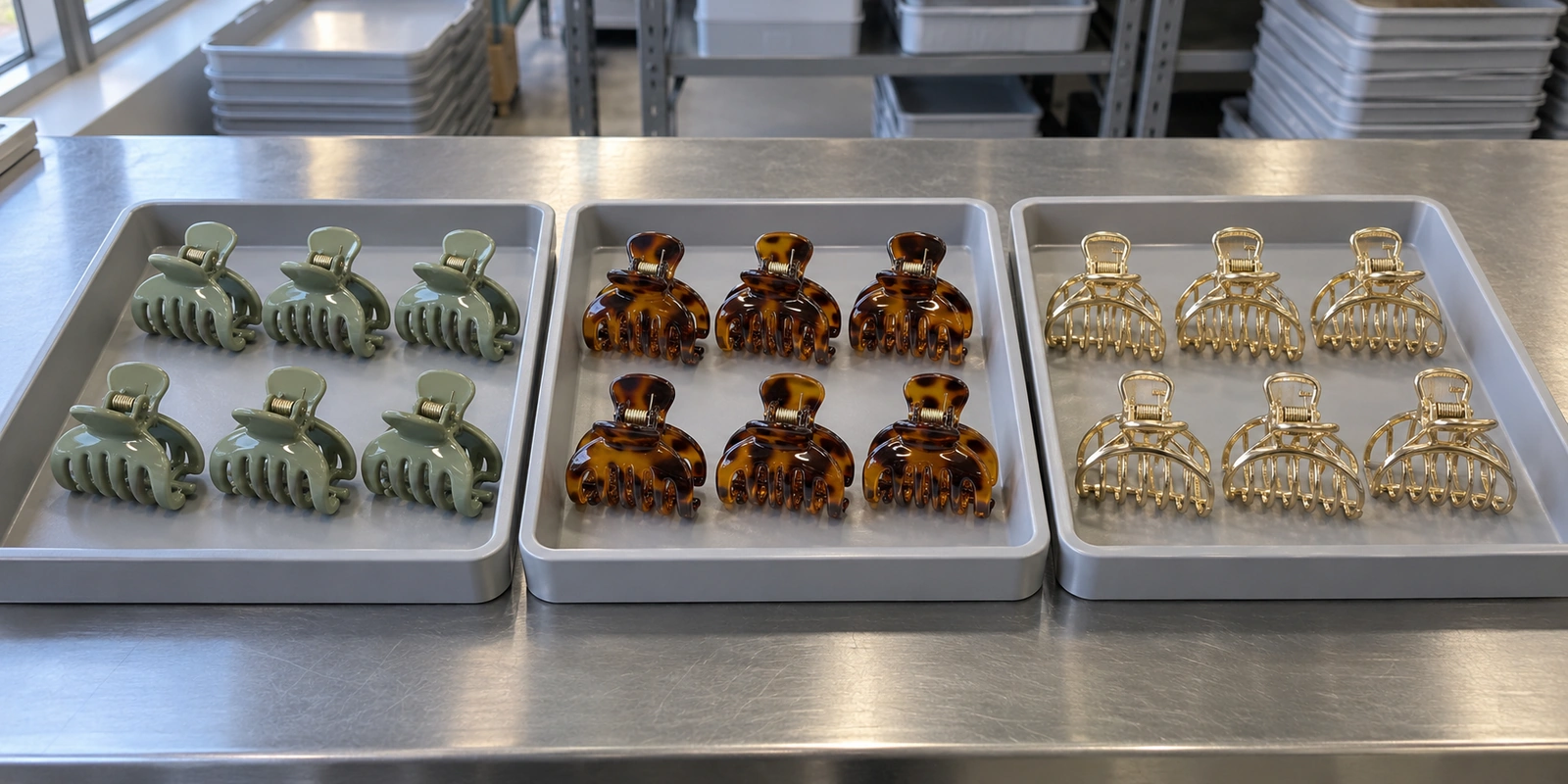
Fabric accessories follow a different logic. The constraint is usually the fabric, not the sewing line.
Scrunchies cut from fabric already held in stock can be made at low minimums, often 100 pieces per style. Velvet, satin, and cotton in core colors are commonly stocked.
A brand color in silk or satin needs a dye lot. Dye-lot minimums typically raise the effective MOQ to 500 to 1,000 pieces per custom color. Printed fabric adds a separate print setup.
Recycled polyester satin and velvet are now common requests. Certified recycled fabric is bought in documented batches, so the minimum follows the fabric mill. Under the Global Recycled Standard, a business-to-business claim needs at least 20% recycled content, and consumer-facing labelling needs at least 50%. Small orders can use certified stock fabric; a certified custom color rarely works below the dye-lot minimum.
Fabric-covered elastic ties sit close to scrunchie minimums. Spiral coil ties are injection molded, which pushes their minimum to about 500 to 1,000 pieces per style. Buyers can review fabric options on the custom hair scrunchie manufacturer page.
Pins are small, fast to make, and sold in multiples. Their minimums look low per style but packaging changes the picture.
Standard bobby pins and U-pins in existing finishes start at around 100 pieces per style. Wire gauge and tip coating are set by the existing line.
Pearl, rhinestone, and cast-metal pins need decoration molds or hand setting. Minimums rise with each new decorative part. For EU sales, metal pins in prolonged skin contact fall under the nickel limits in REACH Annex XVII entry 27, and testing each plating finish adds cost to small orders.
Pins are rarely sold loose. A printed card holding 20 or 30 pins means the card minimum, not the pin minimum, decides the order size.
The following video gives a practical overview of how bobby pins are produced in a factory.
Packaging is where small orders most often break. Printers set their own minimums, and those minimums do not shrink to match a 300-piece clip order.
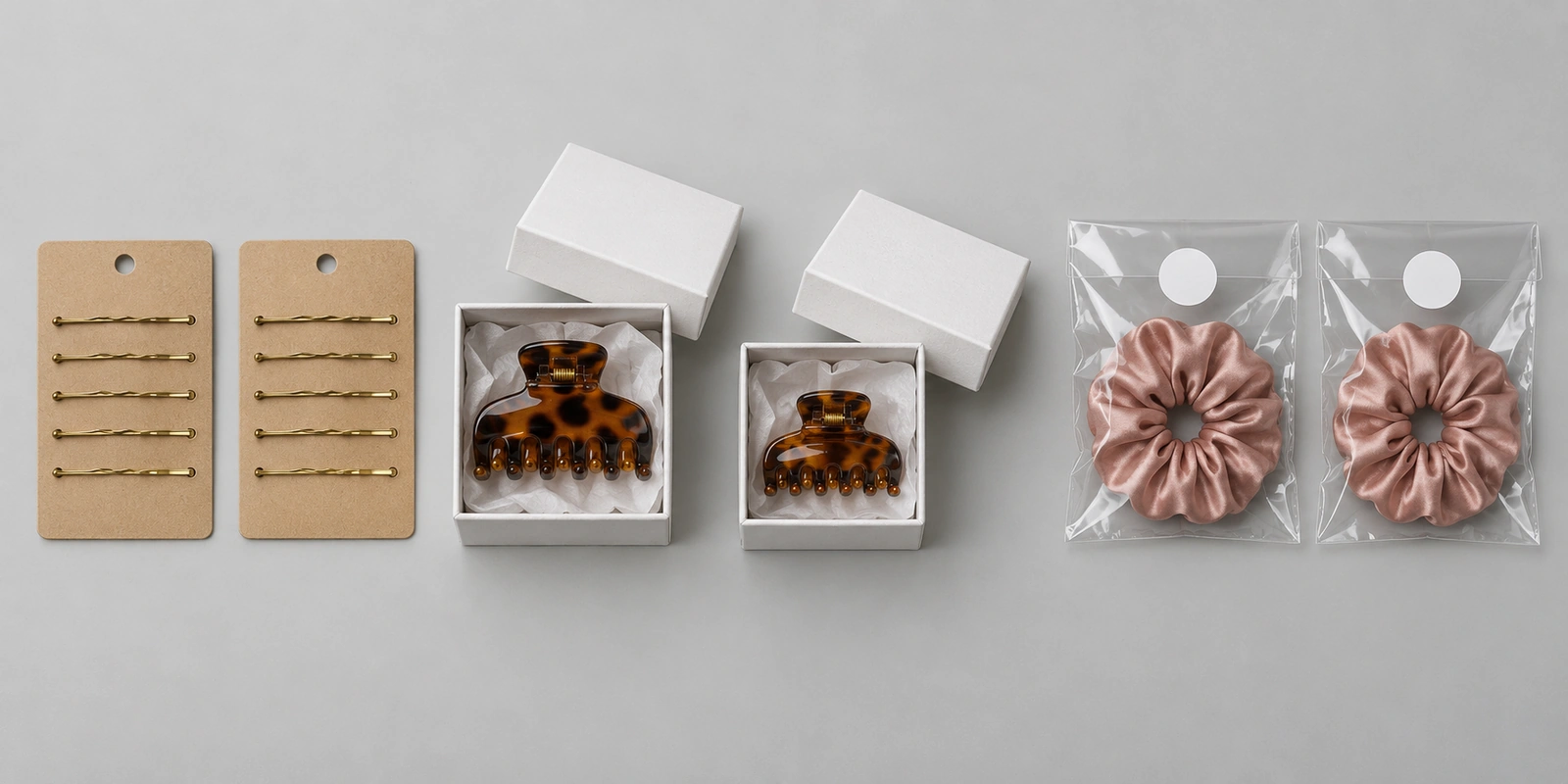
Offset-printed backing cards commonly need 1,000 to 2,000 pieces per design. Digital printing lowers that threshold at a higher cost per card. Plain polybags with a printed sticker avoid the problem for a first order.
Most brands do not need a new mold for their first order. A smaller start is possible if the buyer accepts some limits.
Factories with large mold libraries can often match a target shape from stock. Changing only color and logo keeps the order in the middle tier.
Three colors of one style is easier to run than one color each of three styles. Add colors after the first sell-through.
Ask what the minimum is for a repeat order of the same style and color. Many factories apply a lower threshold to reorders, because the color match and logo setup already exist. Keep the approved sample; it is the reference for every reorder.
A 100-piece order will not include a custom-dyed fabric, a new mold, or offset-printed boxes. A factory that promises all three at that volume is either pricing them in heavily or will not deliver them.
Q: What is a typical MOQ for custom hair accessories?
It depends on how much is new. Existing designs in stock colors start at about 100 pieces per style. A custom color or logo on an existing design usually needs 300 to 500 pieces per style per color, and a new mold needs 1,000 pieces or more per SKU.
Q: What is the MOQ for custom claw clips?
Claw clips follow the same three tiers. Plastic and stock acetate clips can start at about 100 pieces per style from existing molds. Custom colors need 300 to 500 per color. A custom acetate pattern or new jaw shape raises the minimum, because sheet batches and mold sets carry their own costs.
Q: Can scrunchies be ordered in small quantities?
Yes, when made from fabric already in stock, often from 100 pieces per style. A custom-dyed brand color is different. Dye lots typically lift the minimum to 500 to 1,000 pieces per color, and printed fabric adds a separate setup.
Q: Why is the packaging minimum higher than the product minimum?
Printers set minimums based on press setup, separate from the accessory factory. Offset-printed cards and boxes commonly need 1,000 to 2,000 pieces per design. Digital printing or a plain bag with a printed sticker is the usual workaround for a first order.
Q: Is MOQ counted per style or per color?
Either, and the wording changes the total. A minimum per style lets a buyer split colors within it. A minimum per style per color applies to every color separately. Confirm the unit in writing before comparing quotes from different suppliers.
Hair accessory MOQs depend less on the product type than on what is new: color, logo, fabric, or mold. Buyers who plan a first order around existing designs and stock materials can start small and scale into custom tooling later.
Manufacturers such as JunYi Beauty, which keeps more than 2,000 existing molds at its Dongguan facility, represent the type of OEM and ODM hair accessory supplier able to offer all three MOQ tiers under one roof.
👉 Searching for Hair Accessories ? Your brand deserves the best.