Home
Product
Contact
Odm/Oem
About
A comb headband is a flexible plastic or metal headband whose body is shaped into a row of zigzag teeth. The teeth comb through the hair and rest against the scalp, so the band grips instead of resting on the surface. A vague non-slip claim on this product is a common source of retail returns. This guide explains when zigzag teeth hold, when they slip, and what buyers should specify.
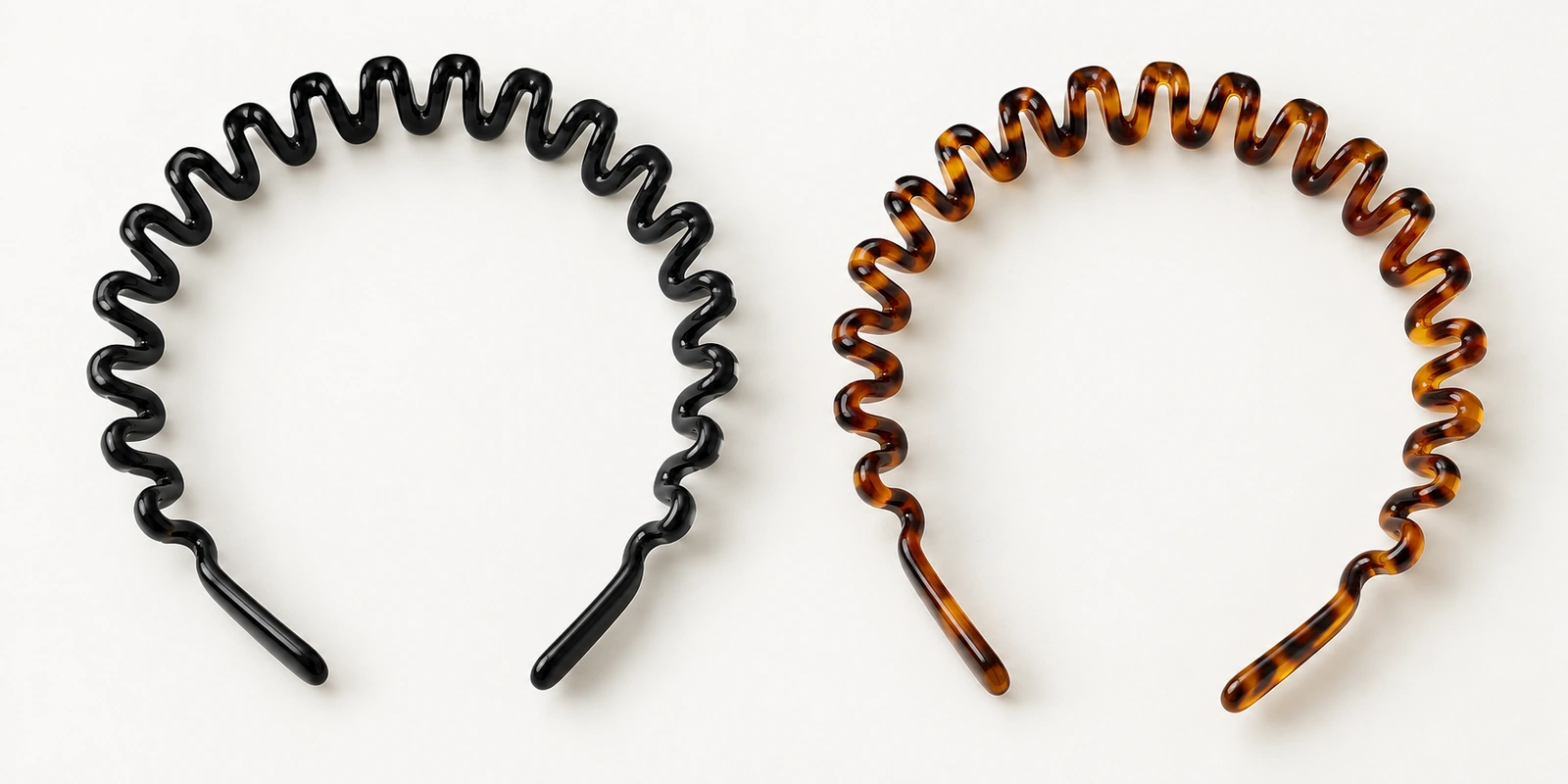
A comb headband combines a headband and a comb in one molded or formed piece. Its zigzag profile creates long, wave-shaped teeth along the whole band. General references group it with toothed headbands, a category defined by comb-like teeth joined to the band.
Each bend of the zigzag acts as a tooth that slides between strands. Hair fills the gaps and holds the band in position from both sides. Grip comes from the hair itself, not from pressure on the head.
The practical result is a band that can sit looser than a smooth headband and still stay in place. That is the feature worth explaining on a product page.
The stretch comb was a familiar accessory in the 1990s and 2000s. Current versions often use thicker teeth, wider profiles, and tortoise or matte finishes. Buyers should treat it as a functional basic with a fashion cycle, not a one-season novelty.
Four constructions are sold under similar names, and they do not behave alike. The following table outlines the main types and where each one fits.
| Type | Shape | Typical Material | Suited To |
|---|---|---|---|
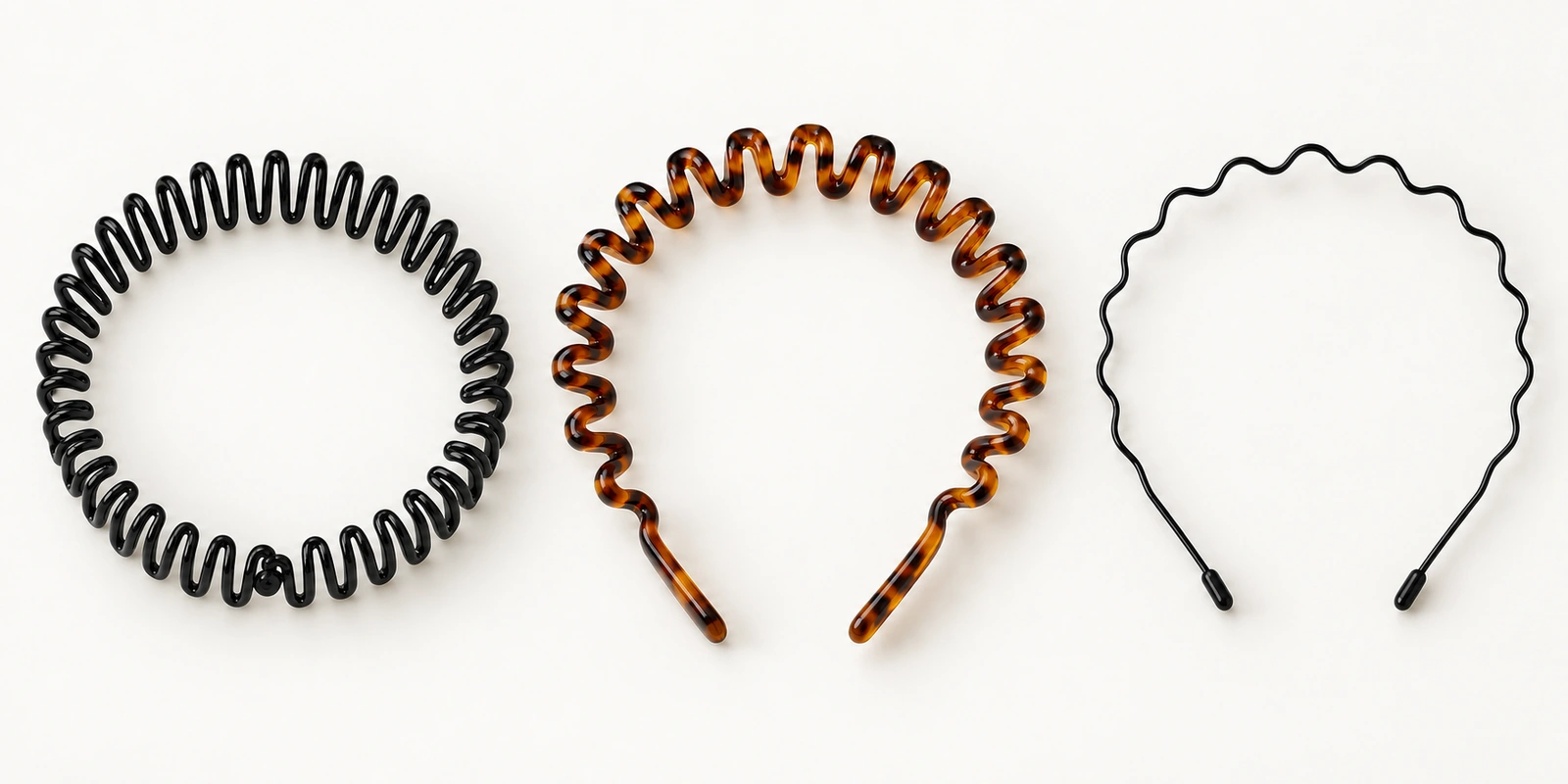
| Full-circle stretch comb | Closed expanding ring | Flexible plastic | Pushing all hair back |
| Open-ended zigzag band | Horseshoe with wavy teeth | Plastic or acetate | Everyday styling |
| Wavy metal band | Thin open wire | Coated or plated metal | Sport and short hair |
| Toothed standard headband | Smooth band, inner teeth | Plastic, fabric-covered | Decorative wear |
The full-circle version is a closed ring that expands as it is pushed back from the forehead. It sweeps all the hair off the face, which suits skincare, makeup, and sport. Its fit depends on how far the plastic stretches without losing shape.
The open-ended version is shaped like a standard headband with long wavy teeth. It is sold in slim and wide profiles, and one acetate version on the market measures 3.5 cm wide. This is the format most fashion retailers now carry.
The metal version is a thin wire formed into a shallow wave. It is light and low-profile, which suits sport and shorter hair. Its narrow contact area means tip finish and coating quality carry more weight.
A standard headband with small molded teeth on its inner edge is a separate product. Do not let a supplier quote one against a brief written for the other. Buyers can compare plastic, metal, and fabric constructions from a custom hair band manufacturer before narrowing the brief.
Yes, a well-sized comb headband stays put on most hair during ordinary daily wear. It is not slip-proof on every head or in every activity. The outcome depends on four variables: hair, fit, tooth design, and placement.
A smooth band relies on clamping pressure behind the ears and a slick inner surface. Any head movement can push it backward. Zigzag teeth add many small contact points along the full length of the band.
Customer reviews of current zigzag bands commonly mention a secure grip without the pressure of a tight band. That pairing of grip and comfort is the main reason the format sells.
If a listing promises hold for every hair type, expect returns from the fine-hair segment. An honest claim is easier to defend than a universal one.
Hair profile changes how deeply the teeth engage. The following table outlines general expectations, based on how zigzag teeth interact with each profile.
| Hair Profile | Expected Hold | Practical Note |
|---|---|---|
| Fine, straight | Moderate | Slim band, closer teeth |
| Medium, wavy | Strong | Slim or wide |
| Thick or curly | Strong | Wide band, longer teeth |
| Short or layered | Moderate | Short layers may escape |
| Long and heavy | Moderate | Pair with a tie |
| Very dense or coily | Varies | Needs wider tooth gaps |
Fine hair offers less friction, so closer tooth spacing helps. A slim band usually performs better here than a wide one. On thin hair the band itself can show through, so matching band color to hair tone matters.
Thick hair fills the tooth gaps and locks the band firmly. The risk is the opposite one: teeth that are too short never reach the scalp. For this segment, specify longer teeth and wider gaps so the band seats fully.
A comb headband controls bangs and grown-out layers well because it combs them backward. Very short pieces can still spring free between teeth. The full-circle stretch comb handles this better, since it surrounds the whole hairline.
Long hair adds weight behind the band but little load on the band itself. The band holds the front, and the length still needs a tie or clip. Sell it to this group as a face-framing tool, not as a replacement for a ponytail holder.
The following video gives a practical overview of how a zigzag comb headband is placed and worn.
Fit decides whether the teeth touch the scalp or hover above it. It is also the specification most often left to the factory default.
Most comb headbands are sold as one size. The opening width at rest and the spring-back of the material set the real fit.
Too open, and the teeth float. Too closed, and the ends press behind the ears.
If you sell to both adults and children, ask for two opening widths. A single mold rarely serves both groups well.
Tight smooth bands concentrate force at two points behind the ears. A zigzag band spreads contact along its length and needs less tension to stay in place. That difference explains most of the comfort feedback on this product.
Pointed teeth grip well, but every tip still needs a rounded finish. The two band ends need the same care, because they rest on sensitive skin. A quick press against the inner wrist shows whether a sample scratches.
Placement accounts for a large share of slip complaints. These steps belong on the backing card or in the listing images.
The full-circle stretch comb is worn differently. Pull it down around the neck first, then push it up and back from the forehead.
Two habits undo the hold. The first is wearing the band over the hair like a standard headband. The second is putting it on straight after applying oil or serum, which removes friction at the teeth.

Material decides how the band flexes, how long it keeps its shape, and how the teeth feel. These points are worth checking before a sample is approved.
Most comb headbands are injection-molded from a flexible thermoplastic. The band must bend repeatedly without cracking or opening up. White stress marks at the bends of a sample signal brittle material.
On molded bands, the mold parting line runs along every tooth. Flash left on that line acts like a tiny hook and is a common cause of hair pulling. Ask how the factory trims or polishes it.
Recycled plastic versions are now common in mainstream retail. Under the Global Recycled Standard, a business-to-business claim needs at least 20% recycled content. Consumer-facing labeling requires at least 50%.
Acetate blends give deeper color and a stiffer, more solid feel. They suit tortoise and marbled finishes that molded plastic imitates less convincingly. Suppliers advise keeping acetate away from heat, water, chemicals, and direct sunlight.
Metal bands are formed from wire and then coated or plated. Capped or dipped ends prevent scratching. For the EU, buyers commonly request an EN 1811 nickel release report for each finish.
The limit under REACH Annex XVII entry 27 is 0.5 µg/cm²/week for articles in prolonged skin contact. A headband worn for hours belongs in that conversation with the test lab.
Zigzag teeth are one of several ways to stop a headband from sliding. Each alternative trades grip, comfort, and appearance differently.
Comb headbands sit between these options. They grip more positively than a lining and add less bulk than padding. They are also the only option that lifts the roots instead of flattening them.
A range that pairs one comb style with one soft-lined style covers most customers. Position the comb band for styling and the lined band for comfort wear.
A comb headband looks simple, which is why briefs for it are often too thin. The details below control hold, comfort, and return rate.
Bands made from existing molds carry the lowest minimums. Entry MOQs for standard designs generally start around 300 to 500 pieces per style and color. Custom colors usually carry their own per-color minimum.
Production commonly takes 30 to 60 days after sample approval. An OEM and ODM hair accessory service can confirm which existing molds match a target width. That check should come before any new tooling is opened.
State what the band does and for whom. A claim such as “grips most hair types for daily wear” is accurate and defensible. Add the band width, the fit range, and one image of correct placement.
Name the hair types where hold is weaker. That candor keeps reviews focused on what the product actually does.
A comb headband is a flexible plastic or metal headband whose body is formed into zigzag teeth. The teeth comb through the hair and rest against the scalp. It is sold as a full-circle stretch comb, an open-ended zigzag band, or a thin wavy metal band for sport.
Yes, on most hair during ordinary daily wear. The teeth sit between strands, so the hair itself holds the band. Hold weakens on very fine, freshly washed hair, during high-impact exercise, or when the band opens wider than the head and the teeth cannot reach the scalp.
They work, with limits. Fine, straight hair gives the teeth less friction, so some movement is possible. A slim band with closer tooth spacing performs better than a wide one. Combing the band backward and then nudging it forward seats the teeth more securely.
A well-made zigzag band needs less tension than a smooth band, so pressure behind the ears is lower. Discomfort usually comes from an opening that is too narrow or from unfinished tooth tips. Flash left on molded teeth is the usual cause of hair pulling.
A stretch comb is a closed ring that expands and sweeps all the hair back from the hairline. A zigzag headband is open-ended like a standard headband and holds the front and sides. The stretch comb controls short layers better, while the open band is easier to style.
Standard designs from existing molds generally start around 300 to 500 pieces per style and color. Custom colors usually carry a separate per-color minimum, and new molds raise the threshold. Production commonly takes 30 to 60 days after sample approval, depending on order size and factory capacity.
Buyers should run a flex test for cracking, a wear test on three hair types, and a tip-finish check. Metal bands for the EU commonly need an EN 1811 nickel release report. Recycled claims should be backed by Global Recycled Standard documentation for the specific production order.
Comb headbands with zigzag teeth do stay put on most hair when fit, tooth design, and placement are right. They are less reliable on very fine hair and in high-impact sport, and listings should say so.
Opening width, tooth finish, and material decide performance more than the zigzag shape alone. Manufacturers such as JunYi Beauty, which produces plastic and metal headbands at its Dongguan facility under ISO 9001:2015 and amfori BSCI certification, represent the type of hair accessories manufacturer suited to brands developing a non-slip headband range.
👉 Searching for Hair Accessories ? Your brand deserves the best.