Home
Product
Contact
Odm/Oem
About
A French side comb is a short, curved comb whose teeth slide into the hair and anchor against the scalp. A hair fork clip is a rigid pin with two to five prongs that threads through a twist. Stocking the wrong one for a French twist leads to slipping styles, returns, and slow-moving inventory. This guide compares hold by hair type, size, material, and sourcing specification.
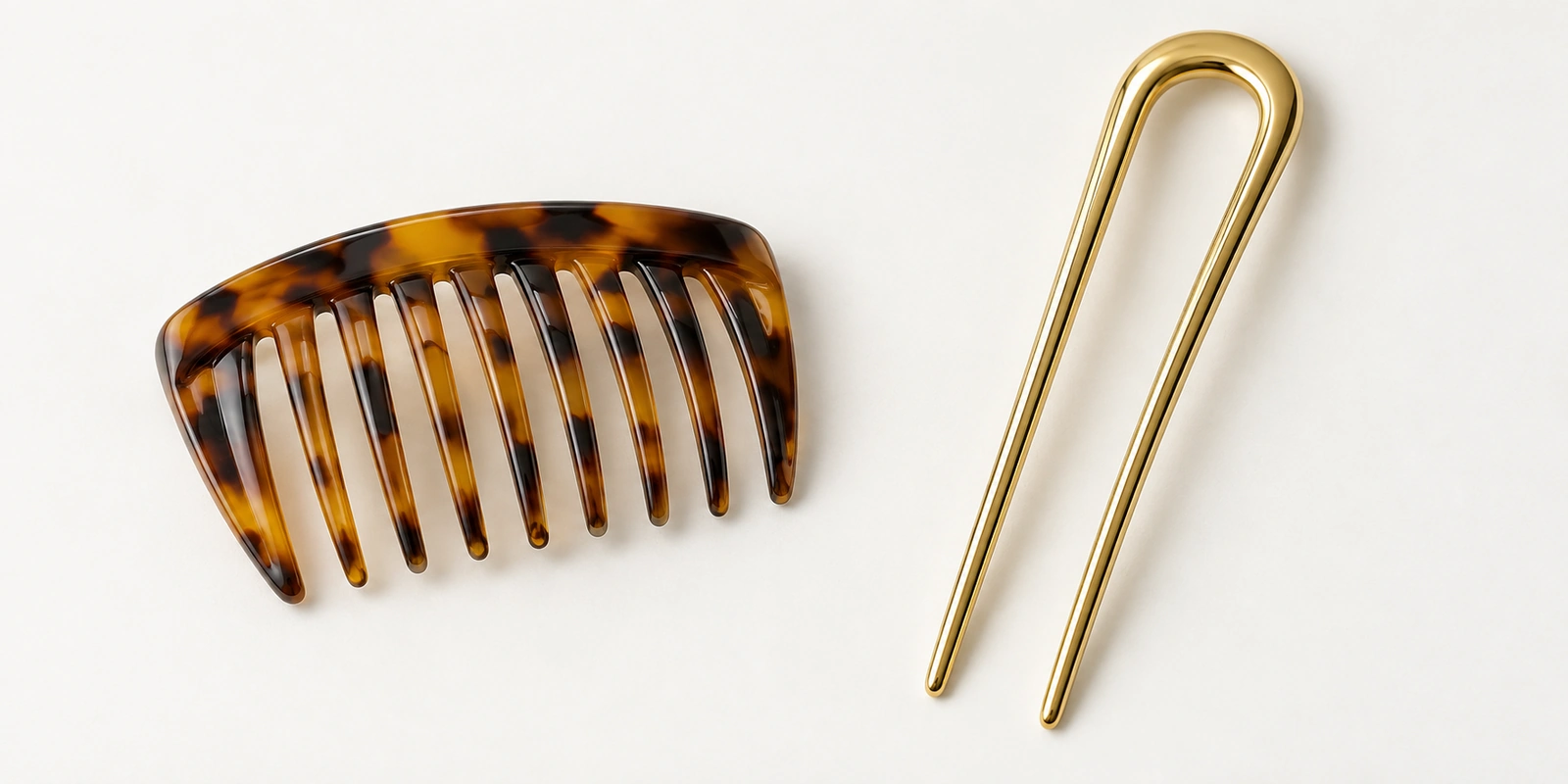
A French side comb is a compact comb with a curved spine and a single row of teeth. The curve follows the shape of the head, so the comb lies flat once it is seated. It pins a section in place without elastic or spring pressure.
The teeth catch hair at the edge of the roll and press it toward the scalp. Hold comes from friction along each tooth, not from clamping force. That is why a comb feels light on the head but depends heavily on hair texture.
Three formats share the name in retail listings. A side comb is the compact piece set at the edge of the roll. A pleat comb is longer and deeper, built to hold the full twist.
An interlocking pair is two combs pushed in from opposite sides so their teeth cross inside the roll. The pair is the comb format that comes closest to fork-level security.
Retail side combs usually run from about 7 cm to 14 cm long. French pleat combs reach 12 cm to 17 cm and carry deeper teeth. A compact side comb often has around nine teeth.
In practice, tooth depth matters more than tooth count for a French twist. Shallow decorative combs rarely hold a full roll alone. Buyers should measure the usable tooth depth on every sample, not only the overall length.
A hair fork clip is a rigid pin with two or more parallel prongs joined at a decorative head. It is one of several accessories used to secure a French twist or French roll, alongside combs, sticks, and bobby pins. Listings also call it a French hair pin, a U-shaped pin, or a chignon fork.
The prongs pass through the outer layer of the roll and then run along the scalp. This weave pins the layers of the twist to the hair beneath it. The load spreads along the full prong length instead of a single row of short teeth.
Fork lengths commonly run from about 7.5 cm for fine hair to 15 cm for long hair. A useful rule is a prong at least 1.3 cm longer than the roll is wide. Two prongs suit most hair, while three to five prongs spread the weight of thick or silky hair.
Length is the specification that fails most often in mixed assortments. Buyers comparing fork formats can review U-pin and fork styles from a custom hair pin manufacturer before fixing a size range.
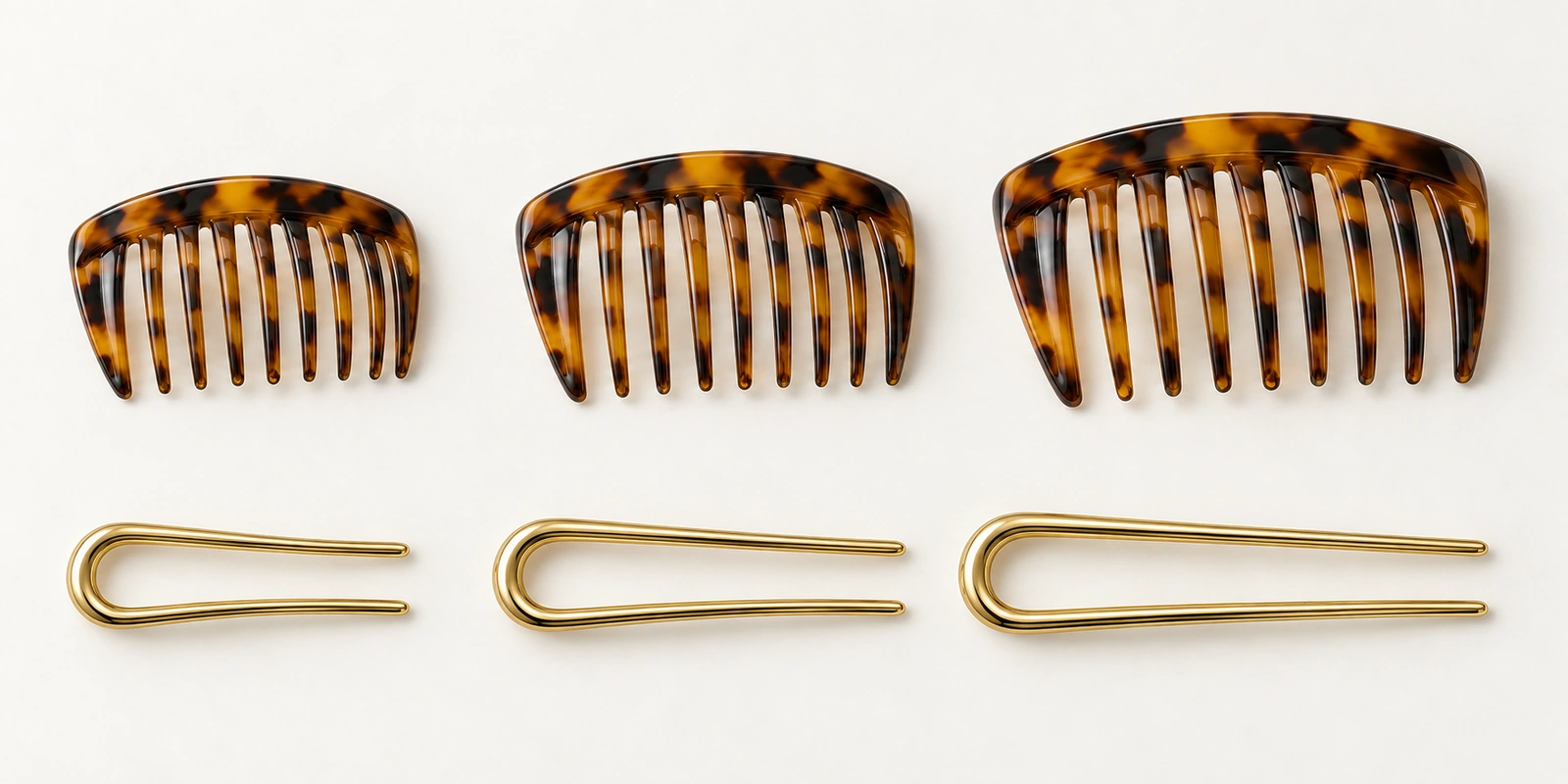
The comparison below summarises how the two tools differ on the criteria that decide French twist hold.
| Criteria | French Side Comb | Hair Fork Clip |
|---|---|---|
| Hold mechanism | Tooth friction at roll edge | Prongs woven through roll |
| Typical length | 7–14 cm | 7.5–15 cm |
| Contact points | One row of teeth | Two to five prongs |
| Fine hair | Good with texture prep | Needs curved prongs |
| Thick or heavy hair | Needs a pair | Strong |
| Learning curve | Low | Moderate |
| Visible part | Full decorative spine | Head only |
| Common materials | Cellulose acetate, metal | Metal, acetate, wood |
| Typical failure | Slides out downward | Rotates loose |
Read the table as a matching exercise, not a ranking. The fork wins on load capacity. The comb wins on speed, forgiveness, and decorative surface.
Neither tool is a universal answer for every customer. A range that names the suitable hair type on each product will outperform one that promises all-day hold for everyone. That single line of copy removes most mismatched purchases.
The failure row deserves attention during sampling. A comb that slides out points to shallow teeth or a slick finish. A fork that rotates loose points to prongs that are too short for the roll.
Hold depends on how much hair the tool must carry and how much friction that hair offers. The answer changes across three broad hair profiles.
Fine hair gives a single smooth prong very little to grip. A side comb with closely set teeth spreads contact across more strands and usually holds better. Stylists often add dry shampoo or light backcombing first to build texture.
A fork can still work on fine hair if it has curved prongs or at least three of them. For this segment, a matte or lightly textured finish is worth more than extra length.
Medium hair is the profile where both tools perform reliably. The choice comes down to look and habit, not security. A single 10 cm to 12 cm comb or a two-prong fork usually lasts a working day.
A heavy roll pulls downward on whatever holds it. A fork resists that load better because its prongs run the height of the twist. One short comb tends to creep out within hours on this hair.
Buyers serving this segment should specify a long pleat comb, an interlocking pair, or a fork of 13 cm or more. Do not rely on a decorative side comb alone for long, dense hair.
The following tutorial by Alex Gaboury demonstrates securing a French twist with a French hair pin (hair fork).
Most complaints about weak hold trace back to placement, not the product. Clear steps on the pack or listing reduce those complaints.
If you sell to first-time users, print the flip step as a diagram. It is the step most people skip.
Material decides stiffness, weight, and surface friction. Finish decides whether the tool glides in cleanly or snags on the way out.
Traditional French combs are cut from cellulose acetate sheet and tumble-polished. Cutting leaves no mold seam on the teeth, so they pass through hair cleanly. Injection-molded plastic combs can carry a parting line on each tooth.
If you source molded combs, ask how the factory removes that flash. A fingertip run along the teeth on the first sample shows the answer quickly. Acetate also flexes slightly, which adds comfort but limits how thin a prong can be.
Metal forks are formed from wire or stamped sheet, then polished and electroplated. Metal allows slim prongs with high stiffness, which suits heavy hair. The trade-off is a slick surface that can slide in fine hair.
A gentle wave in the prongs or a matte finish adds grip without adding bulk. Rounded or ball-ended tips matter as much as the plating color. Sharp tips are the first thing end customers mention in reviews.
Wood offers the most natural friction, though grain quality and sealing vary by batch. Acrylic is light and color-flexible but more brittle than acetate at thin sections. Both appear more often in forks than in side combs.
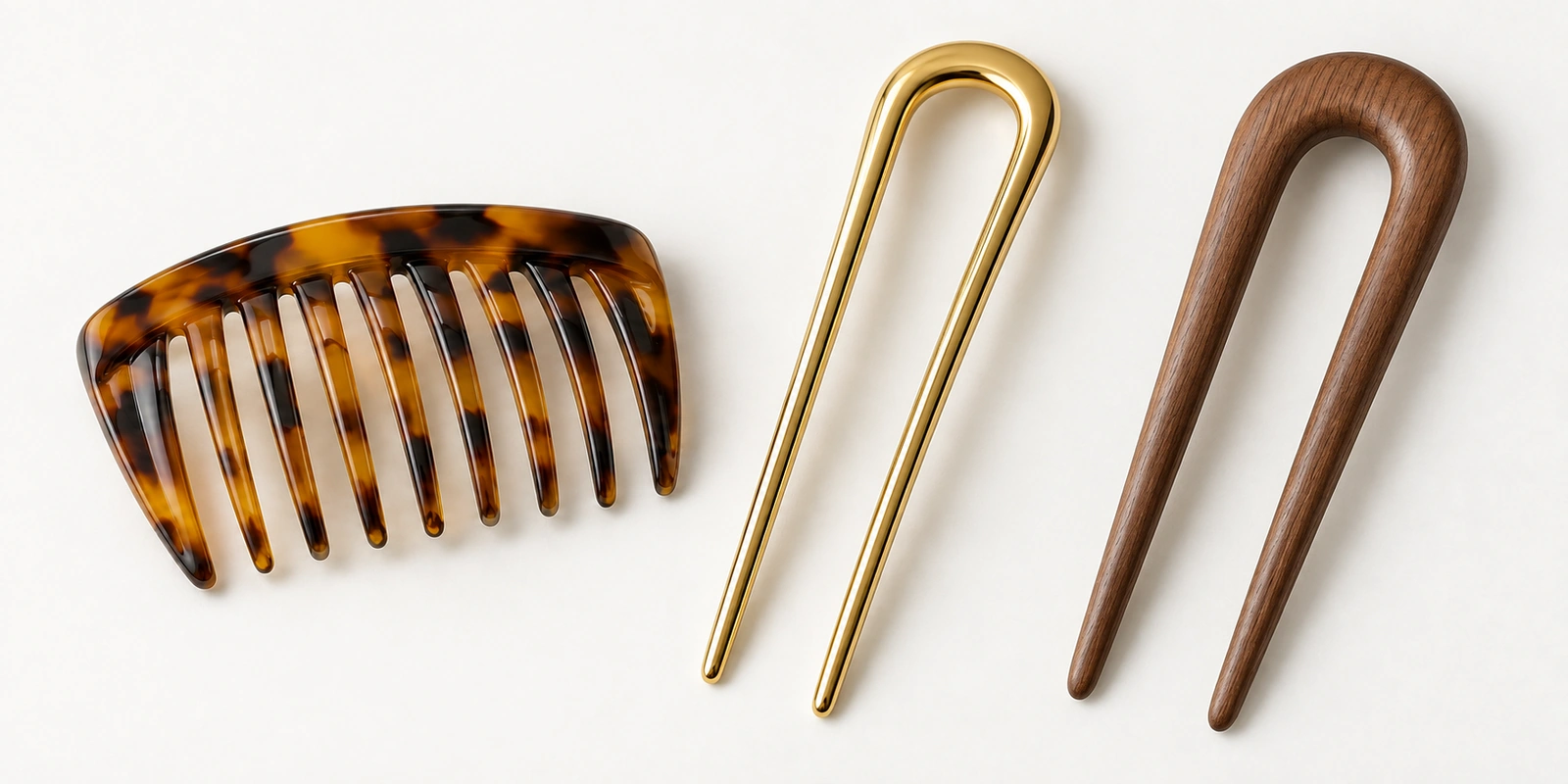
Acetate reacts poorly to heat, solvents, and long soaking. Suppliers of acetate combs advise keeping them away from hairspray, perfume, and direct sunlight. Removing trapped hair and drying the comb before storage helps the teeth keep their shape.
Plated metal lasts longer when it stays dry. Sweat and salt water speed up tarnish on thin plating. A short care line on the backing card costs little and prevents avoidable complaints about fading or spotting.
Service life is also a sizing issue. A comb forced to carry too much hair will lose teeth early, whatever the material. Matching size to hair volume protects the product as much as the hairstyle.
Storage matters at wholesale level too. Acetate combs packed loose in bulk bags can scuff each other in transit. Individual sleeves or carded packs protect the polished finish and reduce cosmetic rejects on arrival.
A sample that looks right can still fail in use. The brief should fix the dimensions and tests that control hold.
Plated metal that rests against the scalp raises nickel questions in the EU. Buyers there commonly request an EN 1811 nickel release report. The limit under REACH Annex XVII entry 27 is 0.5 µg/cm²/week for articles in prolonged skin contact.
Ask for the report by plating color, because each plating bath behaves differently. A report for gold plating does not cover a gunmetal or rose gold run.
Existing molds and standard wire forms carry the lowest minimums. Entry MOQs for standard designs generally start around 300 to 500 pieces per style and color. New acetate tooling or custom plating colors push that figure higher.
Production commonly takes 30 to 60 days after sample approval. An OEM and ODM hair accessory service can confirm which existing molds match a target size. That check should happen before any new tooling is opened.
Most ranges need both tools because they serve different buyers. Side combs sell to occasion, bridal, and beginner customers. Forks sell to long-hair customers who want all-day security.
A practical starter range is one compact comb, one long pleat comb, and two fork lengths. Keep finishes consistent across the set so the pieces can be merchandised together. Tortoise and black acetate with gold or silver metal covers most retail requests.
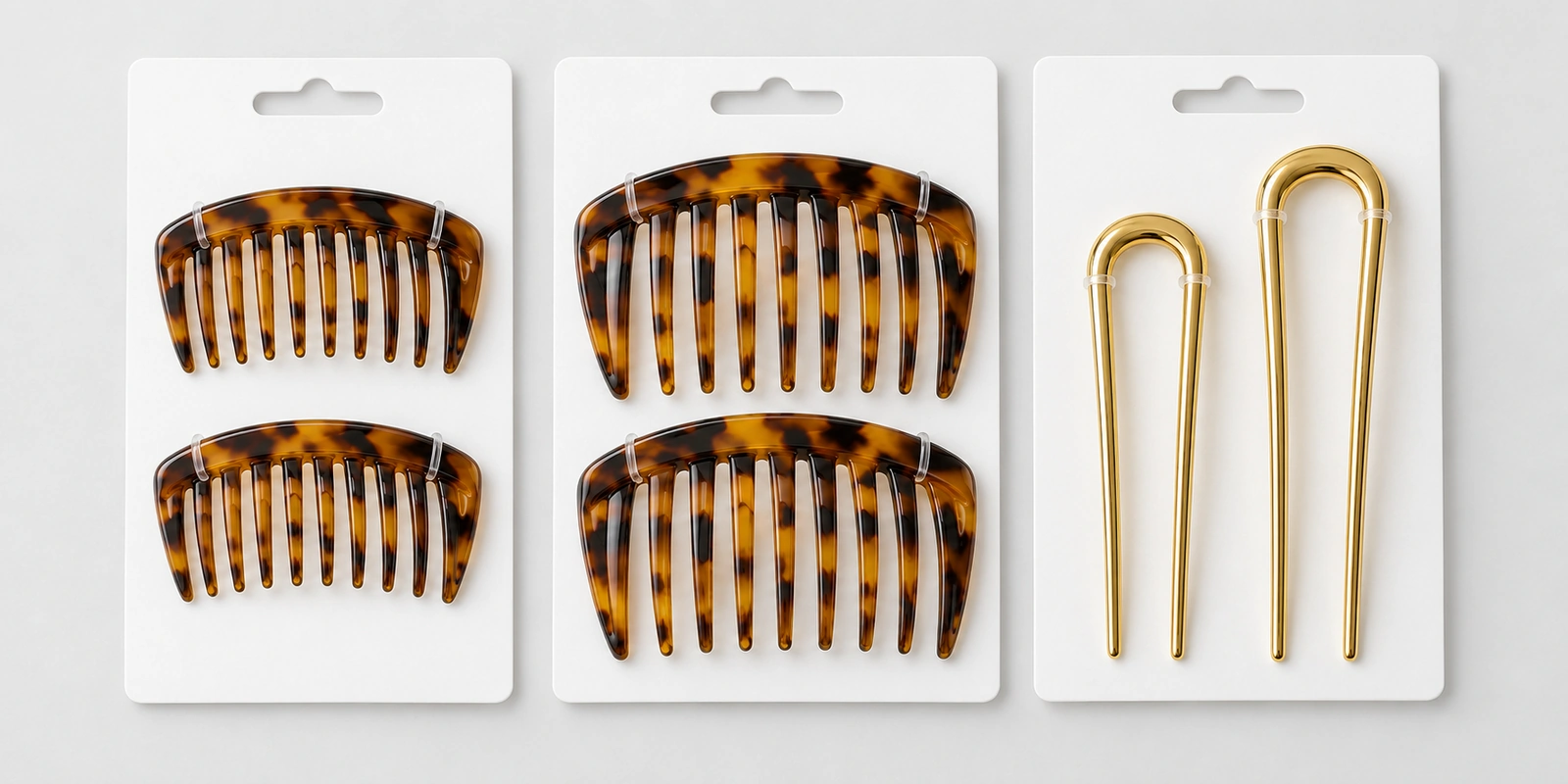
Pack format follows the tool. Side combs usually sell as pairs, because symmetrical styles need two. Forks sell singly or in two-length sets, which lets customers size up as their hair grows.
State the suitable hair type and roll size on every listing. Salon and bridal distributors also value a short placement guide in the pack. These details cost little and separate a considered range from a generic one.
A French side comb is a curved comb that anchors hair with a row of teeth pressed toward the scalp. A hair fork clip is a rigid pin with two to five prongs that weaves through the roll. The comb relies on friction at one edge, while the fork carries load along its full length.
A hair fork clip generally holds a French twist better on thick, long, or heavy hair. Its prongs run the height of the roll and spread the weight. A single short side comb tends to creep downward on this hair, so a long pleat comb or an interlocking pair is the safer comb option.
Yes, a side comb with closely set teeth often holds fine hair better than a smooth fork. The gathered section should be narrower than the comb. Adding dry shampoo or light backcombing first gives the teeth more to grip, which noticeably extends wear time.
A fork should be at least 1.3 cm longer than the roll is wide. Lengths near 7.5 cm suit fine or shorter hair, and 13 cm to 15 cm suits long or dense hair. Three or more prongs help when the hair is heavy or very silky.
Sliding usually comes from placement or size, not a defect. Common causes are skipping the flip step, using a tool shorter than the roll, or styling freshly conditioned hair. Shallow teeth and slick polished finishes also reduce grip, so both should be checked on samples.
Standard designs made from existing molds generally start around 300 to 500 pieces per style and color. New tooling or custom plating raises the minimum. Production commonly takes 30 to 60 days after sample approval, depending on order volume, material sourcing, and factory capacity.
For EU markets, buyers commonly request an EN 1811 nickel release report for each plating color. REACH Annex XVII entry 27 sets a limit of 0.5 µg/cm²/week for articles in prolonged skin contact. A factory audit record such as amfori BSCI and an ISO 9001 certificate support supplier approval.
A hair fork clip holds a French twist better on thick or heavy hair. A French side comb is easier to place and serves fine hair well.
Size, tooth depth, and finish decide the result more than the product name. Manufacturers such as JunYi Beauty, which produces metal and acetate hair pins and clips at its Dongguan facility under ISO 9001:2015 and amfori BSCI certification, represent the type of custom hair clip manufacturer suited to brands building a coordinated updo range.
👉 Searching for Hair Accessories ? Your brand deserves the best.