Home
Product
Contact
Odm/Oem
About
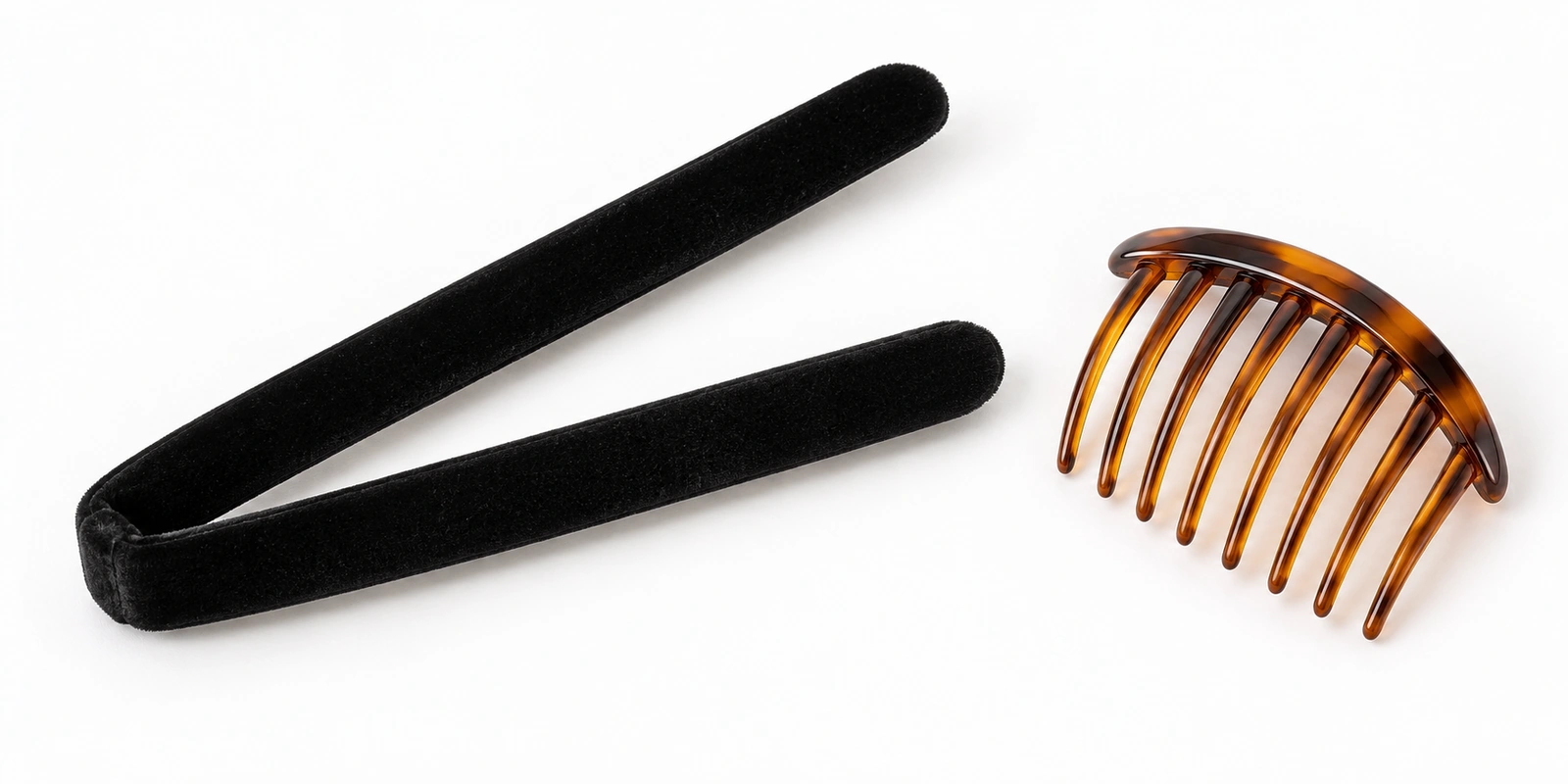
A bun maker tool is a hair accessory designed to help shape or secure a bun. The category includes roll-up shapers, flexible twist tools, and combs used to anchor an updo, but these products do not all work in the same way. A roll-up tool supports hair while it is wound into a bun; a styling comb generally holds a bun or twist that the user has already formed. For buyers sourcing this category, the mechanism matters more than the finished styling photo. Similar product names can hide important differences in construction, instructions, and hair suitability.
A freehand bun usually involves gathering the hair, twisting or wrapping the length, and securing the result with pins or an elastic. Bun maker tools can make parts of that process easier to repeat, but they do not eliminate every manual step. A roll-up shaper provides a support around which hair can be wound. A curved styling comb provides an anchor for an already arranged section. Buyers should describe the specific assistance a product offers instead of promising that every tool automatically creates a bun.
The term “twist clip bun maker” is used loosely in retail listings. Here it refers to a manual snap-roll tool with two flexible, covered strips, not a powered two-strand hair twister. The strips sandwich a section of hair, which the user rolls toward the head before curving the tool into a bun. There is no universal rotating-arm mechanism shared by all products sold under this name.
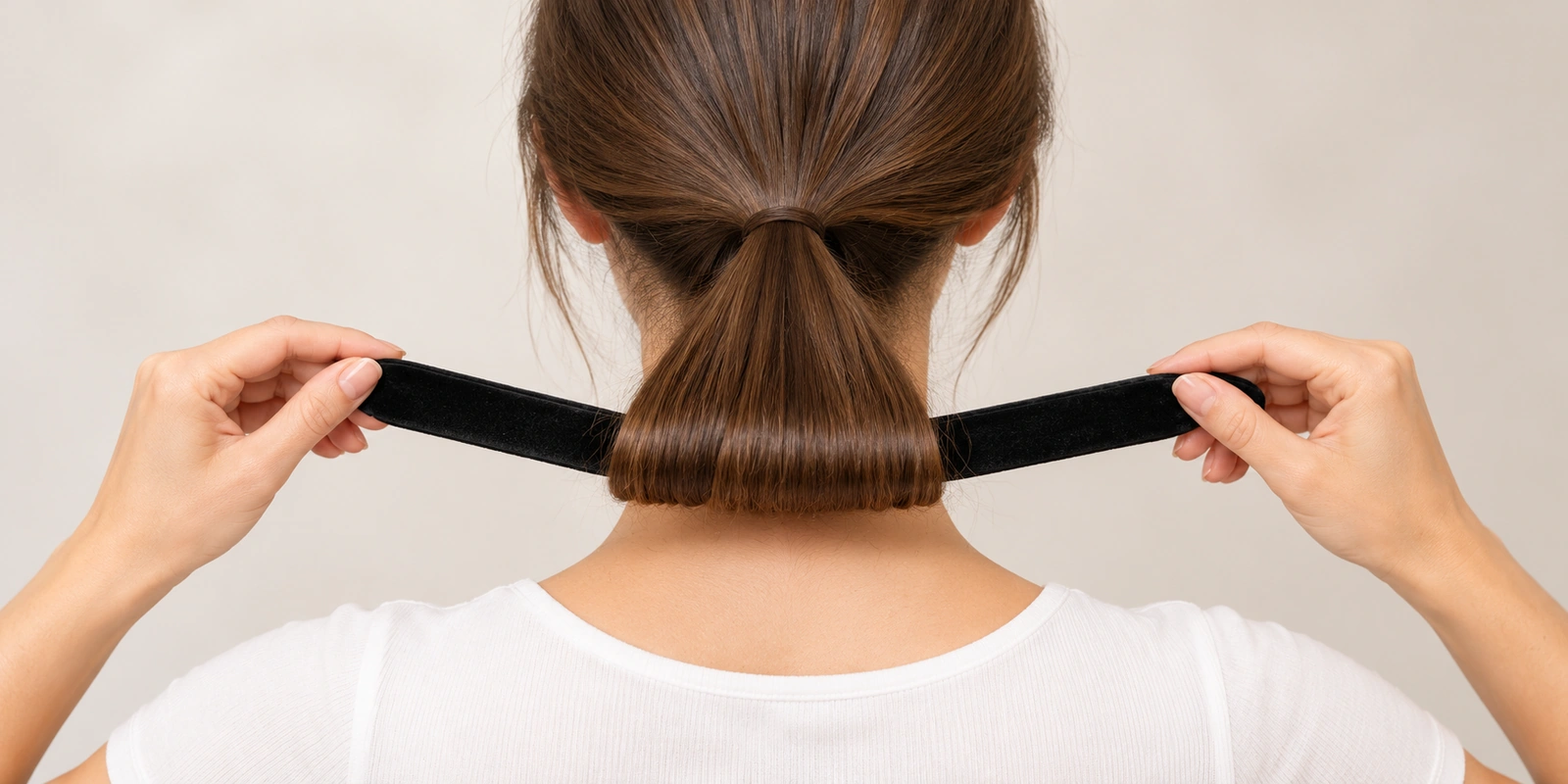
In the two-strip snap-roll design, the covered strips are opened and the gathered hair is placed between them. The tool is moved toward the ends while enough hair remains captured to begin rolling. Both strips are then rolled together toward the ponytail base, winding the hair around the tool. Once the roll reaches the head, the flexible tool is curved or snapped into its closing shape according to its instructions, and the hair is spread to cover it. The whole tool is turned by hand; one arm does not independently rotate around the other.
Hair must be long enough to wrap around the tool and cover it after closure. Layered ends may escape during rolling, and a tool that is too large can show through a fine or low-density ponytail. Thick or very long hair may need a different strip length or a roomier closing shape. Buyers should test samples on the intended hair lengths and densities rather than label every snap-roll tool suitable for all hair types. The finished bun can be smooth or loosely textured depending on preparation and technique.
Comb-style tools in this comparison are curved styling combs used to secure a bun or chignon. Their teeth slide into the arranged hair and catch supporting hair beneath it. A solid styling comb should not be confused with a foam donut, a mesh roll, or a slotted frame through which a ponytail is threaded. Those are separate constructions and require their own instructions.
The user first forms a bun or twist by hand, using an elastic or pins where the chosen technique requires them. The comb is then inserted so its teeth engage both the arranged section and supporting hair close to the head. The direction of insertion depends on the comb and hairstyle; some techniques involve turning the comb before sliding it into place. A second comb or additional pins may help with heavier hair. The comb anchors the shape rather than winding the entire ponytail around a frame.
Comb suitability depends on tooth length, spacing, curvature, weight, and how much hair the style needs to hold. Fine hair may slip from a large or heavy comb, while dense hair may exceed the reach of short teeth. Short layers may still need separate pins. There is no reliable rule that every comb works on shorter or finer hair than every roll-up tool. Buyers should compare samples in the actual intended styles and avoid assigning universal suitability from the product category alone.
The two constructions have different inspection priorities. Material names alone do not establish durability, and a good sample should be assessed as an assembled tool rather than only as a resin or fabric specification.
For a covered snap-roll tool, inspect the flexible core, cover attachment, joined end, and repeated opening and closing behavior. Where a metal spring strip is used, it must remain fully enclosed, with no exposed corners that can catch hair or contact the scalp. Check for split coverings, permanent deformation, or loss of the intended closing action after repeated use. For a styling comb, inspect tooth-tip rounding, smoothness between teeth, spine strength, and curvature. Molded plastic, cellulose acetate, and metal combs need construction-specific evaluation; none should be described as automatically superior without sample testing.
A single size will not suit every hair volume or finished bun. For snap-roll tools, specify strip length and width, the usable hair-holding area, and the space available after closure. For combs, record overall width, tooth length, tooth spacing, and curvature rather than referring to a generic comb diameter. A practical sample review can compare a smaller and a larger option on the target customer profiles. Base the final size range on the results rather than assuming that increasing one dimension solves every fit problem.
A few recurring mistakes show up when buyers approach bun maker tools without understanding the mechanism differences between styles.
One sourcing risk is treating every item called a bun maker as the same product. A snap-roll shaper, a slotted foam tool, a decorative bun cover, and a curved comb can all appear in the same search results while performing different jobs. Another risk is specifying a rotating hinge for a product whose actual working part is a flexible strip. Request clear photographs of the open and closed sample, a materials breakdown, and a demonstration using the exact proposed SKU before agreeing on specifications. Do not rely on a demonstration of a similar-looking tool from another supplier.
Bun maker tools can sit alongside claw clips and other functional hair accessories in a styling range. However, experience molding claw clips does not by itself demonstrate competence in covered spring-strip assembly or comb finishing. Buyers should ask a prospective supplier for samples and production evidence relevant to the actual construction. A broader updo range may also include finishing pins to secure shorter layers or loose ends after the main shape has been formed.
A custom claw clip manufacturer can be a starting point for a broader accessories inquiry, while a hair pin manufacturer can supply finishing pins. Evaluate each supplier against the specific product requirements.
Both snap-roll tools and styling combs benefit from clear, product-specific instructions. For a snap-roll tool, show how to open the strips, capture the hair, move toward the ends, roll toward the head, and close the tool without pulling. For a comb, show how to form the bun and insert the teeth so they engage supporting hair. Avoid a fixed number of rotations unless the exact product instructions require it: hair length and the size of the roll can change the process. A photographed sequence and a matching demonstration video help explain technique, but any claim about reduced returns should be supported by the seller’s own data.
Video can show the rolling and closing action of a snap-roll tool clearly. For combs, close-up photographs or video should make the insertion direction and supporting hair visible, since a finished-bun image alone does not explain the hold. Either format can work in retail listings or social commerce. Buyers should choose content based on what customers need to understand and test performance in their own channels, rather than assume that one mechanism will always sell better on a particular platform.
Buyers should separate tools that help form a bun from accessories that mainly secure one. Match the product name, physical sample, instructions, and marketing image to the same construction. Evaluate cover integrity and closing behavior for snap-roll tools, and tooth finish, curvature, and anchoring performance for combs. State the tested hair-length and volume limits clearly, and make any size options meaningful to the intended customer rather than presenting every design as a universal solution.
A two-strip snap-roll tool supports the hair as the user rolls it toward the head, then curves or snaps closed. A styling comb is inserted into an already formed bun or twist to help secure it. They perform different jobs, and neither universally determines whether the finished style is smooth or textured.
There is no single best category for every fine or short hairstyle. A roll-up tool needs enough length and density to wrap around and cover it. A comb needs suitable tooth length, weight, and anchoring hair. Test the specific size and technique; short layers may require extra pins.
Inspect the covering, joined end, flexible core, and repeated closing action. Look for exposed edges, tears, permanent deformation, or a loss of grip. Agree on a use-cycle test appropriate to the intended product rather than assume that an unspecified hinge or material guarantees durability.
They can serve complementary needs: one assists shaping, while the other helps secure an updo. Whether to stock both depends on the target hairstyles, hair profiles, price range, and sample results, not simply on covering the broad bun maker search term.
The teeth must enter the hair smoothly and provide a useful hold without sharp tips or rough edges. Spacing, tooth length, and curvature should be assessed together against the intended hair density. No single spacing is best for every customer.
Not reliably. Compare strip dimensions and closing space for roll-up tools, and tooth length, spacing, and curvature for combs. Offer sizes and suitability statements based on testing rather than a universal one-size claim.
Bun maker tools can help customers create or secure an updo, provided the construction and instructions match the intended hair type. For a sourcing discussion with JunYi Beauty, prepare a reference sample, target dimensions, materials requirements, and the hairstyles the tool needs to support. Confirm current production capability, quality documentation, and sample performance for the exact design before placing an order. A reliable product line starts with a verified mechanism and realistic claims, not an interchangeable use of the words twist clip, frame, and comb.
👉 Searching for Hair Accessories ? Your brand deserves the best.