Home
Product
Contact
Odm/Oem
About
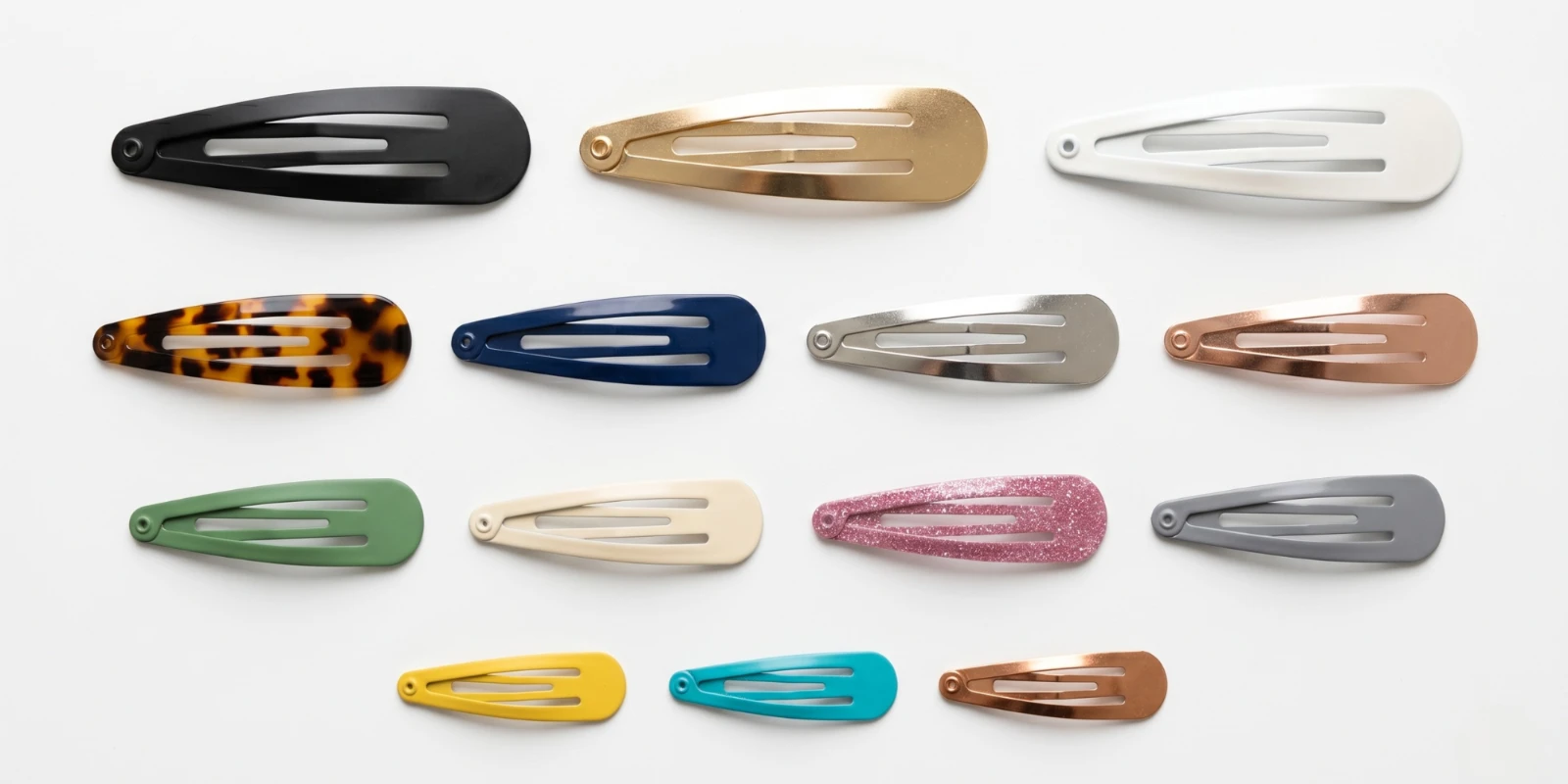
A double grip snap clip is a hinged hair clip with teeth on both the inner surfaces that close together, rather than a single row of teeth pressing against a smooth opposing surface, which is how a standard snap clip works. The double-sided grip changes how the clip holds hair in a way that matters more than the small design difference suggests, and buyers who treat the two as interchangeable often end up with a product that underperforms on exactly the hair types it was meant to serve. This guide explains how the double grip mechanism actually works, where it genuinely outperforms a standard snap clip, and what to specify when sourcing this construction at volume.
A standard snap clip has a single row of teeth on one side of the hinge, closing against a smooth or lightly textured surface on the other side. The grip comes entirely from that one row of teeth pressing hair against the opposite flat surface, which works reliably for moderate hair volumes but relies on friction concentrated along a single contact line. A double grip snap clip puts teeth on both closing surfaces, so hair is gripped from two directions simultaneously rather than pressed against a passive surface. This distributes the holding force across two contact points instead of one, which is the entire mechanical reason double grip clips hold more securely on the same clip size.
The practical effect of two-sided gripping shows up most clearly on hair that a standard snap clip struggles with: thick, coarse, or very smooth hair where a single row of teeth doesn’t generate enough friction to prevent slipping. With only one gripping surface, a standard snap clip depends on the hair being compressed enough against the smooth opposing side to create sufficient friction, and that compression becomes less reliable as hair volume increases or hair texture becomes slicker. A double grip clip doesn’t need to rely on that single-sided compression, since both surfaces are actively gripping rather than one gripping and one merely containing.
The core mechanical difference between the two translates into measurable performance differences across several buying criteria.
| Criteria | Single-Grip Snap Clip | Double-Grip Snap Clip |
|---|---|---|
| Teeth placement | One side only | Both closing surfaces |
| Best hair volume | Light to moderate | Moderate to thick |
| Slip resistance on smooth hair | Lower | Higher |
| Manufacturing complexity | Lower | Higher, requires tooth alignment on both halves |
| Typical unit cost | Lower | Moderately higher |
| Common failure mode | Slipping under hair weight | Pinching if teeth are misaligned |
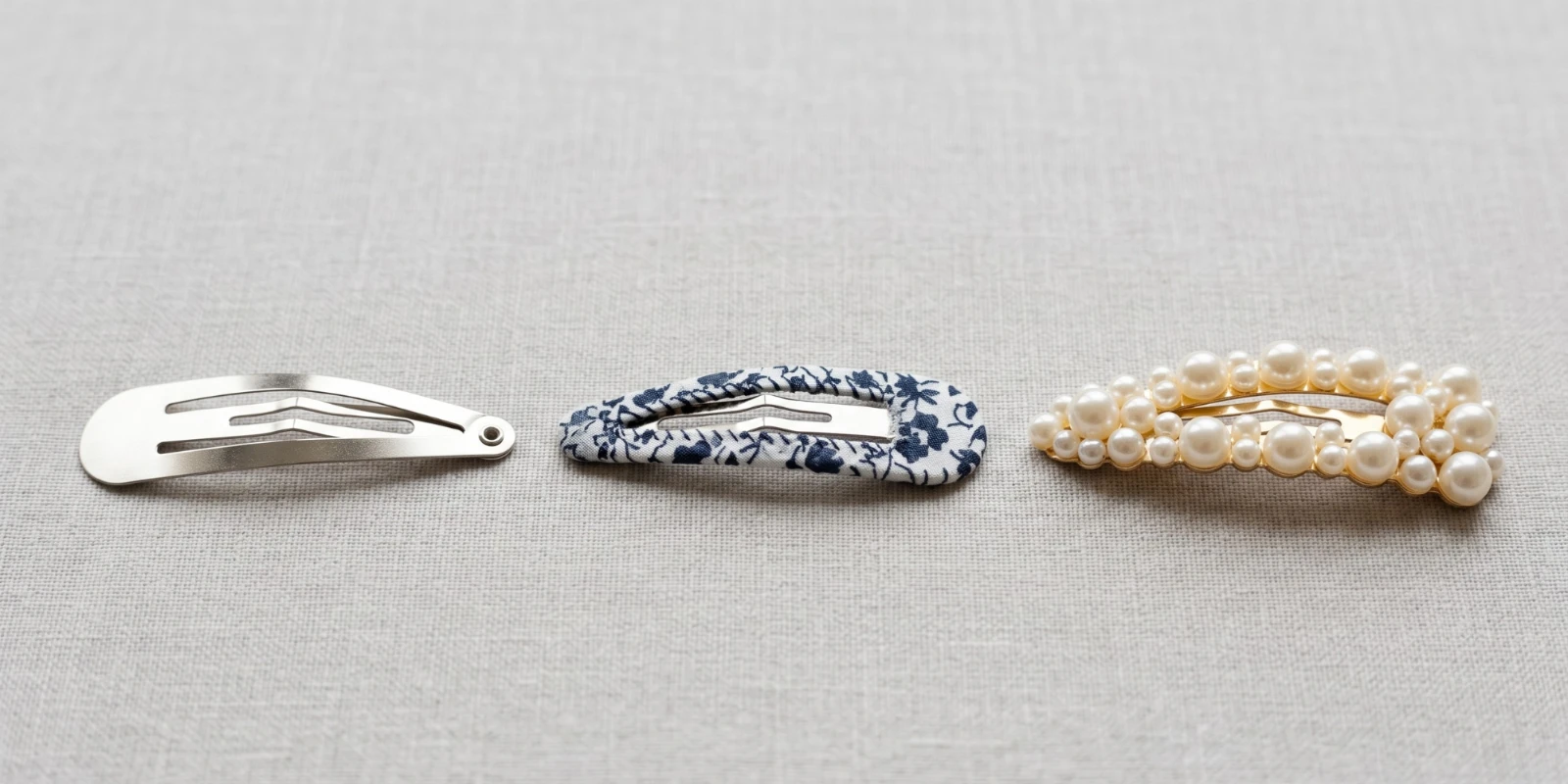
Double grip snap clips are most commonly moulded from ABS plastic or acetate, the same base materials used for standard snap clips, but the tooling requirements differ meaningfully. Both halves of the clip need matching, precisely aligned tooth patterns that close cleanly against each other without one row overshooting or catching the other, which requires tighter mould tolerances than a standard clip where only one side carries teeth. Metal spring quality matters slightly more in double grip construction too, since the clip needs enough tension to bring two toothed surfaces together with even pressure across the full width, not just enough tension to close a single row against a flat surface.
Thick, coarse, or curly hair benefits the most from double grip construction, since these hair types are exactly where a standard snap clip’s single-sided grip tends to slip under the combined weight and volume. Fine, straight hair generally does fine with either construction, since there’s less volume for a single grip surface to struggle with, which means the extra cost of a double grip clip delivers less practical benefit for that hair type specifically. Updos and half-up styles gathering a meaningful section of hair, including bridal and occasion hair accessories, are the styling contexts where the difference is most noticeable, more so than clipping a small decorative section where either clip type holds adequately.
A common misconception is that double grip automatically means a stronger spring or a bigger clip, when in fact the grip improvement comes from tooth placement, not from spring tension or overall size. A small double grip clip and a small single-grip clip can have identical spring tension while performing very differently on the same hair volume, purely because of where the teeth sit. Another common issue in lower-quality double grip clips is tooth misalignment between the two halves, where the two rows don’t mesh cleanly and instead catch or pinch hair at the point of closure rather than gripping it smoothly, which is more uncomfortable than a standard clip’s single-row design and is specifically a manufacturing tolerance problem rather than an inherent flaw in the double grip concept.
Double grip clips see more mechanical stress at the hinge than single-grip equivalents, since bringing two toothed surfaces together evenly requires the spring to work slightly harder on every open-close cycle. This makes periodic checking that both rows of teeth still close flush against each other worthwhile, since a spring that’s begun to weaken shows up first as uneven closure between the two sides rather than an obvious overall looseness. Cleaning product buildup from between the teeth matters more for double grip clips too, since residue trapped between two closing rows of teeth affects hold more noticeably than residue on a single row closing against a smooth surface.

Double grip clips typically carry a modest price premium over single-grip equivalents of the same size, reflecting the tighter tooling tolerances and slightly more complex assembly rather than a difference in raw material cost. This premium is usually easy to justify to end customers once the hair-type benefit is communicated clearly, since a customer with thick hair who has already experienced a standard clip slipping understands the value proposition immediately. Buyers building a snap clip range often stock both constructions side by side, using single-grip clips for the fine-hair and budget segment and double-grip clips as the solution explicitly marketed toward thicker hair, rather than replacing one with the other across the whole range.
The tooth alignment between the two halves is the single specification most responsible for whether a double grip clip performs well or causes complaints, and it’s also the specification most likely to be treated loosely by a lower-cost manufacturer scaling up an existing single-grip mould rather than tooling a proper double grip design from scratch. Buyers should request that a supplier confirm the clip was engineered as a genuine double grip product, with both mould halves cut to align precisely, rather than a single-grip mould modified after the fact to add a second row of teeth without adjusting the overall geometry. Spring tension also needs separate calibration for double grip clips compared with single-grip equivalents of the same size, since closing two toothed surfaces evenly requires different force distribution than closing one toothed surface against a flat one.
Buyers building a range that includes both single-grip and double-grip snap clips should position them deliberately rather than treating double grip as a simple upgrade tier, since the real differentiator is hair type suitability rather than a linear quality hierarchy. Marketing double grip clips specifically toward thick or coarse hair customers, rather than as a generic premium option, matches the product to where its actual performance advantage shows up. Requesting sample units and testing them on genuinely thick hair sections, rather than approving based on a spec sheet or a demonstration on thin hair, is the only reliable way to confirm a supplier’s double grip tooling meets the alignment standard the category depends on.
Buyers can specify tooth alignment tolerance and spring calibration directly through a snap hair clip manufacturer rather than accepting a generic double grip claim without verification.
A double grip snap clip has teeth on both surfaces that close together, gripping hair from two directions at once. A standard snap clip has teeth on only one side, closing against a smooth opposing surface, which relies on a single point of friction to hold hair in place.
Yes, generally. Thick, coarse, or very smooth hair is exactly where a single-sided grip tends to slip, since one row of teeth can’t always generate enough friction against a passive surface. Double grip construction distributes holding force across two contact points instead of one.
They shouldn’t, provided the tooth alignment between the two halves is manufactured precisely. Pinching or catching is a sign of poor tooth alignment during production, not an inherent feature of the double grip design itself.
Not necessarily. Fine or straight hair often holds adequately in either construction, so the extra manufacturing cost of double grip delivers less practical benefit for that hair type. Double grip clips show their real advantage specifically on thicker or more voluminous hair.
Both mould halves need precisely aligned, matching tooth patterns that close cleanly against each other, which requires tighter tolerances than a standard clip where only one side carries teeth. Spring tension also needs separate calibration to close two toothed surfaces evenly.
Confirm the clip was engineered as a genuine double grip design with properly aligned tooling, not a modified single-grip mould, and test physical samples on thick hair sections rather than approving from a spec sheet or a demonstration on fine hair.
The double grip snap clip earns its place as a distinct category by solving a specific problem, hair slipping out of a single-sided grip, rather than simply being a premium version of a standard clip. Its real advantage shows up on thick, coarse, or smooth hair, and buyers get the most value from it by matching the product to that specific use case rather than treating it as an across-the-board upgrade. Tooth alignment precision is the manufacturing detail that determines whether a double grip clip performs as intended or causes the pinching complaints associated with poorly tooled versions of the category.
Manufacturers such as JunYi Beauty, which produces single and double grip snap clips with precision-aligned tooling at its Dongguan facility under ISO 9001:2015 and amfori BSCI certification, offer the manufacturing control that this specific construction depends on for reliable performance.
👉 Searching for Hair Accessories ? Your brand deserves the best.