Home
Product
Contact
Odm/Oem
About
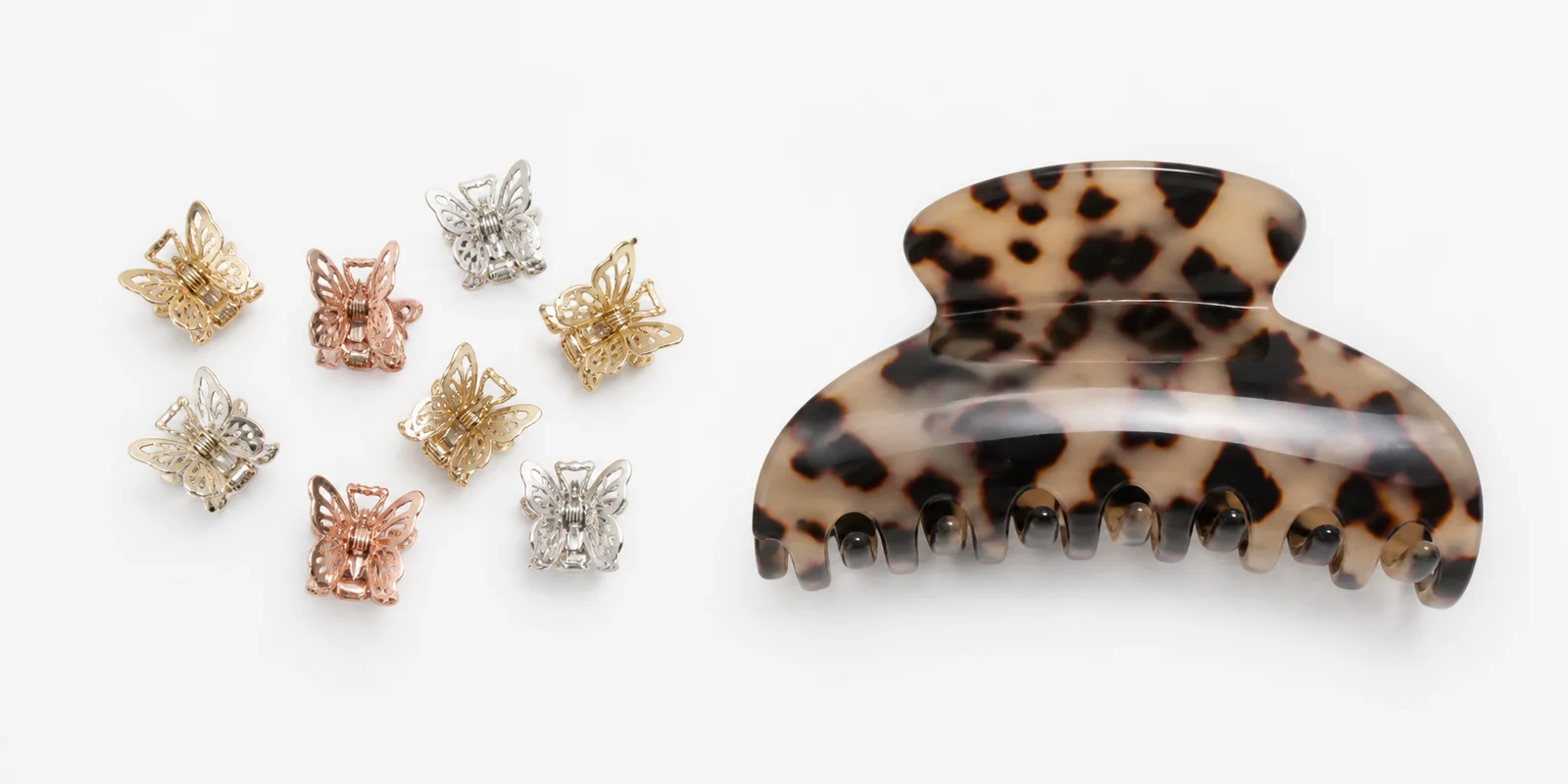
A claw clip holds better than a butterfly clip in most real-world situations, but the honest answer depends heavily on what you’re actually asking it to hold and for how long, which is why the question deserves a more precise answer than a flat yes or no. The two clips aren’t built to compete for the same job, so comparing “hold” without specifying hair volume, activity level, and wear duration produces a misleading verdict either way. This guide breaks the comparison down by the conditions that actually determine hold performance, rather than giving a single blanket answer that doesn’t hold up across different use cases.
A claw clip uses a wide, spring-loaded jaw to gather and grip a full section of hair, while a butterfly clip uses a narrow hinge to hold a thin decorative strand. Asking which one “holds better” without qualification is a bit like asking whether a backpack or a paperclip holds better, the answer depends entirely on what you’re asking each one to carry. The more useful question is where each clip’s hold performance genuinely matters and where the comparison becomes irrelevant because the two were never doing the same job in the first place.
For a full ponytail or gathered section, a claw clip wins decisively and by a wide margin, since a butterfly clip’s narrow hinge simply cannot gather that much hair regardless of spring quality. For a small, thin strand pulled from the front or side of the head, the comparison flips: a claw clip is oversized and impractical for that job, while a butterfly clip’s narrow bite is exactly calibrated for the kind of small, decorative accent found across occasion hair accessories and holds it reliably. The volume of hair being held, not the clip’s general reputation, determines which one actually performs better in a given scenario.
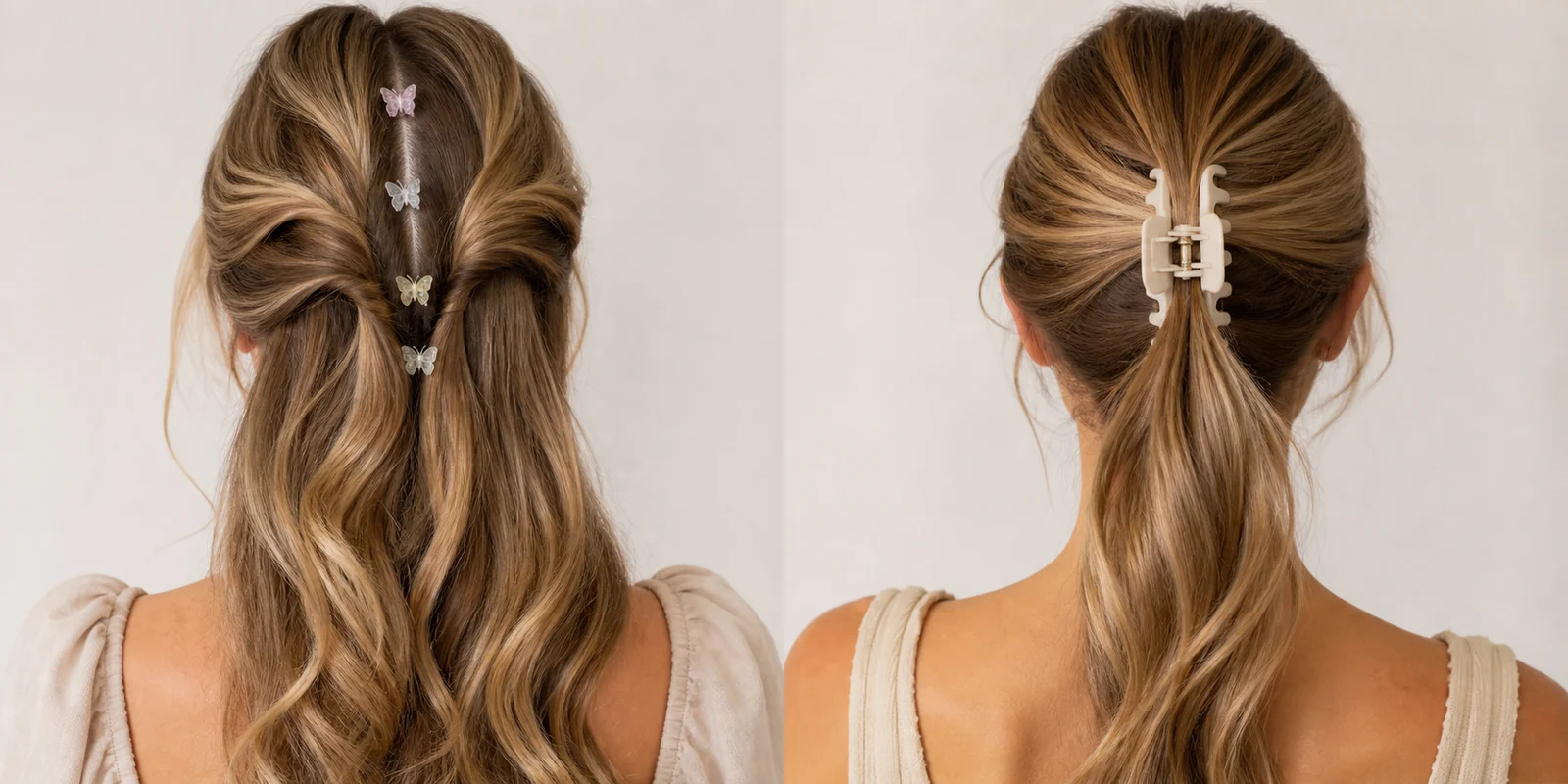
During exercise, quick movement, or anything involving repeated bending and head motion, a claw clip’s stronger spring tension and wider jaw generally maintain hold more reliably than a butterfly clip attempting to secure even a small section under the same conditions. Butterfly clips are more prone to shifting or popping open during vigorous movement precisely because their light spring tension, which is intentional for comfort and decorative placement, wasn’t designed to resist significant force. For anything beyond seated, low-movement wear, a claw clip’s structural advantage becomes more pronounced the more active the wearer is.
A claw clip’s stronger spring generally maintains consistent hold over a full day better than a butterfly clip’s lighter mechanism, particularly for the hair volumes each is designed to carry. That said, this comparison needs a caveat: a claw clip asked to hold hair at the very edge of its jaw capacity can loosen over hours just as readily as an undersized butterfly clip would, since both failure modes come down to the same underlying issue, insufficient capacity for the job, rather than one mechanism being universally more durable than the other. Sizing the clip correctly to the hair volume matters more for all-day hold than which category of clip is chosen.
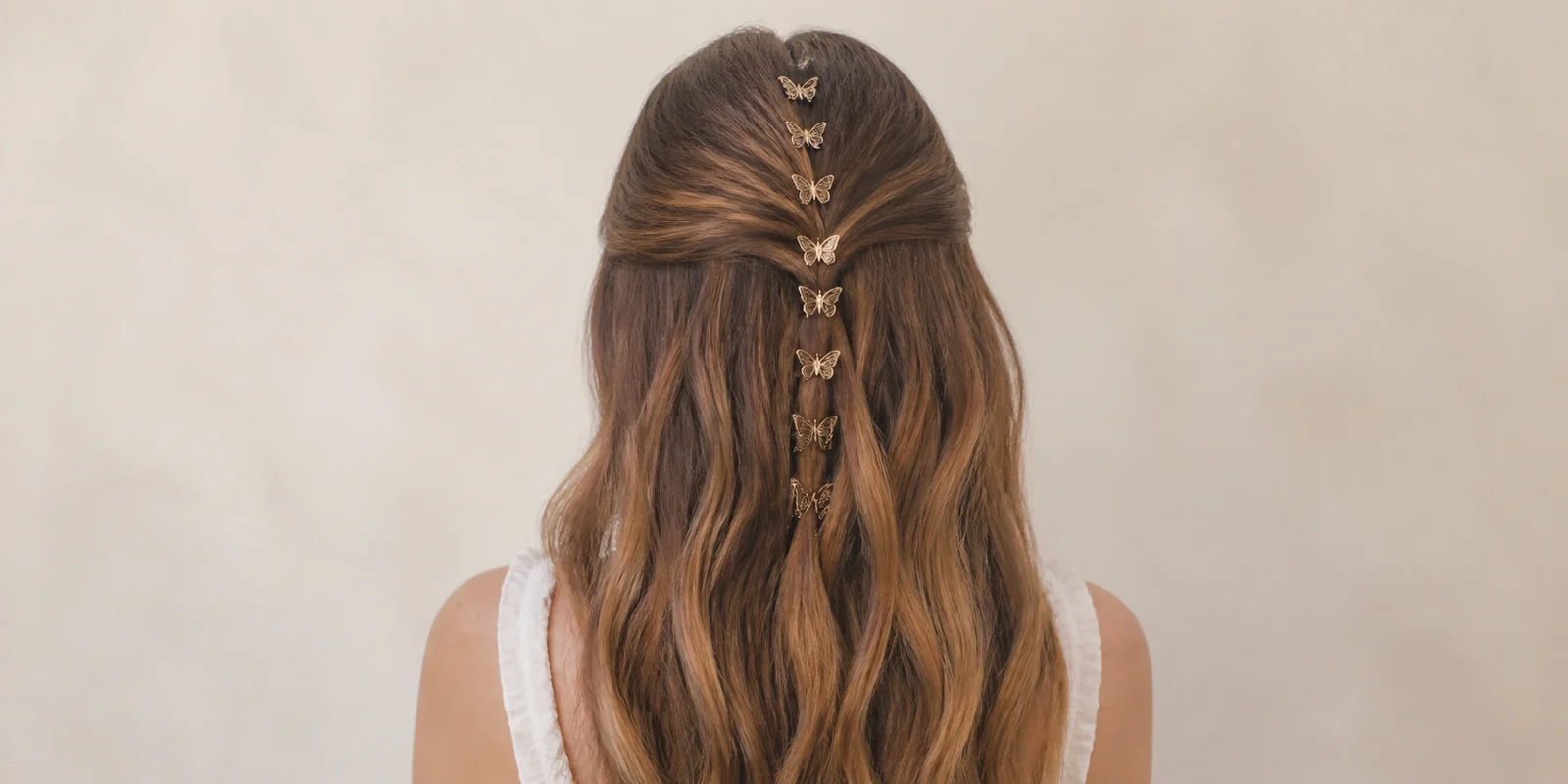
Butterfly clips win clearly in one specific scenario a straight hold comparison often misses: multiple small sections held simultaneously for a layered decorative look. A single claw clip cannot replicate the half-up style with several small clips along a centre part, so in any comparison involving that specific styling goal, the claw clip isn’t just worse, it’s the wrong tool entirely. Butterfly clips also hold thin, fine hair sections with less visible bulk than even the smallest claw clip would create, which matters for anyone prioritising a clean, low-profile look over raw holding force.
For buyers or reviewers genuinely trying to compare hold performance rather than relying on general reputation, a few concrete tests separate marketing claims from real performance. Testing on the specific hair volume the clip is intended for, rather than an unrealistic overload or an undersized test that flatters neither product, gives a fair baseline. Testing under actual movement conditions, walking, bending, light exercise, rather than only static wear reveals failure points that stationary testing misses entirely. Testing over several hours rather than the first few minutes catches spring fatigue and gradual loosening that an initial impression won’t show, since both clip types can feel secure immediately after closing and still loosen meaningfully by the end of a workday.
Humidity and heat affect the two clip types differently in ways that matter for buyers in warmer or more humid climates. Hair tends to feel heavier and slightly more slippery in high humidity, which reduces the effective friction a claw clip’s jaw can generate against the hair surface, meaning a claw clip sized adequately in dry conditions can feel marginally less secure in humid weather. Butterfly clips are less affected by this shift simply because they’re holding a much smaller amount of hair to begin with, so the same humidity-driven reduction in friction has less absolute impact on a thin strand than on a full gathered section. Neither effect is dramatic on its own, but buyers sourcing for humid climate markets should factor slightly stronger spring tension into claw clip specifications rather than assuming dry-climate testing translates directly.
A common mistake is testing a butterfly clip on a hair volume it was never meant to carry and concluding the entire category “doesn’t hold well,” when the actual issue is a mismatch between product and use case rather than a genuine performance failure. The reverse mistake happens too: judging a claw clip as universally superior based on ponytail performance, then being surprised when the same clip feels bulky or oversized clipped onto a small decorative section it was never sized for. A fair hold comparison has to control for the task, not just the product, or the conclusion ends up describing a mismatch rather than an actual performance difference.
Product marketing that claims one clip type “holds better” without specifying hair volume or use case is making an incomplete claim that will disappoint some portion of buyers regardless of how well-made the product actually is. Buyers developing a range spanning both categories should communicate hold expectations by intended use, thick ponytails and buns for claw clips, decorative accents and fine strands for butterfly clips, rather than positioning either product as a universal upgrade over the other. Specification-level differences, spring steel grade for claw clips and hinge cycle durability for butterfly clips, are what actually separate a well-made product from a poorly made one within each category, and these matter more to real-world hold performance than which category a product belongs to.
Buyers sourcing across both categories can specify these performance details directly through a custom claw clip manufacturer for structural pieces and a custom hair clip manufacturer for decorative pieces, rather than assuming one supplier relationship covers the performance requirements of both categories equally well.
Not in every situation. A claw clip holds a full section or ponytail more securely, but a butterfly clip performs its intended job, holding a small decorative strand, just as reliably within its own scope. The comparison only makes sense when the hair volume and use case are held constant.
Butterfly clips have light spring tension by design, meant for comfort and decorative placement rather than resisting significant movement or force. If it’s slipping during active movement or holding more hair than a thin strand, that’s a mismatch between the product and the task rather than a defect.
No, not for that specific styling goal. A claw clip cannot replicate the multi-clip decorative placement along a centre part that butterfly clips are specifically suited for, since it’s built to gather one full section rather than accent several thin ones.
A claw clip generally maintains hold more reliably during exercise, given its stronger spring tension and wider jaw. Butterfly clips are more prone to shifting during vigorous movement due to their intentionally lighter mechanism.
Not accurately. They’re built for different jobs, and rating one as universally better ignores that a claw clip is impractical for the delicate, decorative placement a butterfly clip is designed for. “Better” only applies within a specific, comparable use case.
Test on the hair volume each product is actually intended for, under realistic movement conditions, and over several hours rather than just the first few minutes, since spring fatigue and gradual loosening often don’t show up in an initial impression.
A claw clip holds a full section of hair more securely than a butterfly clip, but that’s the wrong comparison for anyone using a butterfly clip for its actual intended purpose, a small decorative accent rather than a structural hold. The fair way to answer “which holds better” is to match the question to the task: for gathering volume, the claw clip wins clearly; for a thin, decorative strand, the butterfly clip does its job just as reliably within its own scope. Judging either product against a task it was never built for produces a verdict that says more about the mismatch than about the product’s actual quality.
Manufacturers such as JunYi Beauty, which produces both claw clips and decorative clips with spring tension and hinge specifications matched to their intended hold requirements at its Dongguan facility under ISO 9001:2015 and amfori BSCI certification, offer the category-specific engineering that determines real hold performance in either product.
👉 Searching for Hair Accessories ? Your brand deserves the best.