Home
Product
Contact
Odm/Oem
About
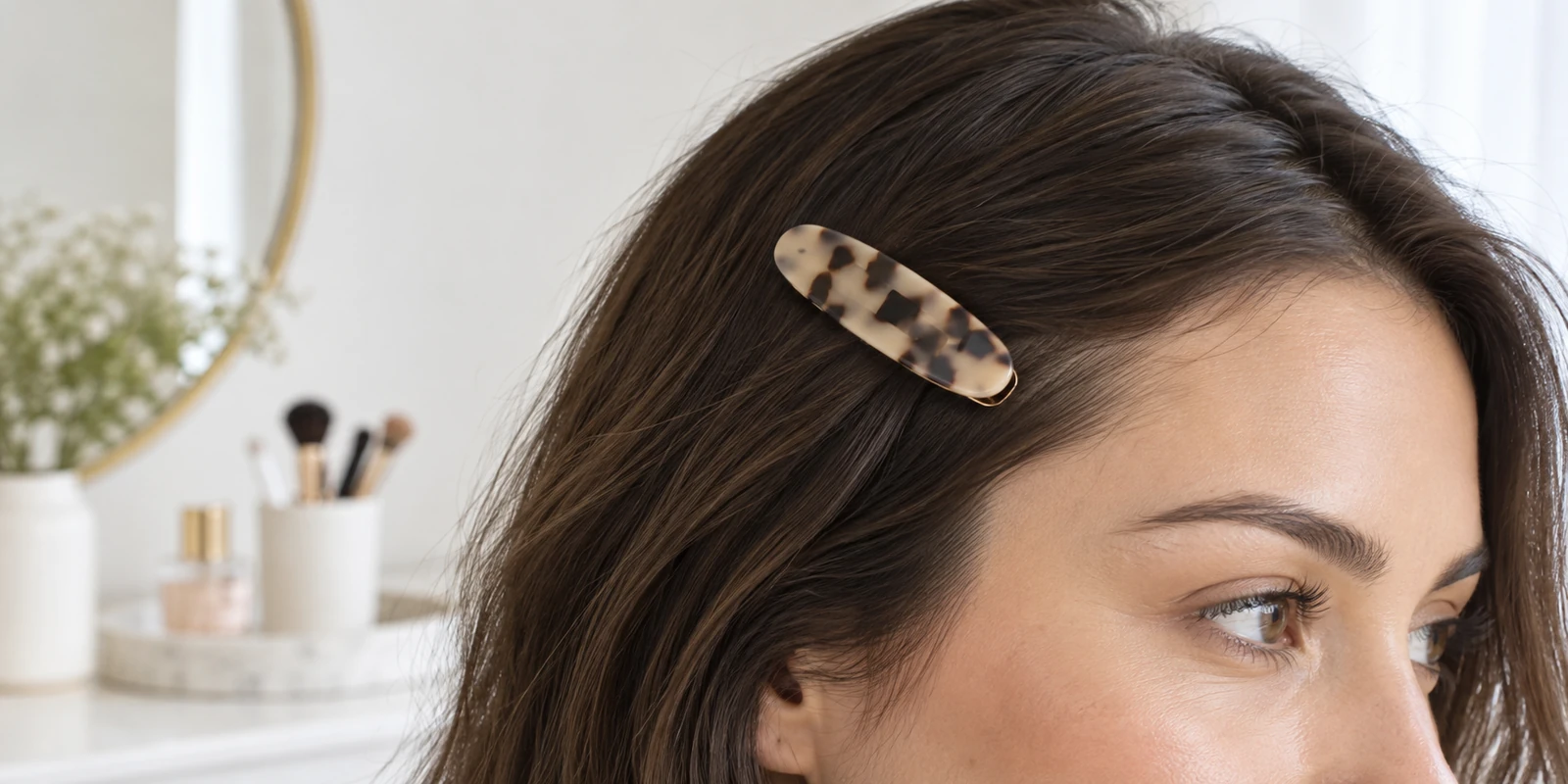
A creaseless flat clip is a hair clip built with a wide, flat, non-serrated grip surface designed to hold a section of hair without leaving the sharp bend mark that traditional pinch clips and bobby pins commonly cause. For bangs specifically, that crease is the single most common styling frustration: you clip your fringe out of the way for ten minutes and it holds a visible dent for the rest of the day. This guide covers exactly how creaseless clips work, the correct technique for using them on bangs, the mistakes that undo their benefit even with the right product, and what to look for when choosing or sourcing one.
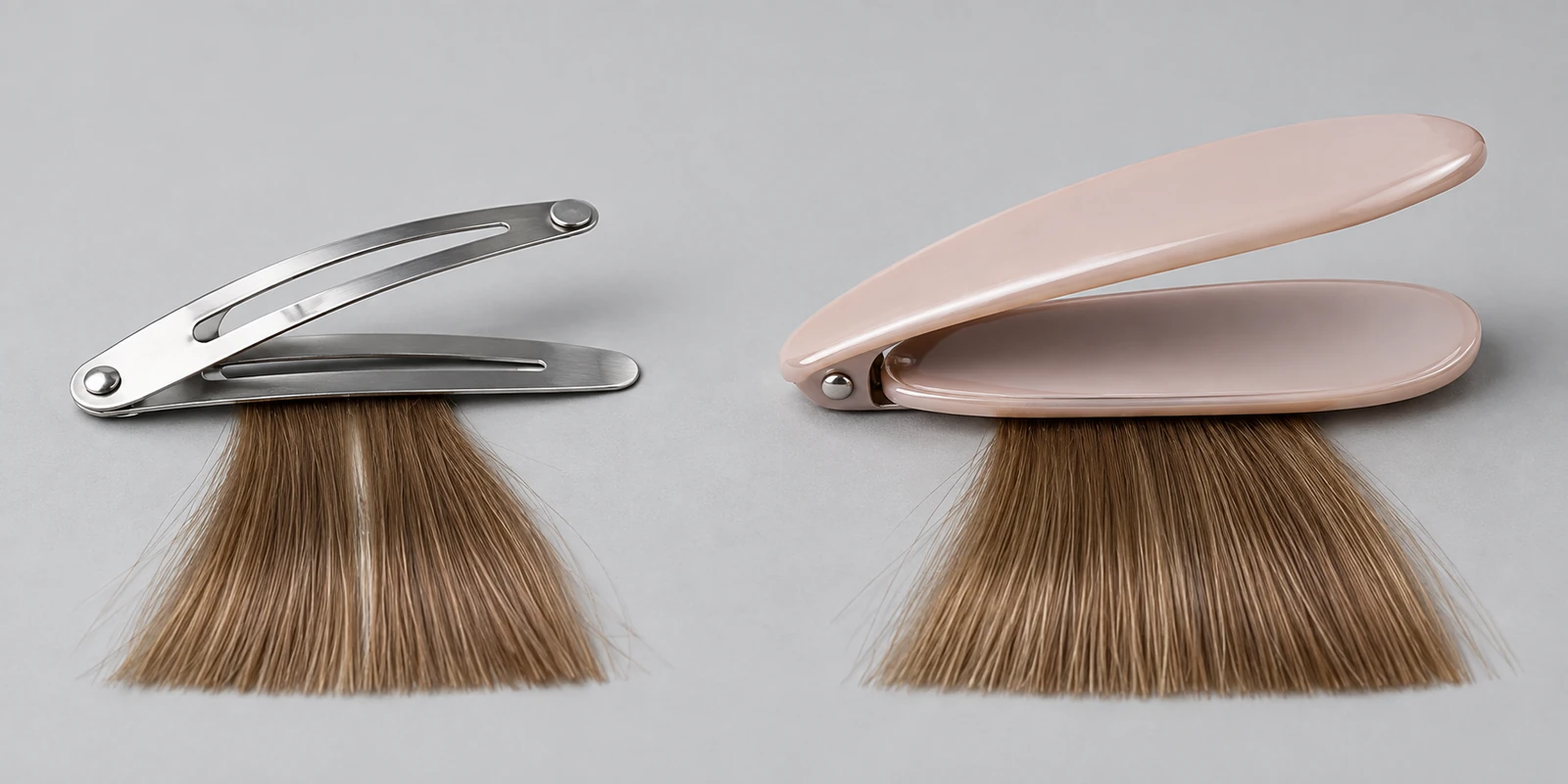
A traditional pinch clip or bobby pin holds hair through concentrated pressure at a narrow point, which is exactly what creates a crease: the hair bends sharply around that pressure point and holds the shape once the clip comes out. A creaseless flat clip distributes the same holding force across a wider, flatter surface instead of a narrow pinch, so no single point of the hair shaft takes concentrated bending stress. The clip still needs spring tension to hold securely, but that tension is spread rather than focused, which is the entire mechanical reason these clips avoid the dent a standard clip leaves behind.
Bangs sit at the front hairline where a crease is immediately visible the moment the clip comes out, unlike a crease hidden under a layer of hair elsewhere on the head. Bangs are also typically shorter and finer than the rest of a hairstyle, which means they hold a crease more readily and for longer, since shorter hair has less of its own weight working to pull a bend back out. This combination, high visibility plus high crease susceptibility, is exactly why bangs are the use case that made creaseless flat clips a distinct, dedicated product category rather than just a nice-to-have feature on a general hair clip.
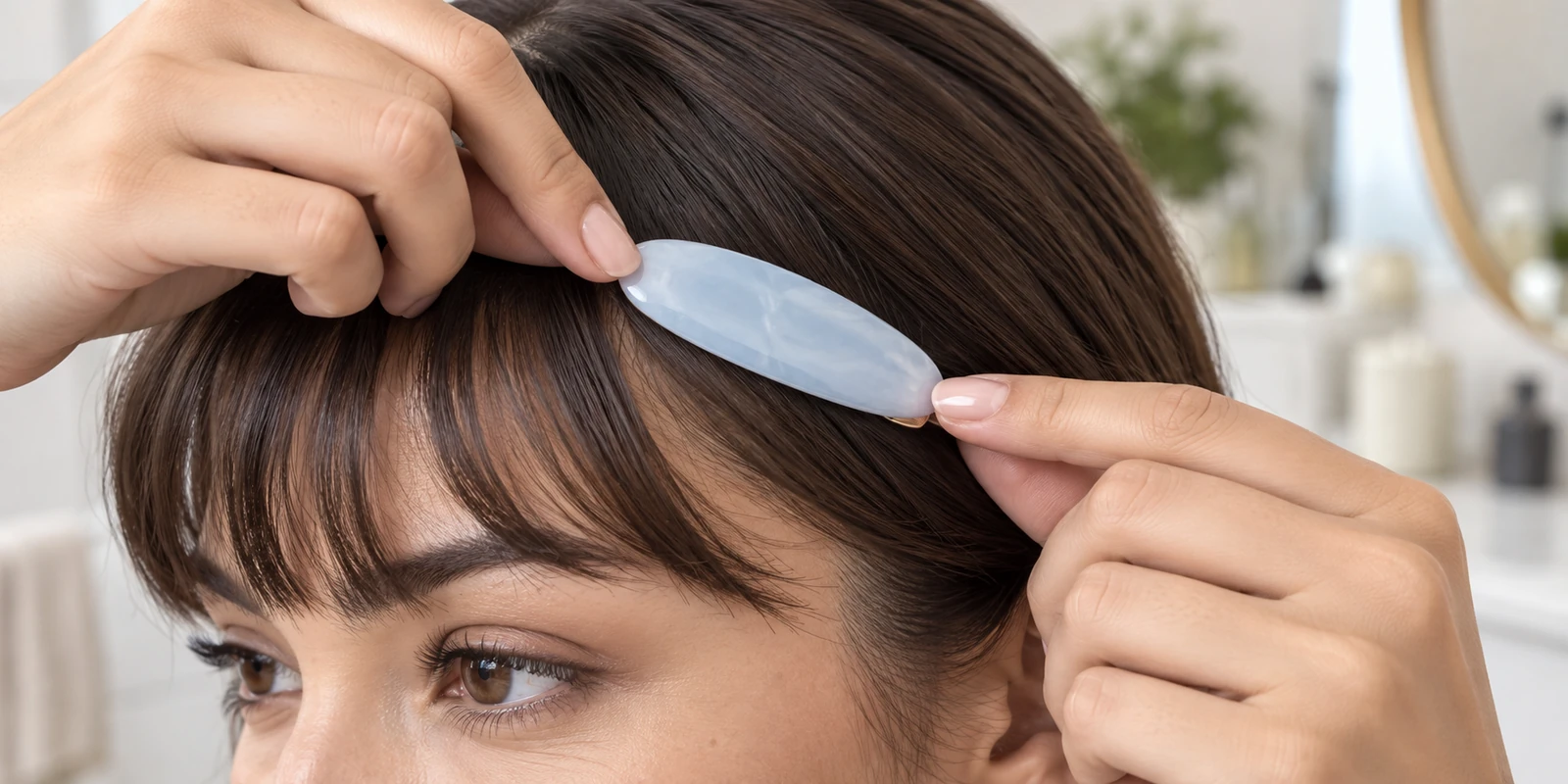
Getting a genuinely crease-free result depends on technique as much as the clip itself. Start with clean, dry hair, or hair that’s fully dry if you’ve just washed it, since damp hair holds a crease far more readily than dry hair regardless of which clip you use. Section the bangs cleanly away from the rest of your style, brushing them smooth before clipping rather than gathering them in a rushed, uneven bunch. Position the clip flat against the head rather than at an angle, and avoid pulling the hair taut before closing the clip, since tension at the moment of closing is what creates a crease even with a flat-surface clip. Keep the clip in place for the shortest time that actually works for your routine, since even a creaseless clip left in for many hours under product or heat can eventually leave a soft bend.
Even a well-designed creaseless clip fails at its one job if a few common mistakes happen alongside it. Using product, particularly hairspray or gel, before clipping and then leaving the clip in while the product sets essentially locks a shape in place regardless of the clip’s flat design, since it’s the product hardening around the bend that creates the crease, not the clip pressure alone. Clipping damp or wet hair is the second major cause, since wet hair reshapes far more easily and holds whatever position it dries in. Over-tightening the clip by forcing it shut on more hair than it comfortably holds concentrates pressure back into a narrow band even on a flat-surface design, effectively recreating the pinch-clip problem the product was meant to solve.
Creaseless flat clips are most commonly made from smooth acetate or coated metal, since the surface finish matters as much as the shape: a rough or textured grip surface can still leave marks even with a wide, flat profile. Acetate versions tend to have a slightly wider flat contact area and a smoother edge, making them the more common choice for daily bang-clipping use, while metal versions with a rubberised or silicone-lined grip surface add extra hold without adding pressure concentration, useful for finer hair that tends to slip out of a purely friction-based acetate clip.
Using a creaseless clip for a quick five-minute task, like clipping bangs back while applying makeup or washing your face, carries very little crease risk with almost any decent flat clip. Overnight use is a different situation entirely: hours of sustained pressure, even distributed pressure, combined with pillow contact and natural hair movement during sleep increases the chance of some crease forming by morning, regardless of clip design. For overnight bang management specifically, positioning the clip loosely rather than snugly, and accepting that some light styling may be needed in the morning regardless of the clip used, is a more realistic expectation than treating any clip as fully crease-proof for eight hours of wear.
A soft fabric-covered clip or a silk scrunchie wrapped loosely around a small bang section offers even lower crease risk than a rigid flat clip, at the cost of being bulkier and less precise for keeping a clean, styled line. For situations demanding a completely invisible hold with zero visible bulk, a single bobby pin placed with the ridged side down and positioned to avoid bending the hair sharply can work if used carefully, though it lacks the built-in crease resistance a dedicated flat clip provides by design. A small claw clip is a third option worth considering for slightly longer bangs being clipped back into the rest of the hair rather than held flat, since it avoids a crease entirely by not pinning the hair against the head at all, though it changes the silhouette rather than keeping bangs in their styled position. The right choice depends on whether the priority is a clean, low-profile look for a short period or genuinely crease-free performance over a longer stretch of time.
The grip surface finish is the single specification that determines whether a clip actually performs as advertised, more than the overall shape or size. A supplier claiming “creaseless” without being able to specify the surface texture, material smoothness, or any independent testing behind that claim is making a marketing statement rather than a product specification. Buyers developing a creaseless clip line should request physical samples and test them directly on fine, short hair sections rather than relying on a supplier’s description, since crease performance is genuinely hard to convey through a spec sheet alone and varies meaningfully between suppliers claiming the same category. Spring tension calibration also matters more in this category than in general clips, since a clip strong enough to hold securely but gentle enough to avoid re-concentrating pressure requires more precise tooling than a standard pinch clip.
Buyers can specify surface finish, material, and tension directly through a no crease hair clip manufacturer rather than adapting a general clip design and hoping the flat profile alone delivers the crease-free result the category promises.
They significantly reduce crease risk compared with pinch clips or bobby pins by distributing pressure across a wider surface, but they aren’t fully crease-proof, particularly for overnight use, damp hair, or hair with styling product applied before clipping. Correct technique matters as much as the clip itself.
Concentrated pressure at a narrow point on the hair shaft, combined with damp hair or styling product setting around that bend, is what creates a visible crease. Flat, wide-surface clips reduce this by spreading pressure rather than concentrating it.
It’s not recommended if avoiding a crease is the goal. Wet hair reshapes far more easily than dry hair and tends to hold whatever position it’s in as it dries, regardless of how the clip distributes pressure.
Smooth acetate offers a wide, smooth contact surface well-suited to daily use, while metal clips with a rubberised or silicone-lined grip add extra hold for finer hair without concentrating pressure. Surface finish matters more than the base material itself.
A creaseless clip gives a cleaner, more precise line and lower bulk, while a scrunchie or fabric-covered clip offers even lower crease risk at the cost of a bulkier look. The better option depends on whether a clean styled appearance or maximum crease avoidance matters more.
Request physical samples and test the grip surface directly on fine, short hair, since crease performance depends heavily on surface finish and spring tension calibration that a spec sheet alone often can’t convey accurately.
Creaseless flat clips solve the bang-crease problem through a straightforward mechanical principle, distributing holding pressure across a wide surface instead of concentrating it at a narrow point, but the clip alone isn’t the whole story. Dry hair, correct positioning, and avoiding product before clipping all matter as much as the clip’s design, and even the best-made flat clip can’t fully overcome damp hair or overnight pressure. Getting genuinely crease-free results comes down to combining the right clip with the right technique rather than expecting the product to compensate for either being skipped.
Manufacturers such as JunYi Beauty, which produces creaseless flat clips alongside a full range of hair clips at its Dongguan facility under ISO 9001:2015 and amfori BSCI certification, offer the surface finish and tension control that determine whether a clip in this category actually performs as intended.
👉 Searching for Hair Accessories ? Your brand deserves the best.