Home
Product
Contact
Odm/Oem
About
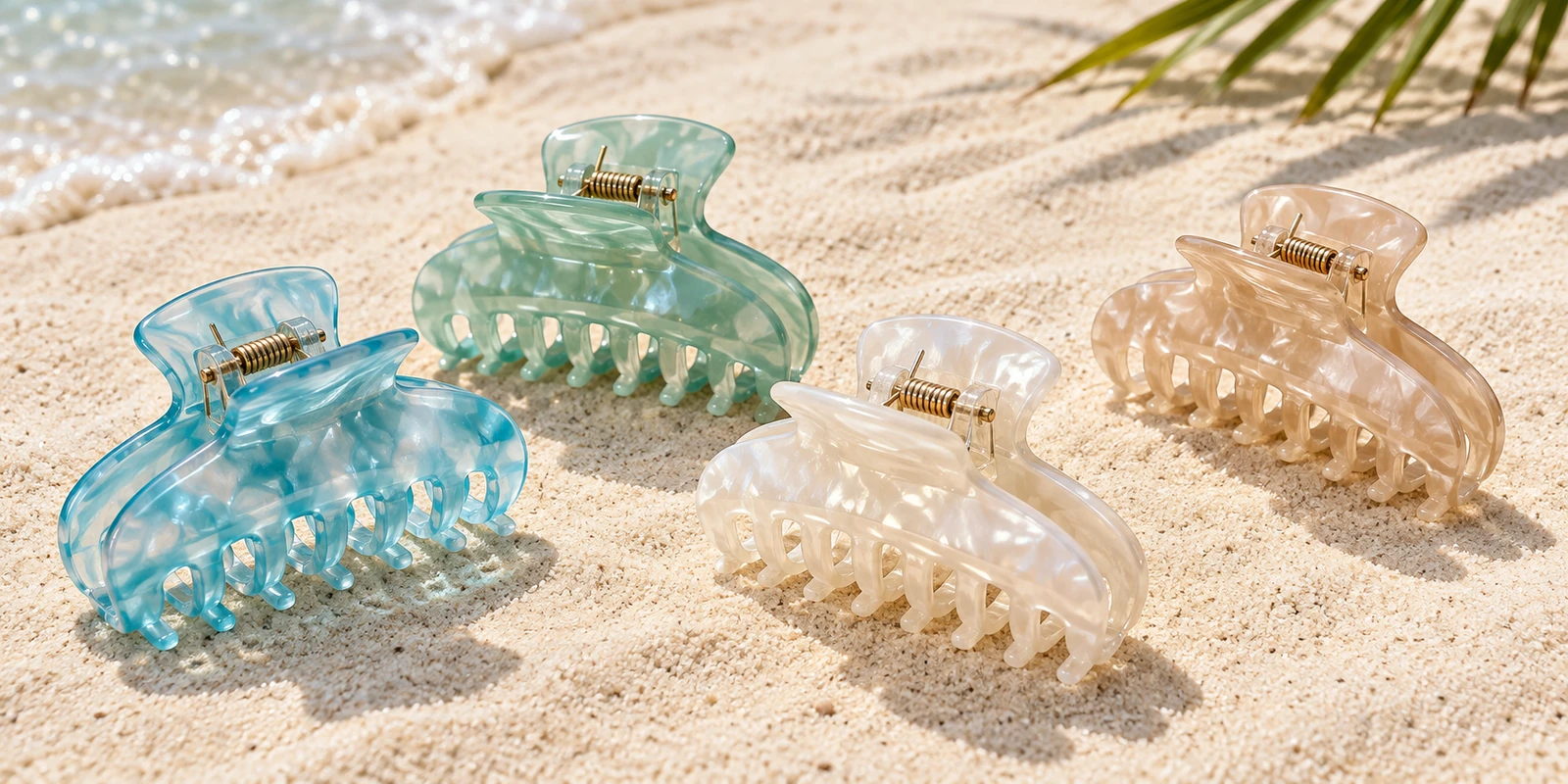
Seashell and ocean-theme claw clips are decorative hair clips built around coastal visual references, typically translucent or pearlescent acetate in blue, seafoam, and sandy tones, sometimes moulded into shell or wave silhouettes rather than the standard rounded or square claw shape. The category sells reliably every spring and summer, but sourcing it wrong, ordering too early on a trend that shifts, too late to hit shelf timing, or in colours that fade visibly under sun exposure, turns an easy seasonal win into dead stock. This guide covers what defines the category, the material and colour techniques behind it, seasonal timing, and what buyers should specify to avoid the quality issues specific to this particular clip style.
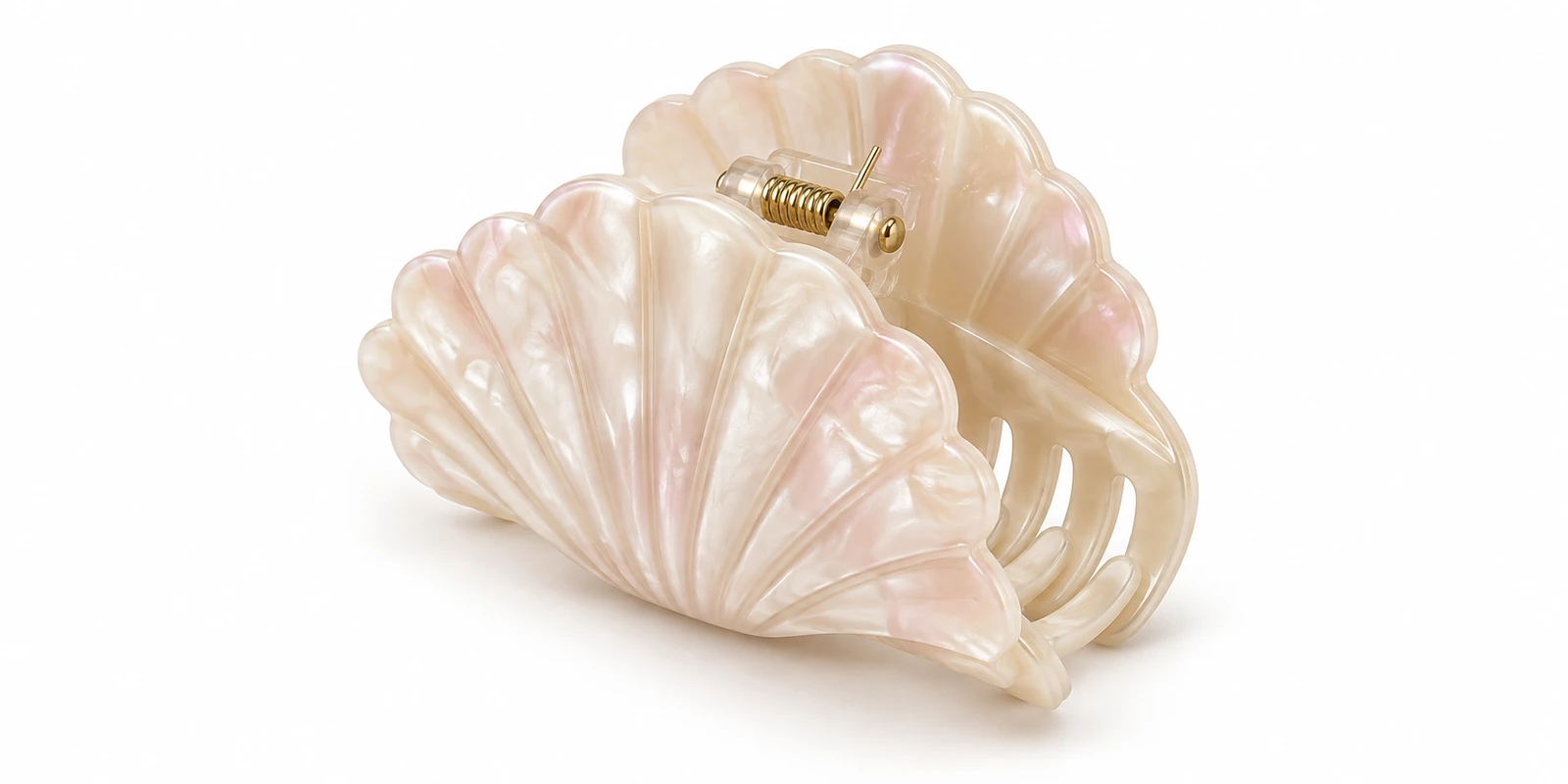
The category sits at the intersection of colour palette and physical design. Colour-only versions use standard claw clip silhouettes in ocean-inspired tones, translucent aqua, seafoam green, sandy beige, and pearlescent white, which is the lower-cost, higher-volume end of the category. Shape-driven versions go further, moulding the clip body itself into a scallop shell contour, a wave-edge profile, or starfish-inspired detailing along the spine, commanding a price premium for the more complex tooling involved. Most seasonal collections blend both approaches, using a handful of shape-driven hero pieces alongside a broader run of colour-only clips to cover different price points within one themed collection.
Cellulose acetate is the dominant material for this category because of what it does with light and colour that opaque plastics can’t replicate. Translucent acetate sheets, layered or swirled during the casting process, produce the sea-glass and water-like depth effect that defines the premium end of ocean-theme collections. Getting this effect consistent across a production run depends on the acetate supplier’s sheet casting process, which is why colour consistency is a genuine sourcing risk in this category rather than a minor cosmetic concern.
Pearlescent pigments, mixed into the acetate or applied as a surface coating, create the shifting, opalescent quality associated with shell and pearl visual references. Iridescent coatings sit on top of the base material rather than through it, which makes them cheaper to produce but more prone to wearing off with repeated handling compared with pigment mixed directly into the acetate itself. Buyers should confirm which technique a quoted price reflects, since the two look similar in a product photo but perform very differently over months of use.
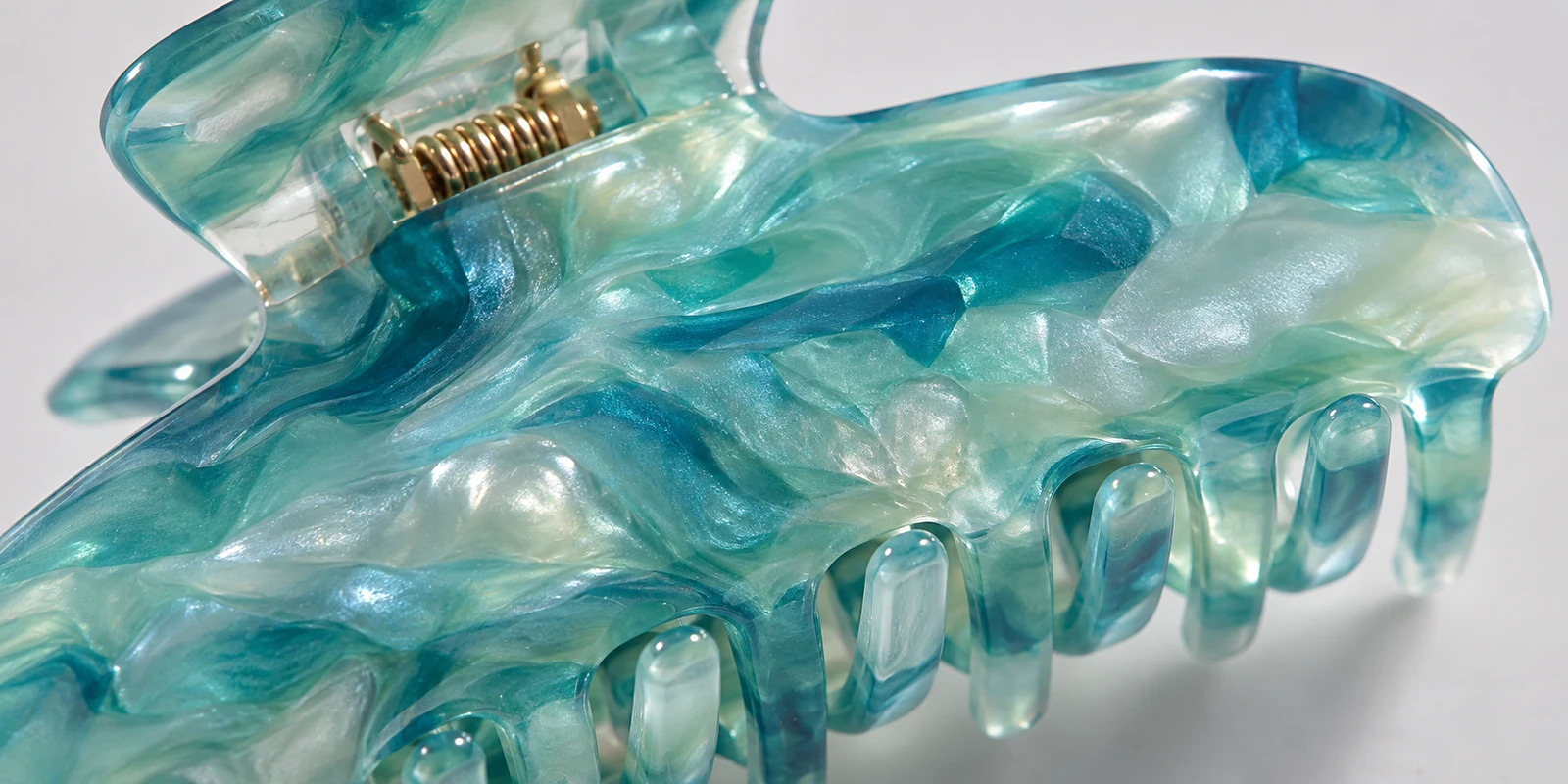
The table below outlines the main variants buyers typically mix within a single seasonal collection.
| Variant | Construction | Price Tier | Typical Use |
|---|---|---|---|
| Colour-only translucent | Standard claw shape, ocean-tone acetate | Entry | High-volume core range |
| Pearlescent finish | Standard shape, pearl pigment or coating | Mid | Broad seasonal appeal |
| Scallop shell silhouette | Moulded shell-contour body | Mid to premium | Hero product, display feature |
| Starfish or wave detail | Textured surface detail on standard shape | Mid | Visual interest without new tooling |
| Marbled sea-glass effect | Layered acetate casting | Premium | Limited-run, higher price point |
Ocean-theme collections need to land on shelves ahead of the actual summer selling window, not during it, which means the sourcing timeline has to work backward from a retail date rather than a production convenience date. For northern hemisphere retail, placing orders in late autumn or early winter for spring sampling and a late-winter production run typically lands stock in time for early spring merchandising, ahead of the peak demand window rather than chasing it. Southern hemisphere buyers and year-round warm-climate markets should shift this calendar roughly six months, but the same principle applies: order well ahead of the selling season, not in response to it.
Colour fading is the most category-specific quality risk, since the light, saturated tones that define ocean-theme collections, particularly translucent blues and pearlescent whites, show UV fade more visibly than darker, opaque colourways used in other clip categories. Requesting UV stability data or accelerated fade testing for a specific colour formulation matters more here than for a standard tortoiseshell or solid-colour range. Translucent acetate is also more likely to show visible flow lines, air bubbles, or inconsistent swirl patterns from the casting process than opaque acetate, defects that are cosmetic but highly visible given how much of the appeal depends on a clean, consistent translucent effect. Pearlescent coatings applied as a surface layer rather than mixed into the material are the third common issue, wearing thin at contact points, particularly the spring hinge area, faster than buyers testing a fresh sample would anticipate.
Ocean-theme collections rarely sell as a single-product line in practice, since buyers building out a coastal or summer accessory range typically pair claw clips with matching scrunchies, headbands, or smaller decorative clips in the same colour and finish story. Sourcing complementary pieces from the same fabric or acetate batch as the claw clips keeps colour matching consistent across the range, which is harder to achieve when different product categories are sourced from separate suppliers running their own independent colour formulations. Buyers planning a multi-product summer launch benefit from briefing the full range at once, even if pieces ship at different times, so the acetate or fabric colour reference stays locked across every item in the collection.
Ocean and coastal themes are a stable, recurring seasonal category rather than a single-year trend, which changes how buyers should think about tooling investment compared with a fast-moving fashion trend that might not return next year. Shape-driven tooling, like a scallop shell mould, has a reasonable expectation of reuse across multiple summer seasons with colour and finish updates, which justifies a higher upfront tooling investment than a one-season novelty item would. This is worth factoring into supplier negotiations, since amortising a mould cost across several seasons of expected reorders is a different conversation than a single-season commitment, and suppliers are often willing to structure pricing differently once that longer-term reorder intent is clear.
Seasonal, trend-adjacent collections carry different MOQ logic than core, year-round product lines. A supplier running a dedicated ocean-theme colour batch needs enough total volume across the collection’s colourways to justify the casting or dyeing setup, which means buyers spreading a small total order across too many individual shades often find each colour’s minimum harder to hit than expected. Consolidating a seasonal collection around four to six core colourways, rather than eight or ten, generally produces better per-unit pricing and more reliable colour consistency than a broader, thinner spread. Buyers testing the category for the first time can order a smaller trial run across fewer colours before committing to a full seasonal programme, using sell-through data to guide which shapes and colours earn a larger commitment the following season.
Packaging for this category benefits from reinforcing the coastal theme visually, since ocean-theme clips are frequently an impulse or gift purchase where shelf presentation drives the sale as much as the product itself. Clear or translucent packaging that lets the acetate’s light-catching quality show through performs better at retail than opaque boxes that hide the product’s main visual appeal. Buyers merchandising alongside other summer-adjacent accessories, sun hats, beach bags, or swimwear displays, should factor packaging size and hang-tag compatibility into the sourcing brief early, since retrofitting packaging after production is a common and avoidable added cost.
Colour and finish technique should be specified explicitly rather than approved from a single sample, since pigment-through versus surface-coated pearlescent finishes look identical in a photo but diverge significantly in durability. UV fade testing is worth requesting specifically for this category given how much the appeal depends on light, saturated tones that are more fade-prone than darker standard colourways. Ordering timeline should work backward from the retail selling window, with production and shipping lead time built in well ahead of peak season rather than planned around it.
Buyers developing an ocean-theme collection can specify acetate casting technique, pigment method, and UV stability directly through a custom claw clip manufacturer rather than approving a seasonal collection on visual sample alone.
Cellulose acetate, cast in layered or swirled sheets during production, creates the sea-glass translucency associated with this category. The casting process itself determines colour consistency and depth, which is why acetate supplier quality matters more here than in opaque clip categories.
For northern hemisphere retail, placing orders in late autumn or early winter, allowing time for sampling and a production run, typically gets stock on shelves ahead of peak spring and summer demand rather than during it. Southern hemisphere timing shifts roughly six months earlier in the calendar year.
Coatings applied as a surface layer can wear thin at high-contact points like the spring hinge faster than pigment mixed directly into the acetate material. Buyers should confirm which technique a supplier is using, since the two can look identical in a fresh sample.
Four to six core colourways generally produce better per-unit pricing and more consistent colour matching than spreading a small total order across eight or more shades, since each colour needs enough volume to justify its own production setup.
Yes, generally. Light, saturated tones like translucent blue and pearlescent white tend to show UV fade more visibly than darker, opaque colourways, making UV stability testing a more relevant request for this category than for standard clip ranges.
Clear or translucent packaging that lets the acetate’s light-catching quality show through typically performs better at retail than opaque packaging, since much of the product’s appeal is visual and often drives an impulse purchase decision at shelf.
Ocean-theme claw clips reward buyers who treat the category’s specific risks seriously rather than sourcing it like a standard colourway extension. Translucent acetate quality, pigment-through versus surface-coated pearlescent finishes, and UV fade resistance are the three specifications that determine whether a summer collection holds its visual appeal through the season or looks tired by midsummer. Getting the ordering calendar right matters just as much as getting the product right, since even a well-made collection arriving after peak season has already missed its selling window.
Manufacturers such as JunYi Beauty, which produces claw clips across acetate, plastic, and metal construction with seasonal colour and finish customisation at its Dongguan facility under ISO 9001:2015 and amfori BSCI certification, offer the material and timeline control that a summer ocean-theme collection depends on for consistent seasonal performance.
👉 Searching for Hair Accessories ? Your brand deserves the best.