Home
Product
Contact
Odm/Oem
About
Quality control for hair accessories manufacturing is the structured inspection process used to verify that each product meets agreed specifications for material, function, appearance, safety, packaging and documentation before shipment. For B2B buyers, this process reduces the risk of inconsistent batches, weak springs, rough edges, color variation, packaging errors and unsupported compliance claims.
Hair accessories may appear simple, but each product type has different failure points. A claw clip depends on spring tension and tooth finishing. A scrunchie depends on elastic recovery and seam strength. A metal pin depends on coating, tip finish and corrosion resistance. A reliable inspection plan should therefore combine general factory controls with product-specific checkpoints.
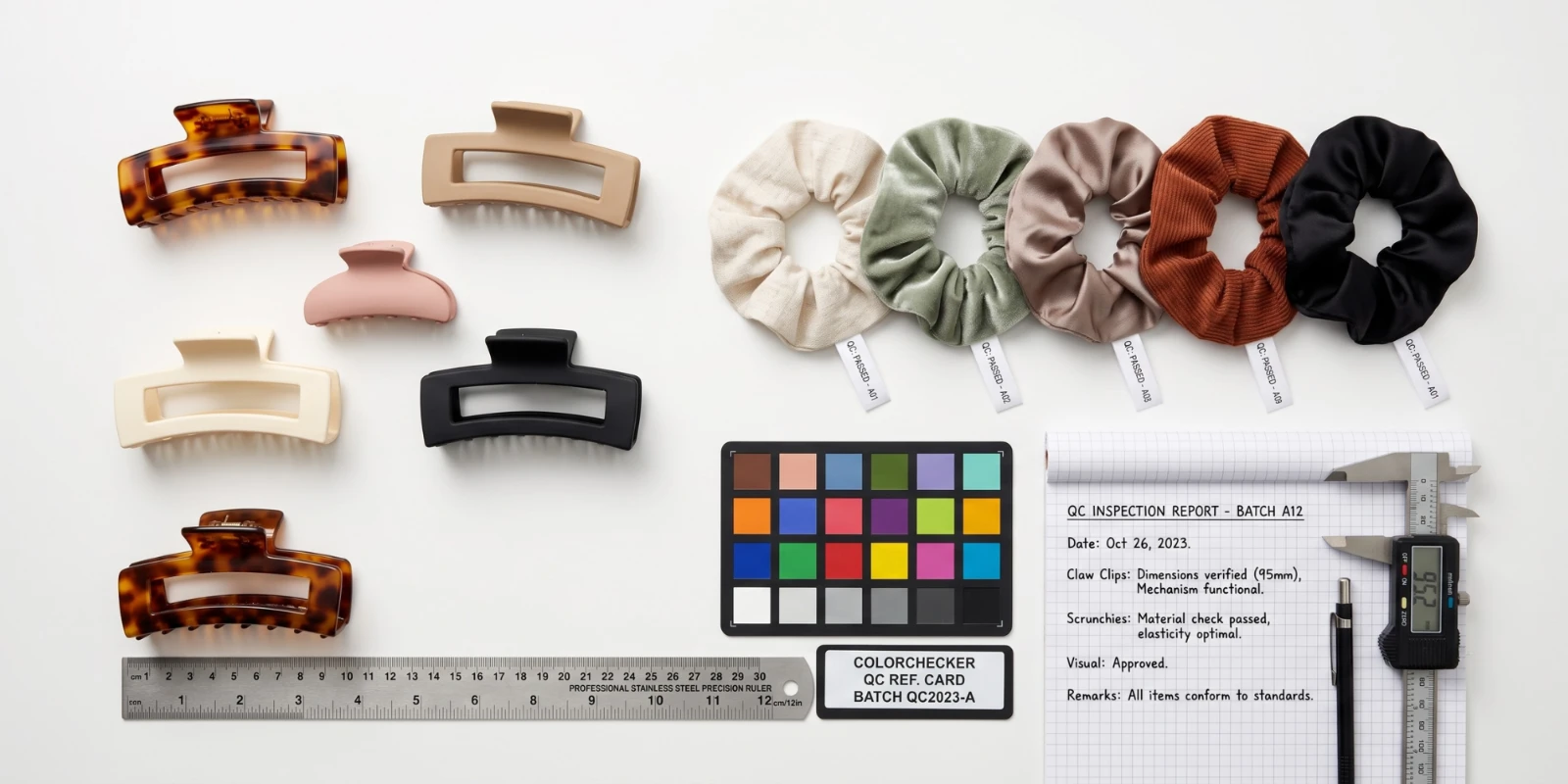
Quality control for hair accessories manufacturing matters because small defects can affect both product function and retail perception. A burr on a plastic clip tooth may snag hair. A weak spring may reduce holding strength. A poorly stitched scrunchie may lose elasticity after limited use. These are not only production issues; they become return risk, complaint risk and repeat-order risk.
For B2B buyers, inspection should begin before mass production. The approved sample should define material and color standard, size tolerance, surface finish, logo position, packaging layout, functional testing requirements and acceptable defect limits. Buyers planning custom hair accessories manufacturing should treat the approved sample as the control reference for every inspection stage.
A structured quality management system also helps factories maintain consistency across repeated orders. Certification does not replace product inspection, but ISO 9001 quality management standards provide a useful framework for process control, documentation and continual improvement.
Incoming material inspection checks whether raw materials match the production brief before cutting, molding, assembly or sewing begins. This stage is important because many defects cannot be fully corrected once production has started. A wrong plastic grade, unstable dye lot or inconsistent elastic core can affect the full order even if final assembly looks acceptable.
For plastic and acetate hair clips, buyers should confirm material type, sheet thickness, color consistency and surface defects. Acetate sheets should be checked for pattern distribution, cracking, warping and polishing suitability. Injection-molded plastic materials should be checked for color masterbatch consistency and material grade.
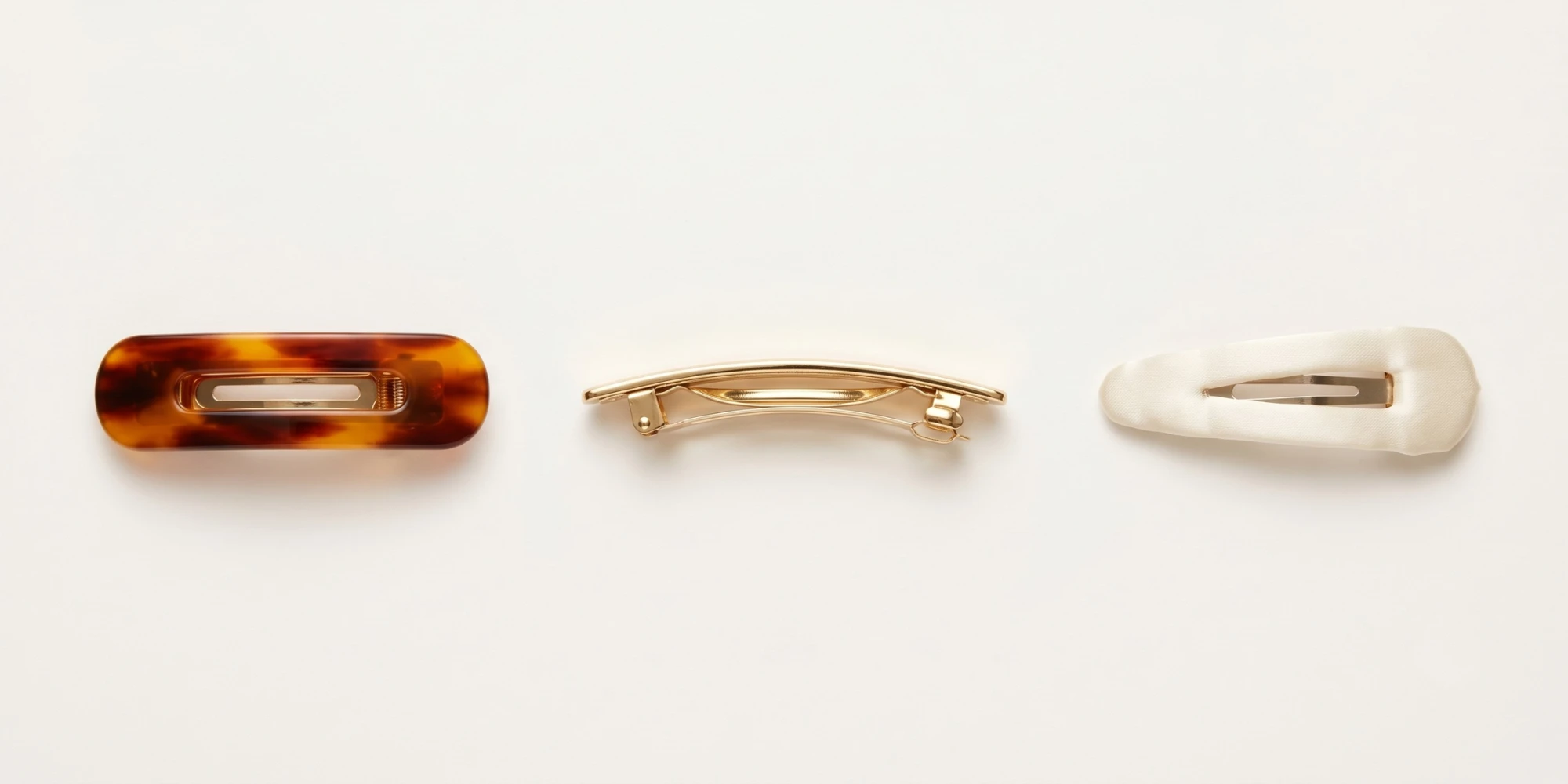
For metal pins, barrettes and alligator clips, inspection should cover plating quality, coating uniformity, tip smoothness and resistance to visible oxidation. For scrunchies and fabric headbands, checks should include fabric weight, colorfastness, elastic strength and seam compatibility.
Recycled material claims require supporting documentation. When recycled acetate, rPET or recycled fabric is specified, buyers may request records aligned with Global Recycled Standard requirements, especially when sustainability claims will appear on packaging or product listings.
In-process quality control checks products while they are still being produced. This reduces the chance that a full batch reaches final inspection with repeated defects. The goal is to identify process drift early, before defective parts move into assembly, packaging or export cartons.
| Product Type | Main Inspection Point | Common Defect | Check Method |
|---|---|---|---|
| Claw clips | Spring tension | Weak grip | Open-close test |
| Snap clips | Bend recovery | Deformation | Press cycle test |
| Hair pins | Tip coating | Sharp end | Manual touch check |
| Scrunchies | Elastic recovery | Loose stretch | Pull test |
| Headbands | Shape stability | Warping | Fit check |
For molded plastic accessories, inspectors should review gate marks, shrinkage, flash lines, uneven color and hinge alignment. For acetate accessories, inspection should include cutting accuracy, polishing consistency, tooth edge smoothness and glue or hinge assembly stability. For fabric-based accessories, seam position and elastic consistency are more important than visual appearance alone.
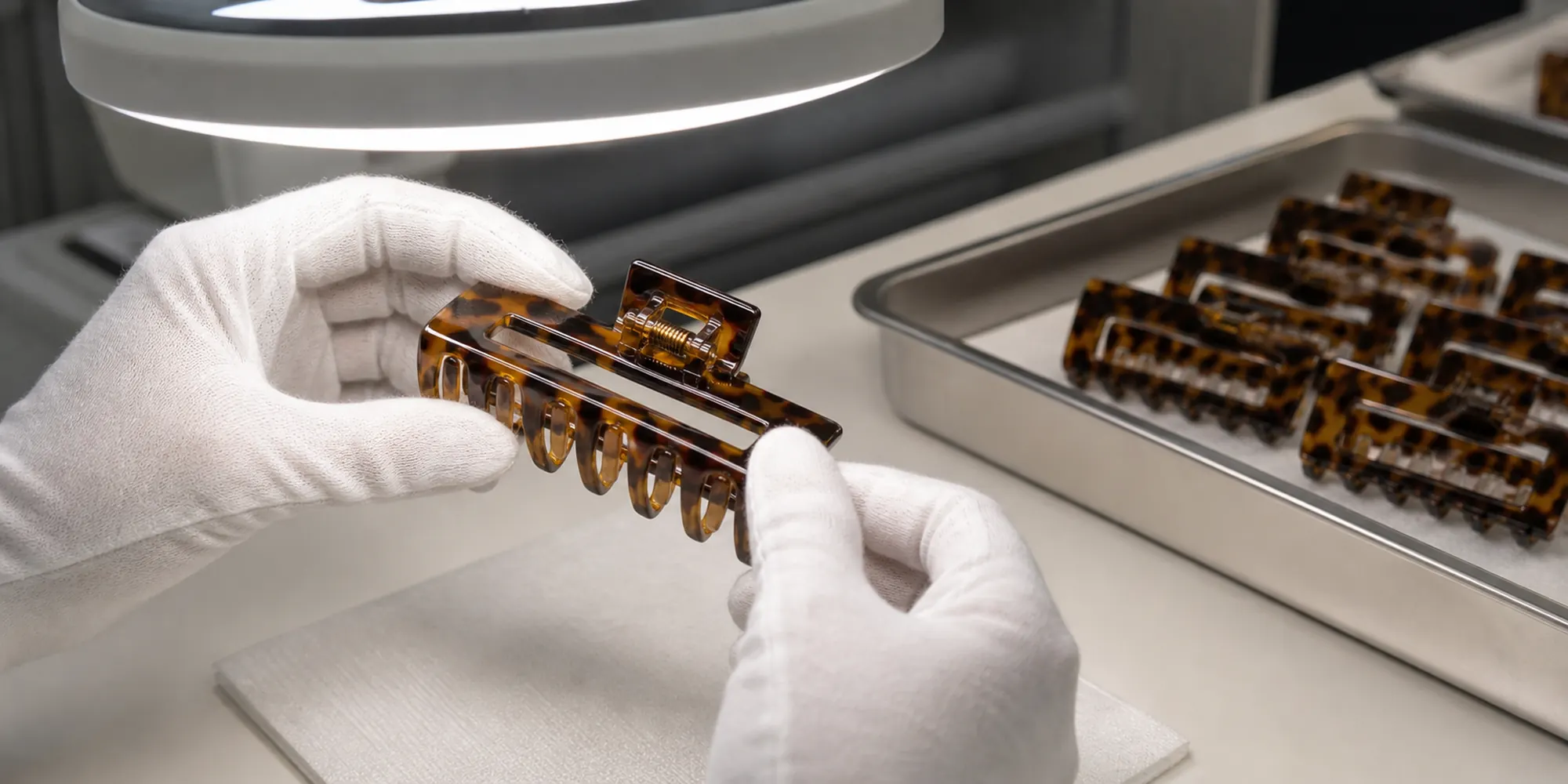
Functional inspection evaluates whether the product performs as intended under normal handling. For hair accessories, this usually means grip, flexibility, opening force, recovery and comfort-related finishing. A product that looks clean in a photo can still fail in use if the spring is weak, the hinge is loose or the teeth have rough edges.
Claw clips should be opened and closed repeatedly to check whether the spring returns to a stable position. Teeth should align evenly, and the hinge should not shift sideways. Snap clips should bend smoothly without creating sharp stress points. Bobby pins and U-pins should hold their shape after light pressure and should not expose rough metal ends.
Edge safety is especially important. Hair accessories are used close to the scalp and hair shaft, so burrs, exposed wire, sharp plating edges or unfinished plastic flash can create complaints even when the product looks acceptable in packaging.
For buyers, the inspection brief should separate major and minor defects. Major defects affect safety, function or saleability. Minor defects may include small surface marks that do not affect use. This distinction helps prevent unclear disputes during pre-shipment inspection.
Packaging inspection confirms that finished goods are ready for retail, e-commerce or wholesale handling. A technically acceptable product can still fail inspection if packaging is incorrect, labels are missing or product variants are mixed. For private label and OEM orders, packaging errors can also delay distribution because barcodes, SKU codes and carton marks must align with buyer systems.
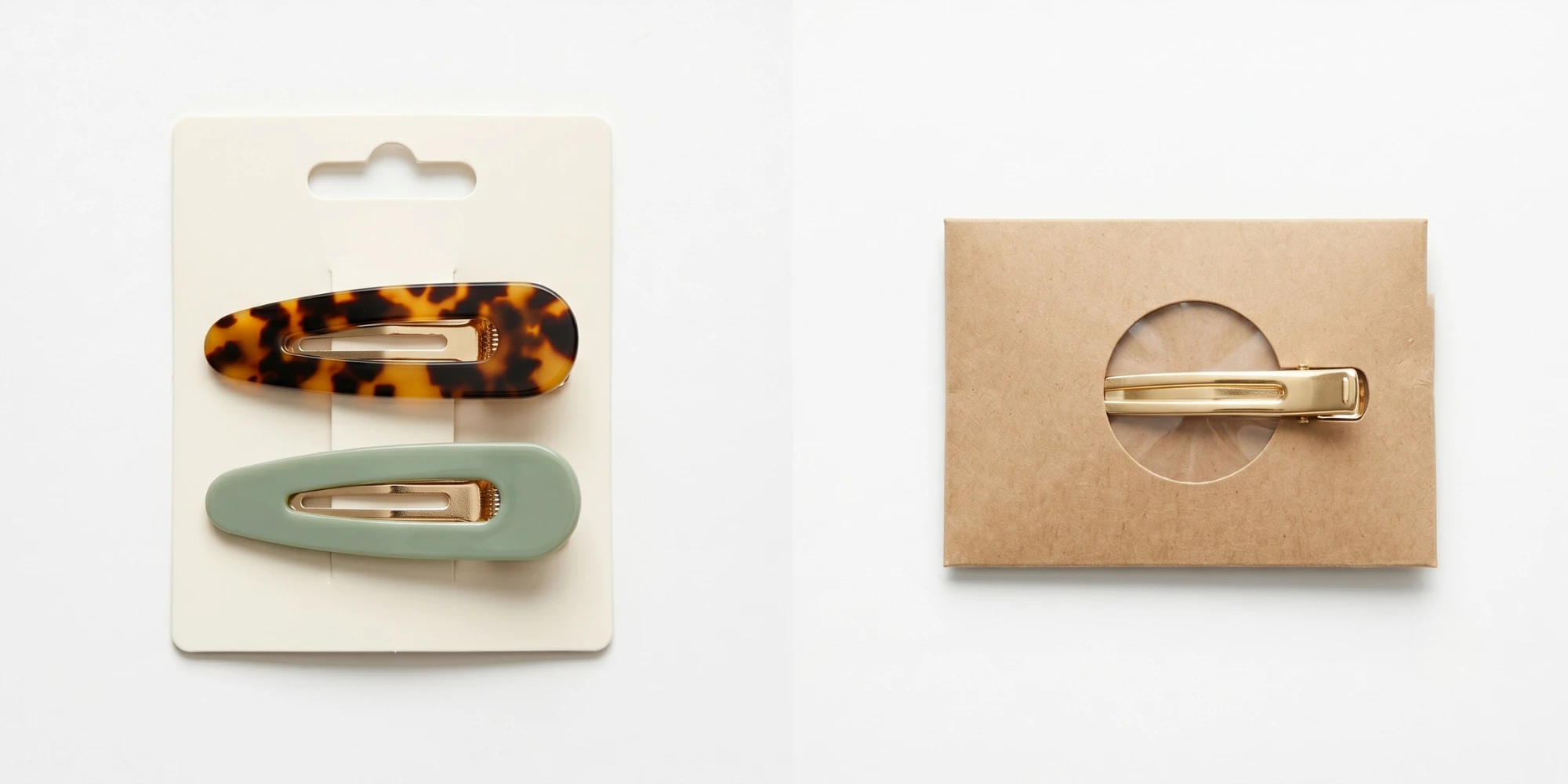
Packaging checks usually include barcode accuracy, SKU matching, color name, product count, warning labels, country-of-origin information and carton marks. Inner packaging should protect the product from deformation, scratching and compression during transport. Buyers sourcing through OEM and ODM hair accessories manufacturing should confirm packaging files before production begins, not after goods are assembled.
Packaging materials may also be part of a buyer’s compliance program. The BRCGS packaging materials standard is often used as a reference point for packaging quality, legal compliance and production control across supply chains.
For a visual explanation of inspection sampling and AQL tables, the following video can be embedded as supporting context:
Documentation review should include inspection reports, material declarations, certification copies, test records and production photos when required. These documents help buyers trace quality issues if a later claim appears in the market.
A supplier’s quality control system should be evaluated through evidence rather than broad claims. Useful evidence includes written inspection standards, batch records, sample approval forms, defect photos, staff training records and pre-shipment inspection reports. Buyers can ask whether the factory uses AQL sampling, what defect categories are applied, and whether inspections are performed at incoming, in-process and final stages.
For custom hair clips, useful factory evidence includes mold maintenance records, spring assembly checks, polishing inspection and edge defect examples. A factory that only checks finished goods may miss repeated process defects until the order is already packed.
Supplier evaluation should also consider whether inspection results lead to corrective action. For example, if a batch shows repeated color variation, the process should identify whether the cause is material mixing, molding temperature, polishing residue or packaging contamination. A mature QC system does not only reject defects; it prevents repeated defects from returning.
| Inspection Area | Buyer Checkpoint | Reason for Review |
|---|---|---|
| Approved sample | Compare product size, color, finish and function | Confirms batch consistency |
| Function | Test spring, hinge, elasticity or grip | Reduces use-related complaints |
| Surface finish | Check burrs, scratches, flash, plating and polishing | Protects appearance and comfort |
| Packaging | Verify SKU, barcode, quantity and carton marks | Prevents retail and logistics errors |
| Documents | Review inspection report, material records and test evidence | Supports traceability |
The most important checkpoint depends on product type. For claw clips, spring tension and tooth smoothness are critical. For scrunchies, elastic recovery and seam strength matter most. For pins and barrettes, tip coating, plating quality and edge finishing require close inspection.
Inspection should happen at multiple stages. Functional and appearance checks should occur before final packaging, while SKU, label, barcode and carton checks should happen after packing. This prevents both product defects and distribution errors.
No. Certification supports process credibility, but it does not confirm that a specific order meets the buyer’s approved sample. Product-level inspection is still required for material, function, finish, packaging and documentation accuracy.
Quality control for hair accessories manufacturing is most effective when it is built into the full production flow: material inspection, in-process checks, functional testing, packaging review and final documentation. B2B buyers should define inspection criteria before production, connect each checkpoint to an approved sample, and separate cosmetic defects from functional or safety-related failures.
For hair clips, claw clips, pins, scrunchies and headbands, the most important inspection points are not identical. Each product requires its own risk checklist, from spring tension and tooth finishing to seam strength and packaging accuracy. Manufacturers such as JunYi Beauty, operating from Dongguan with integrated production and documented quality systems, represent the type of factory-direct supplier suited to buyers that need repeatable inspection standards across custom hair accessory programs.
👉 Searching for Hair Accessories ? Your brand deserves the best.