Home
Product
Contact
Odm/Oem
About
Wooden hair accessories are hair styling and holding tools made from natural wood materials, including wood combs, hair sticks, barrettes, claw clips, pins and decorative hair forks. They are often considered gentle on hair because well-polished wood surfaces may reduce friction, static and pulling compared with some low-grade plastic or rough metal accessories.
However, whether wooden hair accessories are good for hair depends on material quality, surface finishing, edge smoothness, weight, coating safety and daily styling habits. For B2B buyers, salons and private label brands, the question is not simply whether wood is “good” or “bad.” A more useful question is how wooden accessories perform across different hair types, product structures and manufacturing standards.
Brands evaluating wooden pieces often compare material options through custom hair accessories manufacturing before selecting final product structures.
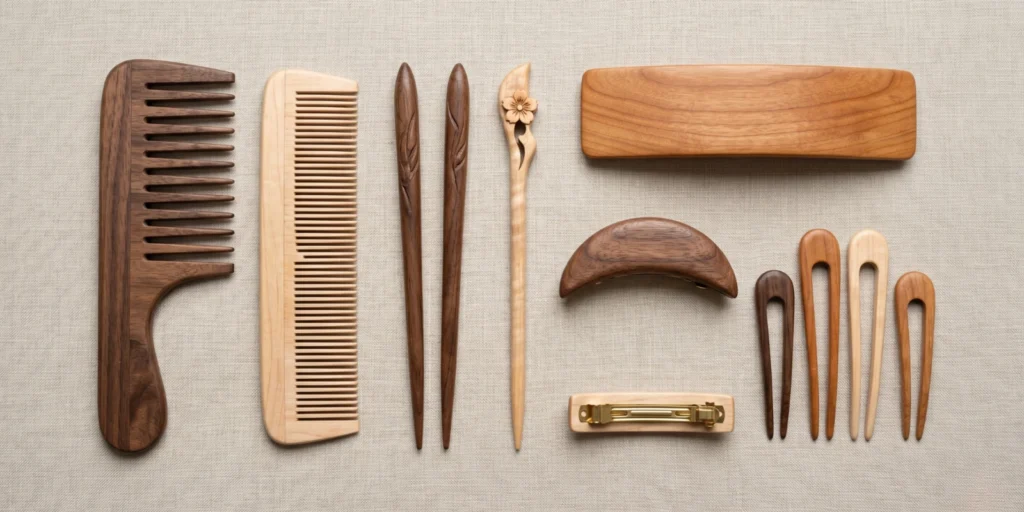
Wooden hair accessories can be hair-friendly when the surface is smooth, sealed properly and shaped without sharp contact points. Wood naturally has a warmer and softer touch than many rigid plastics or exposed metal parts. This makes it suitable for products that stay in close contact with the scalp or hair shaft.
One common reason consumers choose wood is lower static. Plastic combs and clips may create static in dry weather, especially on fine, dry or frizz-prone hair. Smooth wooden combs and hair sticks are often preferred for reducing flyaways during daily styling.
Wood can also distribute pressure more evenly when used in wider accessories such as hair forks, curved barrettes and bun pins. This is useful for thick hair, textured hair or long hair that requires secure holding without tight elastic tension.
Still, the benefit is not automatic. Poorly sanded wooden teeth, rough clip edges or unsealed grain can catch on hair. For procurement teams, the finishing process is therefore more important than the material label itself.
For general background on styling-related damage, the American Academy of Dermatology guidance on preventing hair damage can be used as an external reference.
Wooden hair accessories sit between natural styling tools and fashion hair accessories. They are often selected for tactile comfort, visual texture and low-static performance. Plastic is usually lighter and easier to mold into complex shapes, while metal provides strong hold in slim formats such as bobby pins and U-pins. Acetate is widely used for decorative clips because it offers polished colour patterns and stable shapes.
For buyers comparing wood with acetate or plastic, working with a custom hair clip manufacturer can help assess shape, hinge structure and finishing options before mass production.
The comparison below summarises common material differences for hair accessories.
| Material | Hair Feel | Static Level | Durability | Common Use |
|---|---|---|---|---|
| Wood | Smooth, warm | Low | Medium to high | Combs, pins, sticks |
| Plastic | Lightweight | Medium to high | Medium | Claws, clips |
| Metal | Firm, strong | Low | High | Bobby pins, barrettes |
| Acetate | Polished, rigid | Low to medium | High | Fashion clips, claws |
Wood is not always suitable for highly flexible parts, spring-loaded hinges or very thin teeth. It performs better in accessories where structure is simple and surface contact matters, such as wide-tooth combs, hair sticks, bun pins and decorative barrettes.
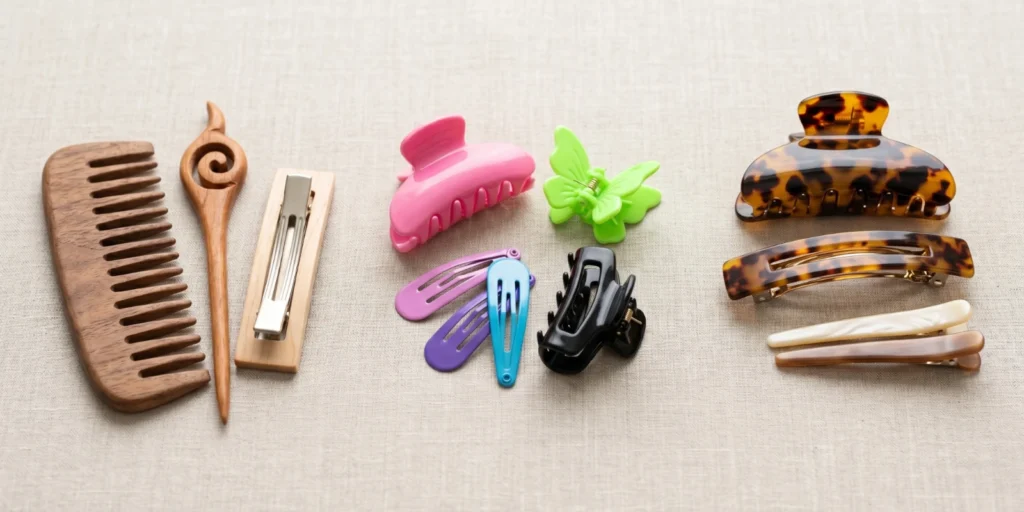
Wooden hair accessories can work well for many hair types, but the design must match hair density, texture and styling purpose. Fine hair usually needs lightweight accessories with smooth edges and moderate grip. Heavy wooden clips may slide down or create tension if the spring and curve are not properly balanced.
Thick hair often benefits from wooden hair sticks, forks and large barrettes because these formats can distribute pressure over a broader area. Curly or coily hair may benefit from wide-tooth wooden combs and smooth hair forks because these structures can reduce snagging when compared with narrow-tooth plastic combs.
For wet hair, wood requires more caution. Natural wood may absorb moisture if it is not sealed correctly. Repeated exposure to water can lead to swelling, cracking or surface roughness. For shower use or wet detangling, resin, silicone or specially coated materials may be more practical.
Wooden bun pins and decorative sticks can also be evaluated alongside metal, acrylic and pearl designs through a custom hair pin manufacturer, especially when buyers need consistent sizing, polishing and packaging standards.
For basic consumer education around hair breakage, the Healthline overview of hair breakage causes may be used as a supporting external reference.
The hair-friendly performance of wooden hair accessories depends heavily on manufacturing control. The first factor is wood selection. Common options include sandalwood, beech, maple, bamboo and walnut. Each material differs in hardness, density, grain pattern and finishing behaviour.
The second factor is shaping. Combs and pins require consistent tooth spacing, rounded tips and balanced thickness. Thin wooden teeth may break if the wood is brittle or cut against the grain. Hair sticks and forks require tapered ends that can pass through hair without scratching the scalp.
The third factor is surface treatment. Sanding, polishing and sealing determine whether the final product feels smooth or rough. A well-finished wooden accessory should not have splinters, sharp corners or exposed grain that catches hair.
For B2B sourcing, quality inspection usually focuses on:
Wooden hair accessories also have limitations. Compared with molded plastic or acetate, wood is less suitable for highly detailed shapes, transparent finishes or complex spring mechanisms. Natural grain variation can make every piece slightly different, which may be useful for handmade-style collections but challenging for strict colour-matching requirements.
Moisture sensitivity is another concern. If wooden clips, combs or pins are stored in humid environments, poorly sealed surfaces may expand or become rough. This can reduce product lifespan and increase the risk of hair snagging.
Weight should also be considered. Dense woods may feel solid but can be too heavy for fine hair or all-day wear. Large wooden barrettes and thick hair forks need careful balancing to avoid pulling at the roots.
The following table outlines practical selection points for buyers.
| Buyer Concern | Recommended Check | Why It Matters |
|---|---|---|
| Hair snagging | Smooth edge test | Reduces friction |
| Moisture exposure | Sealed surface | Prevents swelling |
| Heavy feel | Weight control | Improves comfort |
| Breakage risk | Grain direction | Improves strength |
| Odour issue | Coating review | Supports usability |
For wholesale, salon and private label buyers, wooden hair accessories require different sourcing checks from standard plastic clips. The material itself is variable, so quality control must account for natural grain, colour range and moisture content. A clear specification sheet should define acceptable wood type, thickness, surface finish, coating method and packaging requirements.
MOQ and production time may also differ from injection-molded accessories. Wooden pieces often require cutting, sanding, polishing and manual inspection. Designs with carving, engraving or mixed materials may require additional sampling time.
Packaging is another important point. Wood can be scratched during bulk transport, especially when polished surfaces rub against each other. Individual wrapping, inner trays or soft separators may be needed for decorative retail products.
For custom branding, common options include laser engraving, printed logo plates, hang tags and branded packaging. Laser engraving works well on many wooden surfaces, but contrast varies by wood species.
For quality management context, ISO 9001 quality management standards can be used as an external authority reference.
Attribute: rel=”nofollow noopener noreferrer”
Wooden hair accessories can be good for hair when they are made with smooth surfaces, rounded edges, suitable wood density and safe finishing. They may help reduce static, lower friction and provide comfortable support for buns, updos and daily styling. They are especially relevant for brands developing natural-looking, low-static or craft-inspired hair accessory collections.
The main risks come from rough finishing, moisture damage, excessive weight and weak structural design. For this reason, material selection and production quality should be evaluated together rather than treating wood as automatically gentle.
From a manufacturer perspective, companies such as JunYi Beauty can support buyers comparing wooden hair accessories with acetate, plastic and metal alternatives, especially when product design, finishing method and quality inspection requirements need to be defined before mass production.
👉 Searching for Hair Accessories ? Your brand deserves the best.