Home
Product
Contact
Odm/Oem
About
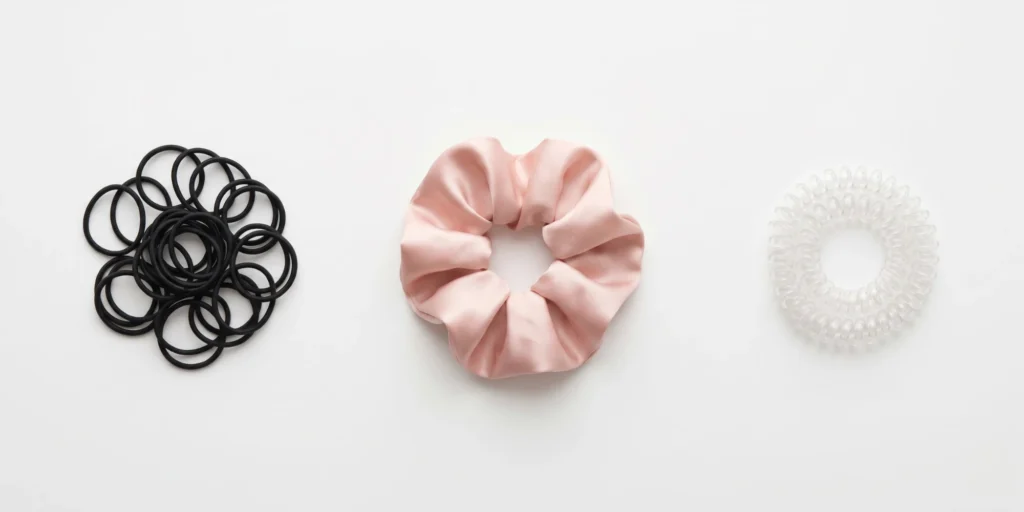
The short answer is yes — rubber hair ties cause more damage to hair than most other hair tie formats when used habitually. The longer answer is that the extent of damage depends on how the tie is used, how frequently, and on which hair type. A rubber band used once to secure a ponytail for an hour causes negligible harm; the same rubber band wrapped tightly three times on fine chemically treated hair, worn for eight hours daily, and yanked out without care is a reliable mechanism for breakage and cuticle damage.
This guide explains precisely how rubber hair ties damage hair, identifies the specific habits and conditions that amplify that damage, distinguishes between different rubber-based formats, and provides evidence-based alternatives for consumers who want to reduce hair tie-related breakage — with sourcing context for B2B buyers developing lower-damage hair accessories ranges.
Rubber hair ties damage hair through three distinct mechanisms, each of which operates independently and compounds the others when all three are present simultaneously.
The outer surface of a rubber hair tie has a high coefficient of friction against the hair shaft. When the tie is wrapped around a gathered hair section and removed, the rubber surface drags against the hair cuticle — the overlapping scale-like layer that protects the inner cortex. This dragging motion abrades the cuticle scales, lifting them further from the shaft surface and roughening the hair’s outer layer. Over repeated daily application and removal cycles, this abrasion accumulates as visible damage: dull, rough-textured hair that is more susceptible to further breakage because the protective cuticle has been progressively degraded.
The friction generated by bare rubber is substantially higher than the friction generated by fabric-covered alternatives. A satin scrunchie fabric surface against the same hair produces a fraction of the drag force that a bare rubber surface produces — which is the primary mechanical reason satin scrunchies are recommended over rubber bands for everyday use.
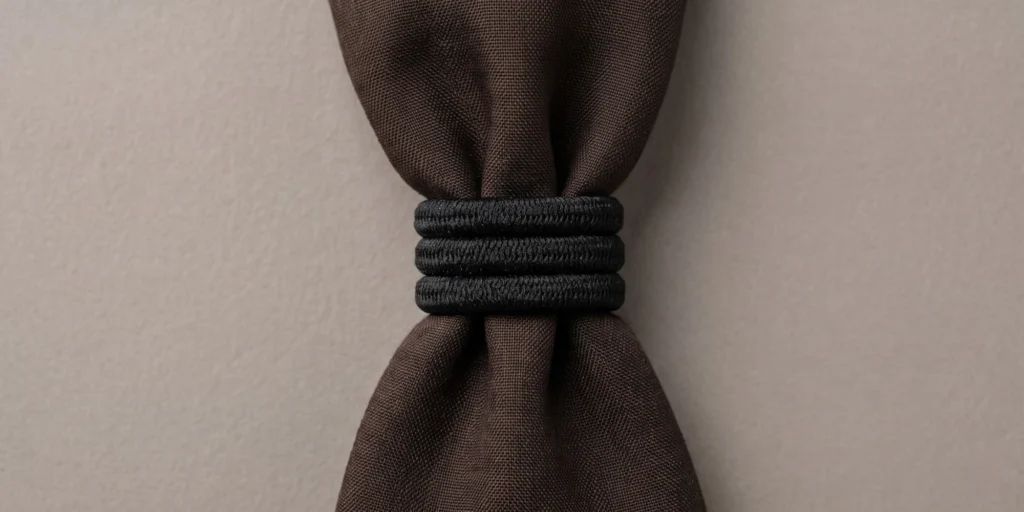
When a rubber hair tie is wrapped around a ponytail, it applies circumferential compressive force to the hair shaft at the wrap point. On thick or long hair that requires two or three wraps to achieve sufficient hold, this force multiplies with each additional wrap — concentrating substantial mechanical stress at a narrow band of the hair shaft. Over time, this localised stress creates a structural weak zone — a crease in the hair shaft where the tensile strength is lower than in unwrapped sections. This weak zone is more susceptible to breakage from subsequent mechanical stress: brushing, heat styling, or simply the tension of a new tie applied to the same position the following day.
The highest-damage moment in the rubber hair tie use cycle is removal. As the tie is unwound from the hair, individual strands that have been caught in or around the tie are subject to tension in the direction of unwinding — and if that tension exceeds the strand’s tensile strength before the strand releases, the strand breaks. This snagging is more severe with rubber bands than with fabric-covered elastics because the rubber surface grips individual strands more aggressively.
Metal-jointed elastics — the standard format with a metal crimp or staple joining the two ends of the elastic — present an additional snagging risk at the join. The metal element catches individual strands on removal, tearing rather than releasing them. This is the single most damaging element of the standard drugstore elastic hair tie and accounts for a disproportionate share of removal-related breakage relative to the rest of the tie.
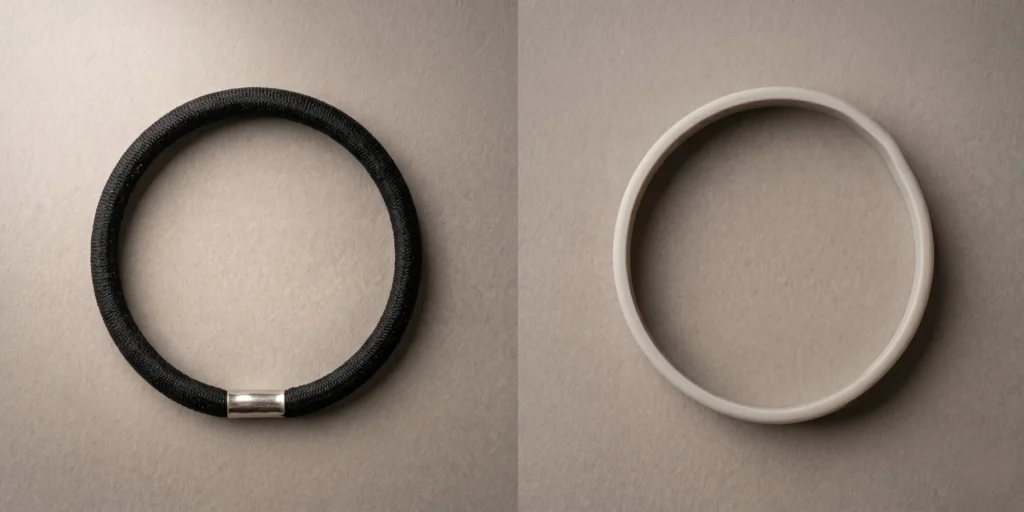
Not all rubber-based hair ties cause equal damage. The following formats are ranked from highest to lowest damage risk:
Office rubber bands — the thick flat bands designed for bundling documents — are not hair accessories and cause the most damage of any elastic format used on hair. Their surface is completely unfinished, their tension is calibrated for grip rather than gentle hold, and they have no design consideration for removal friction. Using an office rubber band in hair consistently causes breakage in almost any use context. They should not be used as hair ties under any circumstances.
The standard thin rubber elastic hair band — available in every drugstore and supermarket, typically in bulk packs — is the most commonly used and most commonly damaging hair tie format in everyday use. The bare rubber surface generates maximum friction, the thin gauge requires multiple wraps on any hair volume above fine, and the narrow contact width concentrates the compressive force at a minimal area of the hair shaft. Metal-jointed versions add the additional snagging risk of the crimp join on removal.
Fabric-covered elastics — where the elastic core is wrapped in a thin nylon or cotton thread — reduce friction relative to bare rubber because the thread surface contacts the hair rather than the rubber. However, the contact width is still narrow, multiple wraps are still typically required for thick hair, and the fabric covering does not eliminate the tension crease risk or the snagging risk on removal. These are a moderate improvement over bare rubber but not a low-damage solution.
Seamless silicone hair bands — moulded from a single piece of silicone without a join — eliminate the highest-risk element of conventional elastics (the metal crimp join) and present a smoother surface than bare rubber. However, silicone still generates moderate friction against the hair cuticle, and the compressive force at the wrap point remains. Seamless silicone bands are a meaningful improvement over standard elastics and represent a low-to-moderate damage profile — significantly safer than bare rubber, not as safe as fabric-covered wide-elastic formats.
According to research on hair cuticle friction and mechanical damage, the surface texture of the material in contact with the hair shaft is the primary determinant of friction-related cuticle damage — which directly explains the damage gradient from bare rubber through fabric-covered elastics to smooth satin fabric surfaces.
The damage caused by rubber hair ties is substantially amplified by specific use habits. Identifying and correcting these habits reduces damage significantly even before switching to a lower-friction alternative.
Wearing a ponytail at the same height and tightness every day concentrates mechanical stress at an identical point on the hair shaft, compounding the tension crease at that location with each wearing. The crease deepens with each day of use, progressively reducing the tensile strength of the hair at that point until it breaks. Varying the ponytail height between high, mid, and low positions rotates which section of the hair bears the stress, giving each location time to recover before the next wearing.
Wet hair has significantly lower tensile strength than dry hair — the water molecules intercalate between the keratin chains in the cortex, temporarily weakening the structural bonds that give the hair shaft its strength. Applying a rubber hair tie to wet hair and wearing it while the hair dries means the hair shaft is under elastic compression at its weakest structural state. As the hair dries and contracts slightly, the effective tension of the tie increases further. The combination of low tensile strength and increased effective tension makes this one of the highest-risk habits for rubber hair tie-related breakage.
The removal step generates the majority of breakage events associated with rubber hair ties. Pulling the tie downward through the hair rather than unwinding it wrap by wrap causes the maximum number of strands to be simultaneously stressed in the removal direction. On a tight tie with multiple wraps, this force is sufficient to break multiple strands in a single removal. Unwinding the tie carefully — releasing each wrap individually before sliding it off the end of the ponytail — reduces removal-related breakage substantially regardless of the tie format used.
A tie that is too small for the hair volume requires more wraps to achieve hold — and each additional wrap multiplies the tension and friction at the wrap point. On thick or long hair, the difference between a tie that achieves hold in one wrap and a tie that requires three wraps is the difference between low-damage and high-damage use. Using a larger-circumference tie or a scrunchie with an appropriately sized elastic core reduces the number of wraps required and therefore the accumulated stress per wearing.
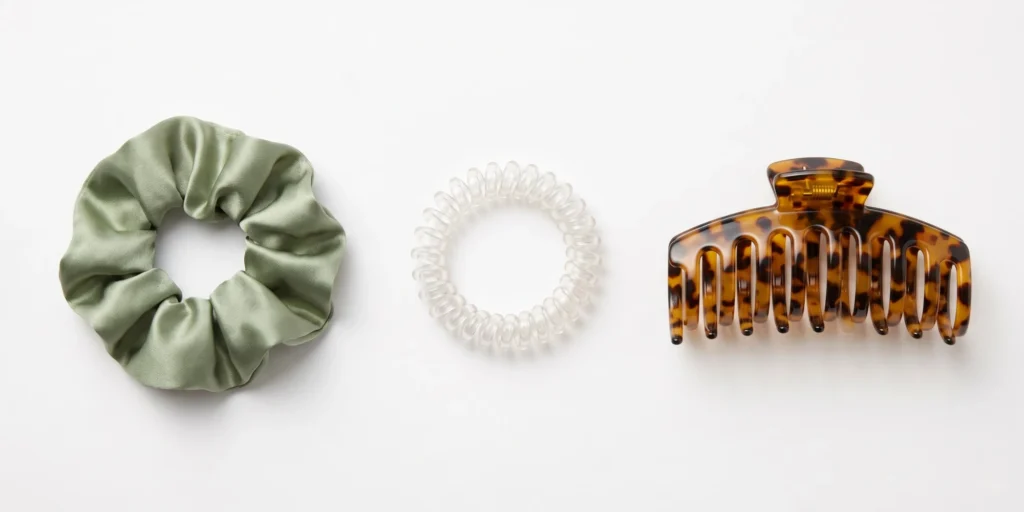
Satin scrunchies address all three rubber hair tie damage mechanisms simultaneously: the smooth satin surface generates the lowest friction of any common hair tie fabric against the cuticle, the wide gathered tube distributes the elastic’s compressive force across a large contact area rather than a narrow band, and the fabric casing prevents the elastic from directly contacting and snagging individual hair strands on removal. For everyday ponytail and bun wear on any hair type, a correctly specified satin scrunchie is the most practical upgrade from a rubber hair tie.
For thick hair, the elastic specification within the scrunchie matters: a wide-gauge, high-tension elastic achieves hold in a single or double wrap rather than requiring the multiple wraps that a standard thin elastic demands. Brands sourcing for the hair care or premium wellness segment should work with a custom hair scrunchie manufacturer to specify elastic width and tension alongside fabric type — these three variables together determine the damage profile of the finished product on different hair types.
Spiral coil hair ties — also called phone cord or tornado ties — are constructed from a coiled plastic or resin filament that wraps around the hair in a helical pattern rather than a circumferential band. The coil distributes tension along its length rather than concentrating it at a narrow wrap point, and the smooth coil surface generates very low friction against the hair shaft. Spiral coil ties leave the lowest tension crease of any hair tie format, making them particularly valuable for consumers whose hair shows persistent denting from conventional elastics.
For bun and half-up styles, a correctly sized claw clip eliminates the hair tie damage equation entirely — there is no wrap, no wrap-point tension, no friction on removal. The clip grips a gathered section through spring jaw tension and releases cleanly without unwinding through the hair. For consumers who primarily wear buns rather than ponytails, switching to a claw clip removes the most significant source of daily mechanical damage from their routine. Brands sourcing claw clips for a hair care-positioned range should source from an acetate claw clip manufacturer that specifies smooth tooth finishing as a production quality standard — since rough or poorly finished teeth reintroduce a snagging risk at the grip point.
Silk ribbon ties present the absolute minimum friction and tension profile of any hair fastening format. With no elastic component and a silk surface that generates near-zero friction against the hair cuticle, they are the recommended format for hair that is severely compromised — bleached, heavily processed, or experiencing active breakage — where even a satin scrunchie’s residual friction is a concern. The limitation is hold reliability: silk ribbon ties are not appropriate for active wear or high-hold styling requirements.
| Format | Surface Friction | Tension Concentration | Snagging Risk | Overall Damage Risk |
|---|---|---|---|---|
| Office rubber band | Very high | Very high | High | ❌ Avoid entirely |
| Bare thin elastic (metal join) | High | High | Very high | ❌ High damage |
| Bare thin elastic (no join) | High | High | Medium | ❌ High damage |
| Fabric-covered thin elastic | Medium | Medium-high | Low to medium | ⚠️ Moderate damage |
| Seamless silicone band | Medium | Medium | Low | ⚠️ Low to moderate |
| Velvet scrunchie | Low to medium | Low | Low | ✅ Low damage |
| Satin scrunchie | Very low | Low | Very low | ✅ Very low damage |
| Spiral coil tie | Very low | Very low | Very low | ✅ Very low damage |
| Claw clip (smooth teeth) | Very low | Very low | Very low | ✅ Very low damage |
| Silk ribbon tie | Minimal | Very low | Minimal | ✅ Lowest damage |
Rubber hair tie damage accumulates differently across hair types. The following groups experience the most significant damage from habitual rubber band use:

Consumer awareness of hair tie-related breakage has grown significantly over the past several years, driven by hair care content across social media platforms and an increased general consumer interest in hair health. This awareness has created measurable commercial demand for lower-damage alternatives — specifically satin scrunchies, spiral coil ties, and seamless bands — at price points above the commodity elastic tier.
For B2B buyers, the practical implication is straightforward: a range that includes demonstrably lower-damage alternatives to rubber bands — with product communication that explains why they are lower damage — commands higher retail price points and attracts a more engaged consumer than a range of undifferentiated elastic formats. The product specifications that define lower-damage performance (satin fabric, wide elastic, seamless construction) are achievable within standard OEM production at modest cost premium over bare elastic alternatives.
The most commercially effective range structure for a lower-damage hair tie positioning includes satin scrunchies across a colour range in at least two elastic tension options (standard for fine to medium hair, high-tension for thick hair), spiral coil ties as a no-crease option for colour-treated and breakage-prone consumers, and a seamless wide band as the active wear option. Positioning these as a deliberate system — rather than individual SKUs — supports a higher average order value and communicates the hair health rationale clearly to the consumer at point of purchase.
Yes — rubber hair ties cause more damage to hair than most alternative formats when used habitually. They generate high friction against the hair cuticle, concentrate compressive tension at a narrow wrap point, and snag individual strands on removal — particularly at the metal crimp join present on most standard elastics. The extent of damage depends on frequency of use, hair type, the number of wraps required, and removal technique. Used occasionally and removed carefully, a rubber band causes minimal harm. Used daily with multiple tight wraps and removed by pulling, it causes cumulative breakage that compounds over weeks and months.
Rubber hair ties cause breakage through three mechanisms: surface friction that abrades the cuticle layer on application and removal, concentrated circumferential tension at the wrap point that creates a structural weak zone in the hair shaft, and snagging of individual strands on removal — particularly at the metal crimp join of standard elastics. These three mechanisms operate simultaneously and compound each other. The result is progressive cuticle degradation and localised shaft weakening that accumulates with each use until the hair breaks at or near the wrap point.
Silk ribbon ties present the lowest damage profile of any hair fastening format — minimal friction, no elastic compression, and no snagging risk. For practical everyday use where silk ribbon hold reliability is insufficient, satin scrunchies with wide-gauge elastic are the least damaging elastic-based hair tie, combining a very low-friction satin surface with wide tension distribution that minimises both cuticle abrasion and wrap-point compression. Spiral coil ties are the least damaging option for consumers whose primary concern is tension crease rather than friction, as the helical coil distributes force along its length and leaves essentially no dent in the hair.
The safest removal technique is to unwind the tie wrap by wrap rather than pulling it straight down through the hair. Slide a finger under the outermost wrap, lift it clear of the hair, and rotate it off rather than dragging it. If strands are caught around the tie, work them free individually before continuing rather than pulling through them. Applying a small amount of hair oil or conditioner at the tie point before removal reduces friction and makes individual strand release easier on tight or tangled ties.
Q: Are scrunchies actually better than rubber bands?
Yes — specifically, satin or silk scrunchies with wide elastic cores are meaningfully better than bare rubber bands for hair health. The satin surface generates a fraction of the friction that rubber generates against the hair cuticle, the wide gathered fabric tube distributes the elastic’s force across a much larger contact area than a thin rubber band, and the fabric casing prevents the elastic from directly snagging individual strands on removal. The practical difference is visible in hair condition over weeks and months of daily use: consumers who switch from rubber bands to satin scrunchies consistently report reduced breakage and improved hair texture at the former tie point.
Standard MOQs for satin scrunchies from factory-direct OEM suppliers typically begin at 300–500 units per style per colour for standard fabric and elastic specifications. High-tension elastic specifications are typically available within the same production framework at no additional tooling cost. Spiral coil ties typically carry MOQs of 500–1,000 units per style reflecting the injection moulding tooling involved. Buyers sourcing both formats within a single order can often negotiate combined minimum requirements with manufacturing partners that produce both product types.
Rubber hair ties are bad for hair — but the degree of harm is determined by the specific format, how the tie is used, and the condition of the hair it is being used on. Bare thin elastics with metal crimp joins, used daily with multiple wraps on chemically treated or fine hair, cause significant cumulative damage. Seamless silicone bands, used with a single loose wrap on healthy hair and removed carefully, cause minimal harm. The practical guidance is to replace bare rubber and metal-jointed elastics with satin scrunchies or spiral coil ties for everyday use — and to remove any elastic format by unwinding rather than pulling, regardless of how low-friction the surface material is.
For B2B buyers, the consumer movement away from rubber bands toward lower-damage alternatives is a commercial opportunity that requires deliberate product specification to capture. Manufacturers such as JunYi Beauty, which produces satin scrunchies across multiple elastic tension specifications, spiral coil ties, and acetate claw clips at its Dongguan production facility under ISO 9001:2015 and amfori BSCI certification, represent the type of factory-direct OEM partner suited to brands building a lower-damage hair tie range with the product and communication depth the category requires.
👉 Searching for Hair Accessories ? Your brand deserves the best.