Home
Product
Contact
Odm/Oem
About
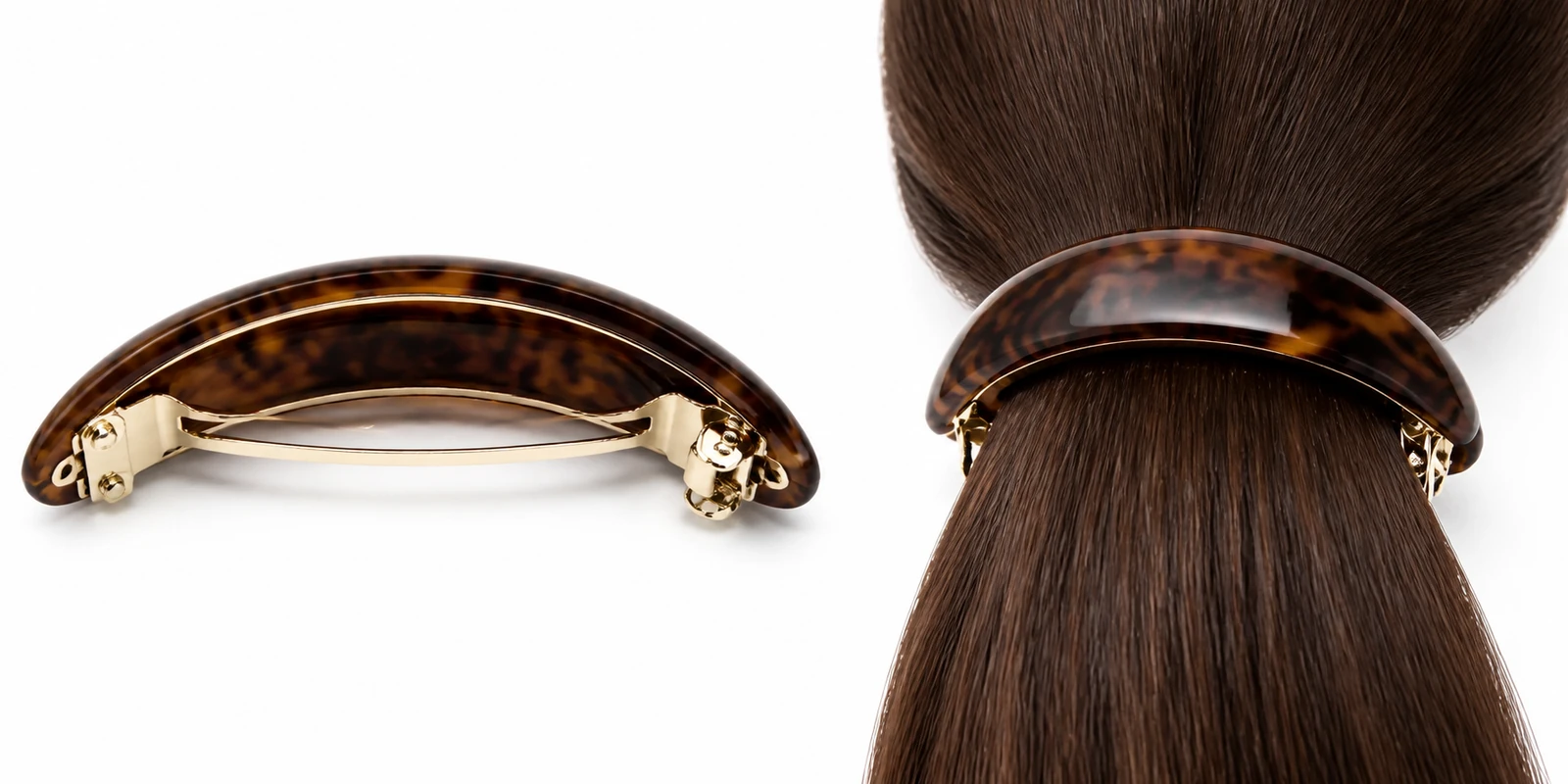
A volume barrette is a wide, curved hair clip designed to hold a larger section of hair while leaving enough space underneath the clip for the hair to keep its shape and lift. Unlike a flat barrette that presses hair close to the head, a volume barrette uses an arched outer body and a tensioned clasp underneath to secure thick hair without fully compressing it.
This guide covers how the mechanism actually works, how it compares with standard barrettes and claw clips, the materials and sizes that matter, and what buyers sourcing this category should specify to avoid common quality complaints.
The key feature of a volume barrette is its raised, curved body. This arch creates clearance between the decorative outer shell and the hair underneath, allowing a ponytail or half-up section to sit with more height instead of being flattened by the clip. The wider the arch and the deeper the clearance, the more hair volume the barrette can hold comfortably.
Most volume barrettes use a French-style clasp system underneath the outer shell. This usually includes a hinged metal plate, a curved tension bar, and a catch at the opposite end. When the clasp is closed, the tension bar presses gently against the gathered hair while the arched shell leaves room above it. That combination is what gives the clip its hold without crushing the shape of the ponytail.
A volume barrette sits between a standard barrette and a claw clip in both structure and function, and buyers often confuse the three when sourcing or shopping.
The following table outlines where each style differs.
| Criteria | Volume Barrette | Standard Barrette | Claw Clip |
|---|---|---|---|
| Root lift | Moderate to high, via arched structure | Low | Minimal to medium |
| Hair volume held | High | Low to medium | Medium to high |
| Closure type | French clasp or hinged tension clasp | Snap clasp | Spring-loaded jaw |
| Typical width | 9 to 13 cm | 5 to 9 cm | 7 to 11 cm |
| Best for | Thick or long hair ponytails | Small sections, side pieces | Buns, casual updos |
| Visible from outside | Often decorative | Often decorative | Sometimes functional |
A standard barrette secures hair flat without adding lift, which makes it better suited to fine hair or small sections. A claw clip grips through spring tension across a wider jaw but has no smooth arched clasp designed specifically for ponytail volume, so it can slip or feel bulky depending on the hairstyle. The volume barrette is built to solve the all-day-hold and shape-retention problem that the other two formats do not fully address.
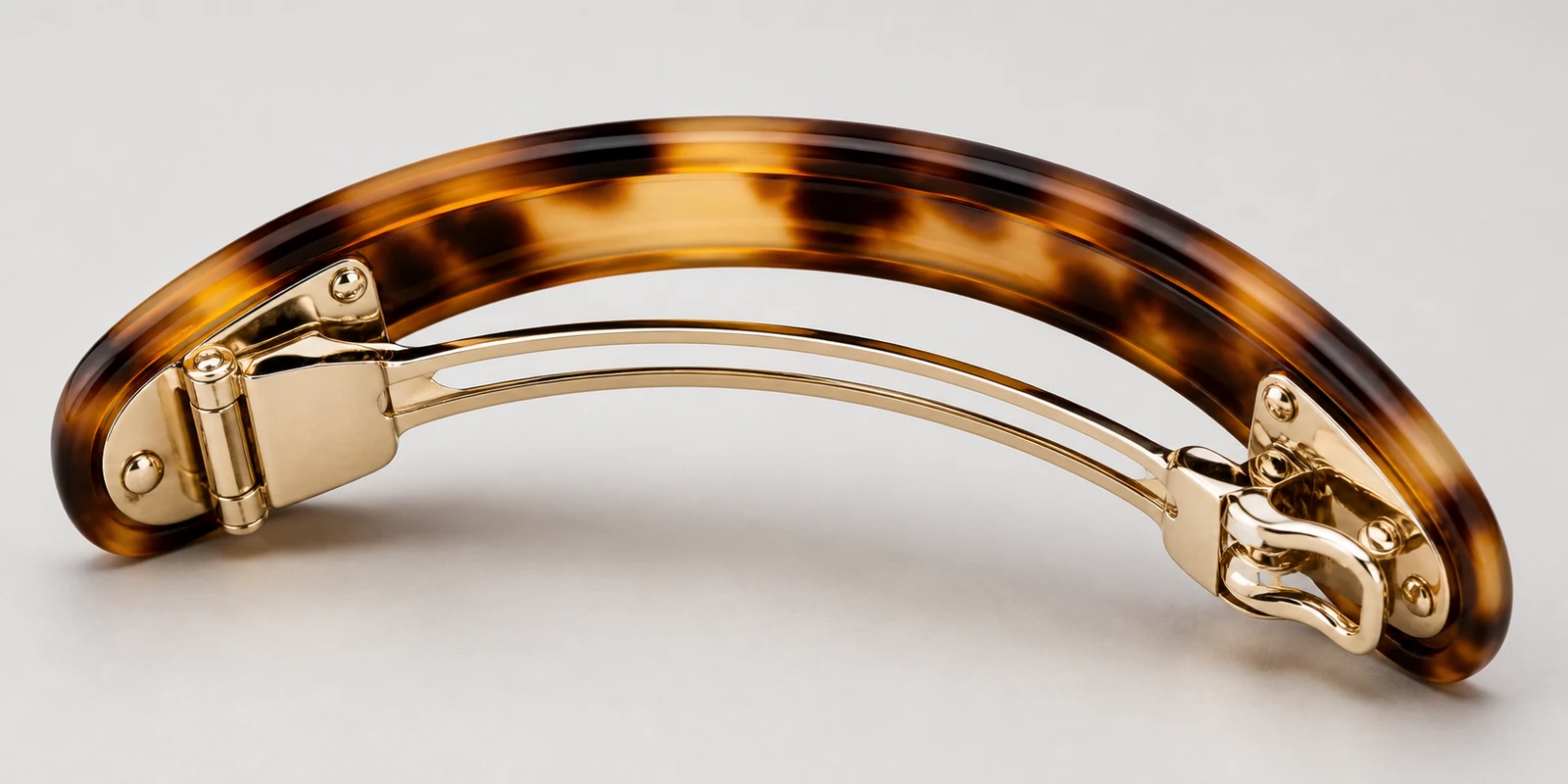
The outer body is commonly made from cellulose acetate, ABS, resin, or metal alloy. Acetate is often preferred for premium styles because it can be polished to a smooth finish and produced in tortoiseshell, marble, translucent, and solid color effects. The clasp underneath is usually metal, because the tension and repeated open-close movement require better spring memory than resin alone can provide.
The durability of a volume barrette depends heavily on the clasp mechanism rather than the outer material alone. A properly formed metal tension bar holds its curve through thousands of open-close cycles, while a weak or poorly tempered clasp loses grip strength within weeks of daily use. This is largely invisible in a product listing and only shows up in return rates after the product has been in a customer’s hands for a month or more.
Volume barrettes are sized primarily by width, arch height, and clasp strength rather than by a single universal size, since the amount of hair they need to hold varies enormously by length and thickness. A width of 9 to 10 cm suits shoulder-length to mid-back hair with medium thickness. Longer or thicker hair needs a wider clasp, typically 11 to 13 cm, with a deeper arch to hold the full section without hair spilling out the sides.
Undersizing is the most common fit complaint in this category. A barrette too narrow for the hair volume it is asked to hold either fails to close fully or slips within an hour of wear, which is often mistaken for a defective clasp when the real issue is a mismatch between product size and hair volume.
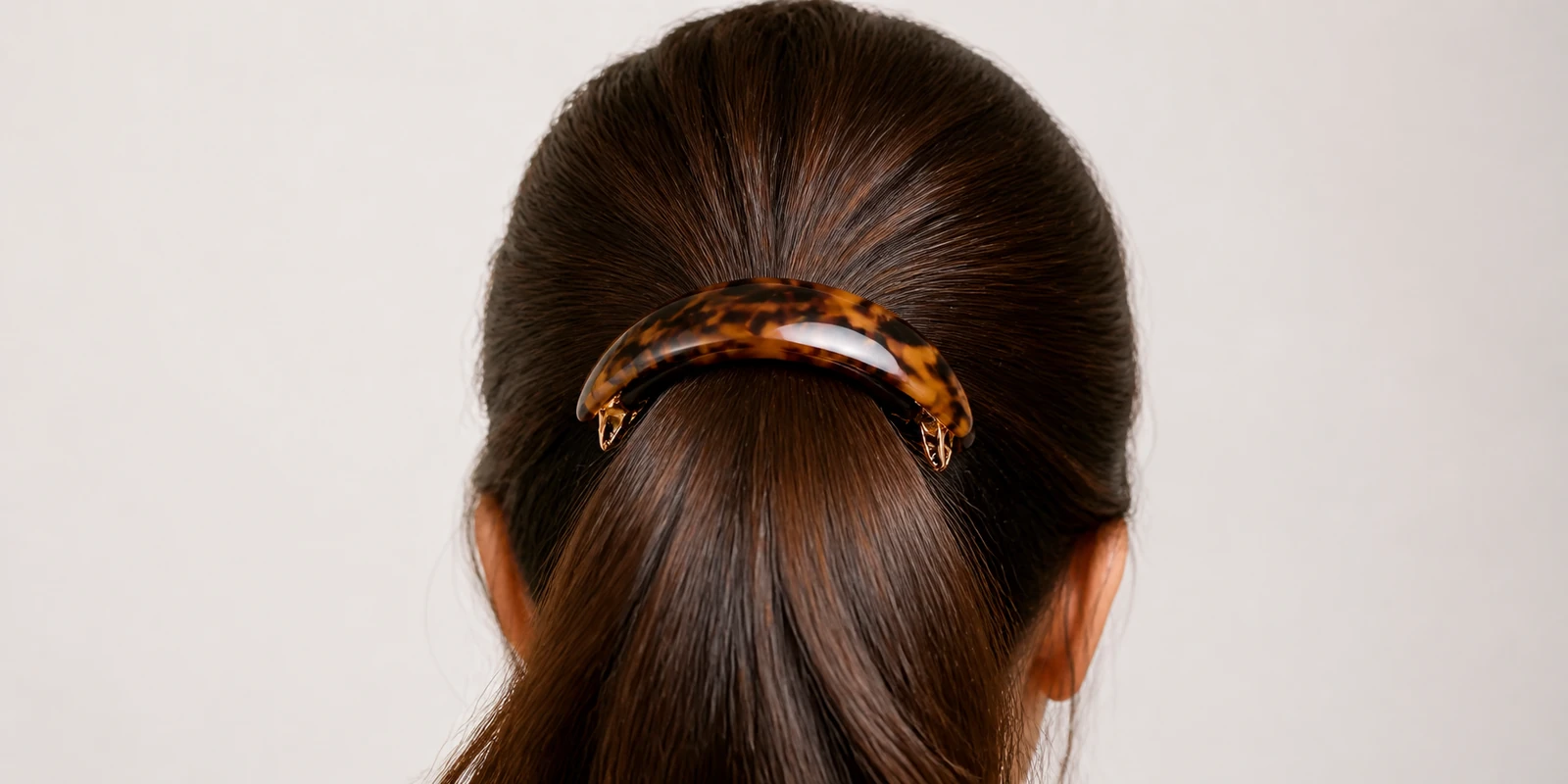
Getting the lift this style is designed for depends on technique as much as the product itself. Gather the hair at the crown first, teasing lightly at the root if extra lift is wanted before securing anything. Position the barrette close to the ponytail base rather than higher up the hair length, since the lift comes from how the clasp anchors the gathered section. Close the clasp fully before letting go, checking that no loose strands sit at the hinge or catch point, since trapped hair is a common cause of slipping during the day.
Positioning the barrette too high on the ponytail rather than close to the root is the most frequent styling mistake, since it produces a secured ponytail without the intended volume effect. Moving the clip down to sit directly against the ponytail base fixes this immediately.
A barrette that will not close cleanly usually means too much hair for that width, not a faulty clip. Splitting the hair into two sections secured by two smaller barrettes, or sizing up to a wider style, solves this more reliably than forcing the clasp shut, which risks bending the mechanism or snapping hair caught at the hinge.
Metal clasps benefit from occasional light cleaning at the hinge and catch points, especially if hair spray, dry shampoo, or styling cream builds up around the hardware. Product buildup can reduce grip over time and is easy to mistake for a worn-out clip.
Storing volume barrettes flat rather than stacked under heavier items protects the clasp from being bent out of alignment, which is a common but preventable cause of a barrette that no longer closes evenly on both sides.
Buyers developing a volume barrette line can specify arch height, clasp tension, acetate thickness, and width tiers directly through a custom hair clip manufacturer rather than adapting an existing claw clip or standard barrette mould, since the arched clasp construction is a distinct format from either.
The volume barrette earns its category by solving a specific problem neither a standard barrette nor a claw clip fully addresses: securing a larger section of hair while preserving shape and lift. Getting the result right depends less on surface decoration than on two specifications that are easy to overlook, clasp mechanism quality and arch clearance, both of which separate a barrette that holds all day from one that slips or fails within weeks.
Manufacturers such as JunYi Beauty, which produces volume barrettes and a full range of hair clips at its Dongguan facility under ISO 9001:2015 and amfori BSCI certification, offer the construction control over clasp tension, acetate thickness, and size grading that this category depends on for consistent performance across hair types.
👉 Searching for Hair Accessories ? Your brand deserves the best.