Home
Product
Contact
Odm/Oem
About
Color-treated hair is structurally different from unprocessed hair in ways that directly affect which accessories are safe to use and which cause accelerated damage. The chemical processing involved in hair colouring — whether permanent dye, bleach, highlights, or toner — partially disrupts the cuticle layer of the hair shaft, the overlapping scale-like surface that protects the cortex underneath. A compromised cuticle is more porous, more susceptible to friction-related abrasion, and less able to resist the mechanical stress generated by hair accessories that are poorly matched to the hair’s reduced tensile strength.
This guide identifies which hair accessories are safe for color-treated hair, explains the mechanisms by which unsafe accessories cause damage, and provides specification guidance for B2B buyers developing hair accessories ranges for the color-treated hair consumer segment.
Understanding why color-treated hair requires more careful accessory selection requires a basic understanding of what chemical processing does to the hair shaft structure.
Permanent hair colour and bleach work by opening the cuticle layer — using an alkaline agent to lift the cuticle scales — and depositing or removing pigment within the cortex. Even after the colour process is complete and the hair has been conditioned and sealed, the cuticle does not fully return to its pre-treatment state. Processed hair has a rougher, more open cuticle surface, reduced protein structure in the cortex, and lower tensile strength than chemically unprocessed hair of the same thickness and density.
The practical consequence is that color-treated hair experiences more friction damage from the same accessories that would be low-risk on unprocessed hair. An accessory that snags, applies concentrated tension, or generates high friction at the contact point causes proportionally more damage on processed hair — because the cuticle has less protective integrity to absorb that mechanical stress before breaking.
According to research on hair cuticle structure and mechanical damage, chemically treated hair has measurably higher surface roughness and lower tensile strength than unprocessed hair, and is significantly more susceptible to breakage from friction and repeated mechanical stress at the same applied force levels.
Accessories damage color-treated hair through two primary mechanisms. Understanding these mechanisms makes it straightforward to evaluate any accessory’s safety profile.
Friction damage occurs when an accessory surface moves against the hair cuticle — on application, during wear, or on removal. The rougher or harder the accessory surface, and the more contact area it maintains with the hair, the higher the friction generated. On color-treated hair with a compromised cuticle, friction abrades the already-lifted cuticle scales further, accelerating the progression from dull, rough-textured hair to active breakage.
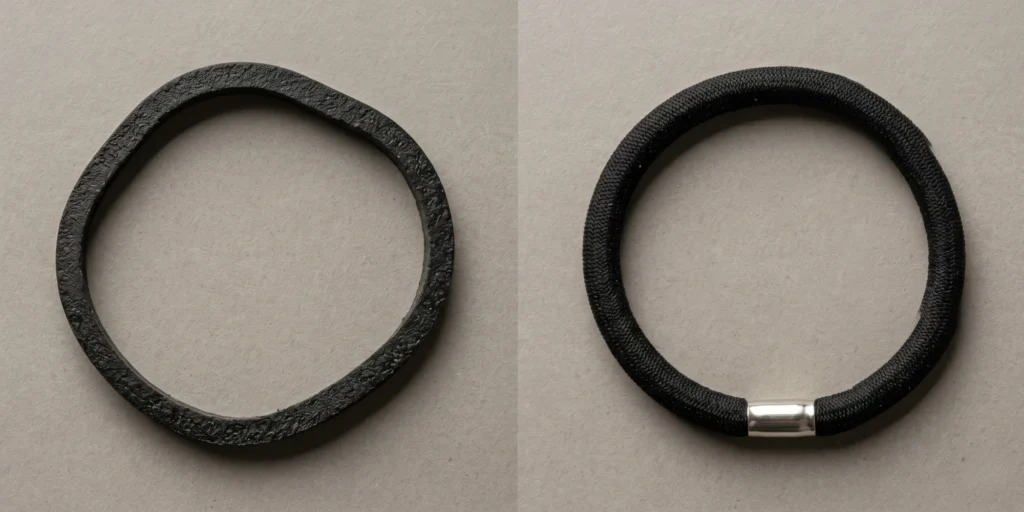
The accessories that generate the highest friction are bare elastic bands (rubber surface against hair shaft), metal-jointed elastics (the metal crimp catches individual strands on removal), and any clip with poorly finished teeth that snag hair on application or removal. The accessories that generate the lowest friction are satin and silk-surface fabrics, smooth-finished acetate and ABS plastic, and seamless constructions that eliminate sharp edges and joins entirely.
Tension damage occurs when an accessory applies concentrated mechanical stress to a localised point on the hair shaft — either through circumferential compression (a tight elastic wrapped multiple times) or through localised grip pressure (clip teeth gripping a small bundle of strands under high spring force). On color-treated hair with reduced tensile strength, the force required to cause breakage at the stress point is lower than on unprocessed hair — meaning that accessories that would be acceptable on healthy hair cause damage on chemically treated hair at the same applied tension.
The accessories that generate the highest localised tension are bare thin elastics requiring multiple wraps, metal-jointed elastics, and undersized claw clips whose springs are compressed to their maximum range trying to close around a hair section they cannot fully accommodate. The accessories that generate the lowest localised tension are wide-format elastics and scrunchies that distribute compression across a large surface area, and correctly sized claw clips whose springs operate well within their closing range.
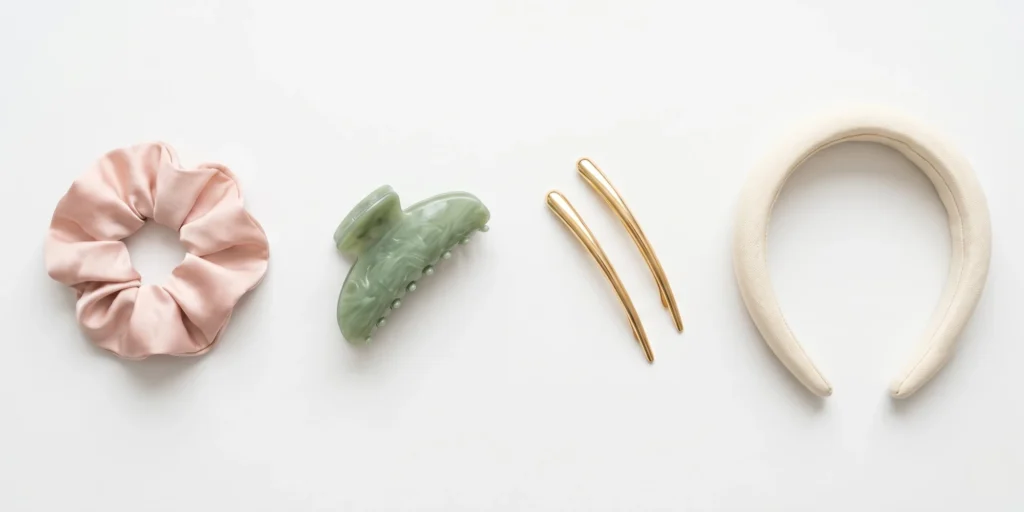
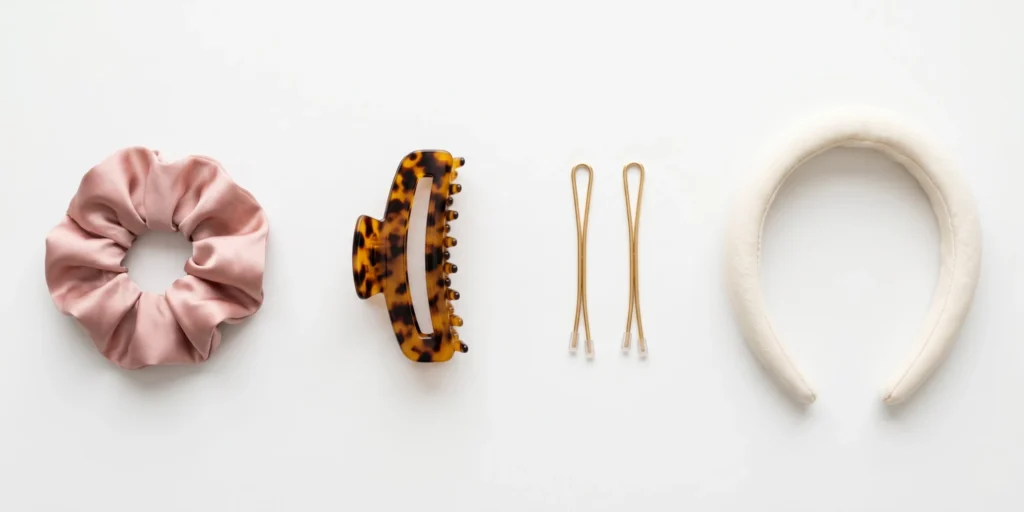
Satin scrunchies are the safest hair tie format for color-treated hair. The smooth polyester satin fabric surface generates minimal friction against the hair cuticle — significantly less than bare elastic, cotton, or velvet — and the wide gathered fabric tube distributes the elastic’s compressive force across a large surface area, reducing localised tension at the wrap point. The combination of low friction and distributed tension makes satin scrunchies the standard recommendation for color-treated, bleached, and chemically processed hair.
Key specification variables for satin scrunchies on color-treated hair: the fabric should be genuine polyester or acetate satin (not satin-finish cotton, which is less smooth), the elastic should be wide-gauge (1.5 cm or greater) to distribute tension, and the seam should be smooth and finished without exposed raw edges that could snag individual strands. Brands sourcing for the color-treated hair segment should work with a custom hair scrunchie manufacturer to specify fabric weave, elastic tension, and seam finishing as explicit production requirements.
Claw clips are inherently low-damage accessories for color-treated hair because they do not wrap around the hair shaft at all — eliminating friction and tension crease at a wrap point entirely. The clip grips a gathered section through spring jaw tension, holds without wrapping, and releases without unwinding through the hair. For color-treated hair, this is a meaningful advantage over any elastic-based alternative.
The safety qualifications for claw clips on color-treated hair are tooth surface finishing and correct sizing. Teeth that are sharp, burr-edged, or poorly finished will snag individual strands on application and removal, generating localised breakage that accumulates with daily use. Premium smooth-finished teeth — the specification standard for acetate clips and well-finished ABS clips — eliminate this risk. Correct sizing ensures the spring operates within a comfortable closing range rather than gripping a hair section under maximum spring compression, which increases the per-tooth contact pressure on individual strands. Brands developing claw clip ranges for the color-treated hair segment should source from an acetate claw clip manufacturer that specifies smooth tooth finishing as a production quality standard.
Hair pins and bobby pins are safe for color-treated hair when they have smooth, coated prong surfaces with rubber or silicone tip protection. The primary risk with metal pins on color-treated hair is exposed metal tips — where the protective coating has worn away — which snag individual strands on removal and tear rather than release. Pins with intact rubber-coated or silicone-tipped prongs slide through the hair without snagging. Replacing pins when the tip coating shows wear is the most practical safety measure for this accessory format.
Wide padded fabric headbands are safe for color-treated hair and present a low damage profile for everyday wear. The wide fabric surface distributes pressure across the hairline rather than concentrating it at a narrow band, and smooth or velvet fabric surfaces generate low friction at the contact points. The primary precaution for color-treated hair is avoiding headbands with interior teeth or grip strips made from hard plastic — these can snag the more fragile cuticle of treated hair on removal.
Silk ribbon ties are the lowest-friction hair fastening option available and represent the gold standard for color-treated, bleached, or heavily processed hair where minimising mechanical stress is the priority. With no elastic component, the hold relies on the knot and the natural friction of the silk against the hair — and silk generates the lowest friction coefficient of any common hair accessory fabric. The trade-off is hold reliability: ribbon ties are not suitable for vigorous activity or extended wear in conditions where the knot may loosen.
The following accessory formats present elevated damage risk for color-treated hair and should be avoided or replaced with lower-friction alternatives:
| Accessory | Friction Risk | Tension Risk | Overall Safety | Notes |
|---|---|---|---|---|
| Satin scrunchie | Very low | Low | ✅ Safe | Best everyday hair tie option |
| Silk ribbon tie | Minimal | Very low | ✅ Safe | Best for fragile / heavily processed hair |
| Acetate claw clip (smooth teeth) | Very low | Low | ✅ Safe | No wrap point — inherently low damage |
| ABS claw clip (smooth teeth) | Very low | Low | ✅ Safe | Tooth finishing quality is critical |
| Wide padded headband (no teeth) | Low | Very low | ✅ Safe | Avoid hard interior grip teeth |
| Smooth coated hair pin | Very low | Low | ✅ Safe | Replace when tip coating wears |
| Velvet scrunchie | Low to medium | Low | ⚠️ Moderate | Higher friction than satin; still safer than elastic |
| Cotton scrunchie | Medium | Low | ⚠️ Moderate | More friction than satin; acceptable for light use |
| Seamless silicone band | Low | Medium | ⚠️ Moderate | No crimp snagging; still applies compression |
| Fabric-covered elastic (thin) | Medium | Medium | ⚠️ Moderate | Better than bare elastic; not ideal for treated hair |
| Bare elastic band | High | High | ❌ Avoid | High friction and tension — avoid on treated hair |
| Metal-jointed elastic | Very high | High | ❌ Avoid | Crimp snags treated cuticle on removal |
| Claw clip with sharp teeth | High at contact | Low | ❌ Avoid | Burr-edged teeth tear treated hair strands |
| Bobby pin with exposed metal tip | High at tip | Low | ❌ Avoid | Replace immediately when coating wears |
Accessory selection is one component of a low-damage routine for color-treated hair. The following daily habits reduce cumulative mechanical stress regardless of which specific accessories are used:
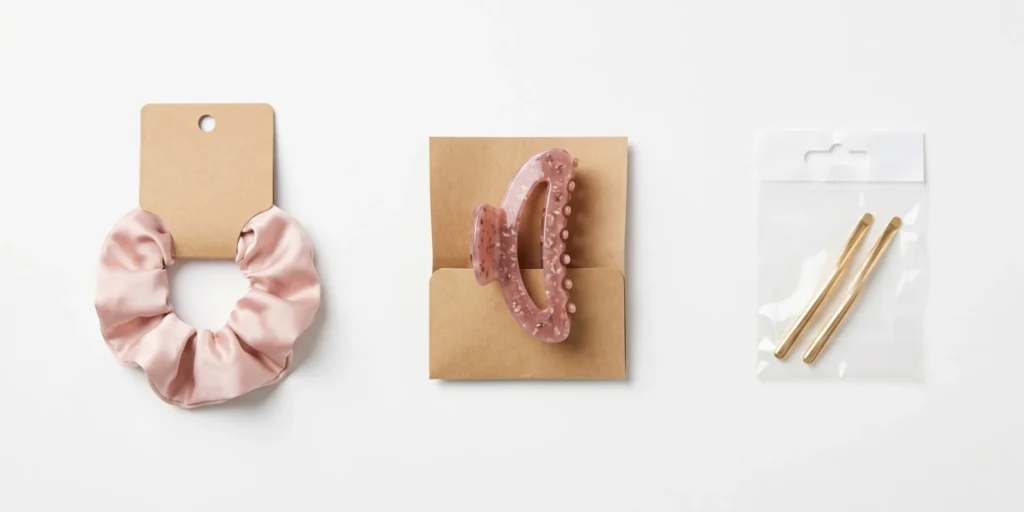
The color-treated hair consumer segment is commercially significant and growing. As at-home and salon colouring has become more accessible and more prevalent, the proportion of consumers with some form of chemically processed hair has increased substantially — and with it, consumer awareness of the relationship between hair accessories and hair health.
For B2B buyers, this awareness represents an opportunity to develop or position accessories ranges specifically for the color-treated hair segment. The product specifications that define a safe accessory for treated hair — satin fabric, smooth-finished teeth, wide elastic, seamless construction — are all achievable within standard OEM production at comparable cost to non-specified equivalents. The differentiation is in the specification, the messaging, and the understanding that color-treated consumers are actively seeking products that will not accelerate the damage they are already managing.
A recommended product mix for a color-treated hair accessories range includes satin scrunchies in multiple elastic tension options (for different hair densities), smooth-finished acetate claw clips across two to three sizes, smooth-tipped hair pins in a multi-pack format, and a wide padded headband without interior grip teeth. The specification brief for each product should explicitly reference low-friction and low-tension performance requirements — ensuring that the factory’s production and quality control processes are aligned with the end-use context, not just with generic accessory production standards.
Buyers engaging OEM manufacturing partners for this segment should request sample testing protocols that include removal friction testing — applying the accessory to hair and removing it under normal use conditions, then examining the sample for snagging or strand capture. This test takes minutes and is the most direct verification that a specific production sample meets low-damage performance requirements for color-treated hair.
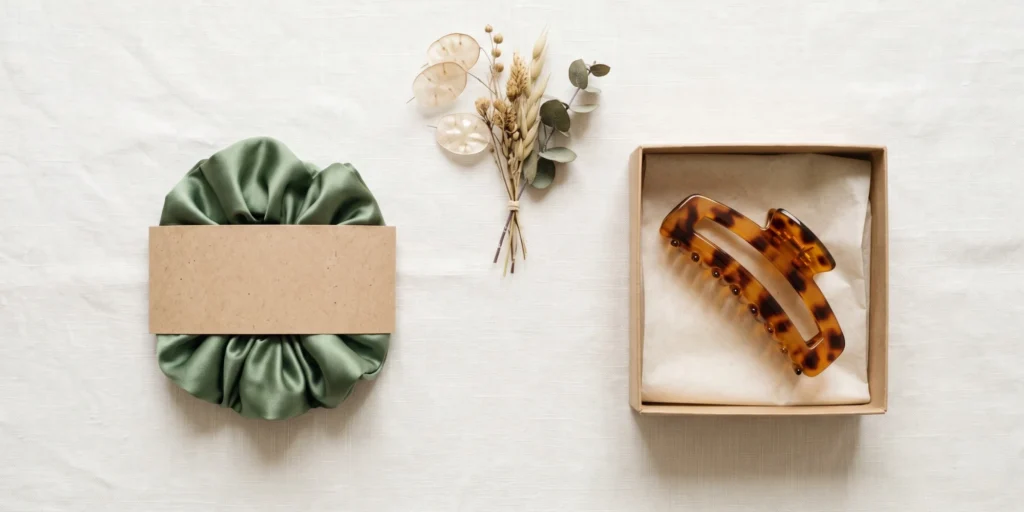
Satin scrunchies and smooth-finished claw clips are the safest everyday hair accessories for color-treated hair. Satin scrunchies generate minimal friction against the compromised cuticle surface and distribute elastic tension across a wide surface area, reducing localised stress at the wrap point. Claw clips eliminate the wrap point entirely — they hold gathered hair through spring jaw tension without wrapping around the shaft — making them inherently low-friction for color-treated hair when correctly sized and smooth-tooth finished. For the most fragile or heavily processed hair, silk ribbon ties present the lowest possible friction and tension profile.
Yes — a well-specified claw clip is safe for daily use on color-treated hair. The key requirements are smooth, burr-free tooth finishing (sharp or rough teeth snag the compromised cuticle), correct sizing for the hair volume (an undersized clip grips under maximum spring compression, increasing per-tooth contact pressure), and varying the clip position regularly to avoid concentrating repeated mechanical stress at the same point on the hair shaft. Premium smooth-finished acetate clips meet these requirements as a standard production specification.
Smooth, coated metal hair pins and bobby pins are safe for color-treated hair as long as the protective tip coating is intact. The risk arises when the coating wears away and exposes bare metal — which creates a rough, sharp surface that tears rather than releases individual strands on removal. Metal-jointed elastics (with a crimp join) should be avoided regardless of coating condition, as the crimp join snags hair on removal even when new. Smooth metal wire headbands without teeth are safe for color-treated hair.
Not entirely — but the specific elastic format matters significantly. Bare rubber elastic bands and metal-jointed elastics should be avoided. Satin scrunchies with wide elastic cores are safe for color-treated hair and are the recommended elastic-based format. Seamless silicone bands present moderate risk — they eliminate the snagging problem of metal joins but still apply circumferential compression, which should be managed by using a single wrap at minimum tension. The practical guideline is to use the elastic format that achieves the required hold with the minimum tension and the smoothest contact surface.
The colour of a hair accessory does not directly affect hair health. However, dark-coloured accessories on recently lightened or bleached hair may transfer pigment in very rare cases if the dye used in the accessory fabric or surface treatment is not colourfast — primarily an issue with low-quality fabric dyes rather than a systematic risk. For most well-finished accessories from reputable manufacturers, colour is not a safety variable for color-treated hair. The relevant variables are surface friction, edge finish, tension distribution, and construction quality — all independent of colour.
For claw clips: smooth, burr-free tooth finishing verified by sample removal testing; correct size range covering fine to medium and medium to thick hair volumes; spring tension calibrated to avoid maximum compression at the target hair volume. For scrunchies: genuine satin or silk fabric (not satin-finish cotton); wide elastic (1.5 cm minimum); smooth, finished seam construction without exposed raw edges. For hair pins: intact rubber or silicone tip coating; smooth prong surface without burrs or corrosion. For headbands: no hard interior grip teeth; smooth fabric or padded surface at the contact area. These specifications should be written into the production brief explicitly rather than assumed.
Color-treated hair requires lower-friction, lower-tension hair accessories than unprocessed hair — not because the accessories themselves are fundamentally different, but because the correct specifications within each accessory format matter more when the hair’s mechanical resilience is reduced by chemical processing. Satin scrunchies, smooth-finished claw clips, coated hair pins, and wide padded headbands all provide safe everyday styling options when produced to the appropriate specifications. Bare elastic bands, metal-jointed elastics, and poorly finished clip teeth should be avoided regardless of hair type, but are particularly damaging on color-treated hair where the cuticle has less protective integrity.
For B2B buyers, the color-treated hair segment is a commercially significant and growing consumer group that is actively seeking accessories that will not accelerate the damage they are already managing. Manufacturers such as JunYi Beauty, which produces satin scrunchies, smooth-finished acetate and ABS claw clips, hair pins, and fabric headbands at its Dongguan facility under ISO 9001:2015 and amfori BSCI certification, represent the type of factory-direct OEM partner suited to brands developing a deliberately specified low-damage hair accessories range for this segment.
👉 Searching for Hair Accessories ? Your brand deserves the best.