Home
Product
Contact
Odm/Oem
About
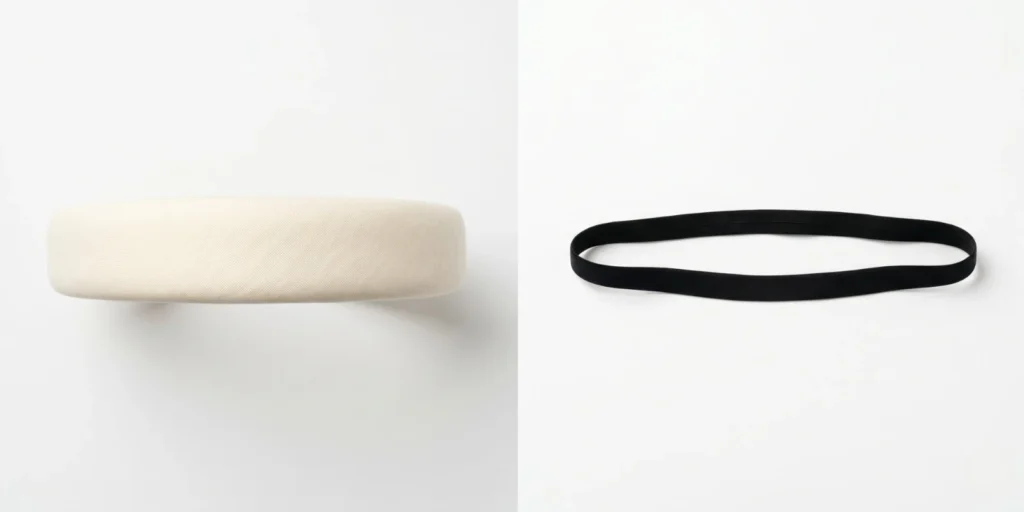
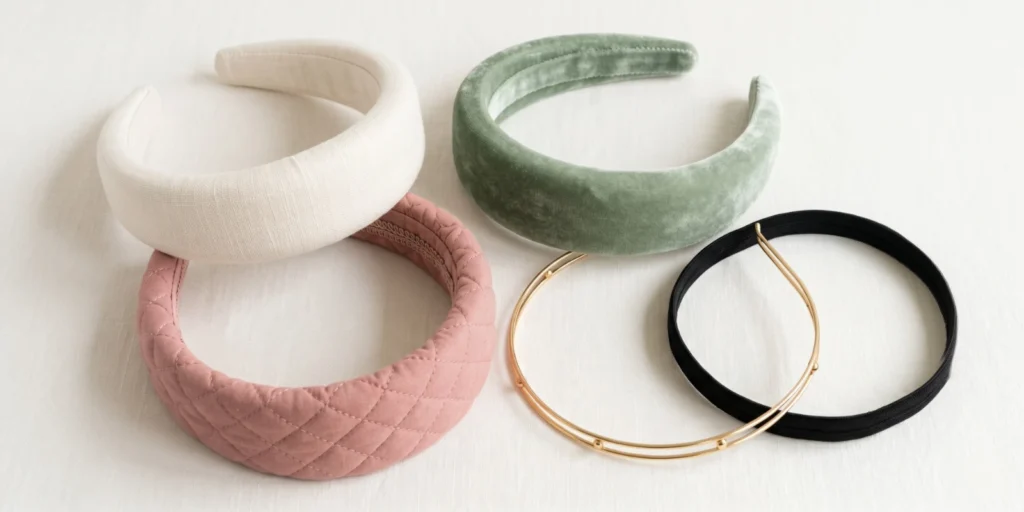
A wide headband is a hair accessory typically measuring 4 cm to 10 cm in width, constructed from padded fabric, structured plastic, or layered material, designed to sit across the crown of the head and secure hair back from the face while functioning as a visible styling element. A thin headband measures 0.5 cm to 2 cm in width and is typically constructed from narrow elastic, plastic, metal, or covered wire, designed primarily to hold hair back with minimal visual weight or to accent a hairstyle without dominating it.
Both perform the same basic function — keeping hair away from the face — but differ substantially in hold mechanism, styling function, comfort profile, face shape suitability, and appropriate use context. This guide examines these differences across each dimension to support consumers making purchasing decisions and B2B buyers developing headband ranges.
Wide headbands generate hold through a combination of surface friction and physical coverage area. The wider the band, the greater the surface contact with the hair and scalp, which distributes the holding force across a larger area and creates more stable, slip-resistant positioning. Most wide headbands are semi-rigid or structured — they maintain their shape when worn and hold their position through the combination of grip and physical fit against the head shape.
Wide fabric headbands typically incorporate an internal structure — a plastic or wire frame, or dense padding — that prevents the band from collapsing under wear and maintains consistent width and shape throughout the day. Stretchy wide headbands achieve hold through elastic tension distributed across their full width, generating compressive grip against the scalp that resists slipping.
Thin headbands hold position primarily through tension and fit — the band is sized to sit snugly against the head, and its narrow profile allows it to tuck between hair sections and grip the scalp directly. Thin plastic headbands with teeth on the inner surface generate additional grip through the teeth engaging with the hair. Thin elastic headbands generate circumferential tension that holds the band in position through compressive force.
Because a thin headband has minimal surface area in contact with the hair, it is more susceptible to slipping than a wide band — particularly on fine or silky hair where the coefficient of friction between band and hair is low. Thin headbands compensate for this through tighter fit, teeth, or textured inner surfaces.
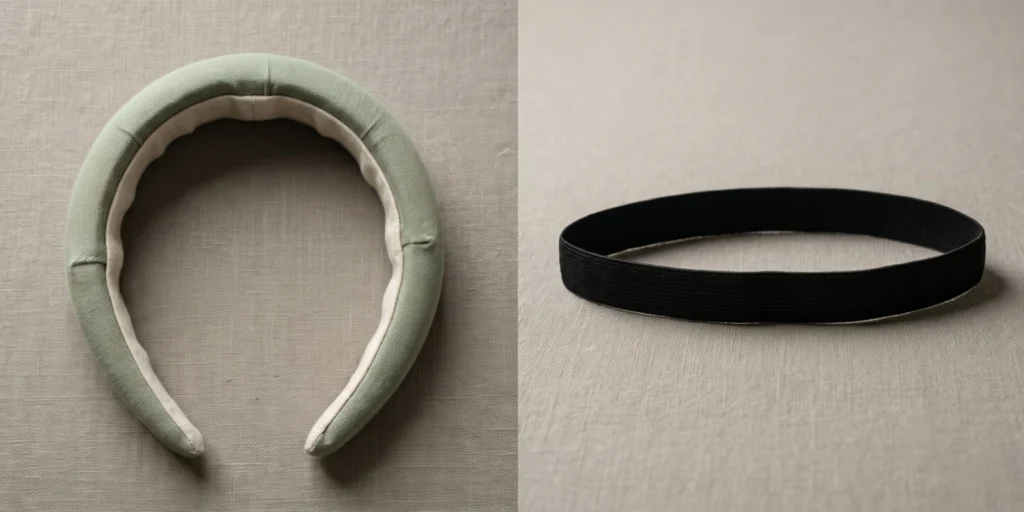
For most hair types and everyday use contexts, wide headbands provide stronger, more stable hold than thin headbands. The larger contact surface generates more friction, the wider coverage distributes pressure more evenly, and the structured format maintains consistent positioning through movement. However, “stronger hold” is not always the priority — the correct choice depends on what the headband is being asked to do.
| Variable | Wide Headband | Thin Headband |
|---|---|---|
| Hold stability | High — large contact surface, stable positioning | Moderate — narrow contact, more susceptible to slipping |
| Hold on fine hair | Good — friction distributed across wide surface | Poor to moderate — slips easily on fine hair |
| Hold on thick hair | Good — wide surface accommodates volume | Moderate — may be pushed up by hair volume |
| Hold during activity | Good — stable under movement | Poor — slips with vigorous movement |
| Headache / pressure risk | Low — pressure distributed across wide area | Moderate to high — concentrated pressure at narrow band |
| Scalp comfort (extended wear) | Good — padded formats very comfortable | Variable — tight thin bands can cause discomfort |
| Hair indentation | Low — wide surface leaves minimal crease | Moderate — narrow band can leave crease in hair |
| Slip resistance on wet hair | Good — textured fabric grips damp hair | Poor — smooth surfaces slip on wet hair |
According to research on hair traction and scalp stress, accessories that concentrate pressure at a narrow point on the scalp or hairline generate higher localised tension on hair follicles than those that distribute pressure across a wider surface area — a finding that supports the comfort advantage of wide headbands for extended daily wear.
Wide headbands function simultaneously as hair accessories and visible fashion elements. Their surface area is large enough to carry decorative treatment — embroidery, beading, quilted fabric, printed patterns, velvet or satin finishes — making them a statement accessory in their own right. The wide format also provides a structured visual frame for the face, which is why wide headbands are associated with polished, intentional styling contexts: editorial fashion, occasion wear, and elevated everyday looks.
Wide headbands also perform a practical function that thin headbands cannot replicate as effectively: they can tame and shape significant volumes of hair. A wide stretchy headband worn low on the forehead can push back and smooth a full head of hair with a single accessory; a thin band in the same position would either slip back or create uncomfortable concentrated pressure at the hairline.
Thin headbands are most effective as low-profile functional accessories — they hold hair back from the face with minimal visual interruption to the hairstyle. This makes them the preferred format for styling contexts where the hair itself is the focus: a blowout or elaborate styling that a wide band would disrupt, or a professional setting where visible hair accessories are considered inappropriate but hair management is necessary.
Thin headbands are also better suited to layered or detailed hairstyles where adding a wide accessory would compete visually with the style. A thin metal or wire headband worn back from the hairline adds a delicate accent without imposing on the overall look; a wide band in the same position would dominate.
For sport and active wear, thin sport headbands in moisture-wicking elastic are the standard format — their narrow profile reduces heat retention at the crown, and their lightweight construction is less disruptive during movement than a wide structured band.
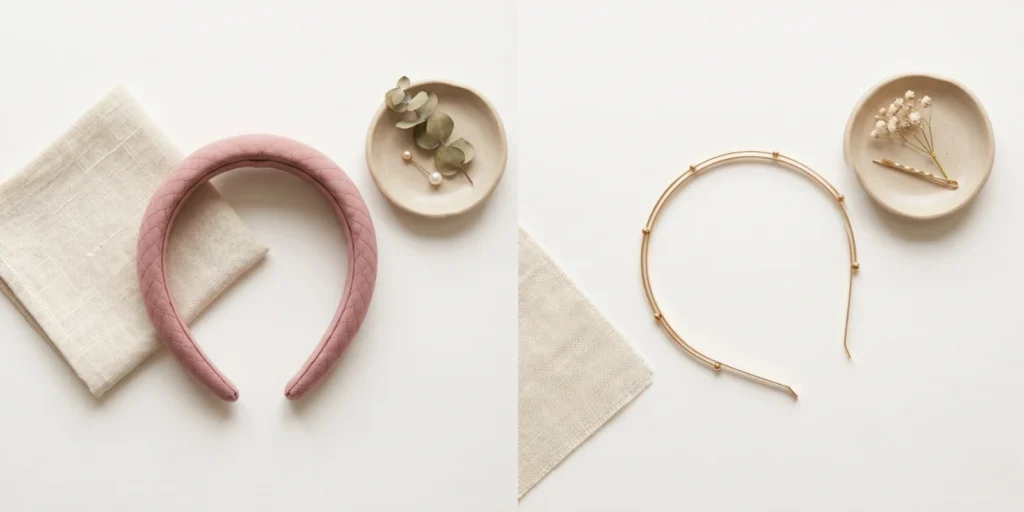
Headband width interacts with face shape in ways that affect how balanced the overall look appears. This is a relevant consideration for consumer-facing product guidance and retail styling content.
Wide headbands add visual height and width to the top of the face, which can balance longer or narrower face shapes effectively. They work particularly well on oval, oblong, and heart-shaped faces where the additional visual volume at the crown creates proportion. On round faces, a wide headband worn high on the crown adds vertical emphasis that can elongate the perceived face shape.
Wide headbands can visually shorten faces that are already short or wide if worn very low on the forehead — in these cases, positioning the band further back from the hairline reduces this effect.
Thin headbands add minimal visual weight and are generally more neutral across face shapes. They do not significantly alter the perceived proportions of the face, making them a versatile choice that works across face shapes without specific positioning considerations. This neutrality is an advantage in contexts where the headband should not draw attention to face shape — it simply holds hair in place without visual commentary.
Wide headbands are produced across a broader material range than thin headbands, reflecting their dual function as both practical accessories and visible fashion items. Common constructions include padded fabric over a plastic or wire internal frame (the most common retail format), stretch velvet or satin (for the premium and occasion wear segment), quilted or embroidered fabric (for statement and seasonal formats), and structured acetate or resin (for premium hard-band formats). Brands building a premium wide headband range should work with a custom hair band manufacturer that offers fabric selection, padding specification, and frame material as configurable variables within a single production relationship.
Thin headbands are produced primarily in plastic, metal, elastic, and covered wire. Standard plastic thin headbands use ABS or polypropylene and may include teeth on the inner surface for grip. Metal thin headbands use aluminium, brass, or stainless steel wire bent into an arc shape, often with decorative plating or enamel finish. Elastic thin headbands are produced from covered or exposed elastic in a range of widths from 0.5 cm to 2 cm. Covered wire headbands use a thin wire frame wrapped in ribbon, thread, or satin for a more decorative finish.
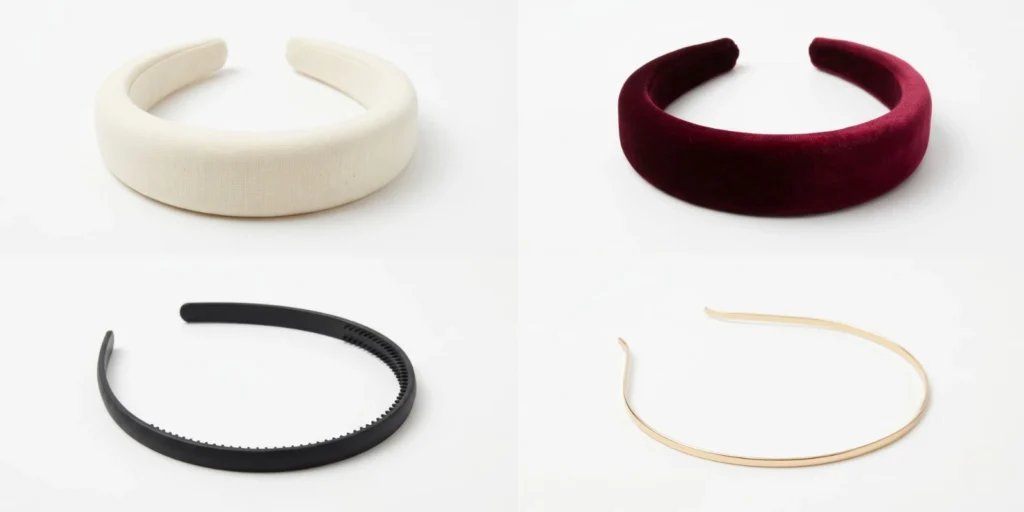
Comfort is one of the most common reasons consumers return or abandon headbands — particularly thin headbands worn for extended periods. The comfort profile of each format is directly related to how pressure is distributed against the scalp and temples.
Wide padded headbands are among the most comfortable hair accessories for extended wear. The padding distributes pressure across a large surface area, preventing the concentrated point pressure that causes headaches with narrow accessories. Stretch wide headbands balance grip and comfort effectively — enough elastic tension to stay in place without the rigid pressure of a hard thin band.
The primary comfort risk with wide headbands is heat retention: a wide band covering the crown traps more heat than a thin one, which can be uncomfortable in warm weather or during physical activity.
Thin headbands — particularly hard plastic bands sized to grip the head through circumferential tension — are associated with headaches in a significant proportion of wearers. The narrow profile concentrates the band’s holding force at two points: behind the ears and across the top of the head. If the band is sized too tightly, these pressure points can cause discomfort within 30 to 60 minutes of wear. Thin headbands that are correctly sized — fitting snugly without excessive tension — are considerably more comfortable than those that are too small for the wearer’s head circumference.
Thin elastic headbands are generally more comfortable than rigid thin bands because the elastic distributes tension more evenly, but they are more susceptible to slipping as the elastic stretches during wear.
For B2B buyers, wide and thin headbands address different consumer segments and retail contexts, and are most effectively positioned as complementary product tiers within a headband range rather than competing alternatives.
| Variable | Wide Headband | Thin Headband |
|---|---|---|
| Target consumer | Fashion-forward, occasion wear, everyday premium | Functional everyday, sport, professional, minimalist |
| Retail channel fit | Boutique, premium beauty, department store, gift | Mass market, sport, drug store, everyday accessories |
| Typical retail price range | $8–$40 per unit | $3–$15 per unit |
| MOQ (factory-direct OEM) | 300–500 units per style per colour | 300–1,000 units per style per colour |
| Production complexity | Medium to high — fabric, padding, frame | Low to medium — moulded or wire formed |
| Customisation potential | High — fabric, embellishment, width, padding | Moderate — material, colour, surface treatment |
| Gift suitability | High — perceived value, visible quality | Low to moderate |
| Seasonal trend sensitivity | High — fabric and colour change seasonally | Moderate — core formats are year-round staples |
Buyers engaging OEM hair accessories manufacturing partners for headband development should confirm that the supplier can produce both wide fabric-and-frame constructions and thin plastic or metal formats, as these involve different production capabilities. Not all headband manufacturers operate both lines. Confirming this upfront avoids the complexity of managing separate supplier relationships for different headband widths within the same product category.
According to hair accessories market segmentation data, the headband category has shown consistent premium growth driven by wide fabric and structured headbands positioned as fashion accessories — supporting the commercial case for investing in wide headband development alongside functional thin formats.
Wide headbands generally provide more stable hold than thin headbands for most hair types and everyday wear contexts. The larger contact surface generates more friction against the hair and scalp, distributing the holding force across a wider area and making the band more resistant to slipping. Thin headbands are more susceptible to slipping, particularly on fine or silky hair, though they can provide adequate hold for low-activity wear when correctly sized and fitted.
Wide padded headbands are typically more comfortable for extended wear than thin rigid bands, because the padding distributes pressure across a large surface area rather than concentrating it at narrow contact points. Thin hard plastic headbands are associated with headaches in many wearers when worn for more than an hour or two. Thin elastic headbands can be comfortable if correctly sized, but may generate less consistent pressure than padded wide formats. For all-day wear, a wide padded or stretchy fabric headband is generally the most comfortable option.
Wide headbands are generally better suited to thick hair than thin ones. The wider contact surface provides more grip across the hair volume, and the structured format is less easily displaced by the outward pressure of thick hair. Thin headbands on thick hair are often pushed upward by the hair volume and slip out of position within minutes of application. A wide stretchy headband or a wide structured band with teeth on the inner surface provides the most reliable hold on thick hair.
Thin headbands are not inherently better or worse for fine hair — but they are more prone to slipping on fine, silky hair due to the low friction between a narrow smooth band and fine hair strands. Fine hair may be better served by a thin headband with a textured or rubber-grip inner surface, or by a wide fabric headband that generates more friction through its larger contact area. The choice depends more on the styling context — if minimal visual weight is the priority, a thin band with grip texture is more appropriate than a wide band.
For sport and active wear, thin moisture-wicking elastic headbands are the standard format — their narrow profile reduces heat retention, their lightweight construction does not shift during vigorous movement, and moisture-wicking fabric manages sweat at the hairline. Wide headbands are less suited to sport use because they retain more heat at the crown and can feel restrictive during high-intensity activity. Sport headbands should specify non-slip inner surfaces or grip strips to maintain position during movement.
Standard MOQs for wide fabric headbands from factory-direct OEM suppliers typically begin at 300–500 units per style per colour for standard constructions using existing frame tooling and standard fabric specifications. Thin plastic headbands typically carry slightly higher MOQs of 500–1,000 units per style per colour due to injection moulding economics. Metal wire headbands typically begin at 300–500 units. Buyers sourcing both wide and thin formats within a single order can often negotiate blended minimum requirements with manufacturing partners that produce both product types.
Wide headbands and thin headbands serve distinct but complementary functions within the headband category. Wide headbands deliver stronger hold, greater comfort for extended wear, and significant decorative presence — making them the better choice for fashion styling, occasion wear, and consumers with thick hair or those prioritising all-day comfort. Thin headbands deliver low-profile functional hold with minimal visual weight — making them the better choice for sport, professional settings, delicate accent styling, and contexts where the hair itself is the focus.
For B2B buyers, the most commercially effective approach is to stock both formats as distinct range tiers, serving the full spectrum of consumer styling needs and price points within a single product category. Manufacturers such as JunYi Beauty, which produces both wide fabric-and-frame headbands and thin plastic and elastic formats at its Dongguan facility under ISO 9001:2015 and amfori BSCI certification, represent the type of factory-direct OEM partner suited to brands building a complete headband range within a single supplier relationship.
👉 Searching for Hair Accessories ? Your brand deserves the best.