Home
Product
Contact
Odm/Oem
About
Choosing a hair accessory factory is a verification task before it becomes a purchasing task. A polished catalog, a fast reply or a low quote can start a conversation, but none proves that the legal entity, production site, quality process and delivery responsibility are the same. Buyers need a repeatable file of evidence that connects the supplier to the products, people and controls that will matter after the purchase order is signed.
This guide is written for importers, brand teams, salon distributors and e-commerce buyers assessing a hair clip, claw clip, headband or related accessory supplier. It explains what to request, what to watch during a video tour, how to read an audit or certificate, and how to turn samples and inspection records into a decision. The goal is a traceable decision, not a perfect-looking supplier profile.
Start by defining three identities: the contracting company, the physical production address and the product family being quoted. They may be related, but they are not automatically interchangeable. A trading company can coordinate production through a partner. A factory can use outside processes for plating, printing, packaging or molding. Record each relationship rather than treating the word “factory” as a conclusion. Compare the route with the custom hair clip manufacturing scope for the quoted model.
Verification is strongest when one evidence item answers one specific question. A business license can support legal identity; a site video can support physical presence; a sample inspection report can support a control activity. Keep these answers separate so a strong document in one area does not hide a gap in another.
Before requesting documents, write the minimum evidence required for your order. For example, the supplier may need to identify the contracting entity, show the production or assembly route, explain subcontracted operations, provide a sample approval path and accept a pre-shipment inspection. Mark each item pass, open or fail. This prevents a friendly call from replacing a missing record. For claw clips, also review the custom claw clip production route.
Request the registered company name, registration number, registered address, operating address, responsible contact and bank-beneficiary name. Compare spelling and address format across the quotation, invoice, contract, certificate and payment instructions. A mismatch may be harmless, such as a group company or export entity, but it needs a written explanation before money is sent.
Ask which entity will issue the commercial invoice and which entity is responsible for defects, replacement parts and claims. If the answer changes between sales, finance and production, pause the assessment. A buyer should know who can accept a corrective-action request and who can authorize a remake.
Certificates and memberships are useful only when their scope matches the proposed work. Read the legal name, address, issue date, expiry date, standard, certified activities and certification body. A certificate for trading or warehousing does not automatically prove injection molding, assembly or finishing at the site you are visiting. Ask for a verification route supplied by the issuing body when available. Use the hair accessories categories to keep the product family specific.
ISO 9001 describes a quality-management-system framework. It is not a product test, a safety certificate for every SKU or a promise of defect-free production. For audit planning, ISO 19011 provides guidance on audit principles, programs and management-system audits. Use these frameworks to understand process evidence, then add product-specific checks for your clips and packaging.
For social-compliance questions, define whether you need an internal assessment, a customer audit or a third-party method such as SMETA. Sedex states that SMETA audits are conducted on site by approved independent affiliate audit companies and that the scope can include labour, health and safety, environment and business ethics. That makes an audit report a risk-assessment input, not a replacement for your own product inspection.
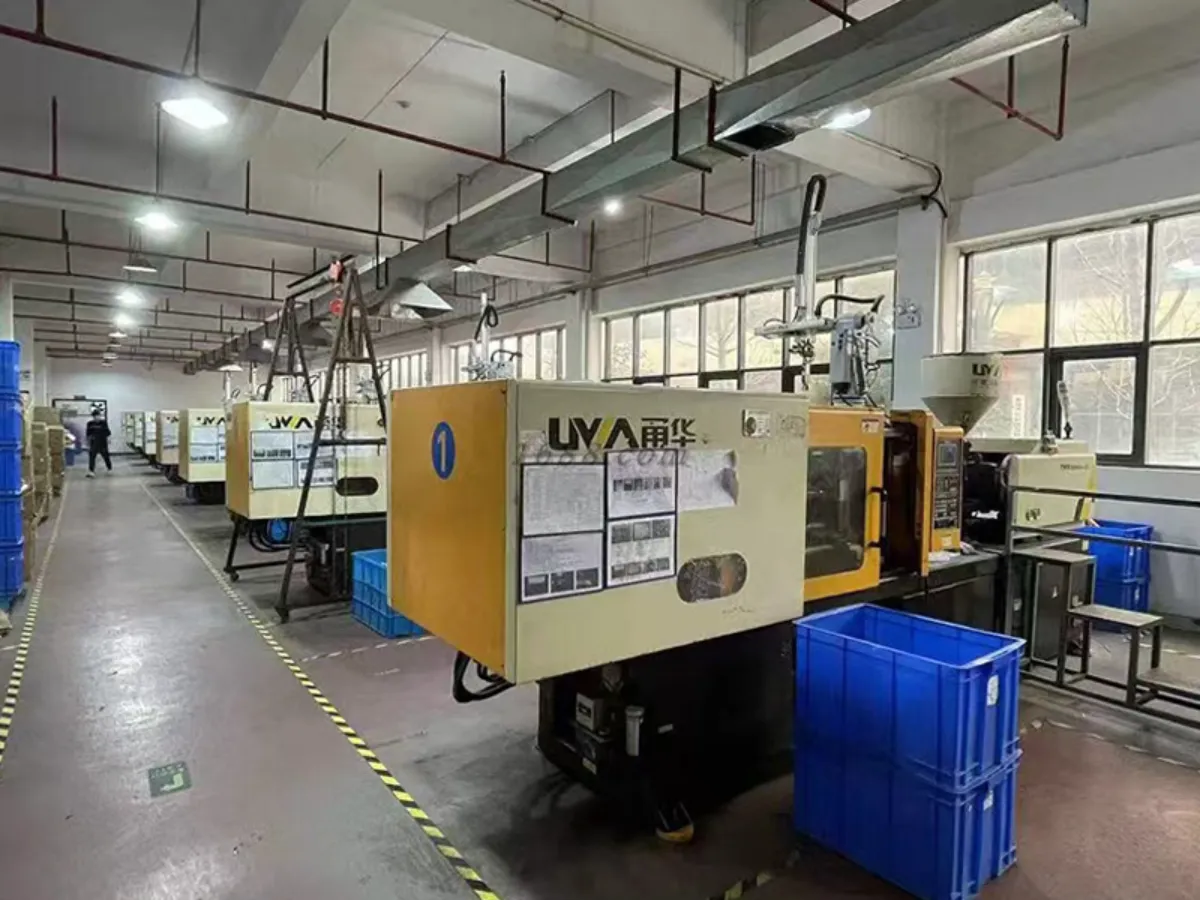
Ask the supplier to map the route for the exact accessory: incoming resin, acetate or metal; molding, cutting or stamping; deburring; printing or plating; spring or hinge assembly; inspection; packing; and dispatch. The route should identify which steps are performed at the shown site and which are subcontracted. A video of a clean office cannot answer a production question.
For a claw clip, ask to see the mold or tooling reference, cavity or model identification, trimming, hinge or spring fitting and surface inspection. For a metal clip, ask about stamping, burr removal, coating or plating and corrosion checks. For a headband, ask about forming, joining, padding, covering and final dimensional checks. The evidence should reflect the failure modes of the product. Align it with the ODM/OEM customization workflow before quoting.
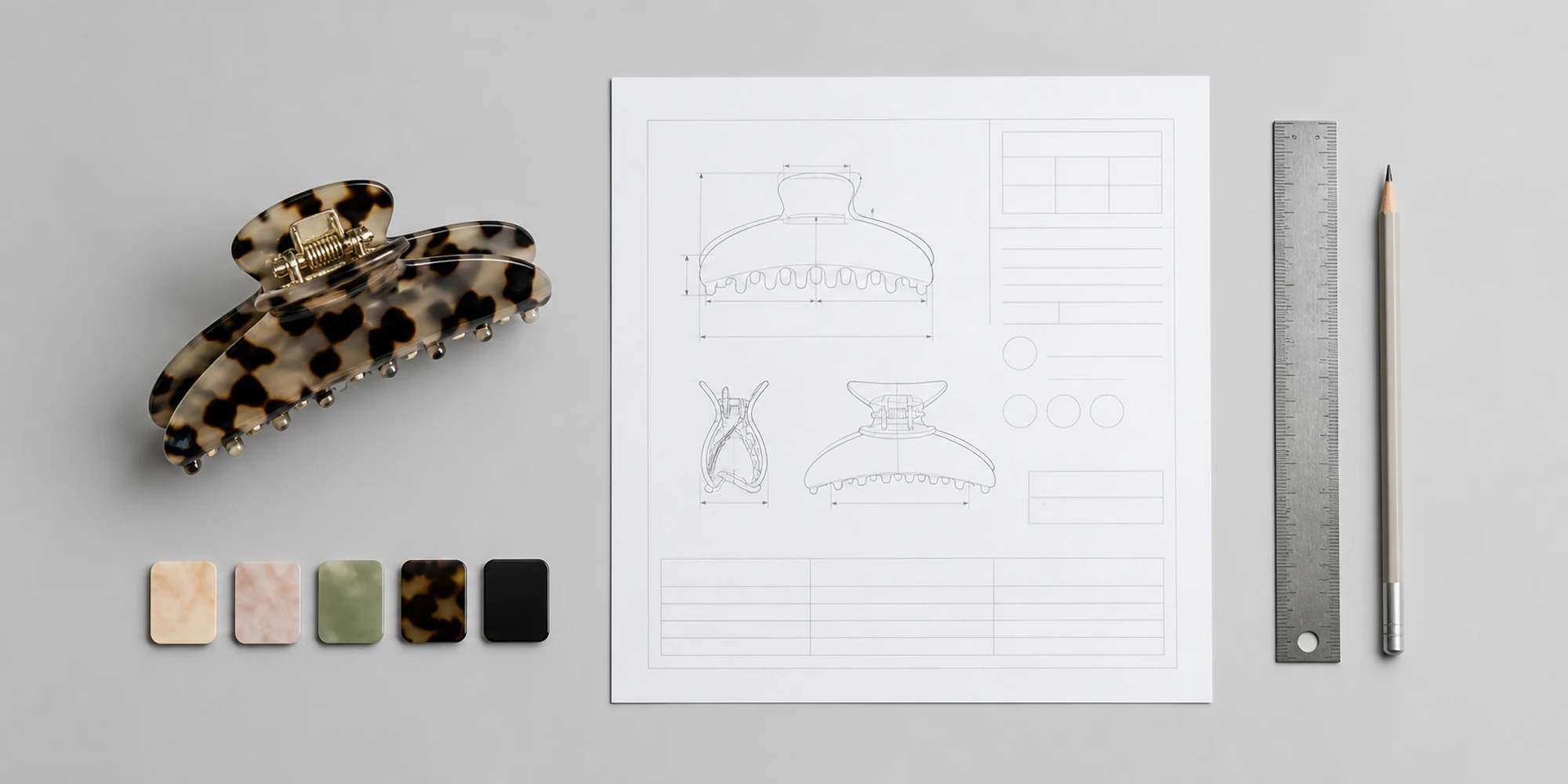
Request a sample with a model number and revision. The same identifier should appear on the quotation, artwork, inspection sheet and packing specification. If the supplier cannot link a sample to a revision, ask how a production worker knows which version to make. Photographs are helpful, but a dated sample and a controlled specification carry more decision value.
An audit is a snapshot with a stated scope, date, method and evidence sample. Read the finding categories, open corrective actions, closure dates and site address. A report with no product-quality section may still be valuable for labour or safety risk, but it does not validate clip dimensions, spring force or packaging durability.
Ask for the corrective-action plan when findings exist. A credible response names the root cause, action owner, due date and verification method. “We will improve” is not a closure record. For a new supplier, an unresolved finding can be accepted only with a documented risk decision and a follow-up date.
Useful records include incoming-material checks, first-piece approval, in-process checks, final inspection, nonconformance logs and shipment release. You do not need every historical record. Ask for a redacted example from a comparable product and confirm that the fields match your purchase order. Look for lot, date, inspector, criteria, result and disposition. Connect the record to the hair accessory quality-control process.
| Evidence item | Question answered | Gap to keep open |
|---|---|---|
| Business registration and contract entity | Who is legally responsible? | Group-company relationship or bank-beneficiary mismatch |
| Site video and process map | Where is the quoted work performed? | Subcontracted molding, plating or packing |
| Audit or certificate with scope | Which management or social controls were assessed? | Expiry, wrong address or missing product scope |
| Sample and inspection record | How is the requested version checked? | Unclear acceptance criteria or revision control |
Send a short route in advance: entrance sign, production area, tooling or material storage, assembly, inspection, packing and dispatch. Ask the host to show the current date or a unique live prompt, then show the same model number on a sample, work order or carton. This does not prove every claim, but it reduces the chance that an old promotional video is being used as current evidence.
Ask what happens when a part fails, where rejected parts go, who releases a first piece and how a change to artwork is communicated. Request close views of the gauges, fixtures, labels and inspection sheets. A tour is more informative when the host explains controls and exceptions rather than only showing tidy aisles. Send unresolved evidence questions through the factory contact page.
Record the date, participants, areas shown and unanswered questions. Keep a screenshot or note for each open item. Do not treat a video tour as an audit certificate; it is a buyer-led observation that needs to be combined with documents and samples.


Check the sample against the use case: opening and closing, spring or hinge alignment, edge feel, surface defects, colour, dimensions, logo placement and packaging protection. Define a tolerance or acceptance description where possible. A beautiful sample can still fail if the hinge binds, the teeth snag hair or the finish marks easily.
Ask how the supplier will control a revised mold, changed resin, replacement spring, colour substitution or new packing material. Agree who approves changes and whether a revised sample is required. Clarify the inspection point, who pays for third-party inspection, and what happens if the shipment fails. These terms belong in the quotation or purchase agreement, not only in chat history. Keep the approval tied to the custom product scope.
Keep a summary with entity, site, product route, evidence received, open gaps, risk owner, sample revision, inspection plan and decision date. Add links or file names for each source. If the order is delayed, another team member should be able to understand why the supplier was approved and what still needs follow-up.
Is a business license enough to verify a hair accessory factory? No. It supports legal identity, but it does not prove the site, process or product controls. Combine it with a site check, process evidence, sample approval and inspection terms.
Does an ISO 9001 certificate guarantee good clips? No. It describes a quality-management framework within a stated scope. Product-specific dimensions, materials, function and packaging still need acceptance criteria and inspection.
Can a video tour replace an on-site audit? It can be a useful first screen, especially when travel is impractical, but it cannot provide the same depth as a defined on-site audit. Use it to identify evidence and decide whether a deeper assessment is justified.
A verified supplier is one whose legal identity, site, process, sample and corrective-action path can be connected in a file. Use the related factory versus trading company comparison and hair accessory quality-control guide when building your checklist. Manufacturers such as JunYi Beauty can be evaluated using the same evidence standard. For audit terminology, review ISO 19011 audit guidance and Sedex’s SMETA methodology overview; they provide frameworks, not a verdict on a particular supplier.
👉 Searching for Hair Accessories ? Your brand deserves the best.