Home
Product
Contact
Odm/Oem
About
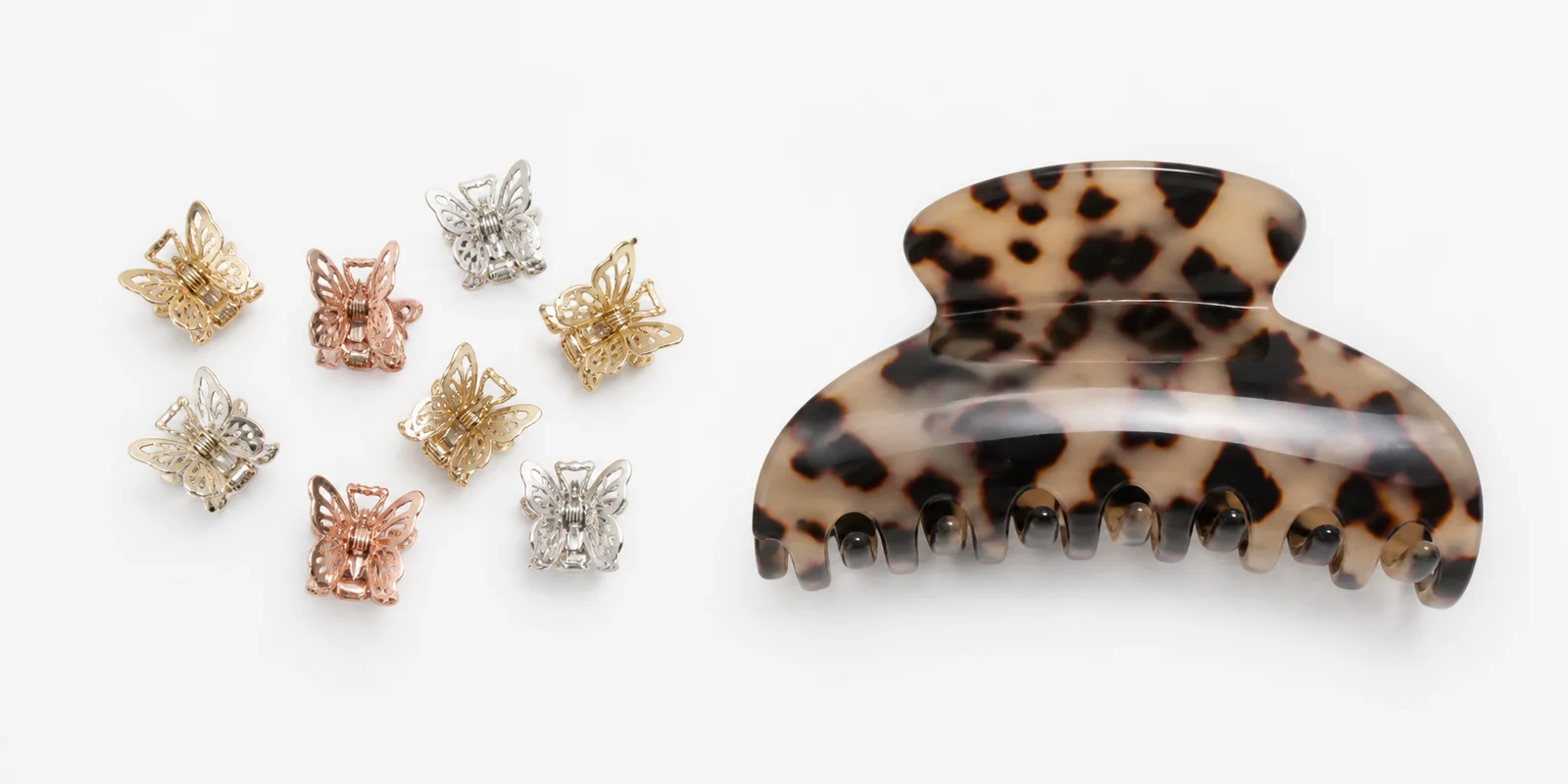
A mini butterfly clip is a small, spring-hinged decorative clip shaped like a butterfly, designed to hold a thin section of hair rather than gather volume, typically closing through two hinged wings that snap shut over a small strand. A regular claw clip is a larger jaw-mechanism clip built to gather and secure a full section of hair, from a half-up style to an entire ponytail, using spring tension across a wider bite than a butterfly clip’s narrow hinge. Confusing the two leads to the most common styling disappointment in this category: buying a butterfly clip expecting it to hold a bun, or buying a claw clip expecting the delicate, decorative placement a butterfly clip is built for. This guide breaks down the mechanical, functional, and styling differences so you know which one actually does the job you need.
A butterfly clip closes through a simple hinge at the centre of the butterfly shape, with the two wings acting as the jaws. The hinge is narrow and the bite is shallow, built to catch a small strand of hair, typically a few dozen strands rather than a full section, and hold it against the head through light spring tension. This narrow bite is a design choice, not a limitation: it’s what allows the clip to sit flat and decorative against the hairline rather than bulking out from the head.
A claw clip uses a longer spring-loaded jaw with teeth along both sides, hinged at one end and held closed by a stronger spring than a butterfly clip’s hinge. The wider jaw and deeper bite let it gather a full section of hair and hold it under real tension, which is what makes it capable of securing a ponytail or bun rather than just a decorative strand. The trade-off is size and visibility: a claw clip is a structural tool first and a decorative one second, while a butterfly clip reverses that priority.
The two clips are not different sizes of the same product, they are built for entirely different jobs, and the size difference reflects that rather than existing on a single spectrum.
| Criteria | Mini Butterfly Clip | Regular Claw Clip |
|---|---|---|
| Typical size | 1.5 to 3 cm wingspan | 7 to 11 cm jaw length |
| Hair volume held | A thin strand, decorative | A full section or ponytail |
| Hold mechanism | Narrow hinge, light spring | Wide jaw, strong spring tension |
| Root lift | None | Minimal to moderate depending on placement |
| Primary function | Decorative accent | Functional hold |
| Typical quantity worn | Multiple at once | Usually one at a time |
| Visibility | Meant to be seen | Can be functional or decorative |
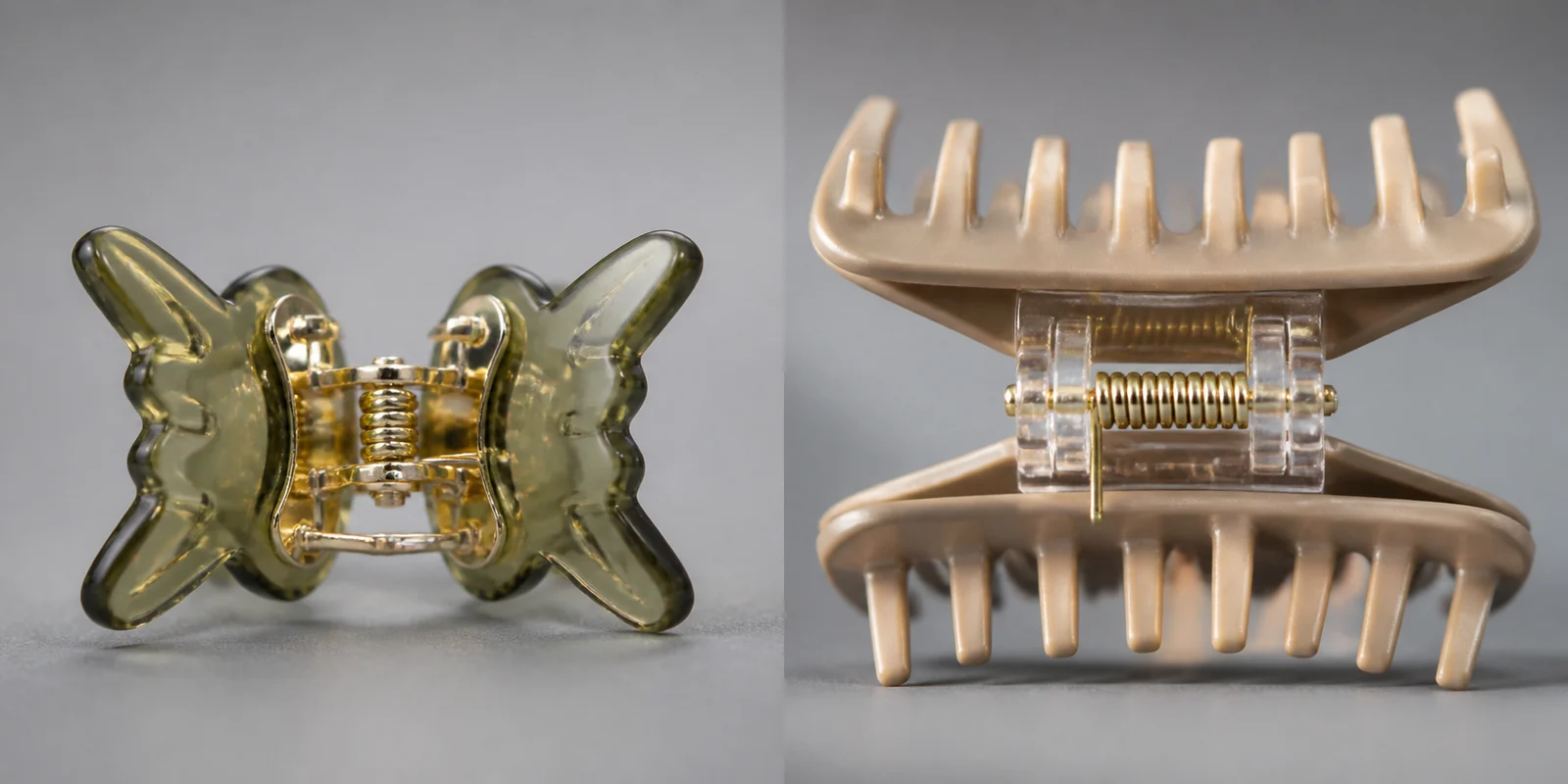
Mini butterfly clips are commonly made from plated metal, acrylic, or plastic, with the material choice driven almost entirely by finish and decorative appeal rather than load-bearing strength, since the clip was never designed to carry real weight. Claw clips are more commonly built from cellulose acetate or ABS plastic specifically because these materials hold up under sustained spring tension across a wider jaw, a structural requirement a butterfly clip’s narrow hinge doesn’t share. This is why a butterfly clip made from delicate plated metal is a perfectly durable product for its intended use, while a claw clip made from the same thin metal would fail quickly under the tension a full section of hair puts on a wider jaw.
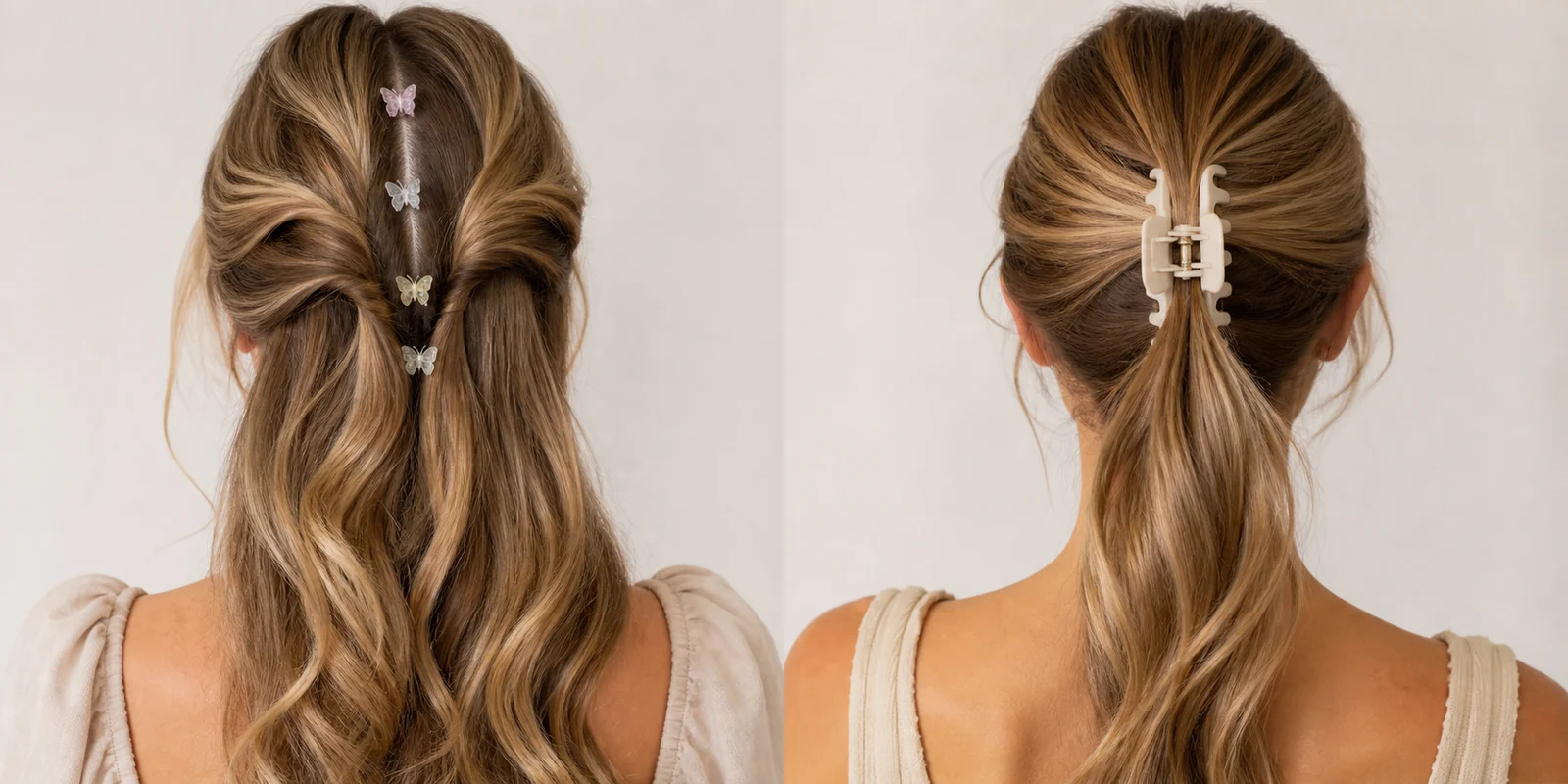
Butterfly clips work as an accent within a style rather than the structure holding it together: several clipped along a centre part on a half-up look, one or two placed at the crown of an otherwise loose style, or scattered through braids for a decorative finish. The style still needs to be held by something else, whether that’s the hair’s own weight or another accessory, since the butterfly clip’s job is visual rather than structural.
Claw clips build the style itself: gathering a ponytail at the crown, securing a low bun, or holding a half-up section with real volume. A claw clip’s placement is functional first, and any decorative value it adds is secondary to the actual job of keeping a meaningful amount of hair in place through a full day.
A butterfly clip’s light spring tension is by design, since a strong grip on a thin strand would pull uncomfortably at the scalp rather than sit decoratively. This means a butterfly clip is not meant to survive vigorous movement in the same way a claw clip is, and it’s reasonable to expect occasional repositioning through the day rather than treating it as a fully secure hold.
A claw clip’s stronger spring and wider bite are built specifically for sustained hold under movement, which is why it’s the choice for anything meant to stay in place through exercise, a full workday, or an evening out. The difference in expected hold duration is not a quality gap between the two products, it reflects what each one was actually engineered to do.
Butterfly clips need less maintenance overall, since their light spring rarely fatigues under normal use, though plated metal versions benefit from keeping them away from moisture to prevent the plating from tarnishing or flaking over time. A quick wipe with a dry cloth is usually sufficient care, and there’s little to service beyond that given the mechanism’s simplicity.
Claw clips see more mechanical wear given their stronger spring and daily structural use, so periodically checking that the jaw still closes fully and evenly on both sides catches spring fatigue before it becomes a visible gap or an uneven bite. Acetate claw clips also benefit from occasional cleaning where product buildup collects near the hinge, since residue there can affect how smoothly the clip opens and closes over time.
Butterfly clips are typically sold in multi-packs at a low per-unit price, reflecting both their smaller material cost and the fact that consumers commonly buy several at once to wear together. Claw clips are more often sold individually at a higher per-unit price, since a single well-made claw clip represents more material, a more complex mechanism, and a standalone styling decision rather than one piece within a set. This pricing pattern isn’t arbitrary: it follows directly from how each product is actually used, in bulk as an accent versus one at a time as a functional centrepiece.
Buying a butterfly clip to hold a ponytail is the most common mismatch, and it fails immediately because the narrow hinge simply cannot gather or hold that much hair, regardless of how well-made the individual clip is. Buying a claw clip for a delicate, decorative accent produces the opposite problem: a bulky, oversized clip that overwhelms a look meant to be subtle. Layering multiple claw clips the way you would layer several butterfly clips also rarely works well, since claw clips are sized to be a singular structural statement rather than a repeated decorative pattern.
The two categories require entirely different manufacturing specifications, which matters for buyers assuming a single supplier relationship covers both adequately. Butterfly clips need hinge cycle durability and plating or finish quality as the primary specifications, since the mechanism is simple but needs to survive repeated light use without the plating flaking or the hinge loosening. Claw clips need spring steel grade, jaw width tolerance, and material fatigue resistance as the primary specifications, since the mechanism carries real structural load across a wider bite.
Buyers building a range that spans both categories benefit from working with a manufacturer that treats them as genuinely separate product lines rather than scaling one design up or down, since the engineering requirements don’t transfer between them. A supplier offering both a custom hair clip manufacturer programme for decorative pieces and dedicated claw clip manufacturer capability for structural pieces is better positioned to get both specifications right than one that treats the two as variations of the same product.
No, not effectively. A butterfly clip’s narrow hinge and shallow bite are built to hold a thin decorative strand, not gather and secure a full section of hair. Attempting to use one for a ponytail typically results in the clip failing to close properly or slipping within minutes.
Claw clips are better suited to thick hair, since their wider jaw and stronger spring tension are engineered to gather and hold a larger volume of hair. Butterfly clips work on thick hair only as a decorative accent on a small section, not as the primary hold.
The size difference reflects their different jobs rather than one being a scaled-up version of the other. Claw clips need a wide jaw to gather a full hair section, while butterfly clips are intentionally small and narrow to sit flat and decorative against a small strand.
Yes, and it’s actually the most common way they’re styled, typically several placed along a centre part or scattered through loose hair for a layered decorative effect. Claw clips are generally worn one at a time given their structural, rather than decorative, function.
For butterfly clips, plating quality on the metal determines longevity more than the base material itself. For claw clips, spring steel grade and hinge construction matter more than the outer material, since the mechanism carries real structural load repeatedly.
They can, provided the manufacturer treats the two as genuinely separate specifications rather than the same design at different sizes. Hinge durability and finish quality matter most for butterfly clips, while spring tension and jaw tolerance matter most for claw clips.
Mini butterfly clips and regular claw clips solve different problems rather than competing for the same job. A butterfly clip is a decorative accent built around a light, narrow hinge, while a claw clip is a structural tool built around a wide, strong spring jaw. Matching the clip to the actual task, whether that’s an accent on a loose style or securing a full ponytail, determines whether the accessory does its job or ends up disappointing on the first wear.
Manufacturers such as JunYi Beauty, which produces both decorative clips and structural claw clips at its Dongguan facility under ISO 9001:2015 and amfori BSCI certification, offer the separate specification control that buyers need when sourcing across both categories for a complete hair accessories range.
👉 Searching for Hair Accessories ? Your brand deserves the best.