Home
Product
Contact
Odm/Oem
About
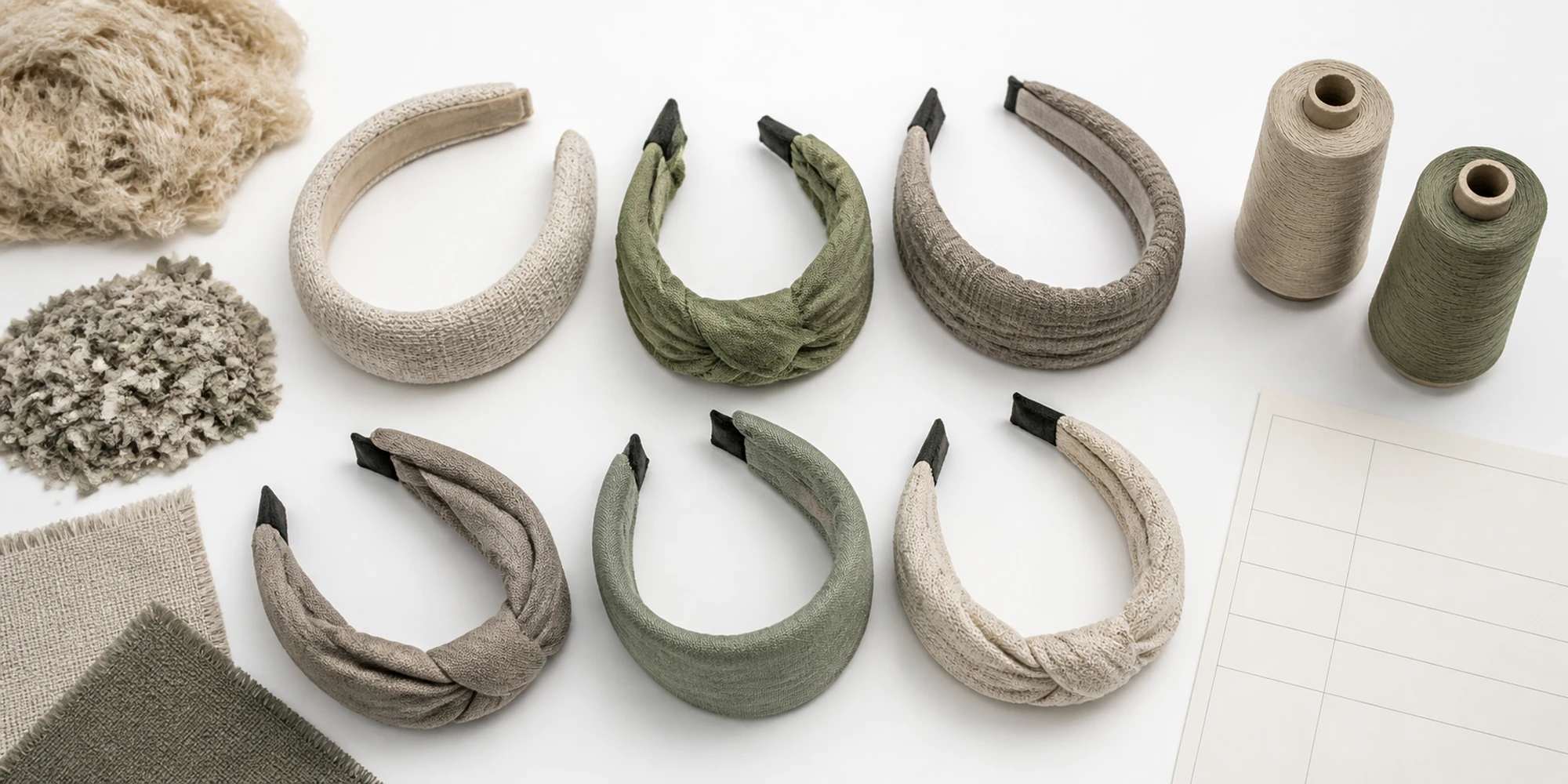
A sustainable fabric headband is a padded or flat headband made from recycled, organic, or deadstock textile inputs rather than virgin synthetic fibre, verified through third-party certification rather than a supplier’s own claim. Buyers sourcing this category face a real risk of paying a premium for material that isn’t actually what the supplier says it is, since recycled content claims are among the easiest sustainability claims to fake and among the hardest for a buyer to verify without knowing what documentation to ask for. This guide covers what recycled material actually means, which certifications carry real weight, how to verify a supplier’s claims, and what a realistic cost and MOQ structure looks like for this category.
Recycled polyester, commonly labelled rPET, is made from post-consumer plastic bottles or pre-consumer manufacturing waste that is broken down and re-spun into new fibre. It is the most widely available recycled input for headband fabric and performs close to virgin polyester in hand-feel and durability. Recycled cotton is reclaimed from pre-consumer textile scraps or post-consumer garments, shredded, and re-spun, though the shredding process shortens fibre length and typically requires blending with virgin cotton to maintain fabric strength. Deadstock fabric, unused material left over from other production runs, is not technically recycled but serves a similar sustainability purpose by avoiding new material production entirely, and some buyers position it alongside recycled content in their sourcing mix.
The Global Recycled Standard is the most widely recognised certification for recycled textile content and covers the full supply chain rather than just the fabric mill. A product needs a minimum of 20 percent recycled material to qualify for GRS certification at all, and only products reaching 50 percent or higher recycled content are eligible for product-specific GRS labelling. This threshold matters directly for headbands, since a supplier claiming “GRS certified” on a product with 25 percent recycled fill and 75 percent virgin material is technically accurate but overstates the sustainability profile most buyers assume from that label.
The Recycled Claim Standard verifies recycled content with a lower bar, requiring only 5 percent recycled material and no processing or chemical management requirements. RCS is a legitimate certification, but buyers should recognise it as a lighter standard than GRS and confirm which one a supplier is actually referencing when they use the general term “certified recycled.”
OEKO-TEX Standard 100 tests the finished fabric for harmful substances rather than verifying recycled content, and it addresses a separate concern: prolonged skin contact safety. Headbands sit against the hairline for extended periods, making this certification directly relevant regardless of whether the fabric input is recycled or virgin.

Certification claims should always come with a transaction certificate specific to the order in question, not a general company-level certificate that doesn’t confirm the actual fabric batch used in your production run. Request the certificate number and verify it directly through the issuing body’s public database rather than accepting a PDF at face value. A supplier unable or unwilling to provide batch-specific documentation is a clear signal that the recycled content claim may not hold up to scrutiny, regardless of how confidently it’s presented in a product listing or sales conversation.
rPET fabric covers work well for structured padded headbands, since the fibre holds shape and colour similarly to virgin polyester, making it close to a drop-in replacement for buyers already sourcing standard fabric headbands. Recycled cotton blends suit softer, more casual headband styles, though buyers should confirm the recycled percentage specifically, since a “recycled cotton blend” can range anywhere from 20 to 80 percent recycled fibre depending on how the supplier sources it. Organic cotton, while not recycled, is sometimes grouped into the same sustainability conversation and carries its own certification (GOTS) that addresses farming practices rather than material recovery, a distinction worth clarifying with buyers who conflate the two.
Recycled fabric typically costs 10 to 25 percent more than equivalent virgin material, with the exact premium depending on fibre type, certification level, and current recycled feedstock availability, which fluctuates more than virgin material pricing. MOQs for certified recycled fabric runs are often higher than for standard stock fabric, since mills need to schedule dedicated production runs to maintain chain-of-custody separation from virgin material batches, and smaller runs are harder for a mill to justify at the certification and documentation overhead involved. Buyers should budget for both a per-unit cost premium and a higher entry MOQ when planning a sustainable headband line compared with a standard equivalent.
A complete verification trail runs from the recycling facility through the spinner, the fabric mill, and the final headband manufacturer, and each stage should be able to produce its own transaction certificate referencing the same batch. Buyers often stop at requesting a certificate from the finished-product manufacturer, but that certificate is only as reliable as the documentation the manufacturer itself received from its fabric supplier. For high-value or high-volume programmes, requesting the full chain of transaction certificates back to the recycling facility gives meaningfully stronger assurance than a single document from the last link in the chain.
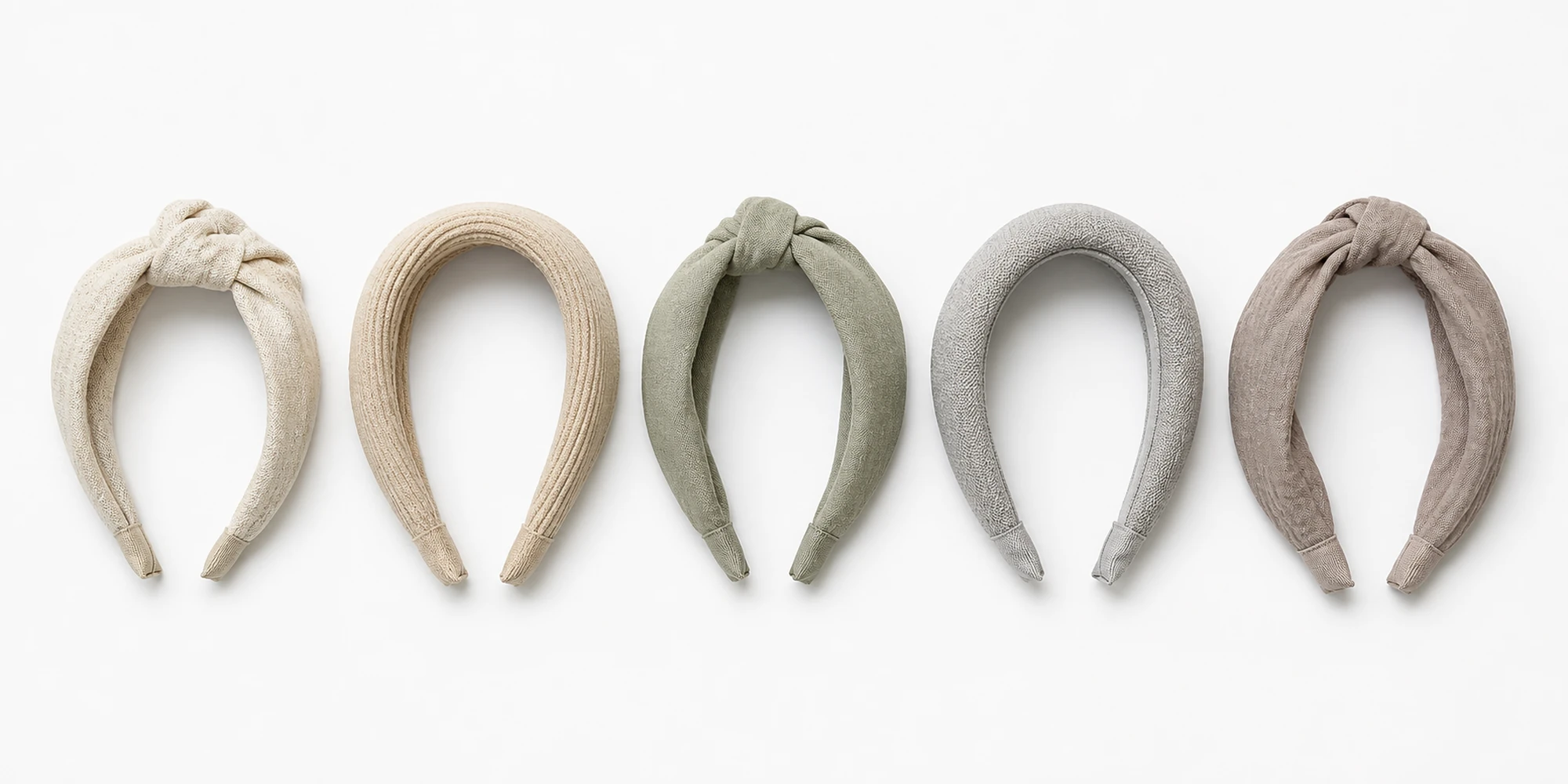
Recycled polyester fabric handles standard care the same way virgin polyester does, with no special washing requirements for the finished headband. Recycled cotton blends, because the shredding process shortens fibre length, can be somewhat more prone to pilling than virgin cotton over repeated wear and washing, which is worth noting in product care instructions rather than presenting the fabric as functionally identical to virgin cotton in every respect. Buyers positioning a sustainable headband line on durability claims as well as sustainability claims should test wear performance directly rather than assuming parity with standard fabric.
Textile Exchange, the body that owns GRS, is currently transitioning its certification suite into a unified Materials Matter Standard, with the new criteria set to take effect at the end of 2026 and become mandatory from the end of 2027. Existing GRS-certified suppliers will need to complete their next audit under the new standard once it takes effect, and buyers building long-term sustainable sourcing programmes should ask current or prospective suppliers about their transition timeline now rather than discovering a certification gap during a future audit cycle.
Recycled content percentage should be requested as an exact figure, not a range, and should match what appears on the transaction certificate for the specific production batch. Certification type matters as much as the percentage, since GRS and RCS represent meaningfully different verification standards despite both using the word “recycled” in casual conversation. For headbands specifically, buyers should also confirm OEKO-TEX or equivalent skin-contact safety testing separately from the recycled content certification, since the two address entirely different risks and one does not imply the other. Buyers developing a sustainable headband range can specify fabric source, recycled percentage, and safety certification directly through a custom hair band manufacturer rather than accepting a supplier’s general sustainability claims at face value.
A few patterns show up repeatedly among suppliers overstating their sustainability credentials. Vague language such as “eco-friendly” or “green materials” without a named certification or percentage figure is the clearest warning sign, since genuine recycled content is always quantifiable. A certificate that lists the company name but not a specific product or batch reference should prompt a follow-up request rather than acceptance at face value. Pricing that matches standard virgin-material fabric exactly, despite a recycled content claim, is also worth questioning, since genuine certified recycled fabric carries a real cost premium that should show up somewhere in the quote.
A product needs a minimum of 20 percent recycled content to qualify for GRS certification. Products need 50 percent or higher recycled content to carry product-specific GRS labelling, which is the threshold most buyers assume when they see the GRS name referenced.
GRS requires a minimum of 20 percent recycled content plus social and environmental processing requirements across the supply chain. RCS requires only 5 percent recycled content with no processing requirements, making it a substantially lighter standard than GRS despite both verifying recycled content.
Yes, in most cases. rPET fibre performs very close to virgin polyester in strength, shape retention, and colour durability, making it a practical substitute for standard fabric headband production without a significant performance trade-off.
Request a transaction certificate specific to your production batch, not a general company certificate, and verify the certificate number through the issuing body’s public database. A supplier unable to provide batch-specific documentation should be treated as a warning sign.
Recycled fabric typically costs 10 to 25 percent more than equivalent virgin material, depending on fibre type and certification level. MOQs are also often higher, since mills need dedicated production runs to maintain certified chain-of-custody separation.
No. OEKO-TEX Standard 100 tests for harmful substances and confirms skin-contact safety, which is a separate concern from recycled material content. Buyers need both certifications independently if sustainability and skin safety both matter for the product.
Sourcing genuinely sustainable fabric headbands comes down to verification rather than trust: knowing the difference between GRS and RCS, requesting batch-specific transaction certificates, and confirming skin-contact safety separately from recycled content are what separate a real sustainability claim from a marketing one. With certification standards themselves currently in transition, staying current with a supplier’s audit status matters as much as checking their certificate on day one.
Manufacturers such as JunYi Beauty, which produces fabric headbands and hair accessories at its Dongguan facility under ISO 9001:2015 and amfori BSCI certification, represent the type of factory-direct partner positioned to support buyers verifying material sourcing at the level this category requires.
👉 Searching for Hair Accessories ? Your brand deserves the best.