Home
Product
Contact
Odm/Oem
About
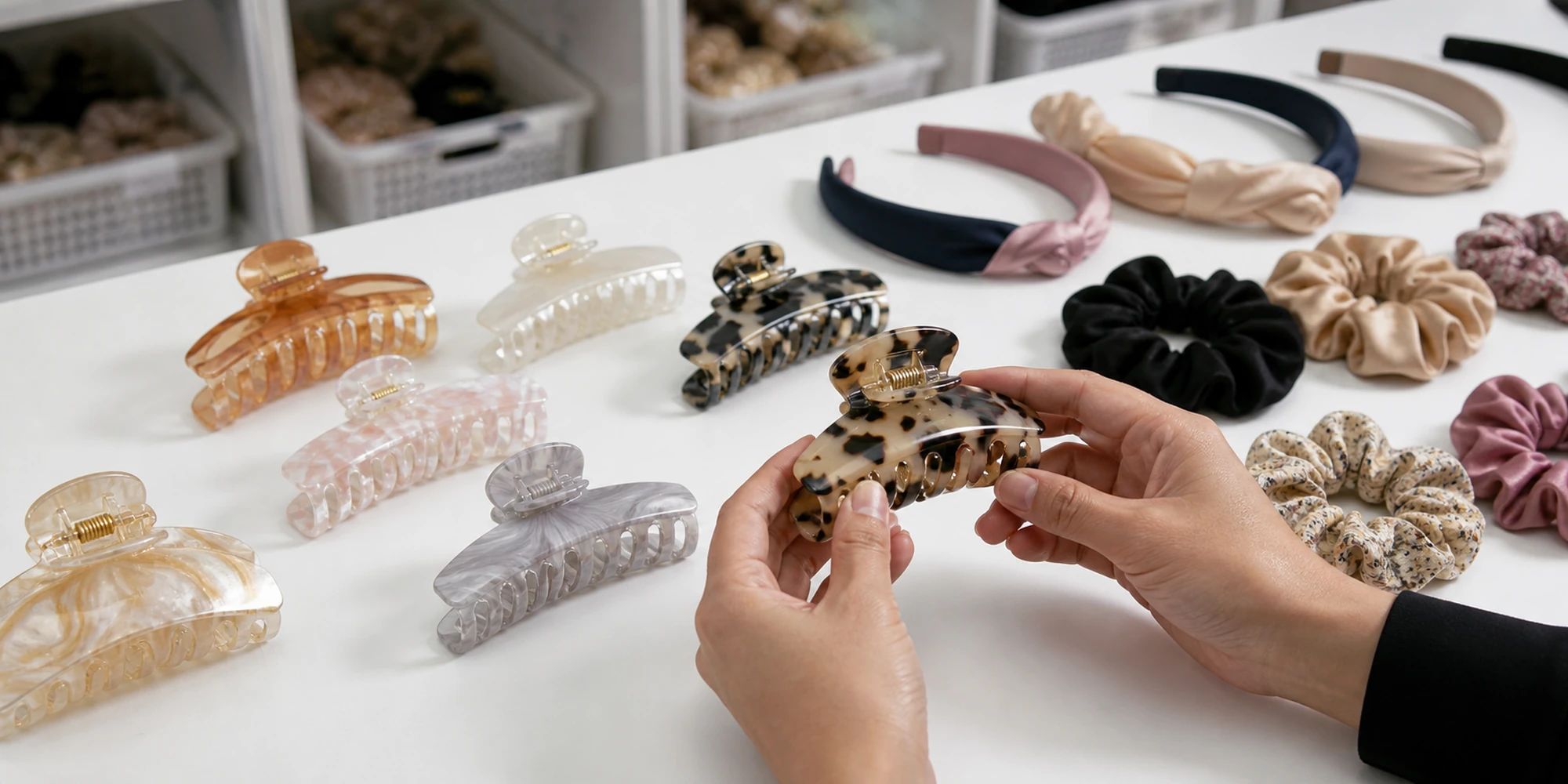
Sourcing custom hair accessories from China means working with a manufacturer to produce claw clips, scrunchies, headbands, or hair pins built to your own specification, branding, and quality standard, rather than reselling generic stock items. Most first-time buyers lose money on their first order, either through an unclear specification that produces the wrong product, a supplier that never had the capability they claimed, or payment terms that leave no recourse when something goes wrong. This guide walks through the sourcing process step by step, from defining your spec to getting your first shipment through customs, so you can avoid the mistakes that cost other buyers their first order.
Hair accessory production concentrates heavily in Guangdong province, particularly around Dongguan, where decades of specialisation have built up dense clusters of injection moulding, acetate processing, metal stamping, and fabric cutting facilities within a short distance of each other. This concentration means a single factory can often source components, tooling, and packaging locally rather than importing inputs, which keeps lead times and costs lower than sourcing the same product from a region without this infrastructure.
For buyers, this concentration translates into more supplier choice, faster sampling turnaround, and factories with genuine category expertise rather than general contract manufacturers taking on hair accessories as a side line. It also means competition between suppliers is real, which gives you negotiating leverage that does not exist in less developed manufacturing regions.
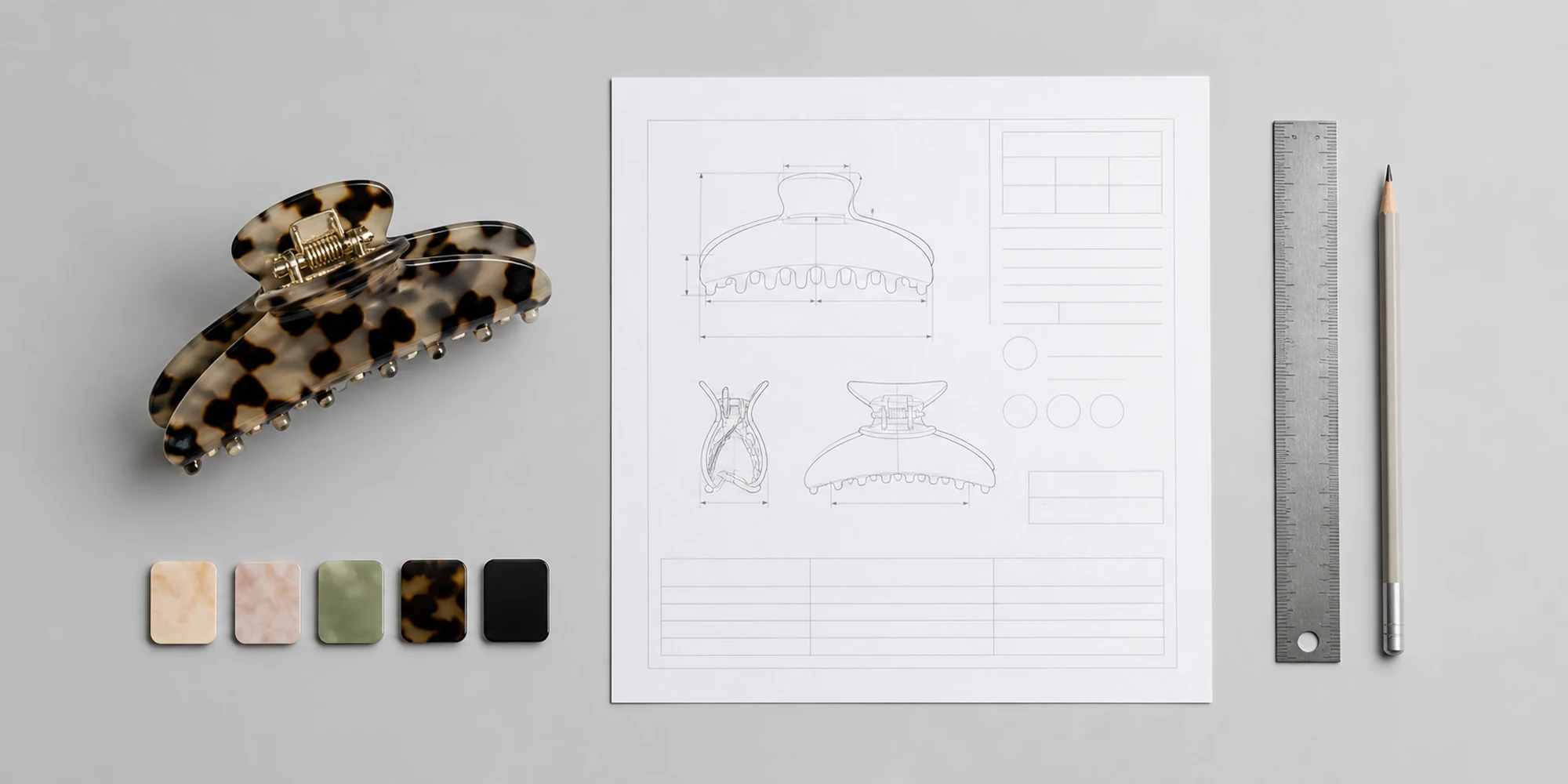
A vague brief is the single biggest cause of wasted sampling rounds. Before reaching out to any supplier, you need material, dimensions, colour references, and functional requirements written down, not left to the factory’s interpretation. For a claw clip, this means jaw width, spring tension expectations, and whether you want acetate or injection-moulded plastic. For a scrunchie, it means fabric composition, elastic gauge, and finished diameter. Suppliers can fill gaps with their own defaults, but those defaults rarely match what you actually pictured, and every round of miscommunication costs a week or more of sampling time.
A factory-direct relationship gives you lower pricing, direct communication with the people who actually make your product, and faster resolution when something needs adjusting. A trading company adds a markup and a layer of communication distance, but can be useful for buyers ordering across multiple product categories from different factories, since one trading company can consolidate shipments and handle documentation that would otherwise mean managing several supplier relationships directly. Most buyers ordering a single product category at meaningful volume are better served going factory-direct once they’ve identified a supplier they trust.
ISO 9001:2015 indicates a documented quality management system rather than ad hoc production. amfori BSCI certification indicates the factory has been audited on labour and social compliance standards, which matters increasingly to retailers in the EU and UK who require it from their own suppliers. Neither certification guarantees perfect execution on every order, but their absence is a legitimate warning sign, particularly for a factory claiming years of export experience.
Request the actual certificate numbers and verify them against the issuing body’s database rather than accepting a PDF at face value, since certificates are sometimes reused or altered. A video call showing the actual production floor, not just an office, is a low-cost way to confirm a supplier isn’t simply a trading company presenting itself as a factory.
Never skip physical samples, regardless of how detailed the supplier’s photos or 3D renders look. Request the sample in the actual material and colour you intend to order, not a close approximation, since acetate patterns, fabric weights, and plating finishes vary enough between batches that photos rarely convey the real product accurately. Test the sample under the conditions it will actually face: open and close a claw clip’s spring mechanism repeatedly, stretch a scrunchie’s elastic to check recovery, or wear a headband for an extended period to check comfort. Sample costs and shipping are usually the buyer’s responsibility, and a supplier unwilling to produce a sample before a large order is a signal to keep looking elsewhere.
Minimum order quantities exist because every production run carries fixed setup costs that need to be spread across enough units to make sense for the factory. Modifying an existing mould or fabric pattern carries a lower MOQ than commissioning entirely new tooling, and colour changes typically carry their own per-colour minimum separate from the overall order size. Get pricing broken down by unit cost, tooling or setup fees, and packaging separately, rather than accepting a single bundled figure, since this breakdown is what lets you negotiate specific line items rather than the whole quote at once.
A standard structure for new supplier relationships is a deposit before production begins, commonly 30 percent, with the balance due before shipment or against a copy of the shipping documents. Paying the full amount upfront to an unverified supplier removes any leverage if the finished product doesn’t match the approved sample. Get the agreed specification, quantity, price, and delivery timeline in writing as a purchase order or contract, even in simplified form, since a written record is what you rely on if a dispute arises later over what was actually agreed.
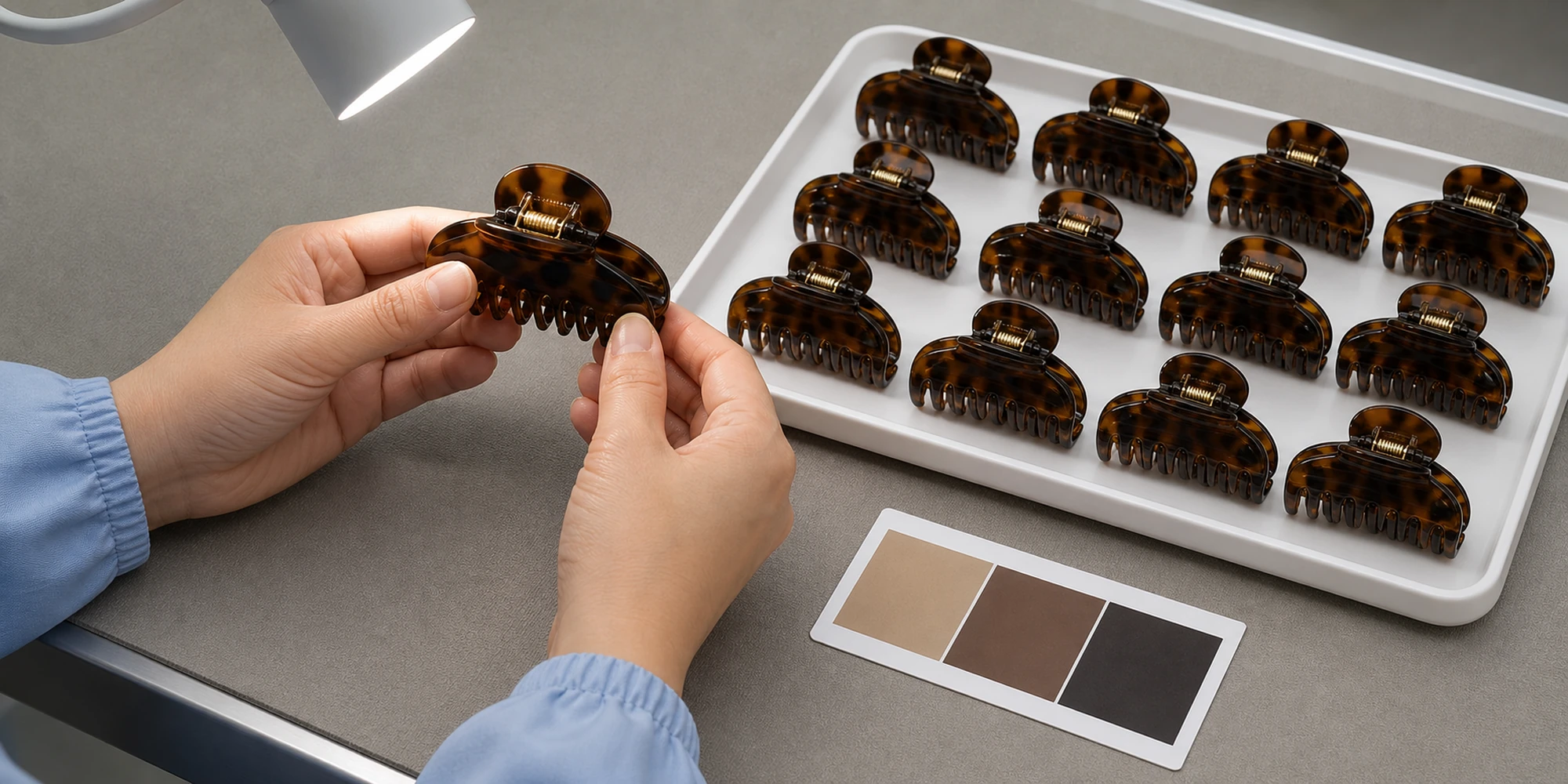
For first orders in particular, an independent quality inspection before shipment catches problems while there’s still time to address them, rather than after a container has already left port. Inspections typically check dimensional accuracy against the approved sample, colour consistency across the production batch, functional testing of moving parts like clasps and springs, and packaging integrity. This costs a modest amount relative to the order value and is standard practice among experienced importers, even when working with a supplier they’ve used before.
Sea freight is the standard method for hair accessories given their low weight-to-volume ratio and non-urgent timelines, with air freight reserved for smaller reorders or time-sensitive launches. Confirm which Incoterm applies to your quote, since FOB and EXW shift meaningfully different responsibilities and costs onto the buyer for the domestic Chinese logistics leg. Factor customs duties and any applicable compliance testing for your destination market into your landed cost calculation before finalising pricing, since these costs are easy to underestimate on a first order and can turn an attractive unit price into a break-even shipment.
Ordering full production quantity based on photos alone, without a physical sample in hand, is the most expensive mistake a first-time buyer can make. Choosing the cheapest quote without checking certifications or requesting a factory video call is the second, since price alone tells you nothing about whether the factory can actually deliver at that price consistently. Skipping a written agreement because the relationship feels friendly is the third, and it becomes a real problem only when something goes wrong and there’s no documented reference point to resolve it against.
Buyers ready to start the process can move directly into specification and sampling through an OEM and ODM hair accessories manufacturing programme, or explore product-specific starting points such as a custom claw clip manufacturer or custom hair scrunchie manufacturer depending on the category.
MOQs vary by product and customisation level. Stock designs with custom branding often start at 100 to 500 units per SKU. Custom colours on existing tooling typically start at 300 to 1,000 units per colour. New tooling generally requires 1,000 units or more to justify the mould investment.
Request business licence and certification numbers and verify them against the issuing authority’s public database. Ask for a video call showing the actual production floor rather than just an office. Order a paid sample before committing to a large production run.
A factory manufactures the product directly, offering lower pricing and direct communication. A trading company sources from one or more factories on your behalf, adding a markup but simplifying logistics if you’re ordering multiple product categories at once.
Sampling for existing mould or fabric designs with colour changes typically takes one to two weeks. New tooling or fully custom development usually takes three to six weeks, depending on the complexity of the design and the number of revision rounds needed.
A common structure is 30 percent deposit before production, with the remaining 70 percent due before shipment or against shipping documents. Paying the full amount upfront to an unverified supplier is generally not recommended for a first order.
A sourcing agent can help if you lack the time or experience to vet suppliers and manage quality control directly, particularly for buyers new to importing. For straightforward single-category orders, working factory-direct after proper vetting is usually more cost-effective once you’re comfortable managing the process yourself.
Sourcing custom hair accessories from China rewards buyers who slow down at the start: a precise specification, verified certifications, a physical sample, and a written agreement prevent almost every expensive mistake that derails a first order. The process gets faster and more predictable with each subsequent order once you’ve established a working relationship with a supplier you trust, but that trust has to be earned through verification rather than assumed from a polished website or a low quote.
Manufacturers such as JunYi Beauty, which produces hair clips, scrunchies, and hair accessories at its Dongguan facility under ISO 9001:2015 and amfori BSCI certification, represent the type of factory-direct partner suited to buyers working through this sourcing process for the first time.
👉 Searching for Hair Accessories ? Your brand deserves the best.