Home
Product
Contact
Odm/Oem
About
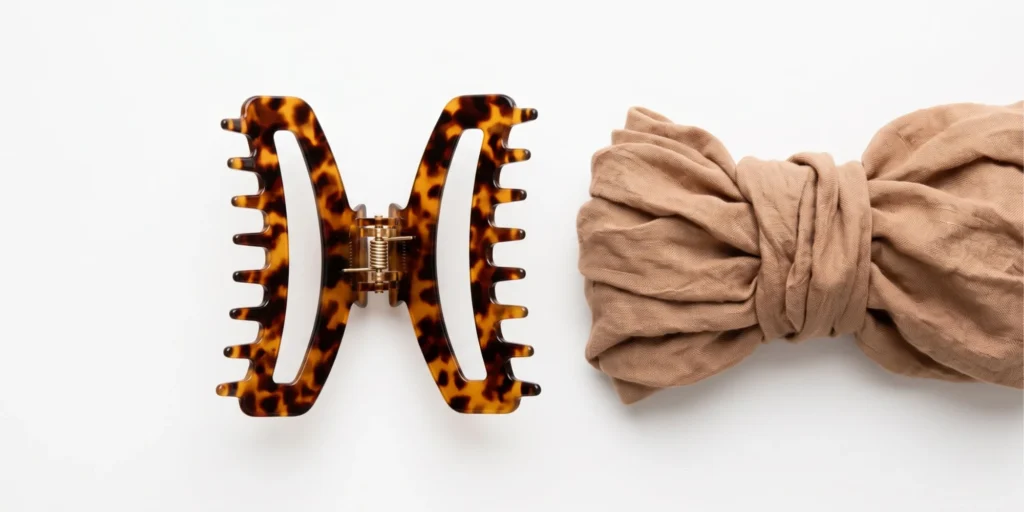
A claw clip that is applied correctly holds all day without slipping, popping open, or leaving visible pressure marks. A claw clip applied incorrectly — with too much or too little hair gathered, at the wrong angle, or in the wrong position for the style — fails within minutes and leaves the impression that claw clips simply do not work. In most cases, the clip is not the problem. The technique is.
This guide covers the complete mechanics of claw clip application across every major hair type and style — from the basic bun for medium hair to the techniques that make claw clips work on thick, fine, short, and curly hair. It also addresses the most common application errors and the clip size and quality variables that determine whether a correct technique will produce reliable hold.
Two variables must be correct before technique can compensate for anything: clip size and clip quality. A clip that is too small for the hair volume will not close fully regardless of technique — the spring is working at its compression limit and will pop open under any load. A clip with sharp, poorly finished teeth will snag the hair on every application regardless of how carefully it is handled.
As a quick pre-check: gather your hair into the style you intend to create and hold the gathered section in one hand. Press the clip open with the other hand and place it around the gathered section. Release. If the clip closes fully with the jaws meeting evenly — proceed to technique. If the clip does not close, or closes only partially — the clip is too small. Size up before reading further. Brands sourcing claw clips should work with an acetate claw clip manufacturer that specifies smooth, burr-free tooth finishing as a production quality standard — this is the variable most directly responsible for the snagging and catching that makes applying and removing clips uncomfortable.
The foundational claw clip style is a mid-height bun — gathered hair secured at the back of the head between the crown and the nape. This is the starting point for every variation.
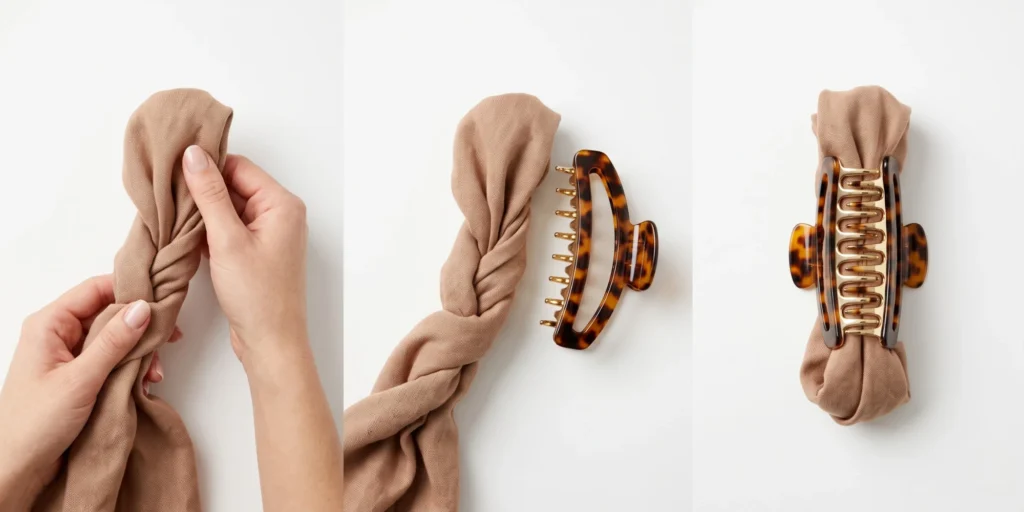
Fine hair presents two challenges: the gathered section is less voluminous, so a standard clip may be too large and grip unevenly; and individual fine strands are more susceptible to snagging on teeth that are not perfectly smooth. The correct technique for fine hair prioritises maximum grip contact and uses a smaller clip than might be expected.
Thick hair requires a larger clip than most consumers initially select, and the technique must account for the higher outward pressure of the hair volume against the spring mechanism.
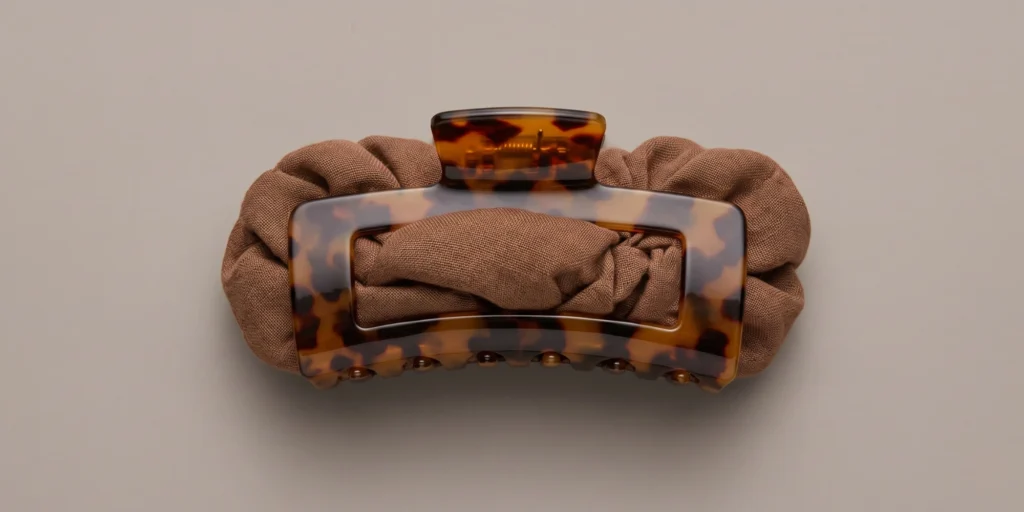
Claw clips on short hair — hair that sits at or above the collarbone — require a different technique because there is not enough length to create a full twist-and-coil bun. The relevant styles for short hair are half-up sections, small buns at the nape, and accent clips for layers.
Curly hair requires a larger clip than the volume of the hair might suggest, and the technique must minimise friction against the curl pattern at the clip entry point.
Gather the top two-thirds of the hair — from the temples back to the crown — into a loose ponytail. Twist loosely two to three times. Fold the twist into a small coil and apply the clip around it at the crown. Allow the lower third of the hair to fall freely. This style works on all hair types from shoulder length up and is the most versatile everyday claw clip style.
Gather all the hair into a low ponytail at the nape. Twist tightly downward until the hair begins to coil. Press the coil toward the nape and apply the clip vertically through the coil, perpendicular to the spine. The low bun sits flat against the nape and is more comfortable for extended wear (including leaning against headrests) than a mid or high bun.
Gather all the hair into a high ponytail at the crown. Twist firmly upward and coil the twist at the crown. Apply a large clip through the coil, oriented horizontally or diagonally. The high bun places the clip at the highest point on the head and requires the strongest spring specification — the combined weight of the hair section hangs from the clip, which must resist downward torque as well as outward spring compression.
Gather all the hair into a low ponytail and twist the gathered section tightly upward along the back of the head. As the twist tightens, fold the tail of the twist over and press it flat against the head. Apply a long clip (10–12 cm) vertically along the length of the fold to anchor it. This creates a structured upswept style that the clip holds against the head rather than through it.
The following table covers the most common claw clip failure modes and their solutions:
| Problem | Most Likely Cause | Solution |
|---|---|---|
| Clip pops open immediately | Clip is too small for hair volume | Size up — use a clip at least 2 cm longer |
| Clip closes but slips down over time | Clip is too large; teeth not fully engaging hair | Size down, or gather a larger section to fill the jaw |
| Clip holds initially but loosens by midday | Spring fatigue in worn-out clip, or hair too slippery | Replace clip; try twisting hair more tightly before applying |
| Clip pops open during movement | Spring too light for the hair weight; clip undersized | Size up to a clip with a reinforced spring specification |
| Hair snags when applying or removing clip | Poorly finished teeth with burrs or sharp edges | Replace with a premium smooth-finished clip |
| Style looks flat or collapsed | Hair not twisted tightly enough; bun pressed too flat | Twist more firmly; allow the coil to be rounder before clipping |
| Clip uncomfortable after an hour | Clip too heavy for the scalp position; applied too tight | Try a lower bun position; gather hair more loosely |
| Hair Type | Style | Recommended Size |
|---|---|---|
| Fine, short (above collarbone) | Half-up, accent | Small (4–6 cm) |
| Fine, medium length | Full bun, half-up | Small to medium (6–8 cm) |
| Medium density, any length | Full bun, half-up | Medium (7–8.5 cm) |
| Medium-thick, shoulder to mid-back | Full bun, updo | Large (9–10.5 cm) |
| Thick, any length | Full bun, messy bun | Large to oversized (10–12 cm) |
| Curly, medium density | Full bun, half-up | Large (9–10.5 cm) |
| Curly, thick or coily | Full bun, updo | Oversized (11–13 cm) |
| Any type, French twist | French twist variation | Large to oversized (10–12 cm) |
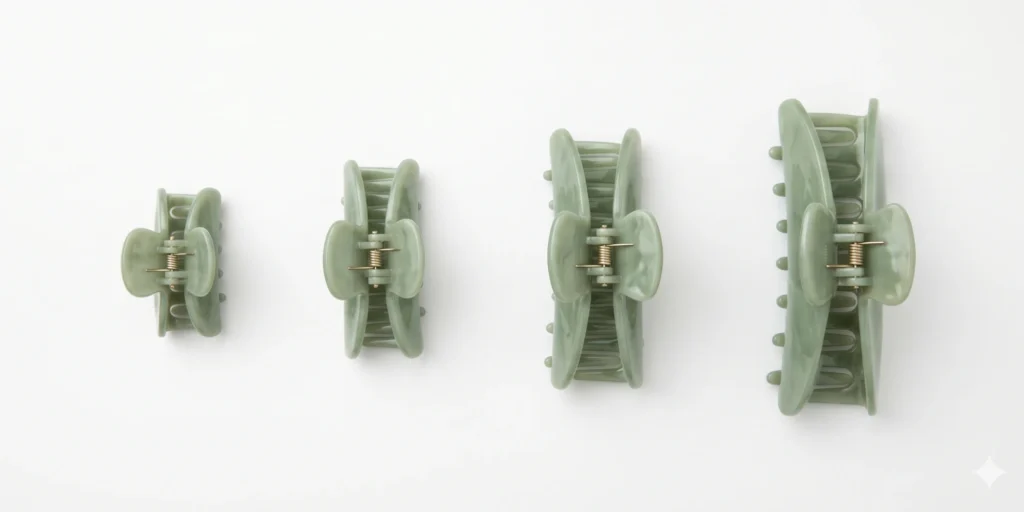
Every technique described in this guide depends on product variables that are determined at the manufacturing stage: spring tension, tooth surface finish, jaw span calibration, and clip weight. Consumers who cannot make a claw clip work are almost always experiencing a product specification failure — a clip that is the wrong size, has the wrong spring weight, or has inadequately finished teeth — rather than a technique failure.
For B2B buyers developing or sourcing claw clip ranges, the practical implication is that product specification is consumer experience. A range that covers small through oversized sizes with correctly calibrated springs at each size, and smooth-finished teeth verified by sample testing, will be used correctly by the majority of consumers without instruction. A range that defaults to a single size or a single spring weight will consistently underperform for the consumers whose hair type falls outside the specification’s assumptions.
Brands sourcing a size-assorted claw clip range should work with an OEM hair accessories manufacturing partner that offers spring tension as a specifiable variable at each clip size — not all factories offer this level of specification control, and those that do produce clips that perform consistently across the full consumer hair type range rather than only for median hair density.
Q: Why does my claw clip keep falling out?
The most common reason a claw clip falls out is that the clip is too small for the hair volume being gathered. A clip that cannot close fully around the gathered section is working at the extreme of its spring compression range and will pop open under the outward pressure of the hair. The solution is to size up — choose a clip at least 2 cm longer than the one currently being used. If the clip is the correct size and still falls out, the twist before application is likely not tight enough, or the clip is worn out and the spring has fatigued. A tighter pre-application twist and replacing the clip with a fresh one typically resolves persistent slippage.
Q: How do you use a claw clip without it hurting?
Claw clip discomfort is almost always caused by one of three things: the clip is too small and the spring is working at maximum compression, creating high localised pressure at the grip point; the clip is applied too tightly against the scalp, creating direct pressure on the skin; or the clip is too heavy for the bun position, causing it to pull downward. The solutions are to size up to a clip whose spring closes comfortably around the gathered section without maximum compression, to apply the clip with a small gap between the clip body and the scalp, and to choose a lower bun position that reduces the downward torque on the spring mechanism.
Q: Can you use a claw clip on short hair?
Yes — but the technique is different from longer hair. Short hair does not have enough length to create a full twist-and-coil bun, so the relevant styles are half-up sections, small nape buns using a fold technique, and accent clips for individual layers. Small clips (4–6 cm) are the appropriate size for short hair sections; medium and large clips will not grip a small short-hair section evenly. The looped fold technique — gathering the section, twisting it twice, folding it back on itself, and clipping the fold — is the most reliable approach for short hair that cannot form a full coil.
Q: How do you use a claw clip on thick hair?
Thick hair requires an oversized clip (10–13 cm) with a reinforced spring, and a firmer pre-application twist than fine or medium hair. Gather the hair into a tight, compressed twist before applying the clip — the twist reduces the effective diameter of the gathered section enough for a large clip to close fully. For very thick hair, inserting the clip horizontally through the bun (rather than vertically) angles the spring’s closing force more directly against the hair’s outward pressure. Two large clips inserted from opposite directions — a criss-cross technique — provide the most secure hold on the thickest hair.
Q: What is the correct way to remove a claw clip without breaking hair?
The correct removal technique is to press the clip open by squeezing the outer arms, hold it open, and then slide it cleanly out of the hair section rather than pulling it while closed. Pulling a closed clip through the hair catches individual strands in the teeth and tears them. If strands are caught around the clip teeth after opening, work them free individually before removing the clip. Clips with smooth, well-finished teeth release from the hair cleanly; clips with rough or poorly finished teeth snag even during correct removal technique.
Q: What size claw clip should I use for a messy bun?
The correct size for a messy bun depends on hair density rather than style name. Fine hair typically needs a small to medium clip (6–8 cm); medium-density hair needs a medium to large clip (8–10 cm); thick hair needs a large to oversized clip (10–12 cm). The messy bun style itself — looser, with deliberately pulled-out sections — typically uses a slightly larger clip than a neat bun at the same hair density, because the looser gather creates a larger effective diameter that a smaller clip cannot span.
Using a claw clip correctly comes down to three variables: the right size for the hair volume, a firm enough pre-application twist to create a manageable gathered section, and a clip-through angle that positions the teeth to engage the hair from both sides of the bun. Every hair type — fine, thick, short, curly — has a working technique once the correct clip size is in hand. The clips that consumers report as unreliable are almost always the wrong size, have a worn spring, or have inadequately finished teeth that snag rather than release.
For B2B buyers, this guide reinforces that clip sizing and spring specification are not secondary details — they are the primary determinants of whether a consumer has a positive or negative product experience. A size-assorted range with calibrated spring tension at each size, sourced from a manufacturer such as JunYi Beauty that produces both ABS and acetate claw clips across the full size range at its Dongguan facility under ISO 9001:2015 and amfori BSCI certification, is the product foundation that makes every technique in this guide work as described.
👉 Searching for Hair Accessories ? Your brand deserves the best.