Home
Product
Contact
Odm/Oem
About
Hair pins are U-shaped metal or plastic accessories that grip hair through an open-ended design, sliding deep into styled sections to anchor them from underneath. Bobby pins are smaller, closed clips with two flat prongs, one ridged for grip, designed to hold small sections flat against the head rather than anchor volume from within.
Picking the wrong one for your hair type is the most common reason styles fall apart by midday: a bobby pin asked to hold a thick bun slips within the hour, while a hair pin used on fine flyaways looks bulky and overdone. This guide breaks down the structural differences, which hair types and styles each one suits, correct insertion technique, and what to check before buying either in bulk.
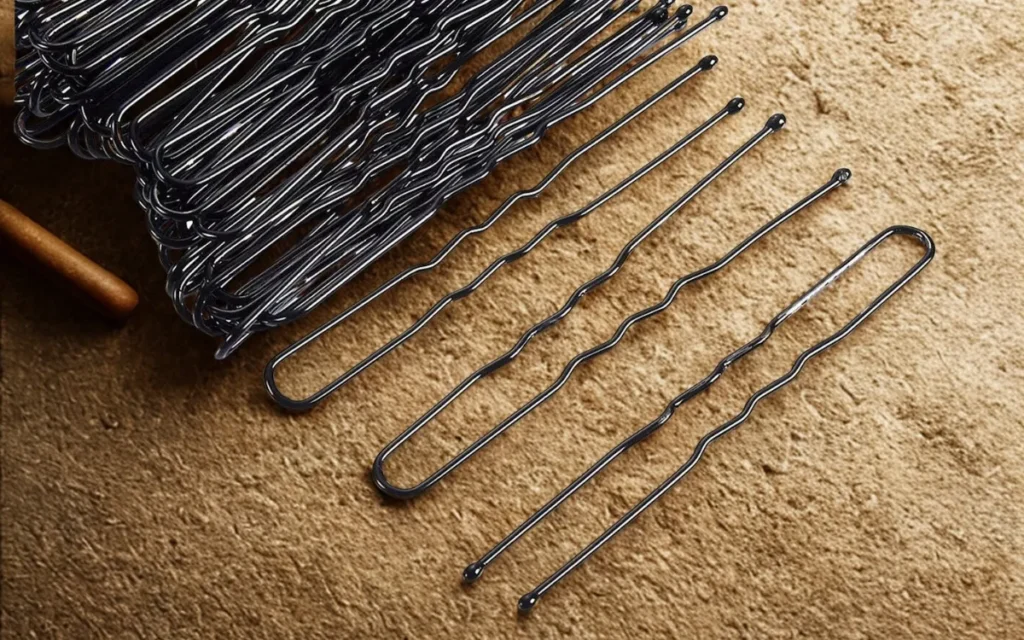
A hair pin is a U-shaped accessory, typically 2 to 4 inches long, made from stainless steel, nickel-plated steel, coated metal, plastic, or bamboo. The open end slides directly into gathered hair, distributing tension along the full length of the shaft rather than pinching a single point. This construction is what allows hair pins to support heavier, more voluminous sections without slipping.
A bobby pin is a closed, two-pronged clip roughly 1.5 to 2 inches long, with one flat prong and one ridged prong that presses together to grip hair through friction. Made from stainless steel, coated metal, plastic, or wood, bobby pins hold small sections flat against the scalp rather than anchoring volume, which makes them the better choice for detail work rather than structural support.
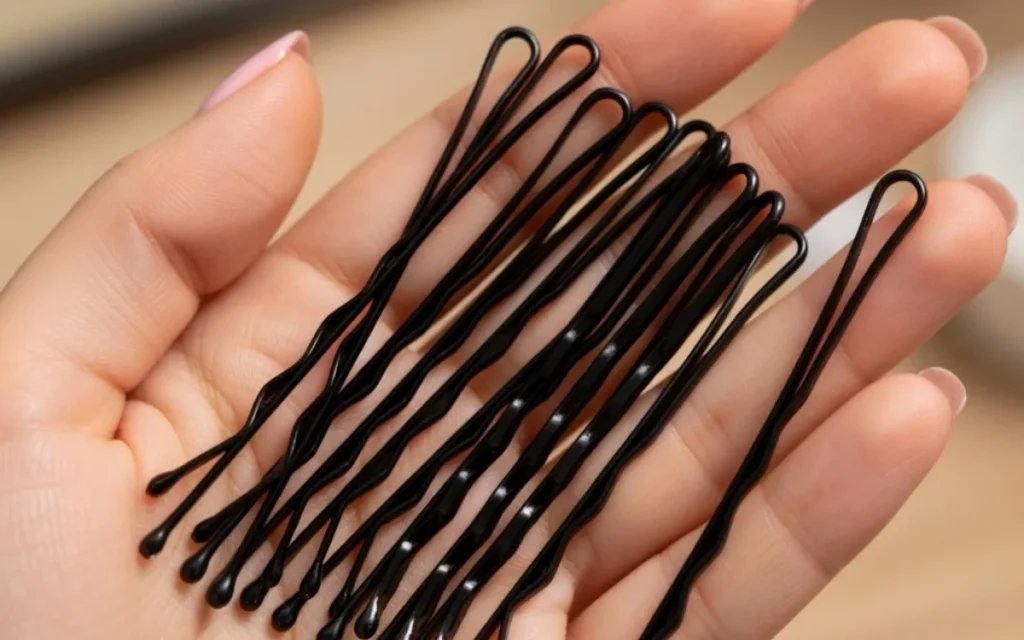
Shape is the starting point. A hair pin’s open U-shape lets it slide deep into a style and distribute holding tension across its length, which is why it handles heavier sections without slipping. A bobby pin’s closed V-shape presses strands against the scalp from the surface, which suits light, detail-level holds rather than bearing weight.
Length compounds this difference. Hair pins run 2 to 4 inches, long enough to reach through thicker or more voluminous styles. Bobby pins run 1.5 to 2 inches, short enough to stay flat and unnoticeable for quick fixes like flyaways or bangs.
Grip mechanism is the third factor. A hair pin holds through tension distributed along its shaft as it slides through hair. A bobby pin holds through friction between its ridged and flat prongs, which is effective for light sections but loses grip strength faster under sustained weight.
Flexibility also differs. Hair pins are rigid and hold their shape under repeated use, which makes their performance predictable over time. Bobby pins rely on spring tension between the two prongs, and that tension weakens with repeated opening and closing, meaning bobby pins typically need replacing sooner than hair pins.
The table below summarises these differences directly.
| Category | Hair Pins | Bobby Pins |
|---|---|---|
| Shape | Open U-shape | Closed V-shape |
| Length | 2–4 inches | 1.5–2 inches |
| Material | Stainless steel, nickel-plated steel, plastic, bamboo | Stainless steel, coated metal, plastic, wood |
| Grip Mechanism | Tension distributed along the shaft | Friction and ridges press strands against scalp |
| Holding Power | Strong — ideal for thick, heavy hair | Medium — best for fine, lightweight sections |
| Flexibility | Rigid structure, more durable under stress | Spring tension weakens with repeated use |
| Best Hair Type | Thick, coarse, or curly hair | Fine, straight, or slightly wavy hair |
| Best Hair Length | Medium to long hair | Short to medium-length hair |
| Best For | Buns, updos, bridal and formal styles | Bangs, flyaways, everyday minimalist styles |
| Comfort | Can feel stiff when multiple pins are layered | Flat and lightweight, comfortable for all-day wear |
| Visibility | Can be hidden or used as decorative accents | Low-profile design, easily concealed in hair |
| Damage Risk | Worn tips may snag hair if not handled carefully | Broken or bent pins can tug at fragile strands |
Bobby pins work best on fine or thin hair, where a lightweight grip is enough to hold a section without adding visible bulk. They also suit short to medium-length styles, where quick, low-profile placement matters more than load-bearing strength, and straight or slightly wavy textures, where the flat prong stays hidden and secure.
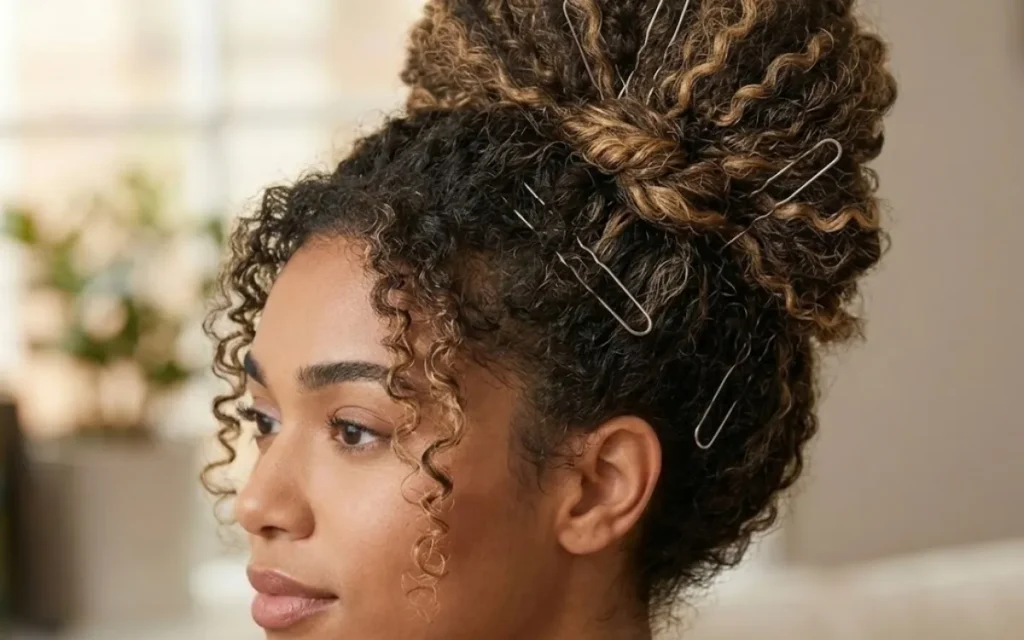
Hair pins work best on thick, coarse, or curly hair, where a stronger, deeper grip is needed to control volume without the pin working loose during the day. They also suit long hair that needs structural support to hold an updo in place, and high-density or voluminous hair, where the pin’s length allows it to distribute weight evenly rather than concentrating pressure at one point.
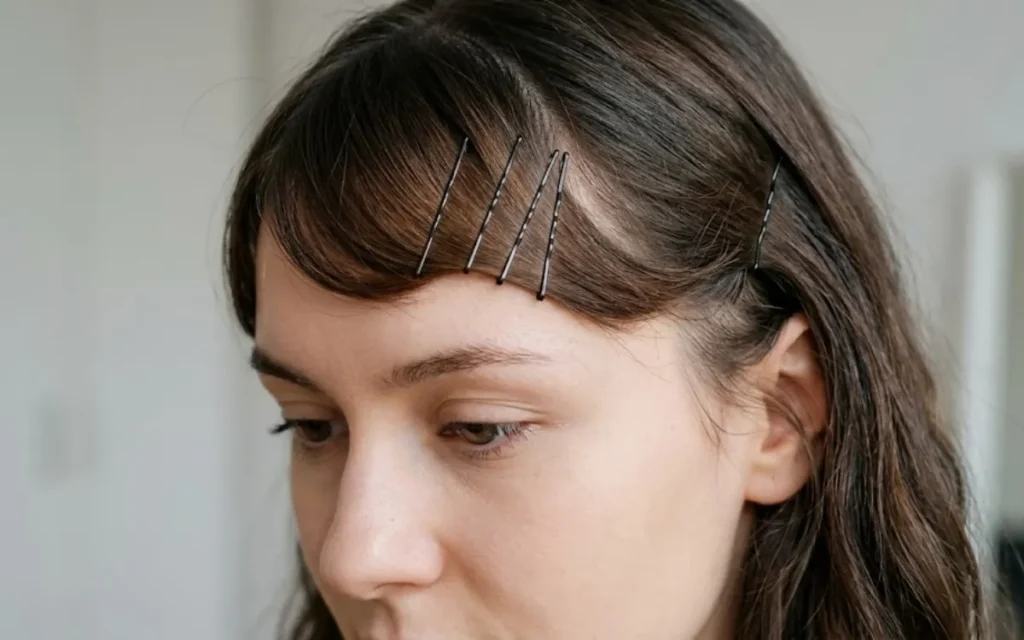
Bobby pins handle detail work: taming bangs and flyaways by anchoring them at the least visible point, holding half-up styles by securing the gathered top section while the rest falls naturally, smoothing sleek styles by pinning strands flat against the head, and supporting minimalist everyday looks where a few strategically placed pins keep hair under control without changing its natural texture.
Hair pins handle structural work: securing buns, chignons, and twists so they hold through long events, anchoring bridal and formal updos that need to stay in place through hours of movement, supporting cultural hairstyles that rely on stable, balanced construction, and holding messy textured buns together where volume needs to stay lifted rather than collapse.
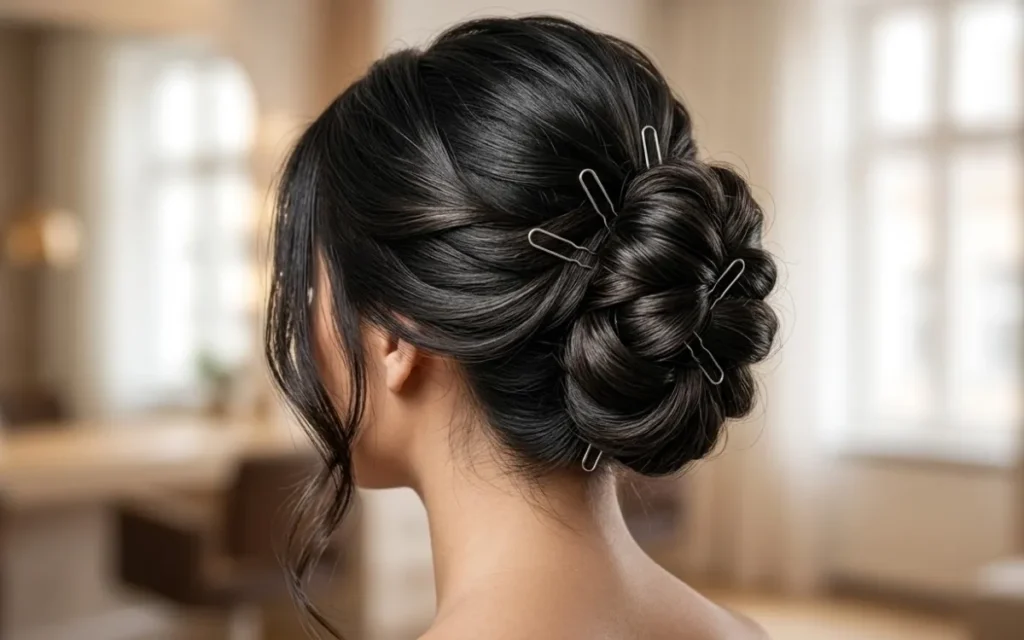
For hair pins: start with clean, dry hair for better grip, since product buildup reduces tension. Twist or shape the base of the style first, then slide the pin in following the direction of hair growth, angling it slightly downward to lock into the twist. For sections carrying real weight, insert two pins in a crisscross pattern rather than one straight pin, since the crossed tension holds significantly longer through movement. Test the hold by shaking your head gently before finishing.
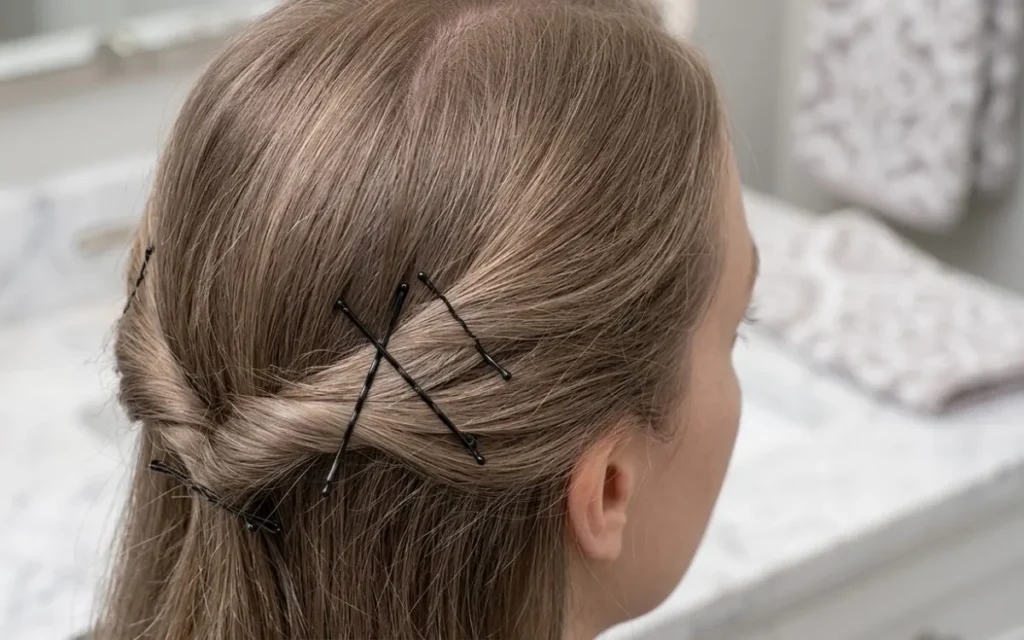
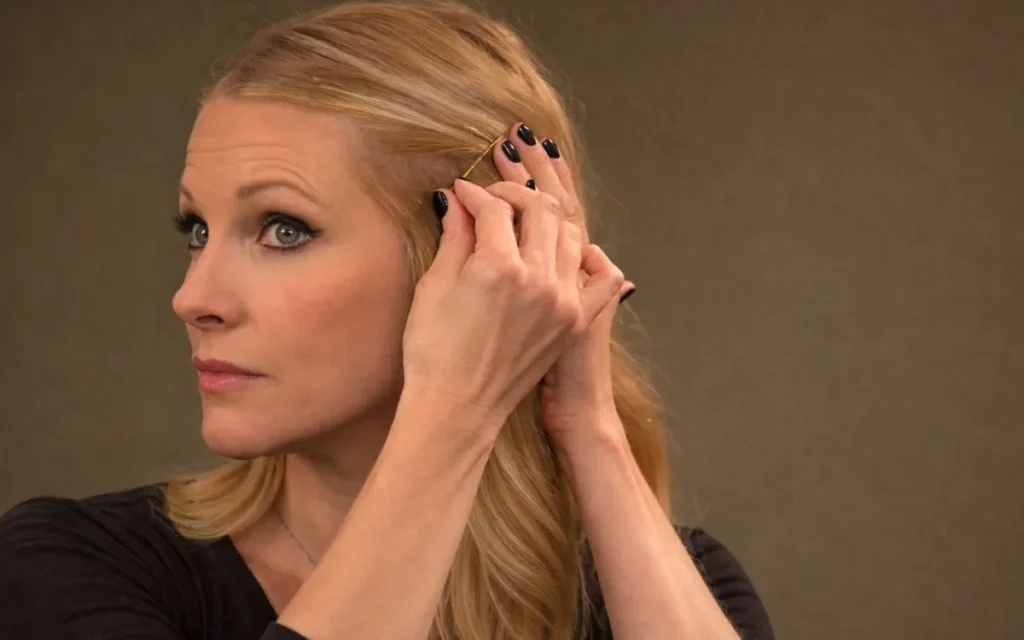
For bobby pins: begin with dry or lightly textured hair, since slick hair reduces friction grip. Insert with the ridged side facing down, since that side does the actual gripping against the scalp. Slide the pin along the scalp rather than at an angle, and use two pins in a crossed X pattern for sections that need to last through a full day. Finish by tucking any open ends inward so they don’t catch on other strands.
The most common hair pin mistake is inserting a single pin without anchoring the twist first, which leaves nothing for the pin to grip against. Using too few pins on a heavy section is the second most common issue, and it shows up as slippage within an hour rather than an immediate failure. Choosing a pin too short for the hair volume is the third, since a pin that doesn’t fully clear the section has no leverage to hold it.
The most common bobby pin mistake is inserting it ridge-side up, which puts the smooth, low-friction side against the scalp and gives the pin almost nothing to grip. Asking a single bobby pin to hold more hair than its size allows is the second common failure, and it is a sizing issue rather than a product defect. Continuing to use a bent or worn pin past its useful life is the third, since a pin that no longer holds its shape cannot maintain consistent tension.
Start with the primary use case. Everyday styling calls for flexible, quick-insert pins. Salon or professional settings need predictable, repeatable hold across many clients. Bridal and event use calls for stronger grip and a more polished finish, since these pins have to perform for hours without adjustment.
Match the pin to the hair characteristics of your target customer. Thicker hair needs longer pins with more grip surface. Fine hair needs lighter, shorter pins that won’t add visible bulk. Long styles generally need longer pins for adequate structural support.
Material and build quality determine how the product performs after repeated use. Stainless steel resists bending and corrosion better than coated alternatives. Coating quality determines how long a pin resists rust before the base metal is exposed. Smooth, rounded tips prevent snagging and scalp discomfort, which matters more in bulk orders where quality control is harder to verify piece by piece.
Before committing to a large order, request a small sample batch. Check grip strength under normal movement, wear a sample for several hours to test comfort, and if the product is destined for humid or coastal markets, test corrosion resistance under simulated moisture exposure before finalising the order. For buyers developing a custom program, specifications on material grade, coating, and finish can be set directly through a custom hair pin manufacturer rather than accepted as-is from a stock catalogue.
Hair pins and bobby pins solve different structural problems rather than competing for the same job. Hair pins carry weight and hold volume in place through tension distributed along their length, making them the right choice for buns, updos, and thicker hair. Bobby pins handle detail and light sections through surface friction, making them the right choice for flyaways, bangs, and fine hair. Matching the pin to the hair type and styling goal, rather than defaulting to whichever is on hand, is what determines whether a style holds through the day or needs constant readjustment.
For buyers sourcing either category at volume, manufacturers such as JunYi Beauty, which produces both hair pins and bobby pins in stainless steel and coated finishes at its Dongguan facility under ISO 9001:2015 and amfori BSCI certification, offer the material consistency and customisation options that bulk buyers need to verify before committing to a large order.
👉 Searching for Hair Accessories ? Your brand deserves the best.